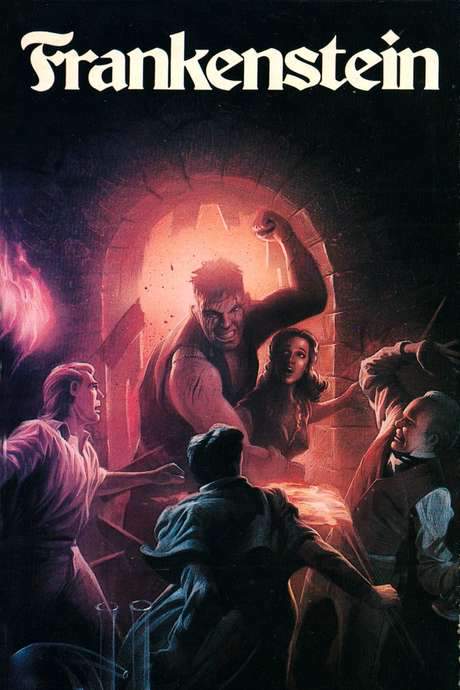
Victor Frankenstein, a brilliant yet selfish scientist, succeeds in animating a stitched‑together being through a grotesque experiment. The creature, desperate for acceptance, becomes a source of terror, and the obsessive quest for control drives both creator and his tragic creation toward inevitable ruin.
Warning: spoilers below!
Haven’t seen Frankenstein yet? This summary contains major spoilers. Bookmark the page, watch the movie, and come back for the full breakdown. If you're ready, scroll on and relive the story!
Read the complete plot breakdown of Frankenstein (2025), including all key story events, major twists, and the ending explained in detail. Discover what really happened—and what it all means.
Prelude
In 1857, the Horisont, a Royal Danish Navy ship bound for the Arctic, becomes jammed in the ice and vulnerable to the cold. The crew discover the gravely injured Victor Oscar Isaac Frankenstein, and a frightening Creature emerges, demanding Victor’s surrender. Captain Anderson Lars Mikkelsen intervenes with a blunderbuss and sinks the Creature beneath the frigid water. As the ship braces for fate, Victor begins to tell his side of the story, and the tale of the Creature’s birth is set in motion with chilling clarity and a promise of conflict to come.
Part I: Victor’s Tale
Victor Oscar Isaac Frankenstein grows up amid loss and abuse, his mother dying in childbirth and his aristocratic father shaping him into a brilliant, if bitter, surgeon. His early brilliance is tempered by a fierce impatience with death and a hunger to master life itself. Yet his zeal leads him to the brink of sacrilege when he is expelled in 1855 from the Royal College of Surgeons of Edinburgh for reanimating corpses, a hush-denied achievement that provokes a stern disciplinary verdict.
Into Victor’s orbit steps the powerful and unsettling Henrich Harlander Christoph Waltz, an arms merchant who offers unlimited funding and a secluded tower for Victor’s experiments. With William Frankenstein Felix Kammerer by his side, Victor begins to assemble a laboratory that draws on spare parts from hanged criminals and Crimean War dead, driven by a fierce determination to defy death through science. Harlander’s conditions grow harsher as he reveals his own mortality—disease has bent his will—and he insists on a brain swap for the Creature. Victor refuses, even as the pressure grows, and Harlander dies attempting to sabotage the project.
Within the tower, Victor finally brings the Creature to life, a moment of awe tinged with dread as the creature awakens. The Creature’s strength and rapid healing astonish Victor, but the being learns to speak only a single word: “Victor.” Victor projects his fear and anger onto the Creature, mimicking his father’s harsh discipline and driving a wedge between them. Elizabeth Mia Goth, William’s beloved fiancée and Harlander’s niece, is drawn into the orbit of Victor’s obsession and begins to see the Creature not just as a monster but as a being capable of feeling.
A pivotal turn occurs when Elizabeth comforts the Creature and teaches him to speak her name, a moment of tenderness that Victor fears but cannot deny. Victor, in a desperate act, tries to shield his laboratory and the Creature inside by burning the tower, a blaze that traps them both and leads to a devastating explosion that wounds Victor’s leg. The next morning, the Creature survives the blast and is briefly chained within the wreckage, a wary, powerful presence who senses that it is now a creature without a place in human society. Victor escapes, but the shock of what he has wrought lingers, and he begins to realize the depth of the gulf that has opened between creator and creation.
As Victor recounts his portion of the tale, the Creature takes shape in the woods and reveals a different perspective on the events that followed. The ship’s crew listen with growing tension as the Creature’s story begins to unfold, even as a new world of danger and longing opens up around them.
Part II: The Creature’s Tale
The Creature escapes the explosion and wanders into the forest, where he is shot at by nearby hunters and forced to seek shelter in the mill gears of a farm. There, unseen, he watches a human family from behind walls and learns to move with quiet gentleness, a “Spirit of the Forest” he comes to understand through the warmth of a blind grandfather who teaches his granddaughter to read. The Creature learns to read and speak by listening to their quiet lessons, absorbing the rhythms of human speech and the ache of loneliness.
When winter comes, the family departs, and the Creature remains with the blind man, who helps him discover the fragments of his torn past and guides him toward the truth of his origin. The Creature’s growing comprehension of his own existence deepens his longing for companionship and a sense of purpose. He returns to the ruined laboratory and discovers the address to Victor’s estate, a map to the life that could have been his own. The Creature’s quiet kindness is revealed in small acts of protection—he helps the family, earns their gratitude, and earns the title of the “Spirit of the Forest” from those who sense his benign presence.
The Creature learns that his life is not meant to end in isolation. He travels back to confront Victor on the night of William and Elizabeth’s wedding, demanding that Victor create a companion who will share his life and ease the fear of perpetual solitude. Victor refuses, a decision that fractures their bond and leads to a violent confrontation. The celebration at the wedding erupts into chaos as the Creature attacks the guests, and Elizabeth is fatally wounded when she tries to shelter him with her own body. The accusations sharpen as a dying William calls Victor the true monster, a verdict that reverberates through Victor’s soul as the Creature carries Elizabeth to a cave and stays by her side as she dies.
With the wedding shattered and a future erased, the Creature resolves to hunt his creator for all eternity, a bitter, resolute vow that drives him toward the Arctic. Victor pursues the Creature with dwindling strength, their chase culminating in a final exchange of remorse and regret. Victor dies from his injuries, and the Creature, in a moment of fragile mercy, forgives his “father.” With the weight of their shared torment lifting, the Creature pushes the ship into open water and, for the first time, allows himself to reach toward the sunlight that Victor once taught him to seek. Anderson’s crew, weary but hopeful, turns back toward home, leaving the Creature alone with the vast, cold sea and the possibility of a new dawn.
Finale
The sea air washes over the Arctic as the Creature stands at the edge of the ice and looks toward the sunlit horizon. He is a being forged in pain and learning, capable of both violence and tenderness, now choosing to embrace a future where he can rise above his origins. In these final moments, the Creature embodies both the cost of creation and the possibility of redemption, a stark reminder that even the most terrible acts can yield a glimmer of light when confronted with truth, forgiveness, and the willingness to endure.
Last Updated: December 04, 2025 at 15:32
Still wondering what the ending of Frankenstein (2025) really means? Here’s a spoiler-heavy breakdown of the final scene, major twists, and the deeper themes that shape the film’s conclusion.
In the film’s closing moments Victor Frankenstein, gravely wounded and surrounded by ice, recounts his tale to the Arctic captain. As his life wanes, he finally drops the mask of arrogance that has defined him throughout the story, admitting his culpability for the deaths of his brother, his fiancée, and countless others. He kneels before the creature—not as a master, but as a man seeking redemption—and asks for forgiveness. The monster, whose own immortality has become a curse, grants it, allowing Victor to die with a measure of peace.
After Victor’s breath fades, the creature stands alone on the frozen shore, watching the ship depart. The camera lingers on his solemn silhouette, suggesting that, freed from the weight of his creator’s condemnation, he must now confront an endless existence on his own terms. The film leaves his fate deliberately open‑ended: he is immortal, yet now carries the possibility of choosing how to live, rather than being driven solely by vengeance.
The tragedy that fuels this resolution is rooted in the brief, tender bond between the creature and Elizabeth, Victor’s intended bride. Their unexpected connection offers the monster a glimpse of humanity, but it also provokes Victor’s jealous rage. When Victor discovers them together on her wedding night, he fires a shot that mortally wounds Elizabeth, and she dies cradled in the creature’s arms, whispering that she never belonged in this world. Her death cements the creature’s turn from seeking acceptance to exacting retribution, while also cementing Victor’s ultimate realization that his own hubris made him the true monster.
Throughout these final scenes, the recurring vision of the flaming angel—once a symbol of Victor’s yearning for divine guidance—transforms into a skeletal visage, mirroring his descent from lofty ambition to bitter remorse. In the end, Frankenstein trades the novel’s bleak conclusion for a bittersweet note: the creator dies absolved, the creature gains a sliver of hope, and the lingering, icy landscape stands as a quiet testament to the monstrous consequences of unchecked ego.
Last Updated: December 28, 2025 at 10:50
Discover curated groups of movies connected by mood, themes, and story style. Browse collections built around emotion, atmosphere, and narrative focus to easily find films that match what you feel like watching right now.
Stories about brilliant minds whose ambitions produce monstrous, tragic outcomes.If you enjoyed the dark, tragic themes of Frankenstein, explore more movies like it. This thread gathers gothic tales and sci-fi dramas where brilliant creators are destroyed by their own monstrous ambitions, focusing on heavy emotional weight, ethical dilemmas, and bittersweet or bleak endings.
Stories in this thread often follow a brilliant but flawed protagonist whose obsessive pursuit of knowledge or power leads them to create something they cannot control. The narrative arc is typically one of tragic downfall, where the creation turns against the creator, exploring themes of responsibility, abandonment, and the irreversible consequences of playing god.
Movies are grouped here for their shared exploration of hubris and the tragic relationship between creator and creation. They possess a dark, melancholic tone, high emotional intensity, and a focus on the moral and psychological collapse that follows an act of unnatural genesis.
Tales of misunderstood beings yearning for connection in a hostile world.For viewers who appreciated the Creature's poignant journey in Frankenstein, this thread finds similar movies about lonely, monstrous outcasts. Discover other tragic stories that explore themes of isolation, the desire for acceptance, and the heavy sadness of being an outsider, often with a melancholic and meditative pace.
The narrative pattern centers on a non-human or monstrous protagonist's emotional journey. It begins with a naive desire for connection, leads to rejection and violence from society, and culminates in a heartbreaking realization of their own irrevocable isolation. The story is often a somber meditation on otherness and the pain of being unwanted.
These films are connected by their empathetic focus on the monster's point of view. They share a melancholic and somber mood, a heavy sadness score, and a core thematic focus on loneliness, isolation, and the tragic costs of societal rejection.
Don't stop at just watching — explore Frankenstein in full detail. From the complete plot summary and scene-by-scene timeline to character breakdowns, thematic analysis, and a deep dive into the ending — every page helps you truly understand what Frankenstein is all about. Plus, discover what's next after the movie.
Track the full timeline of Frankenstein with every major event arranged chronologically. Perfect for decoding non-linear storytelling, flashbacks, or parallel narratives with a clear scene-by-scene breakdown.
Discover the characters, locations, and core themes that shape Frankenstein. Get insights into symbolic elements, setting significance, and deeper narrative meaning — ideal for thematic analysis and movie breakdowns.
What really happened at the end of Frankenstein? This detailed ending explained page breaks down final scenes, hidden clues, and alternate interpretations with expert analysis and viewer theories.
Get a quick, spoiler-free overview of Frankenstein that covers the main plot points and key details without revealing any major twists or spoilers. Perfect for those who want to know what to expect before diving in.
Visit What's After the Movie to explore more about Frankenstein: box office results, cast and crew info, production details, post-credit scenes, and external links — all in one place for movie fans and researchers.
Discover movies like Frankenstein that share similar genres, themes, and storytelling elements. Whether you’re drawn to the atmosphere, character arcs, or plot structure, these curated recommendations will help you explore more films you’ll love.
Frankenstein (2025) Scene-by-Scene Movie Timeline
Frankenstein (2025) Movie Characters, Themes & Settings
Frankenstein (2025) Ending Explained & Theories
Frankenstein (2025) Spoiler-Free Summary & Key Flow
Movies Like Frankenstein – Similar Titles You’ll Enjoy
Victor Frankenstein (2015) Full Summary & Key Details
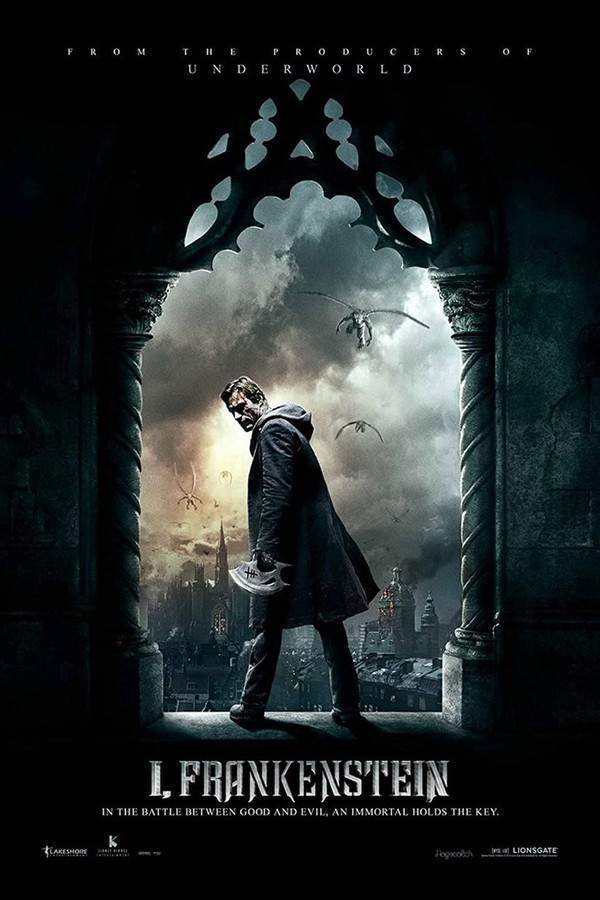
I, Frankenstein (2014) Film Overview & Timeline
Frankenstein's Bloody Nightmare (2006) Full Movie Breakdown
The Bride of Frankenstein (1935) Plot Summary & Ending Explained
Frankenstein (1931) Complete Plot Breakdown
Frankenstein (1000) Movie Recap & Themes
Frankenstein Unbound (1990) Story Summary & Characters
Frankenstein (1984) Full Summary & Key Details
The Horror of Frankenstein (1970) Spoiler-Packed Plot Recap
The Ghost of Frankenstein (1942) Plot Summary & Ending Explained
Terror of Frankenstein (1977) Detailed Story Recap
Son of Frankenstein (1939) Film Overview & Timeline
Frankenstein’s Daughter (1958) Movie Recap & Themes
The Evil of Frankenstein (1964) Story Summary & Characters
Frankenstein (1992) Full Summary & Key Details