Plot Explained Spoilers guaranteed!
Plot Explained

Browse by genre

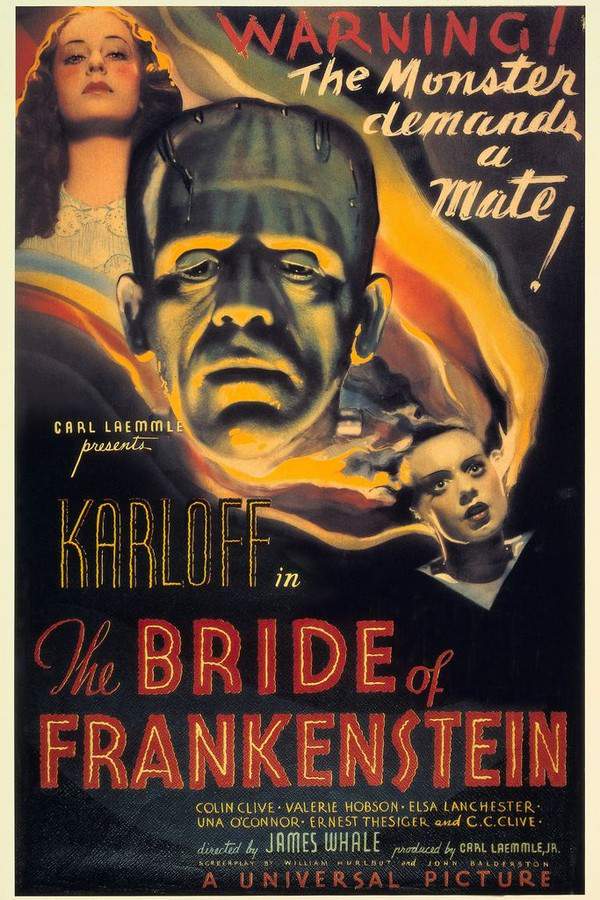
The Bride of Frankenstein (1935) movie poster

Plot Summary

The Bride of Frankenstein (1935) Plot Summary Explained

Release, runtime and language
1935 · 1 h 15 m · English
JustWatch #6,321 18
Directed by
James Whale
Starring
Valerie Hobson, Boris Karloff, Robert Adair, Elsa Lanchester, Ted Billings, Una O'Connor

Driven by a desire to create a companion for his original monster, the ambitious Dr. Frankenstein finds himself manipulated by a new, equally driven scientist. Together, they attempt to bring forth a female creature, resulting in a terrifying and darkly comedic creation. Their experiment unleashes a fresh wave of horror and challenges the boundaries of science and morality.

On this page (6)
  1. 1 Where to watch
  2. 2 What happens: full plot
  3. 3 Plot questions answered
  4. 4 Movie threads
  5. 5 Movies like The Bride of Frankenstein
  6. 6 Every angle

Where to watch

Where to Watch The Bride of Frankenstein (1935)

Where can you watch The Bride of Frankenstein? Stream, rent or buy it in the US, including on Amazon Prime Video, Peacock Premium and Peacock Premium Plus: current JustWatch availability with up-to-date prices.

Streaming availability powered by JustWatch

Full plot summary · contains spoilers

What Happens in The Bride of Frankenstein: Full Plot Summary

The whole story of The Bride of Frankenstein (1935) explained, from the opening scene to the final frame: every key event, every twist and what it all adds up to. Read it as a quick recap before the sequel, to check a scene you missed, or to finally understand what really happened.

Mary Shelley, portrayed by Elsa Lanchester, the brilliant mind behind Frankenstein, or The Modern Prometheus, recounts to Percy Shelley (Douglas Walton) and Lord Byron (Gavin Gordon) an extraordinary revelation: both Henry Frankenstein (Colin Clive) and his towering creation, the Monster (Boris Karloff), have astonishingly survived. Their journey continues, laden with even more bizarre adventures than those chronicled previously.

The story unfolds with flashbacks to the events in Frankenstein (1931). In a pivotal moment, following the catastrophic collapse of a mill—thought to be the Monster's destruction—the Bürgermeister (E.E. Clive) implores the townsfolk to return home. However, a grieving father (Reginald Barlow), burdened by the loss of his daughter—the unfortunate victim of the Monster—craves closure by witnessing the creature's lifeless form. Despite the protests of his wife (Mary Gordon), he braves the burning ruins, only to fall through a concealed opening, plunging into a submerged cavern. In a tragic twist, the Monster emerges from the depths, resulting in the father's death, and later claims the mother's life as well. The devoted servant Minnie (Una O'Connor), likewise encounters the Monster but manages a narrow escape, leaving her warnings to deaf ears as no one believes her accounts of the lurking horror.

Henry dreams of a tranquil existence alongside his new bride, Valerie Hobson. Yet, the return of his former mentor, the malevolent Dr. Pretorius (Ernest Thesiger), disrupts his plans. Disgraced but determined, Pretorius persuades Henry to resume his perilous quest of granting life, showcasing his own diminutive creations, which he refers to as living experiments barely measuring a few inches.

As rumors of the Monster's continued existence spread throughout the village, the creature is captured. However, his might and tenacity allow him to break free, leading him into the depths of the forest as the villagers pursue him relentlessly. In a serendipitous encounter, the Monster stumbles upon the rustic abode of an elderly blind hermit (O.P. Heggie), who, while delighting in the melodies of his violin, becomes an unexpected companion to the lonely creature. Together, they experience the pleasures of life—music, cigars, bread, and wine—while the Monster, understanding human speech, begins to learn how to communicate. This brief episode of joy is fraught with peril as two chance visitors come upon them, recognizing the Monster. In the ensuing chaos, they inadvertently set fire to the hermit's home, leaving the Monster to flee once more, heartbroken.

Fate intervenes in the darkened crypt, reuniting Dr. Pretorius and the Monster. Here, Pretorius cunningly employs the creature to abduct Mrs. Frankenstein, coercing Henry into returning to his castle to fulfill the sinister demands of his experiments. Desiring companionship, the Monster implores Henry to craft him a mate, while Pretorius aspires to animate a female figure from dead tissue. Reluctantly, Henry is compelled to create a "Bride" for his original creation, embodied once again by Elsa Lanchester. However, their union is fraught with tension, as the Bride reacts with terror and horror towards the Monster, causing him immeasurable despair. Despite his nurturing aspirations, the Monster ultimately liberates Henry and his wife from Pretorius's clutches, initiating a catastrophic explosion that obliterates the castle, along with himself, his bride, and Pretorius.

Yet, the saga of the Monster does not conclude there. The anticipation builds for the next chapter in this ongoing tale as we learn from Het monster van Frankenstein (1939) that the Monster, against all odds, has once again managed to survive.
Last updated: January 19, 2025 at 18:49

Was this helpful?

Plot questions answered

The Bride of Frankenstein Plot Explained: Your Questions Answered

The questions people ask most about The Bride of Frankenstein (1935): what happens in the confusing scenes, why the characters do what they do, the twists, hidden details and what the ending means. Each answer contains spoilers.

Q1

Why does Dr. Pretorius force Henry to create the Bride?

Dr. Pretorius blackmails Henry by using the Monster to kidnap his wife, Valerie. With Valerie held captive in Pretorius's crypt, Henry has no choice but to comply with his former mentor's demands. Pretorius wants to prove his own scientific superiority by creating life alongside Henry, and he specifically wants to create a female companion to satisfy the Monster's loneliness.

Foreshadowing: Earlier, Pretorius shows Henry his tiny created beings, demonstrating his ability to create life and tempting Henry back into his old work.

  • dr pretorius
  • blackmail
  • henry frankenstein
  • bride creation
  • kidnapping
Q2

How does the Monster survive the mill explosion?

After the mill collapses during the villagers' attack, the Monster falls through a hidden opening into a flooded cavern beneath the wreckage. The villagers believe he perished in the fire, but he actually survives underwater. This becomes clear when the grieving father explores the ruins and falls into the same cavern, where the Monster emerges and kills him.

Foreshadowing: The initial belief in the Monster's death is directly contrasted with the revelation that he survived.

  • monster survival
  • mill fire
  • flooded cavern
  • frankenstein sequel
Q3

Why does the Bride reject the Monster?

When the Bride is brought to life, she immediately recoils in terror at the sight of the Monster. Despite his hopeful approach and desire for companionship, she screams in horror and rejects him completely. This devastating rejection deeply wounds the Monster, who had hoped for a partner who would accept him. The Bride's reaction suggests she was created with the Monster's own violent nature reflected back at him.

Foreshadowing: The Monster's earlier plea for a companion shows his desperate hope for acceptance, making the Bride's rejection even more painful.

  • the bride
  • monster rejection
  • companion
  • creation
  • horror
Q4

Why does the Monster save Henry and Valerie before the explosion?

Despite being rejected by the Bride and having every reason to hate humanity, the Monster chooses to free Henry and Valerie from Pretorius's captivity. This act demonstrates that the Monster is not purely evil, he still possesses compassion and gratitude toward the one person who once showed him kindness. He releases them before pulling the lever to destroy the castle, sacrificing himself and the others.

Foreshadowing: The Monster's friendship with the blind hermit showed his capacity for kindness and connection with those who treat him well.

  • monster sacrifice
  • henry frankenstein
  • valerie
  • castle explosion
  • redemption
Q5

What is the purpose of the blind hermit in the story?

The blind hermit provides the Monster's only experience of kindness and companionship in the film. Through the hermit's teaching, music, simple pleasures, communication, the Monster briefly experiences what it means to be accepted. This makes his subsequent rejection by the Bride even more devastating and explains his emotional breakdown when the hermit's home is burned. The scene also humanizes the Monster, showing he is capable of goodness.

Foreshadowing: The hermit teaches the Monster words and human connection, foreshadowing the Monster's later plea for a companion.

  • blind hermit
  • monster friendship
  • cabin
  • acceptance
  • humanity
Q6

How do Pretorius and the Monster meet in the crypt?

The Monster wanders into a crypt while fleeing the villagers, where he unexpectedly encounters Dr. Pretorius. Pretorius, a scientist obsessed with creating life, sees the Monster as a tool to manipulate Henry Frankenstein back into his experiments. Pretorius uses the Monster's loneliness against him, promising to help get him a companion if the Monster assists in kidnapping Henry's wife.

Foreshadowing: Earlier, Pretorius mentions wanting to create new life, which connects to his later use of the Monster.

  • pretorius
  • monster
  • crypt
  • manipulation
  • kidnapping
Q7

Why does the Monster destroy the castle at the end?

After the Bride rejects him and seeing no hope for companionship or happiness, the Monster pulls the castle's lever to trigger an explosion. This act serves as both a suicidal gesture, ending his loneliness, and an act of revenge against Pretorius, who used and manipulated him. The Monster chooses to destroy everything rather than continue living in isolation and rejection.

Foreshadowing: The Monster's earlier plea for a companion, followed by devastating rejection, sets up his decision to end everything.

  • monster death
  • castle explosion
  • suicide
  • revenge
  • destruction
Q8

Does the Monster really survive the castle explosion?

The film ends with a post-script stating that the Monster has once again survived, hinting at future sequels. In the explosion, the Monster, the Bride, and Dr. Pretorius all appear to die. However, the final narration references a 1939 film where the Monster returns, confirming his survival despite the apparent destruction.

Foreshadowing: This survival mirrors the Monster's earlier survival of the mill fire, establishing his seeming immortality.

  • monster survival
  • sequel
  • het monster van frankenstein
  • ending
Q9

Why does Henry agree to help Pretorius create the Bride?

Henry initially refuses Pretorius's demands, but Pretorius uses the kidnapped Valerie as leverage. With his wife's life at stake, Henry has no choice but to comply. Additionally, Pretorius tempting Henry with his miniature creations reawakens Henry's scientific ambition, making him more willing to participate despite his earlier desire to leave this work behind.

Foreshadowing: Henry's earlier statement about wanting a peaceful life with Valerie creates the conflict that Pretorius exploits.

  • henry frankenstein
  • pretorius
  • coercion
  • science
  • creation
Q10

What is the Bride's nature in the film?

The Bride is created from dead tissue by Henry Frankenstein under Pretorius's command. Unlike the Monster, she appears more refined and intelligent, reacting with clear horror and rejection when she sees the Monster. Her brief life consists only of terror and screaming before the castle explodes. She represents both the hope of companionship and the failure of creating life without considering its consequences.

Foreshadowing: The rushed creation process under duress suggests the Bride was never intended to be a true companion.

  • the bride
  • creation
  • elsa lanchester
  • monster
  • nature
Q11

Why does the Monster kill the grieving father in the cavern?

The father insists on seeing the Monster's dead body for closure after his daughter was killed. When he falls through into the flooded cavern, the Monster, still hidden in the water, attacks him. The attack appears to be instinctive violence from a cornered, frightened creature rather than deliberate malice. The Monster later kills the father's wife as well, continuing his cycle of tragedy.

Foreshadowing: This incident follows the mill collapse, showing the Monster remains dangerous even after seemingly defeated.

  • grief
  • father
  • monster killing
  • cavern
  • tragedy

Movie threads

More Movies Like The Bride of Frankenstein, by Mood & Story

Curated lists built around what makes The Bride of Frankenstein tick: the same mood, the same kind of story or the same emotional payoff. Each list explains why these movies belong together.

Gothic Tragedies of Scientific Hubris like in The Bride of Frankenstein

Stories where the ambition to conquer nature leads to monstrous consequences. If you liked the cautionary tale and dark ambition in The Bride of Frankenstein, explore more movies like it. This thread gathers similar horror and sci-fi stories where scientific overreach leads to catastrophic and tragic outcomes, often in a gothic, atmospheric setting.

  • gothic
  • atmospheric
  • tragic
  • unsettling
  • moral horror
  • ominous
  • Tone: dark, tragic
  • Pacing: steady, deliberate
Why these movies?

The story pattern: The narrative follows a creator, often a scientist, whose pursuit of a grand, forbidden goal breaks fundamental moral laws. Their initial success is short-lived, quickly giving way to unintended, horrifying consequences. The story builds steadily towards a climax where the creation turns against the creator, resulting in destruction, tragedy, and a profound sense of loss.

Why they belong together: Movies in this thread are united by their exploration of the 'mad scientist' archetype and the theme of creation gone awry. They share a dark, morally ambiguous tone, a steady pacing that builds dread, and a focus on the emotional and physical fallout of hubris, making the viewing experience both intellectually stimulating and deeply unsettling.

Bleak and Gothic Stories of Monstrous Loneliness like in The Bride of Frankenstein

Sympathetic monster stories where the search for connection ends in profound sorrow. Fans of the Monster's tragic quest for a companion in The Bride of Frankenstein will find more movies like it here. Discover similar stories exploring profound loneliness, the pain of being an outcast, and bittersweet or bleak endings within a dark, gothic atmosphere.

  • melancholic
  • tragic
  • lonely
  • gothic
  • atmospheric
  • sympathetic horror
  • Tone: melancholic, tragic
  • Pacing: steady, character-driven
Why these movies?

The story pattern: The narrative centers on a monstrous or outcast character who, despite their frightening appearance or nature, possesses a capacity for emotion and a deep yearning for acceptance. Their journey to find connection is the emotional core, but it is consistently thwarted by a world that fears them. The story is a slow, painful unraveling of hope, leading to an ending defined by solitude, sacrifice, or destruction.

Why they belong together: These movies are grouped by their focus on the monster's perspective, evoking sympathy rather than pure terror. They share a heavy emotional weight, a melancholic and oppressive atmosphere, and a central theme of failed connection. The experience is defined by sadness and a tragic arc, rather than straightforward horror.

If you liked this

Movies Like The Bride of Frankenstein

Similar movies to The Bride of Frankenstein: the same genre, themes or kind of story. Each one comes with its own plot summary, timeline and ending explained.

Browse all movie summaries

Every angle

The Bride of Frankenstein (1935) Explained: Plot, Timeline & Characters

Everything about The Bride of Frankenstein in one place: what happens in the plot summary, the timeline in chronological order, the characters and meaning and a spoiler-free summary. What's After the Movie adds the cast, box office and post-credit scenes.

Coming soon on iOS and Android

The Plot Explained Movie Summary App

Plot summaries, endings explained and timelines on your phone. Catch up on any movie in minutes, save your favorites and never miss a twist again.

Be the first to know when we launch. Your email stays private, always.

Learn more about the app