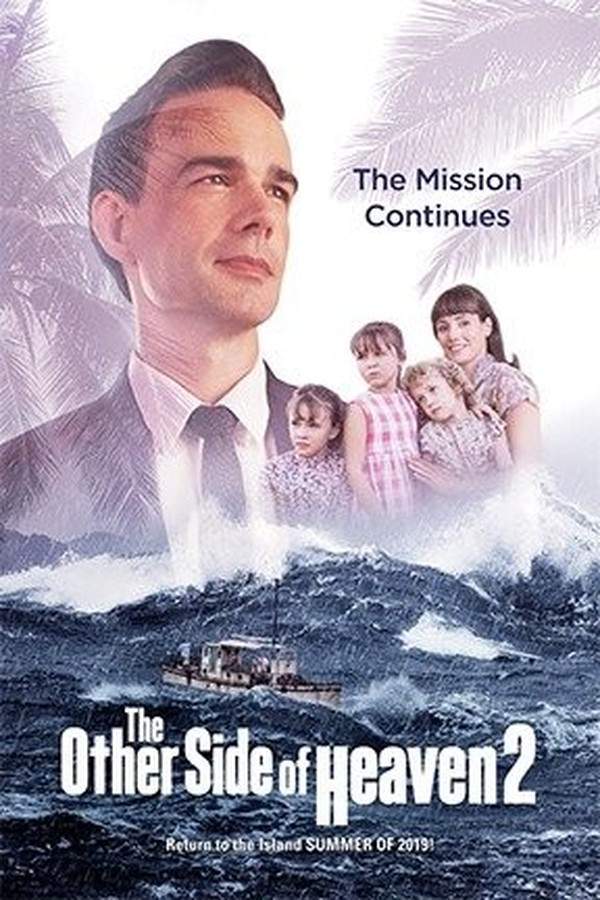
Set in the 1960s, a decade after the original Heaven film, John Groberg, Christopher Gorham, is appointed president of the Tonga–Fiji mission for The Church of Jesus Christ of Latter-day Saints. He returns to the Pacific islands where he once served as a young missionary, this time accompanied by his wife, Jean Groberg, Natalie Medlock, and their five daughters. The family begins a new chapter in Tonga, balancing duty, faith, and the intimate rhythms of island life as they settle into their role in the community.
Meanwhile, native Tongan minister Sione learns that his son, Toutai Paletu'a, Alex Tarrant, plans to be baptized into the Church and to pursue a missionary path himself. This news stirs fear and pride in Sione, who worries about losing influence and about the pace of change on the island. He becomes determined to curb the missionaries' progress, setting the stage for a clash of beliefs and ambitions that will test bonds that initially seemed unbreakable.
The conflict erupts in a dramatic moment on a sunlit beach. Sione’s fierce resolve leads him to bury Toutai neck-deep in sand as a storm roils at sea. A race against time ensues: Toutai’s life hangs in the balance while his brother races to dig him free, only to be struck by lightning in the attempt. Against all odds, Toutai miraculously survives, a turn of events that unsettles the island’s power dynamics and deepens the characters’ inner struggles, while also offering a glimmer of awe and possibility for those who believe in miracles.
Parallel to this, Jean Groberg gives birth to a sixth child, a son who arrives severely ill and cannot be transported off Tonga for the medical care he needs. In the same hospital, Sione’s son lies in a coma, reinforcing the shared vulnerability of the families involved. Across hospital wards and waiting rooms, the community responds with gifts, visits, and prayers as they navigate the mounting concerns over the newborn’s health and the ailing boy’s condition. The juxtaposition of these two fragile lives underscores how faith, compassion, and communal support sustain people through moments of profound fear and uncertainty.
As the days unfold, the two patriarchs—John Groberg and Sione—put aside their differences and find common ground in their shared concern for their sons. This act of reconciliation becomes a quiet, powerful thread running through a story about faith under pressure, the endurance of family, and the possibility of harmony when pride yields to compassion. The narrative invites viewers to witness how devotion to loved ones can bridge divides, transform neighborhoods, and illuminate the path toward understanding across cultures and beliefs.