Plot Explained Spoilers guaranteed!
Plot Explained

Browse by genre

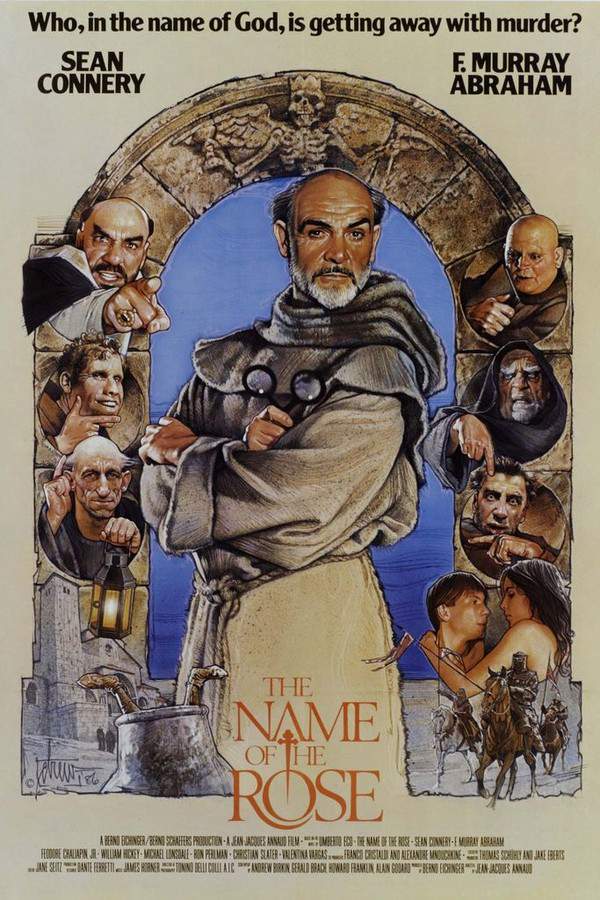
The Name of the Rose (1986) movie poster

Timeline

The Name of the Rose (1986) Timeline Explained – Every Event in Order

Release, runtime and language
1986 · 130 min · English
Loading streaming availability…
Directed by
Jean-Jacques Annaud
Starring
Sean Connery, Michael Lonsdale, Christian Slater, William Hickey, Elya Baskin, Feodor Chaliapin Jr.

In 14th-century Italy, a seasoned Franciscan friar and his young apprentice are dispatched to a remote mountain monastery to investigate a series of bizarre deaths. As they examine the abbey's extensive library and interview its inhabitants, they uncover a sinister plot involving forbidden knowledge and long-held secrets. Their investigation leads them deeper into a web of deceit, challenging their beliefs and endangering their lives as they race to expose the truth before more lives are lost.

On this page (8)
  1. 1 Where to watch
  2. 2 Events in order (14)
  3. 3 Timeline questions answered
  4. 4 The book behind the movie
  5. 5 Movie threads
  6. 6 Movies like The Name of the Rose
  7. 7 Categories
  8. 8 Every angle
Loading streaming availability…

14 events in order · contains spoilers

The Name of the Rose Timeline: Events in Chronological Order

Every key event of The Name of the Rose (1986) in order, scene by scene, with when and where it takes place. Use it to untangle flashbacks, time jumps and parallel storylines, to refresh your memory before the sequel or to find the exact scene you are thinking of.

  1. Arrival at the Abbey

    William of Baskerville and his novice, Adso of Melk, arrive at a Benedictine abbey in Northern Italy. They are welcomed into a complex environment filled with mystery, where tensions are high due to recent disturbing events.

    When
    Early 14th century
    Where
    Benedictine abbey, Northern Italy
  2. Investigation of the Suicide

    The abbey is dealing with the aftermath of a young illuminator's apparent suicide. William seeks permission from the Abbot to investigate the circumstances surrounding this unsettling event, which coincides with a significant theological Church conference.

    Where
    Benedictine abbey
  3. Emergence of Additional Deaths

    While William delves into the mystery, more unusual deaths occur within the abbey, prompting him to dig deeper into the dark secrets hidden within its walls. The increasing fatalities create an atmosphere of fear and uncertainty among the inhabitants.

    Where
    Benedictine abbey
  4. Encounter with Salvatore

    William and Adso meet Salvatore, a hunchback who communicates in fragmented languages. Salvatore's mention of a penitenziagite raises William's suspicions about a connection between the recent murders and potential heretical beliefs.

    Where
    Benedictine abbey
  5. Adso's Loss of Innocence

    Adso interacts with a peasant girl who has infiltrated the abbey, trading sexual favors for food. This encounter becomes a significant moment in Adso's life, marking a painful transition away from innocence and affecting his understanding of love.

    Where
    Benedictine abbey
  6. Discovery of the Forbidden Library

    William and Adso explore a concealed library within the abbey, discovering it to be one of the greatest collections in all Christendom. Containing lost works, particularly Aristotle’s writings, this library is shrouded in secrecy and conflict.

    Where
    Benedictine abbey, main tower
  7. Bernardo Gui's Arrival

    The investigation takes a turn with the arrival of Bernardo Gui, an Inquisition representative. Eager to impose his version of justice, Gui clashes with William, dismissing his investigative methods and accusing others of heresy.

    Where
    Benedictine abbey
  8. False Confessions and Tribunal

    Gui presses Salvatore and others into false confessions during a tribunal, showcasing his willingness to manipulate justice. William, reluctantly part of the panel, challenges the unfounded accusations, attempting to reveal the truth.

    Where
    Benedictine abbey
  9. Confrontation with Jorge

    William confronts Jorge, the oldest inhabitant of the abbey, who possesses the book that poses a philosophical threat. Jorge's belief that humor is a devilish tool leads to a dramatic confrontation over the dangerous knowledge contained within.

    Where
    Forbidden library, Benedictine abbey
  10. The Library Fire

    In a desperate act, Jorge ignites the library, leading to a catastrophic fire. William tries to save the invaluable texts but is forced to flee, witnessing the destruction of knowledge and the loss of the Poetics, among others.

    Where
    Forbidden library, Benedictine abbey
  11. Executions and Escapes

    Amidst the chaos from the library fire, Salvatore and Remigio are executed, showcasing the brutal consequences of the Inquisition's actions. The peasant girl is saved by local villagers who rise against Bernardo Gui.

    Where
    Benedictine abbey
  12. Gui's Downfall

    As the villagers revolt, Gui meets his demise when his wagon is overturned by the enraged mob. This incident marks a significant turn in the power dynamics of the abbey and symbolizes the collapse of Gui's authority.

    Where
    Nearby cliff
  13. Adso's Heartfelt Choice

    In a poignant moment, Adso is torn between staying with the peasant girl and continuing his journey with William. Ultimately, despite the emotional pull, he chooses to leave, signifying a departure from his youthful desires.

    Where
    Benedictine abbey
  14. Adso's Reflection

    In later years, Adso reflects on his experiences and the profound wisdom gained from William. He concludes that he has never regretted his decision to leave the abbey, recognizing the girl as a pivotal figure in his life, despite never knowing her name.

Last updated: November 15, 2024 at 19:40

Was this helpful?

Timeline questions answered

The Name of the Rose Timeline Explained: Your Questions Answered

When does it happen, and why in that order? The questions people ask about the chronology of The Name of the Rose (1986): time jumps, flashbacks, cause and effect between scenes and the correct order of events, each answered with spoilers.

Q1

Why were all the victims who died connected to Aristotle's Second Book of Poetics?

All the victims had read the only extant copy of Aristotle's Second Book of Poetics, which was hidden in the abbey's forbidden library. The monk Jorge had poisoned the pages of this particular book because he believed comedy and humor were tools of the Devil. Anyone who touched the poisoned pages while turning them would absorb the toxic substance through their fingers and eventually die, making the book the murder weapon.

Foreshadowing: The young illuminator's suicide at the beginning is later revealed to be an accidental death from handling the poisoned manuscript.

  • poetics
  • aristotle
  • poisoned book
  • jorge
  • library deaths
Q2

Why did Jorge poison the book in the library?

Jorge, the abbey's oldest monk, believed that comedy and humor were tools of the Devil that could corrupt Christian teaching. He considered Aristotle's Second Book of Poetics dangerous because it discussed comedy as a legitimate art form. Rather than allow this knowledge to spread, he poisoned the pages with a toxic substance to ensure anyone who read it would die, effectively destroying the ideas he feared.

Foreshadowing: Jorge's strong opposition to humor is evident throughout the investigation, particularly in his reactions to any mention of comedy.

  • jorge
  • comedy
  • poison
  • forbidden knowledge
  • heresy
Q3

How did William of Baskerville identify Jorge as the murderer?

William deduced that the murderer must have been able to read Greek, since the poisoned book was written in Greek and required someone to handle it while reading. This skill was possessed only by the oldest monks, and Jorge was the most learned among them. Additionally, William realized that only someone with access to the forbidden library and deep knowledge of its contents could have orchestrated the deaths in a way that pointed to the Poetics.

Foreshadowing: William notes early on that the deaths seem connected to the library's most dangerous texts, narrowing the suspects to those with scholarly access.

  • william of baskerville
  • jorge
  • greek
  • murder investigation
  • deduction
Q4

Why did Bernardo Gui target Salvatore and Remigio instead of finding the real killer?

Bernardo Gui was more interested in demonstrating his authority and rooting out heresy than in solving the actual murders. When he witnessed Salvatore struggling with the girl over a black cockerel alongside a black cat, he used this as fabricated evidence of a satanic pact. Gui forced false confessions from both Salvatore and Remigio, coercing the Abbot into supporting his heresy accusations despite William's protests that neither suspect could read Greek.

Foreshadowing: Gui's arrival signals a shift from rational investigation to religious persecution, foreshadowing the tragedy to come.

  • bernardo gui
  • inquisition
  • salvatore
  • remigio
  • false confession
Q5

Why was the abbey's library forbidden and hidden?

The library contained one of the greatest collections of knowledge in Christendom, including lost works from Classical thinkers like Aristotle. However, these texts were considered incompatible with Christian teachings and were deliberately hidden from general access. Only the most senior monks were permitted to enter, and the library was located within the forbidden main tower, making it a place of dangerous forbidden knowledge.

Foreshadowing: William's initial curiosity about the abbey's library hints at its significance long before the full truth is revealed.

  • forbidden library
  • aristotle
  • secret books
  • monastery
Q6

What happened to the peasant girl at the end of the movie?

The peasant girl was sentenced to death by fire as part of the Inquisition's heresy charges. However, she was saved during the chaos that erupted when the library caught fire. Local peasants, already angry about the Church's oppression, rose up against Gui and his men. During this revolt, the girl was liberated by the villagers who also killed Bernardo Gui by overturning his wagon over a cliff.

Foreshadowing: Adso's intimate encounter with the girl earlier establishes her as someone the peasants would rally to protect.

  • peasant girl
  • rescued
  • villagers
  • escape
Q7

Why did Jorge set fire to the library?

When William confronted Jorge in the forbidden library and was about to expose his crimes, Jorge chose to destroy the library rather than allow its contents to be revealed. Rather than surrender the poisoned book or see the forbidden knowledge fall into the hands of those he considered unworthy, Jorge lit a candle that set the entire library ablaze. This act destroyed the priceless collection, including Aristotle's Poetics, and cost Jorge his own life.

Foreshadowing: Jorge's extreme devotion to suppressing knowledge foreshadows his willingness to sacrifice everything, including the library itself.

  • jorge
  • library fire
  • destruction
  • forbidden knowledge
Q8

Why did Adso choose to leave with William instead of staying with the girl?

When the girl silently urged Adso to stay with her, Adso faced a choice between his earthly love and his spiritual journey with William. Despite his strong emotional pull toward the girl, whom he would later reflect on as the singular earthly love of his life, Adso chose to continue his apprenticeship with William. He later stated he never regretted this decision, having gained profound wisdom from his mentor.

Foreshadowing: Adso's loss of innocence earlier marks his transition from boy to man, making this final choice a culmination of his character arc.

  • adso
  • girl
  • choice
  • departure
  • regret
Q9

What was the significance of Salvatore mentioning the penitenziagite?

When Salvatore mentioned the penitenziagite, it revealed his past involvement with a heretical sect. William recognized this term as referring to a radical apocalyptic group that had been repressed years earlier. This connection initially made Salvatore and his protector Remigio suspects in the murders, though William later proved their innocence regarding the actual killings.

Foreshadowing: Salvatore's fragmented speech and mysterious background create initial suspicion that misdirects the investigation.

  • salvatore
  • penitenziagite
  • heresy
  • heretical sect
Q10

Why did Bernardo Gui arrive at the abbey?

Bernardo Gui arrived at the abbey because a significant theological Church conference was taking place, and as an Inquisition representative, he had been summoned to address matters of heresy. His presence coincided with the investigation into the deaths, and he immediately clashed with William of Baskerville, dismissing William's rational methods in favor of forcing confessions and pursuing his own agenda.

Foreshadowing: The mention of the upcoming Church conference at the beginning establishes why the abbey is under heightened scrutiny.

  • bernardo gui
  • inquisition
  • church conference
  • heresy
Q11

What caused the young illuminator's death that started the investigation?

The young illuminator's death, initially thought to be a suicide, was actually the first victim of the poisoned book. He had been handling manuscripts in the library and inadvertently came into contact with the poisoned pages of Aristotle's Second Book of Poetics. His death appeared as a suicide because he had reportedly been behaving strangely, which was actually an early symptom of the poison.

Foreshadowing: William notes the unusual circumstances of the illuminator's death from the very beginning of the investigation.

  • illuminator
  • suicide
  • poison
  • first death
Q12

How did Bernardo Gui die?

Bernardo Gui was killed when his wagon was overturned over a cliff by an angry mob of local peasants. The villagers, already resentful of the Church's oppression and the recent executions, rose up in revolt during the chaos of the library fire. They seized the opportunity to attack Gui and his men, ending his life in a violent act of retribution.

Foreshadowing: The growing tension between the abbey and the surrounding peasant community foreshadows their violent uprising.

  • bernardo gui
  • death
  • villagers
  • revolt
  • cliff

Movie threads

More Movies Like The Name of the Rose, by Mood & Story

Curated lists built around what makes The Name of the Rose tick: the same mood, the same kind of story or the same emotional payoff. Each list explains why these movies belong together.

Cloistered Mysteries Like The Name of the Rose

Where an investigation uncovers secrets in a sealed-off, authoritarian society. If you liked the intellectual detective work in The Name of the Rose, explore more movies where a sharp-minded investigator uncovers dangerous truths within a sealed-off society. These films share a claustrophobic, atmospheric setting and a plot driven by philosophical inquiry and hidden knowledge.

  • claustrophobic
  • intellectual
  • suspenseful
  • atmospheric
  • philosophical
  • grim
  • Tone: dark, suspenseful, philosophical
  • Pacing: steady, methodical
Why these movies?

The story pattern: The narrative follows a logical, often methodical investigation into a series of unsettling events within a highly controlled environment. The protagonist, usually an outsider or a skeptic, must navigate complex social hierarchies and ideological dogma to expose a truth that the powers-that-be wish to keep buried. The central conflict is often between reason and dogma, or individual inquiry and collective authority.

Why they belong together: Movies are grouped here for their shared core structure: a cerebral mystery set against the backdrop of an insular, rule-bound society. They prioritize atmosphere and intellectual tension over physical action, creating a suspenseful experience rooted in the pursuit of forbidden knowledge.

Bittersweet Investigative Dramas Like The Name of the Rose

Stories where uncovering a grim truth leaves profound scars. For viewers who appreciated the heavy emotional toll and melancholic resolution of The Name of the Rose, this section gathers movies about investigations that uncover painful truths. These stories often end on a bittersweet note, where the solution comes at a significant personal or philosophical cost.

  • melancholic
  • grim
  • philosophical
  • heavy
  • atmospheric
  • suspenseful
  • Tone: dark, melancholic, heavy
  • Pacing: steady, deliberate
Why these movies?

The story pattern: The narrative arc is one of descent and revelation. The protagonist begins with a clear mission but becomes increasingly burdened by the grim nature of their discoveries. The climax resolves the central mystery but often at the expense of the character's peace of mind or cherished beliefs, resulting in an ending that is emotionally resonant and far from purely triumphant.

Why they belong together: This thread connects films based on their shared emotional journey: a serious investigation that leads to a bittersweet or morally ambiguous conclusion. The focus is on the heavy emotional weight and the lasting impact of the truth on the protagonist, creating a thoughtful and melancholic viewing experience.

If you liked this

Movies Like The Name of the Rose

Similar movies to The Name of the Rose: the same genre, themes or kind of story. Each one comes with its own plot summary, timeline and ending explained.

Browse all movie summaries

Categories

Movie Lists Featuring The Name of the Rose

The Name of the Rose appears in these hand-built movie categories. Each one groups movies by a specific mood, theme or story type, with their plot summaries and endings explained.

View all movie categories

Every angle

The Name of the Rose (1986) Explained: Plot, Timeline & Characters

Everything about The Name of the Rose in one place: what happens in the plot summary, the timeline in chronological order, the characters and meaning and a spoiler-free summary. What's After the Movie adds the cast, box office and post-credit scenes.

Coming soon on iOS and Android

The Plot Explained Movie Summary App

Plot summaries, endings explained and timelines on your phone. Catch up on any movie in minutes, save your favorites and never miss a twist again.

Be the first to know when we launch. Your email stays private, always.

Learn more about the app