Plot Explained Spoilers guaranteed!
Plot Explained

Browse by genre

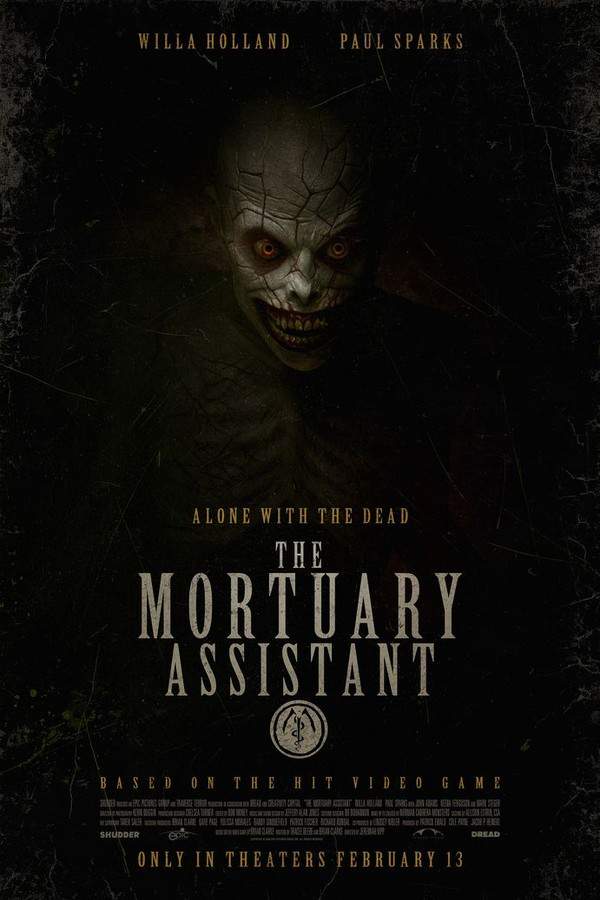
The Mortuary Assistant (2026) movie poster

Plot Summary

The Mortuary Assistant (2026) Plot Summary & Ending Explained

Release, runtime and language
2026 · 1 h 31 m · English
Echo score 30
JustWatch #4,803 122
Directed by
Jeremiah Kipp
Starring
Paul Sparks, Emily Bennett, John Adams, Mark Steger, Willa Holland, Keena Ferguson
Budget
$18M

Rebecca Owens, a newly minted mortuary science graduate, accepts a night shift at River Fields Mortuary. What starts as a routine custodial job quickly devolves into a nightmare, as she confronts terrifying supernatural forces and a malevolent presence that turns the quiet mortuary into a house of horror.

On this page (6)
  1. 1 Where to watch
  2. 2 What happens: full plot
  3. 3 Plot questions answered
  4. 4 How it ends
  5. 5 Movie threads
  6. 6 Every angle

Where to watch

Where to Watch The Mortuary Assistant (2026)

Where can you watch The Mortuary Assistant? Stream, rent or buy it in the US, including on AMC+, Philo and Shudder: current JustWatch availability with up-to-date prices.

Streaming availability powered by JustWatch

Full plot summary · contains spoilers

What Happens in The Mortuary Assistant: Full Plot Summary

The whole story of The Mortuary Assistant (2026) explained, from the opening scene to the final frame: every key event, every twist and what it all adds up to. Read it as a quick recap before the sequel, to check a scene you missed, or to finally understand what really happened.

Rebecca, Willa Holland is a woman with a troubled past who has taken a job at a mortuary. After earning her one-year sober chip from Narcotics Anonymous, her boss, Paul Sparks Delver, calls her to work the night shift. Rebecca embalms a body and then burns it, quietly questioning why both steps are necessary as she begins to sense something is off. Soon, strange things creep into her world: a shadowy figure flickers at the edge of her vision and the line between reality and nightmare grows uncomfortably thin. She drifts between the quiet aisles of the mortuary and a string of unsettling visions that won’t leave her alone.

She returns home to a disruption she can’t quite explain. Her sponsor, Kelly appears at the door in a state of urgency, claiming Rebecca called and asked her to come over, yet Rebecca has no memory of making that request. This fracture in memory and control marks a turning point; Rebecca’s eyes take on a unnerving yellow glow, and fear gives way to violence as she attacks and kills Kelly with a corkscrew through the temple. The moment is harrowing, and the aftermath leaves Rebecca grappling with a truth she hasn’t earned: something in the mortuary has followed her home.

The caller on the other end of the line is Raymond Delver, Rebecca’s boss, Paul Sparks again, who insists that the mortuary is safer and who promises to explain everything later. As Rebecca trades worried words with him, Kelly’s figure seems to return—standing just outside the doorway for a heartbeat, then vanishing—as if the boundaries between life, death, and the supernatural are collapsing around her. Rebecca rushes back to the mortuary, where Raymond awaits and begins to outline what is happening and what she must do, all while her eyes pulse with that same yellow light. A brutal cycle resumes: she lashes out at Raymond, who narrowly escapes and bolts the doors, trapping her inside.

Alone inside the quiet rooms, Rebecca wanders in a haze and briefly encounters the memory of her deceased father, a presence that adds weight to her fear. Raymond steadies the moment by speaking through the phone again, directing her to cut the wrist of a body and burn it. Rebecca obeys, but the visions persist and intensify. She repeatedly hallucinates as Raymond’s guidance shifts—from a steady mentor to a chilling, almost manipulative voice that pushes her toward ever darker acts.

Seeking control, Rebecca uncovers tapes in the basement. In them, Raymond explains that a ritual is needed to stop the demons: they must be embalmed with a reagent and burned. The reagent, it is revealed, is the blood of a woman Raymond has locked in a box. With this forbidden knowledge, Rebecca confronts a new layer of danger and begins to perform the act he prescribes. She places a tablet bearing the demon’s name on a cadaver as the entity within begins to question her, and then she carries out the burning, attempting to sever the connection that has menaced her mind.

Morning finds Rebecca awake in the mortuary and driven to release the woman locked in the box. With bolt cutters in hand, she frees the woman, who immediately hurls accusations at Rebecca. Raymond reappears, revealing a tattoo on his chest that seems to enforce the woman’s fear. He explains that the woman isn’t merely dead—she died long ago—and that her blood is needed to prevent further deaths. He cautions Rebecca that she will never be free of the demons, but he offers a chance to learn to live above the fear.

As Rebecca steps outside, she allows herself a wary, uneasy smile at ordinary life in a nearby park. People go about their days, but a second glance reveals something else: a demonic figure watches from the brush, grinning at her. She looks back for a fleeting moment before returning to the mortuary, where the line between her fragile autonomy and the forces that haunt her remains perilously uncertain.
Last updated: May 05, 2026 at 10:08

Was this helpful?

Plot questions answered

The Mortuary Assistant Plot Explained: Your Questions Answered

The questions people ask most about The Mortuary Assistant (2026): what happens in the confusing scenes, why the characters do what they do, the twists, hidden details and what the ending means. Each answer contains spoilers.

Q1

Why does Rebecca's eyes turn yellow during her shift?

Rebecca's eyes turn yellow as a result of demonic possession. The supernatural entity haunting the mortuary has latched onto her, and the yellow glow signals when the demon's influence takes hold of her body and mind. This physical transformation coincides with her violent outbursts and loss of control.

Foreshadowing: Earlier in her shift, Rebecca notices shadowy figures flickering at the edge of her vision, hinting at the supernatural presence beginning to侵入 her consciousness.

  • demonic possession
  • yellow eyes
  • rebecca
  • supernatural
Q2

Why does Rebecca attack and kill Kelly with a corkscrew?

Rebecca kills Kelly because she is under demonic possession at that moment. When Kelly arrives at her door, Rebecca's eyes glow yellow and she loses all control over her actions. The demon uses Rebecca's body to commit violence, though Rebecca herself has no memory of making the call that brought Kelly there.

Foreshadowing: Rebecca's memory gaps and the mysterious phone call she doesn't remember making foreshadow her loss of bodily autonomy.

  • kelly
  • corkscrew
  • murder
  • possession
  • loss of control
Q3

What is the ritual involving embalming and burning bodies?

The ritual involves first embalming a body with a special reagent, then burning it to destroy the demon possessing that corpse. Raymond explains this through basement tapes - the demon must be bound to a body, treated with the reagent (which is human blood), and then incinerated to sever its connection to the living world.

Foreshadowing: Rebecca questions why both embalming and burning are necessary early in her shift, foreshadowing that these procedures serve a supernatural purpose beyond standard mortuary work.

  • ritual
  • embalming
  • burning
  • demons
  • reagent
Q4

Who is Raymond Delver and what is his role in the story?

Raymond Delver is Rebecca's boss at the mortuary who knows about the demonic activity. He instructs Rebecca through the phone throughout the night, guiding her through the ritual to stop the demons. However, his motives are ambiguous - he keeps a woman locked in a box to harvest her blood as the reagent, suggesting he has been involved in this dark practice for some time.

Foreshadowing: Raymond's phone call immediately after Kelly's death, where he claims the mortuary is safer, reveals he has dealt with these demons before.

  • raymond delver
  • boss
  • mortuary
  • ritual guide
Q5

Why is there a woman locked in a box in the mortuary?

The woman locked in a box is being held as a source for the ritual reagent - her blood. Raymond explains that her blood is needed to perform the demon-banishing ritual and prevent further deaths. She is not merely dead but has been held captive for a long time, her blood periodically harvested for the ritual.

Foreshadowing: The basement tapes reveal that the reagent must come from a woman's blood, foreshadowing the discovery of the imprisoned woman.

  • woman
  • box
  • blood
  • reagent
  • captive
Q6

What does the tablet with the demon's name do?

The tablet bearing the demon's name is used to bind the demon to a specific body during the ritual. When Rebecca places the tablet on a cadaver and burns it, the demon is drawn to that vessel, allowing the ritual to sever its connection to Rebecca and the living world. The demon itself questions her about the tablet, indicating its significance.

Foreshadowing: Raymond's instructions to place a tablet on a body connects to earlier mentions of needing something to direct the ritual.

  • tablet
  • demon name
  • ritual
  • binding
Q7

What is the significance of Rebecca seeing her deceased father's vision?

Rebecca encounters a vision of her deceased father while wandering through the mortuary, suggesting the demons are using her past trauma against her. This encounter adds emotional weight to her situation and indicates her personal history of loss is being exploited by the supernatural force. It also hints that her father's death may be connected to the demonic activity.

Foreshadowing: The meta notes mention Rebecca deals with past trauma, which the demon leverages during her possession.

  • father
  • vision
  • trauma
  • memory
Q8

Why does Rebecca attack Raymond at the mortuary?

Rebecca attacks Raymond because the demonic possession surges within her during their confrontation. Her eyes turn yellow again as the entity within takes control, causing her to berate and physically assault the one person who seems to be helping her. Raymond narrowly escapes and seals her inside, trapping her with the demon's influence.

Foreshadowing: Rebecca's earlier violent outburst against Kelly foreshadows her inability to control the demon's impulses.

  • raymond
  • attack
  • possession
  • violence
Q9

What does the ending with the demon watching from the brush mean?

The ending suggests Rebecca has not truly escaped the demon's influence. Even after performing the ritual and returning to what seems like ordinary life, a demonic figure watches her from the brush with a grin. This implies the ritual may have only temporarily weakened the demon rather than eliminating it, leaving Rebecca in a state of uneasy coexistence with supernatural forces.

Foreshadowing: Raymond's warning that she will never be free of the demons foreshadows this ambiguous ending.

  • ending
  • demon
  • watching
  • ambiguous
  • threat
Q10

Why does Rebecca have no memory of calling Kelly?

Rebecca's memory fails her because the demonic possession is already active, causing gaps in her consciousness. The demon appears to be using her body even when she's unaware, making phone calls and manipulating situations while she has no control or memory. This fracture in her memory and control is a key sign of the supernatural invasion.

Foreshadowing: The subtle strange occurrences during her shift, like shadowy figures, hint at the demon's early infiltration of her mind.

  • memory loss
  • gaps
  • possession
  • unconscious
Q11

How does Rebecca's sobriety relate to the story?

Rebecca's recent one-year sobriety from Narcotics Anonymous establishes her as someone trying to reclaim control over her life. The story parallels this struggle with her battle against demonic possession - both involve fighting for autonomy over one's body and mind. The demon preys on her vulnerability, making her recovery journey part of the horror narrative.

Foreshadowing: The meta notes explicitly mention addiction as a key emotional weight in the story.

  • sobriety
  • addiction
  • narcotics anonymous
  • recovery

Ending explained

What Happens at the End of The Mortuary Assistant?

How The Mortuary Assistant (2026) ends, in short: the final scene, the last twist and what it means for the characters. The full ending explained, with every spoiler, lives on its own page.

Read the full ending explained

The ending of The Mortuary Assistant resolves Rebecca's immediate supernatural ordeal while leaving her with a sobering realization: there is no true escape from the darkness that has attached itself to her. After successfully performing the ritual to banish the demon—injecting the blood of the possessed into a marked corpse and cremating it—Rebecca believes the worst is over. She even attempts to free Vallery, Raymond's partner, from her confinement in the basement. However, this act of mercy nearly backfires, as Vallery is still possessed. Raymond intervenes just in time, using sacred tattoos on his chest to force the entity back into containment.

What follows is a series of painful truths. Raymond confesses that Vallery died long ago; he has been keeping her body alive only to harvest her blood, the essential "reagent" needed to perform the banishment ritual. Without it, neither he nor Rebecca would have survived. He also reveals that Rebecca is not the first assistant he has guided through this nightmare—others before her succumbed to possession and had to be destroyed. But Raymond sees something different in Rebecca. She is strong enough to endure, and he asks her to stay and help him find a permanent solution. The current ritual is merely a temporary measure, and the demonic forces will continue to hunt her wherever she goes.

Continue reading the ending (3 more paragraphs)

This supernatural predicament becomes deeply personal when Rebecca confronts the trauma that has haunted her for years. Throughout the film, fragments of memory surface involving her father's death. In the end, the truth becomes clear: years ago, her father had come to retrieve her from a drug-induced haze. In that vulnerable moment, a demonic presence appeared. Her father fell and suffered a fatal head injury, and Rebecca has carried the guilt ever since. In the mortuary's basement, she experiences a vision of her father urging her to forgive herself. This confrontation is not just emotional—it is essential. The demon exploits fear and guilt, and only by accepting her past can Rebecca loosen its hold on her soul.

When she steps outside, hoping to leave the horror behind, she sees a demonic figure waiting across the street. The message is unambiguous: running away will not work. The entities will follow. Raymond's warning proves true—this is not a battle she can win alone. She walks back inside and agrees to help him find a way to end the cycle for good.

The film closes on a note of grim determination. Rebecca realizes she will never be truly free, but she can choose to become unbreakable. By facing the darkest parts of herself and standing with Raymond, she commits to a path where she fights rather than flees. The ending leaves open the possibility of a sequel, promising further exploration of Rebecca's journey and the mysteries Raymond has yet to share.

The Mortuary Assistant ending explained in full

Movie threads

More Movies Like The Mortuary Assistant, by Mood & Story

Curated lists built around what makes The Mortuary Assistant tick: the same mood, the same kind of story or the same emotional payoff. Each list explains why these movies belong together.

Claustrophobic psychological horror movies like The Mortuary Assistant

Trapped protagonists battling supernatural forces and their own unraveling sanity. If you liked the intense, isolated terror of The Mortuary Assistant, explore more movies about characters trapped in a single location, battling supernatural forces and their own psychological unraveling. These films share a high-intensity, dark tone and a heavy emotional weight.

  • claustrophobic
  • paranoid
  • unsettling
  • oppressive
  • nightmarish
  • sinister
  • Tone: dark, paranoid, unsettling
  • Pacing: variable, shifting between slow dread and fast bursts
Why these movies?

The story pattern: These stories typically follow a single protagonist or a small group who become trapped in a confined space, often at night. A malevolent supernatural or psychological force systematically torments them, blurring the lines between reality and nightmare and forcing a confrontation with personal demons, often leading to an ambiguous or bleak resolution.

Why they belong together: They are grouped by their shared core experience: an overwhelming sense of claustrophobic dread, a focus on psychological torment over physical threat, and a narrative that explores the fragility of the human mind when isolated and attacked by unseen forces.

Movies about supernatural descent into madness like The Mortuary Assistant

Characters whose reality is distorted by a sinister, otherworldly presence. Fans of The Mortuary Assistant's reality-bending horror will find more movies here about protagonists whose sanity is attacked by demonic forces. These stories feature heavy emotional weight, dark tones, and often ambiguous, unsettling endings.

  • unsettling
  • reality distortion
  • psychological torment
  • demonic
  • sinister
  • paranoid
  • Tone: dark, sinister, nightmarish
  • Pacing: variable, building unease
Why these movies?

The story pattern: The narrative pattern involves an initially grounded protagonist who encounters a supernatural force that specializes in psychological manipulation. Through visions, possessions, and reality-warping events, the entity systematically breaks down the protagonist's psyche, leading them on a terrifying journey where they can no longer trust their own senses or memories.

Why they belong together: This thread connects films based on a specific type of horror: the terror of losing one's mind to an external, demonic influence. They share a high intensity, a dark and oppressive tone, and a core theme of psychological distortion and torment.

Every angle

The Mortuary Assistant (2026) Explained: Plot, Ending, Timeline & Characters

Everything about The Mortuary Assistant in one place: what happens in the plot summary, the timeline in chronological order, the characters and meaning, the ending explained and a spoiler-free summary. What's After the Movie adds the cast, box office and post-credit scenes.

Coming soon on iOS and Android

The Plot Explained Movie Summary App

Plot summaries, endings explained and timelines on your phone. Catch up on any movie in minutes, save your favorites and never miss a twist again.

Be the first to know when we launch. Your email stays private, always.

Learn more about the app