










Plot Explained Spoilers guaranteed!
Plot Explained

Browse by genre

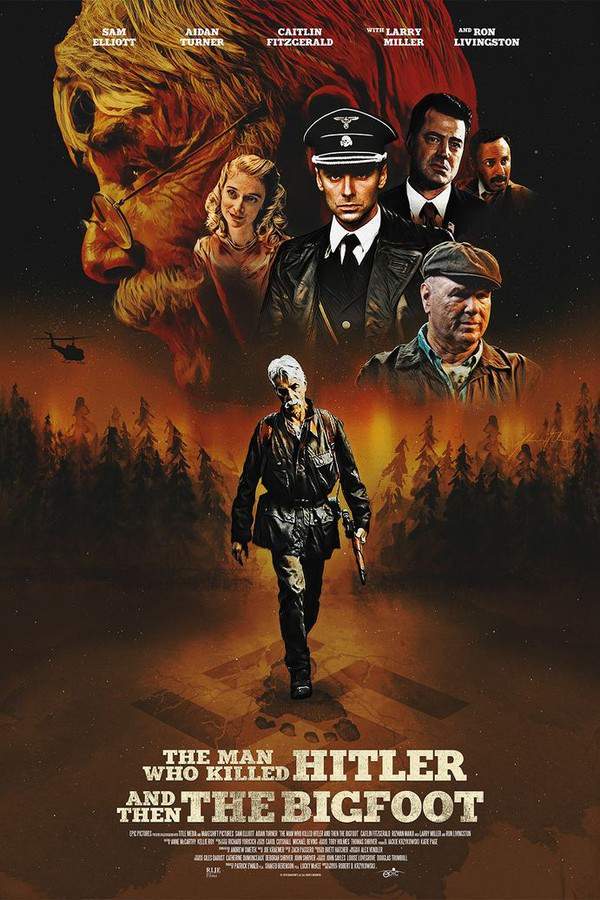
The Man Who Killed Hitler and Then The Bigfoot (2019) movie poster

Timeline

The Man Who Killed Hitler and Then The Bigfoot (2019) Timeline Explained – Every Event in Order

Release, runtime and language
2019 · 98 min · English
Echo score 55
JustWatch #2,485 16
Directed by
Robert D. Krzykowski
Starring
Ron Livingston, Sam Elliott, Caitlin Fitzgerald, Rizwan Manji, Aidan Turner, Ellar Salmon

A World War II veteran, Calvin Barr, is called back into action when Bigfoot unleashes a deadly plague that could devastate the world. Haunted by his covert wartime experiences, Calvin must confront the monstrous creature and stop the outbreak. He draws upon his military skills and wartime experience to save humanity from this unprecedented threat.

On this page (6)
  1. 1 Where to watch
  2. 2 Events in order (15)
  3. 3 Timeline questions answered
  4. 4 Movie threads
  5. 5 Movies like The Man Who Killed Hitler and Then The Bigfoot
  6. 6 Every angle

Where to watch

Where to Watch The Man Who Killed Hitler and Then The Bigfoot (2019)

Where can you watch The Man Who Killed Hitler and Then The Bigfoot? Stream, rent or buy it in the US, including on Philo, Hoopla and Fandango at Home Free: current JustWatch availability with up-to-date prices.

Streaming availability powered by JustWatch

15 events in order · contains spoilers

The Man Who Killed Hitler and Then The Bigfoot Timeline: Events in Chronological Order

Every key event of The Man Who Killed Hitler and Then The Bigfoot (2019) in order, scene by scene, with when and where it takes place. Use it to untangle flashbacks, time jumps and parallel storylines, to refresh your memory before the sequel or to find the exact scene you are thinking of.

  1. Calvin Reflects on Life

    In 1987, Calvin Barr reflects on his life as the sun sets, feeling the weight of his past and a sense of resignation. His thoughts drift back to his experiences as a World War II special ops soldier, highlighting a profound emptiness left by his unrecognized achievements.

    When
    1987
  2. World War II Mission

    Barr recalls his daring mission to eliminate Adolf Hitler during World War II, a classified operation that brought him little glory. Despite the gravity of his actions, he is haunted by the realization that it did not have the impact he had hoped for.

  3. Visit to Brother Ed

    To escape his melancholic thoughts, Barr visits his brother Ed at a cozy barbershop. Their light conversations offer him a momentary respite and comfort from the burdens of his past.

    Where
    Barbershop
  4. Threat from Thugs

    Barr's routine is abruptly disrupted when a group of thugs threatens him for his vehicle. This encounter serves as a reminder of the dangers lurking around him, further complicating his already tumultuous life.

  5. Government Agents' Revelation

    Mysterious government agents, working on a joint mission between the U.S. and Canada, approach Barr with alarming news. They reveal a rapidly spreading virus that threatens to wipe out all life on Earth and believe he is uniquely suited to combat it due to his rare immunity.

  6. The Quest for Bigfoot

    The agents inform Barr that Bigfoot is at the center of the viral threat, and he must track down the creature to save humanity. Thus, Barr sets off on a treacherous journey into the wilderness with his loyal dog.

    Where
    Wilderness
  7. First Encounter with Bigfoot

    During his expedition, Barr has his first encounter with the elusive Bigfoot. In a tense moment, he is able to wound the creature, setting the stage for a deeper moral confrontation with his own conscience.

    Where
    Wilderness
  8. Moral Dilemma

    After cornering the injured Bigfoot, Barr faces a profound moral dilemma. Despite the orders to capture or kill it, he decides to cremate the creature, feeling a deep sympathy for its suffering without realizing the consequences of his compassionate choice.

    Where
    Wilderness
  9. Barr's Near-Death Experience

    Following his decision, Barr becomes severely wounded and is left on the brink of death. In a poignant moment, his life flashes before his eyes, confronting the ghosts of his past as he struggles for survival.

  10. Ed's Eulogy

    At a somber funeral, Ed delivers a heartfelt eulogy for his brother, unaware that Barr is still alive. This moment underscores the deep bond between the brothers despite the tragic circumstances.

  11. Fishing with Barr's Dog

    Time passes and Ed is seen fishing with Barr's devoted canine companion. This serene moment contrasts with the chaos of Barr’s life, emphasizing the enduring connection between the brothers.

    Where
    River
  12. Barr's Secret Return

    After a period of secretive healing, Barr reemerges to reunite with Ed by the river. Their reunion brings a sense of closure and reconnects them through their shared experiences.

    Where
    River
  13. Facing the Past

    Now at peace after thwarting the viral threat, Barr confronts the ghosts that have haunted him throughout his life. This pivotal moment allows him to reconcile with his decisions and find solace.

  14. Unveiling the Coffin

    In an emotional and symbolic gesture, Barr retrieves a mysterious box from his own coffin, which represents his past life. This act signifies a turning point where he embraces his history and moves forward.

  15. Walking into the Sunset

    With his spirit finally at rest, Barr walks off into the sunset, embodying a sense of fulfillment and acceptance. This poignant ending encapsulates his journey of redemption and newfound peace.

Last updated: November 19, 2024 at 18:31

Was this helpful?

Timeline questions answered

The Man Who Killed Hitler and Then The Bigfoot Timeline Explained: Your Questions Answered

When does it happen, and why in that order? The questions people ask about the chronology of The Man Who Killed Hitler and Then The Bigfoot (2019): time jumps, flashbacks, cause and effect between scenes and the correct order of events, each answered with spoilers.

Q1

Why was Barr the only person who could stop Bigfoot?

Barr was chosen because he possesses a rare immunity to the virus that Bigfoot carries. The government agents explain that due to his unique immunity and his exceptional combat skills from his WWII special ops background, he is the only person capable of tracking down and confronting the creature without being infected himself.

  • immunity
  • virus
  • bigfoot
  • government
  • selected
Q2

Why does Barr cremate Bigfoot instead of turning it over to authorities?

After cornering the injured Bigfoot, Barr experiences a deep moral conflict. He feels profound sympathy for the creature's suffering and chooses to spare it a painful death by cremation rather thanhanding it over to the authorities. He does not realize this compassionate act will have serious consequences.

  • bigfoot
  • cremation
  • mercy
  • moral dilemma
  • compassion
Q3

Did Barr actually kill Adolf Hitler during World War II?

Yes, Barr undertook a classified special ops mission during World War II to eliminate Adolf Hitler. The mission was successful, but because it was top-secret, he never received recognition or glory for it. This unacknowledged act haunts him throughout his life, contributing to his profound sense of emptiness.

  • hitler
  • world war 2
  • mission
  • classified
  • secret
Q4

What is the connection between Bigfoot and the deadly virus?

Bigfoot is revealed to be the source of a mysterious virus that is rapidly spreading and threatens to wipe out all life on Earth. The joint U.S.-Canada government operation believes Bigfoot carries or is the carrier of this catastrophic pathogen, making the creature the center of the global threat.

  • bigfoot
  • virus
  • pandemic
  • threat
  • outbreak
Q5

How did Barr survive his near-death experience in the wilderness?

After being severely wounded following his encounter with Bigfoot, Barr was left on the brink of death. The exact details of his recovery are not shown, but he secretly healed away from everyone. Ed delivered a funeral eulogy believing Barr was dead, not knowing he had survived in secret.

  • wound
  • survival
  • death
  • recovery
  • healing
Q6

Why does Barr feel empty and disappointed despite killing Hitler?

Barr feels empty because his most significant achievement, killing Hitler, was a classified operation that never earned him recognition or public acknowledgment. Despite saving the world, he lived in anonymity, and this lack of validation left him with a profound sense of purposelessness that colors his entire present-day existence.

  • emptiness
  • regret
  • legacy
  • recognition
  • sacrifice
Q7

What is in the box that Barr retrieves from his own coffin?

The box contains mementos from Barr's past life and his previous identity. At the film's emotional climax, Barr unearths his own coffin to retrieve this mysterious box, which represents his hidden history and former self before he walks away at peace.

  • coffin
  • box
  • past
  • closure
  • symbolism
Q8

Does Barr reunite with his brother Ed after the Bigfoot mission?

Yes, Barr secretly survives his injuries and eventually returns to reunite with his brother Ed by the river. Their reunion brings emotional closure, with the two brothers reconnecting through their shared trials. Ed had previously mourned Barr at a funeral, unaware he was still alive.

  • ed
  • brother
  • reunion
  • river
  • family
Q9

Why are thugs pursuing Barr at the barbershop?

A group of thugs pursues Barr for his vehicle, disrupting his peaceful routine at the barbershop. This incident, combined with the appearance of government agents, marks the end of Barr's quiet civilian life and pulls him back into dangerous action.

  • thugs
  • barbershop
  • chase
  • vehicle
  • danger
Q10

What happens to Barr's dog during the Bigfoot mission?

Barr's faithful dog accompanies him on his expedition into the wilderness. After Barr is wounded and presumed dead, Ed later goes fishing with Barr's devoted canine companion, indicating the dog survived and was cared for by Ed during Barr's absence.

  • dog
  • wilderness
  • companion
  • fishing
  • ed

Movie threads

More Movies Like The Man Who Killed Hitler and Then The Bigfoot, by Mood & Story

Curated lists built around what makes The Man Who Killed Hitler and Then The Bigfoot tick: the same mood, the same kind of story or the same emotional payoff. Each list explains why these movies belong together.

Movies about reluctant heroes like The Man Who Killed Hitler and Then The Bigfoot

Aging warriors confront final missions while haunted by past sacrifices. If you enjoyed the melancholic journey of Calvin Barr, explore movies featuring aging or world-weary protagonists on a final, lonely mission. These character-driven stories focus on the weight of the past and bittersweet redemption, offering a similar blend of reflective drama and atmospheric adventure.

  • melancholic
  • wistful
  • lonely
  • reflective
  • resigned
  • atmospheric
  • Tone: melancholic, bittersweet, reflective
  • Pacing: slow, contemplative
Why these movies?

The story pattern: The narrative typically follows a hero, long retired or living in obscurity, who is called back for a task only they can complete. The external mission runs parallel to an internal journey of confronting past traumas and unresolved grief. The climax often brings a personal, rather than purely triumphant, resolution.

Why they belong together: They are grouped by a shared melancholic tone, a slow-burn pacing that prioritizes character over plot, and the central theme of an unrecognized hero finding a form of peace through one last act of necessary, lonely service.

Wilderness survival movies with a somber tone like The Man Who Killed Hitler and Then The Bigfoot

Lone figures in vast landscapes confront both external threats and internal demons. Fans of the atmospheric and somber wilderness hunt in 'The Man Who Killed Hitler and Then The Bigfoot' will appreciate these movies. They feature solitary characters in remote settings, blending survival action with deep psychological reflection and a pervasive sense of loneliness, resulting in a bittersweet viewing experience.

  • atmospheric
  • lonely
  • somber
  • wistful
  • wilderness
  • survival
  • Tone: somber, atmospheric, bittersweet
  • Pacing: slow, atmospheric
Why these movies?

The story pattern: A protagonist, often carrying emotional baggage, is isolated in a harsh natural environment. The physical struggle for survival mirrors an internal psychological battle. The narrative unfolds slowly, emphasizing the character's solitude and the imposing presence of the wilderness, leading to a resolution that is more about personal acceptance than outright victory.

Why they belong together: They share a specific mood blend: a somber, atmospheric tone, a slow pace that allows for reflection, the thematic focus on solitude and survival, and a consistent bittersweet emotional undercurrent.

If you liked this

Movies Like The Man Who Killed Hitler and Then The Bigfoot

Similar movies to The Man Who Killed Hitler and Then The Bigfoot: the same genre, themes or kind of story. Each one comes with its own plot summary, timeline and ending explained.

Browse all movie summaries

Every angle

The Man Who Killed Hitler and Then The Bigfoot (2019) Explained: Plot, Timeline & Characters

Everything about The Man Who Killed Hitler and Then The Bigfoot in one place: what happens in the plot summary, the timeline in chronological order, the characters and meaning and a spoiler-free summary. What's After the Movie adds the cast, box office and post-credit scenes.

Coming soon on iOS and Android

The Plot Explained Movie Summary App

Plot summaries, endings explained and timelines on your phone. Catch up on any movie in minutes, save your favorites and never miss a twist again.

Be the first to know when we launch. Your email stays private, always.

Learn more about the app