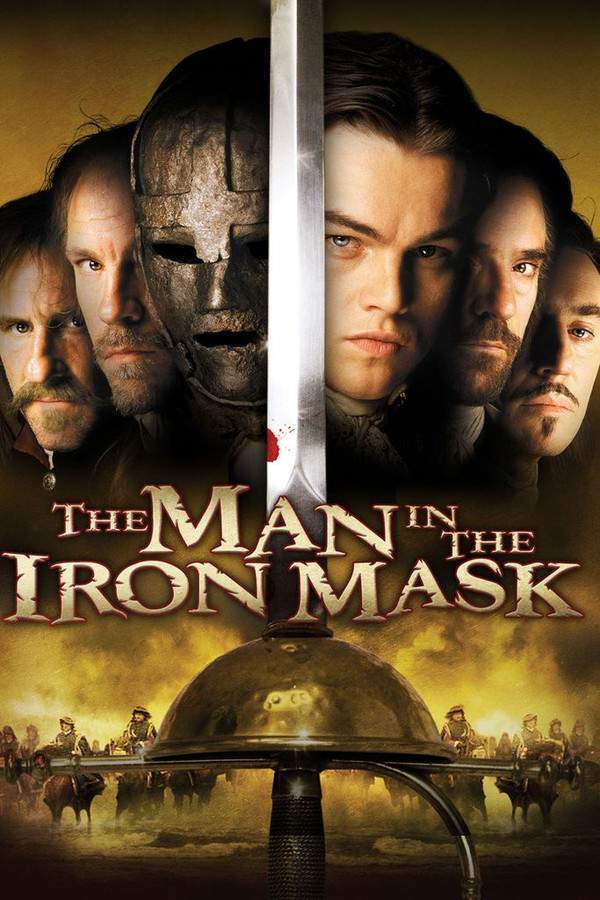
The Man in the Iron Mask

The Man in the Iron Mask

Year: 1998

Runtime: 132 min

Language: English

Director: Randall Wallace

ActionAdventureDramaHistory

A tyrannical king imprisons a man hidden behind an iron mask, effectively silencing a potential rival to the throne. As injustice spreads, the legendary Musketeers band together to challenge the king's authority. They undertake a perilous mission to free the mysterious prisoner and restore balance to the kingdom, facing danger and intrigue at every turn.

Where to Watch The Man in the Iron Mask?

Find where to stream, rent, or buy The Man in the Iron Mask (1998) in the US with current JustWatch availability, up-to-date pricing, and platform listings for subscription, rental, and digital purchase options.

Warning: spoilers below!

Haven’t seen The Man in the Iron Mask yet? This summary contains major spoilers. Bookmark the page, watch the movie, and come back for the full breakdown. If you're ready, scroll on and relive the story!

The Man in the Iron Mask (1998) – Full Plot Summary & Ending Explained

Read the complete plot breakdown of The Man in the Iron Mask (1998), including all key story events, major twists, and the ending explained in detail. Discover what really happened, and what it all means.

As the once-mighty Kingdom of France teeters on the brink of financial ruin due to King Louis XIV’s relentless wars against the Dutch, an array of crises threatens the nation. In his desperation to replenish his kingdom’s coffers, the king resorts to distributing spoiled provisions among the populace, a decision that only worsens the already grim conditions faced by the French people. Simultaneously, a group of rogue Jesuits conspires to remove Louis from power, fueled by their indignation at his betrayal of the very citizens he has sworn to protect. Amidst this turmoil, the four Musketeers—Aramis, Porthos, Athos, and D’Artagnan—have diverged on separate paths.

Driven by an intense desire to emulate his father’s legacy, Raoul, Athos’s son, aims to join the ranks of the Musketeers. However, his dreams are brutally shattered when King Louis sets his sights on Christine Bellefort, Raoul’s beloved fiancée, during a lavish palace festival. This lustful fixation triggers a series of events that culminate in Raoul’s tragic demise on the battlefield. Athos, heartbroken and infuriated by Louis’ role in his son’s death, renounces his loyalty to the king.

In the wake of these heart-wrenching developments, Aramis calls for a secretive gathering of Porthos, Athos, and D’Artagnan, disclosing that he has taken on the mantle of leader within the Jesuits’ plot to dethrone Louis. While Porthos and Athos agree to join forces with their old ally, D’Artagnan, steadfast in his loyalty to the crown, declines to partake in this betrayal. A profound rift opens between the Musketeers, with Athos branding D’Artagnan a traitor and vowing to end his life should they cross paths again. Nevertheless, D’Artagnan remains silent about the clandestine meeting, biding his time for the right moment.

As Louis plots against those who threaten his rule, he becomes infatuated with Christine, whose growing suspicions regarding her involvement in Raoul’s death will soon compel her to confront the dire nature of her situation. The cunning Musketeers embark on a mission to infiltrate the Île Sainte-Marguerite prison, where they liberate a figure concealed in an iron mask. To their astonishment, they discover he is Philippe, the long-lost twin brother of Louis XIV. This shocking revelation reshapes the course of French history, revealing that Queen Anne had given birth to both twins, and it was Louis XIII who had orchestrated Philippe’s secret upbringing to avoid potential dynastic conflicts.

Amid this precarious landscape, Aramis sees a chance for redemption by spearheading a palace coup to install the benevolent Philippe as king. The Musketeers engage in the complex task of educating Philippe in the rituals of court life, aspiring to prepare him to assume his brother’s throne. Athos, in particular, develops a fatherly affection for Philippe, who bears unsettling resemblances to the reigning monarch.

As tensions escalate, the Musketeers orchestrate an elaborate masquerade ball, successfully luring Louis XIV into his chambers and subduing him, all while substituting Philippe in his place. Yet, D’Artagnan, ever the discerning observer, starts to realize something is amiss when Christine boldly challenges Philippe’s composure compared to that of his brother. The illusion is short-lived when Porthos, Aramis, and Athos make their escape with Louis XIV, leaving Philippe to confront D’Artagnan and his allies. In a dramatic twist, D’Artagnan uncovers Philippe’s true identity and pleads with Louis XIV for mercy on his brother’s behalf, only to be met with the king’s chilling indifference as he sends D’Artagnan to the Bastille. The tragic aftermath of betrayal is further cemented by Christine’s devastating act of self-destruction, which leaves Louis XIV untouched by the emotional wreckage.

As D’Artagnan rallies the Musketeers for a daring rescue of Philippe from the ominous Bastille, Louis—ever watchful—prepares to strike. With meticulous planning, he ambushes the group, poised to eliminate anyone who disrupts his reign. In a moment of courageous defiance, D’Artagnan turns down Louis’s offer of clemency, revealing a staggering truth: he is Philippe’s biological father, born from an illicit affair with the Queen. This shocking revelation underscores his allegiance to both sons. As the Musketeers charge forward one last time, they face a hail of gunfire, yet their unwavering bravery causes the soldiers to miss their marks intentionally. In a final, sacrificial act of love, D’Artagnan shields Philippe from Louis’s deadly blade. Overwhelmed by grief and fury, Philippe nearly strangles Louis to death, but D’Artagnan’s poignant final words urge him to maintain his humanity.

In the wake of D’Artagnan’s tragic fall, André, D’Artagnan’s loyal lieutenant, consumed by rage, vows to keep his mentor’s death a secret and aligns himself with Philippe, executing another switch between the twin brothers. Philippe assumes control of the kingdom, ordering Louis’s imprisonment while appointing Athos, Porthos, and Aramis as his closest advisers.

At a solemn service for D’Artagnan, Philippe shares a heartwarming moment with Athos, declaring his newfound paternal regard for him, which Athos reciprocates. Through Aramis’s narration, we learn that Philippe ultimately grants Louis a royal pardon, allowing him to live out his days in secluded peace, while Louis’s name remains forever etched in the annals of history as one of France’s greatest rulers.
Last updated: November 21, 2024 at 10:57

Was this helpful?

The Man in the Iron Mask (1998) Plot Questions Answered – Summary FAQ

Explore frequently asked questions about The Man in the Iron Mask (1998) with spoiler-rich answers covering the full plot summary, major story beats, character motivations, hidden details, and ending meaning. This movie summary FAQ helps explain confusing scenes, plot twists, and narrative decisions in clear, searchable detail.

Q1

Why was Philippe imprisoned behind an iron mask?

A.

Philippe was Louis XIV's identical twin brother. Queen Anne gave birth to both sons, but King Louis XIII feared that having two heirs would spark a succession crisis and civil war. He secretly ordered Philippe to be taken away and hidden, eventually imprisoning him on Île Sainte-Marguerite behind an iron mask to conceal his identity and prevent anyone from discovering the truth about the king's brother.

philippe twin brotherking louis xiviron maskqueen annesuccession crisis
Q2

Why did Athos abandon his loyalty to King Louis?

A.

Athos renounced his loyalty after his son Raoul was killed on the battlefield. King Louis had become infatuated with Christine Bellefort, Raoul's fiancée, and used his power to pursue her. This lustful fixation directly led to Raoul's tragic death, leaving Athos devastated and furious at the king's role in destroying his family.

Early scenes establish Raoul's dream of becoming a Musketeer and his deep bond with his father.

athosraoulking louis xivchristine bellefortbetrayal
Q3

Why did D'Artagnan refuse to join the Jesuit plot?

A.

D'Artagnan remained loyal to the crown because of his deep sense of duty and honor. Though he cared for his fellow Musketeers, he believed betraying the king, even a tyrannical one, would be wrong. He kept the secret of the Jesuit plot to himself rather than expose his friends, hoping to find another way to address the kingdom's problems without treason.

dartagnanloyaltyjesuit plotmusketeersking louis xiv
Q4

How did the Musketeers rescue Philippe from prison?

A.

The Musketeers staged a daring infiltration of Île Sainte-Marguerite prison. Using stealth and combat, they fought their way through guards and freed the man hidden behind the iron mask. They were shocked to discover he was Philippe, Louis XIV's twin brother, which immediately presented them with an opportunity to replace the tyrannical king with his more benevolent sibling.

ile saint-margueriteprison breakphilippemusketeers
Q5

How did the Musketeers switch Philippe for King Louis?

A.

The Musketeers organized an elaborate masquerade ball at the palace. While Louis was distracted, they lured him into his chambers and overpowered him. Philippe, who had been educated in courtly manners by the Musketeers, was substituted in Louis's place. The plan worked until Christine noticed Philippe's different demeanor, raising suspicions that eventually led to the deception being uncovered.

masquerade ballphilippe substitutionpalace coupmusketeers
Q6

Why did D'Artagnan reveal he was Philippe's father?

A.

When Louis XIV offered D'Artagnan clemency in exchange for abandoning Philippe, D'Artagnan refused. To explain his loyalty to a man who wasn't his king, D'Artagnan revealed the shocking truth: he was Philippe's biological father, born from an affair with Queen Anne. This revelation tied D'Artagnan's personal fate to Philippe's survival and drove his willingness to sacrifice everything.

dartagnanphilippe fatherqueen annebiological fatherrevelation
Q7

What happened to Christine after discovering the truth?

A.

Christine Bellefort grew suspicious about her role in Raoul's death after learning Louis had deliberately sent Raoul to battle knowing he would likely die. Overwhelmed by guilt and despair over being used as a pawn that led to Raoul's demise, Christine took her own life. Her death underscored the human cost of Louis's tyranny and manipulation.

christine bellefortsuicideraoul deathguilt
Q8

Why did Philippe pardon Louis at the end?

A.

Despite Louis's tyranny, betrayal, and attempts to have him killed, Philippe chose to grant his brother a royal pardon. Rather than execute Louis or keep him imprisoned publicly, Philippe allowed him to live in quiet exile. This decision reflected Philippe's character as a more merciful and benevolent ruler, choosing forgiveness over vengeance while ensuring Louis could no longer harm the kingdom.

philippe pardonking louis xivmercyforgivenessexile
Q9

How did D'Artagnan sacrifice himself for Philippe?

A.

During the final confrontation at the Bastille, King Louis attacked the Musketeers with his guards, attempting to kill Philippe and end the rebellion. D'Artagnan stepped in front of Philippe, shielding him from Louis's deadly blade. In his dying moments, D'Artagnan urged Philippe to maintain his humanity and not become like his brother. His sacrifice cemented Philippe's resolve to become a just ruler.

dartagnan deathsacrificephilippebastillefinal battle
Q10

What happened to Queen Anne's twins after birth?

A.

Queen Anne gave birth to twin boys, Louis XIV and Philippe. King Louis XIII, fearing that two heirs would create a dynastic struggle and threaten his rule, secretly ordered Philippe to be taken away at birth. The truth was hidden from everyone, and Philippe was eventually imprisoned behind an iron mask to keep his existence secret. Only much later was Philippe's true identity revealed to the Musketeers.

queen annetwinslouis xiiiphilippesecret birth
Q11

Why did the Musketeers become divided?

A.

The four Musketeers split because of fundamentally different responses to King Louis's tyranny. Aramis, having become leader of the Jesuit conspiracy to dethrone Louis, recruited Porthos and Athos to his cause. However, D'Artagnan, believing in loyalty to the crown regardless of who sat on the throne, refused to join them. This choice led Athos to brand D'Artagnan a traitor and vow to kill him if they ever met again, creating a painful rift among longtime brothers-in-arms.

musketeers splitaramisporthosathosdartagnanbetrayal
Q12

Why did the Jesuits want to overthrow King Louis?

A.

A group of rogue Jesuits plotted to remove Louis from power because they were outraged by his betrayal of the French people. Louis had engaged in relentless wars against the Dutch that bankrupted the kingdom, then compounded the suffering by distributing spoiled provisions to the starving populace. The Jesuits saw his tyranny and disregard for his subjects as an unforgivable violation of his sacred duty as king.

jesuit plotoverthrow kingfrench peopletyrannywars dutch
Mobile App Preview

Coming soon on iOS and Android

The Plot Explained Mobile App

From blockbusters to hidden gems - dive into movie stories anytime, anywhere. Save your favorites, discover plots faster, and never miss a twist again.

Sign up to be the first to know when we launch. Your email stays private, always.

Explore Movie Threads

Discover curated groups of movies connected by mood, themes, and story style. Browse collections built around emotion, atmosphere, and narrative focus to easily find films that match what you feel like watching right now.

Movies with Historical Intrigue and Tragic Loyalty like The Man in the Iron Mask

Swashbuckling adventures shadowed by tragic betrayals and heavy political stakes.If you enjoyed the blend of royal conspiracy, heroic sacrifice, and brotherly conflict in The Man in the Iron Mask, you'll find similar stories here. This list features historical dramas and adventures where characters face heavy moral choices, political betrayal, and bittersweet victories.

tensetragicheroicpolitical intriguebrotherly conflictgrief-strickendefiant

Narrative Summary

Stories in this thread typically follow a band of allies, often bound by a deep code of honor, who must challenge a corrupt political power. Their mission is perilous and often involves a hidden identity or a secret that could change the fate of a kingdom. The narrative is punctuated by personal tragedies and sacrifices, leading to a victory that is meaningful but emotionally costly.

Why These Movies?

Movies are grouped here for their shared atmosphere of tense historical drama, their focus on themes like loyalty, betrayal, and sacrifice, and their emotionally heavy, often bittersweet conclusions. They balance fast-paced action with deep, character-driven grief.

Movies with Identity Swaps and Doppelgänger Plots like The Man in the Iron Mask

Stories where a hidden twin or double is used to seize or save power.Fans of The Man in the Iron Mask who were intrigued by the central plot of the imprisoned twin will enjoy these films. Discover similar stories of doppelgängers, secret identities, and political coups where the fate of a nation hinges on a single deception.

deceptiveconspiratorialtensepsychologically complexpoliticalidentity crisissuspenseful

Narrative Summary

The core pattern involves a secret double—often a sibling—being used to overthrow or impersonate a ruler or influential person. The plot revolves around the execution of the switch, the challenges of maintaining the deception, and the ultimate confrontation that reveals the truth. This creates a natural foundation for tension, moral ambiguity, and dramatic reveals.

Why These Movies?

These films are connected by their central use of the identity swap trope as a primary driver of the plot. They share a mood of conspiracy and intrigue, a fast pacing due to the precarious nature of the deception, and themes of power, legitimacy, and the nature of self.

Unlock the Full Story of The Man in the Iron Mask

Don't stop at just watching - explore The Man in the Iron Mask in full detail. From the complete plot summary and scene-by-scene timeline to character breakdowns, thematic analysis, and a deep dive into the ending - every page helps you truly understand what The Man in the Iron Mask is all about. Plus, discover what's next after the movie.

The Man in the Iron Mask Timeline

Track the full timeline of The Man in the Iron Mask with every major event arranged chronologically. Perfect for decoding non-linear storytelling, flashbacks, or parallel narratives with a clear scene-by-scene breakdown.

The Man in the Iron Mask Timeline

Characters, Settings & Themes in The Man in the Iron Mask

Discover the characters, locations, and core themes that shape The Man in the Iron Mask. Get insights into symbolic elements, setting significance, and deeper narrative meaning - ideal for thematic analysis and movie breakdowns.

Characters, Settings & Themes in The Man in the Iron Mask

The Man in the Iron Mask Spoiler-Free Summary

Get a quick, spoiler-free overview of The Man in the Iron Mask that covers the main plot points and key details without revealing any major twists or spoilers. Perfect for those who want to know what to expect before diving in.

The Man in the Iron Mask Spoiler-Free Summary

More About The Man in the Iron Mask

Visit What's After the Movie to explore more about The Man in the Iron Mask: box office results, cast and crew info, production details, post-credit scenes, and external links - all in one place for movie fans and researchers.

More About The Man in the Iron Mask

Similar Movies to The Man in the Iron Mask

Discover movies like The Man in the Iron Mask that share similar genres, themes, and storytelling elements. Whether you’re drawn to the atmosphere, character arcs, or plot structure, these curated recommendations will help you explore more films you’ll love.