Plot Explained Spoilers guaranteed!
Plot Explained

Browse by genre

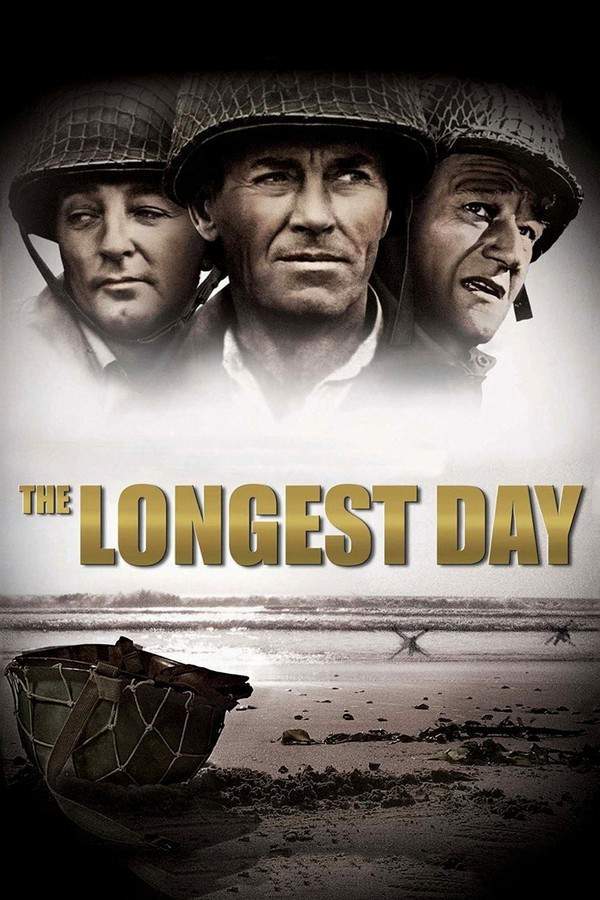
The Longest Day (1962) movie poster

Timeline

The Longest Day (1962) Timeline Explained – Every Event in Order

Release, runtime and language
1962 · 178 min · English
Loading streaming availability…
Directed by
Andrew Marton
Starring
Arletty, Jean-Louis Barrault, Eddie Albert, Hans Christian Blech, Paul Anka, Richard Beymer

This intense 1962 film honors the courage and dedication of Allied forces during the crucial Normandy Invasion of World War II. The story meticulously details the anxious build-up to June 6, 1944, showcasing the preparations and experiences of American, British, and German participants. Through multiple perspectives, the movie captures the tension and drama of D-Day, from paratroopers dropping behind enemy lines to the naval assault on the beaches and the fierce fighting that followed.

On this page (7)
  1. 1 Where to watch
  2. 2 Events in order (15)
  3. 3 Timeline questions answered
  4. 4 The book behind the movie
  5. 5 Movie threads
  6. 6 Movies like The Longest Day
  7. 7 Every angle
Loading streaming availability…

15 events in order · contains spoilers

The Longest Day Timeline: Events in Chronological Order

Every key event of The Longest Day (1962) in order, scene by scene, with when and where it takes place. Use it to untangle flashbacks, time jumps and parallel storylines, to refresh your memory before the sequel or to find the exact scene you are thinking of.

  1. Allies Await D-Day

    As D-Day approaches, the Allies are on high alert, waiting for a break in the poor weather. The atmosphere is tense as they anticipate possible reactions from the German forces defending northern France.

    When
    Early June 1944
    Where
    English Channel
  2. Lieutenant Col. Vandervoort's Mission

    Lieutenant Col. Benjamin H. Vandervoort reports for duty and receives his orders to take Sainte-Mere-Eglise, a critical location for the invasion. He prepares his troops, issuing them clicking toys for identification purposes during the night drop.

    When
    Days before D-Day
    Where
    England
  3. Eisenhower's Decision

    Gen. Dwight Eisenhower makes the crucial decision to proceed with the invasion after reviewing weather reports promising a brief window of favorable conditions. This decision is supported by Gen. Bernard Montgomery and aims to take the Axis forces by surprise.

    When
    June 5, 1944
    Where
    SHAEF Headquarters
  4. German Intelligence Concerns

    German commanders, including Generalfeldmarschall Gerd Von Rundstedt, struggle with conflicting intelligence reports about the potential Allied invasion. Oberstleutnant Helmuth Meyer predicts an attack within 24 hours but is met with skepticism from his superiors.

    When
    June 5, 1944
    Where
    German HQ, France
  5. French Resistance Alerted

    The French resistance receives coded messages indicating that the invasion is about to begin. Resistance members, like Alexandre Renaud and Father Louis Roulland, prepare to sabotage German communication and support the Allies.

    When
    June 5, 1944
    Where
    Sainte-Mere-Eglise
  6. Dawn of D-Day

    On the early hours of June 6, Allied airborne troops begin their drops, taking key locations inland from the beaches. The French resistance reacts intensely to the unfolding invasion, aware that the fate of their country is at stake.

    When
    June 6, 1944
    Where
    Normandy, France
  7. Pegasus Bridge Secure

    Maj. John Howard and his forces successfully land and secure Pegasus Bridge, a crucial objective meant to prevent the Germans from demolishing it. He prepares for a potential counterattack while awaiting reinforcements.

    When
    June 6, 1944
    Where
    Orne River, Normandy
  8. Paratroopers' Chaos

    American paratroopers experience disarray as some land in swamps while others touch down in Sainte-Mere-Eglise. This initial drop leads to heavy casualties as they encounter scattered enemy forces.

    When
    June 6, 1944
    Where
    Sainte-Mere-Eglise
  9. German Misjudgment

    German forces fail to recognize the invasion due to the calm beaches and reports of approaching Allied aircraft. Major Werner Pluskat dissects evidence of troop movements but miscalculates the threat level.

    When
    June 6, 1944
    Where
    Normandy Coast
  10. The Invasion Force Launches

    At dawn, Allied forces embark on their invasion of Normandy. This coordinated assault is led by Lt. Gen. Omar N. Bradley, who commands various naval and airborne units as they engage with German defensive positions.

    When
    June 6, 1944
    Where
    Normandy, France
  11. Norman's Assault

    Brigadier Gen. Norman Cota leads forces from the beach as they begin to engage the enemy. He quickly assesses the situation at the beachhead, commanding engineers to blow a hole through enemy defenses to secure an exit point.

    When
    June 6, 1944
    Where
    Normandy Beach
  12. Ranger Group's Climb

    The U.S. Provisional Ranger Group launches an assault on Pointe Du Hoc and faces grievous losses scaling the cliffs. They discover that the German artillery they aimed to neutralize was never installed, showcasing a dramatic twist.

    When
    June 6, 1944
    Where
    Pointe Du Hoc
  13. Rommel Learns of Invasion

    By late morning, Rommel returns home only to discover that the invasion is already underway. Despite urging from his officers, he cannot mobilize the Panzer reserves without Hitler's approval, leading to further delays.

    When
    June 6, 1944
    Where
    Germany
  14. Regrouping of Troops

    Lieutenant Col. Vandervoort successfully regroups scattered troops and leads an assault on Sainte-Mere-Eglise. In fierce fighting, they manage to capture the town and witness the aftermath of losses suffered by their comrades.

    When
    June 6, 1944
    Where
    Sainte-Mere-Eglise
  15. Consolidation of Beachheads

    As the day comes to a close, various Allied units work to consolidate their positions along the beachhead. The overall successful invasion sets the stage for the Allies to advance further into France, eventually bringing the fight towards Germany.

    When
    June 6, 1944
    Where
    Normandy

Last updated: January 19, 2025 at 18:49

Was this helpful?

Timeline questions answered

The Longest Day Timeline Explained: Your Questions Answered

When does it happen, and why in that order? The questions people ask about the chronology of The Longest Day (1962): time jumps, flashbacks, cause and effect between scenes and the correct order of events, each answered with spoilers.

Q1

Why did Eisenhower decide to proceed with D-Day despite the bad weather?

Eisenhower made the go-ahead decision after meteorologist Group Capt. J. M. Stagg presented a promising weather forecast. A brief window of favorable conditions was expected, which would provide the element of surprise against German defenses. The invasion had already been delayed for days, and further postponement risked intelligence leaks and diminished the chance of catching Axis forces off guard.

Foreshadowing: Earlier scenes establish the Allied leadership's anxiety about the weather and the mounting pressure to launch the invasion.

  • eisenhower
  • weather
  • d-day decision
  • invasion timing
  • allied command
Q2

Why was taking Sainte-Mere-Eglise important for the Allied invasion?

Sainte-Mere-Eglise lay along the sole route that could be exploited by Germans to target the Allies' northern flank after the beach landings. Capturing this town would secure a critical inland position and prevent German reinforcements from cutting off Allied forces as they pushed inland from Normandy.

Foreshadowing: Vandervoort receives explicit orders about the town's strategic significance early in the film.

  • sainte-mere-eglise
  • airborne mission
  • strategic point
  • vandervoort
Q3

Why did American paratroopers land in swamps during the D-Day drop?

The nighttime drop into Sainte-Mere-Eglise was severely disrupted by导航 errors and scattered deployment. Approximately half of the paratroopers landed in deliberately flooded swamps created by the Germans, while others landed in the town itself. This dispersion caused initial confusion and heavy casualties as soldiers struggled to regroup in darkness against scattered enemy forces.

Foreshadowing: The timeline notes highlight the chaos of the drop and the initial disarray among American troops.

  • paratroopers
  • swamps
  • sainte-mere-eglise
  • airborne drop
  • casualties
Q4

What was the purpose of the clicking toys given to paratroopers?

Lt. Col. Vandervoort supplied his men with clicking toys to enable friendly identification in the darkness. Since the paratroopers were dropping at night into enemy territory where they'd be dispersed and separated, these sound signals allowed soldiers to recognize each other without revealing their positions to German forces through verbal communication.

Foreshadowing: The assignment of these toys occurs when Vandervoort prepares his troops for the night drop.

  • clicking toys
  • night identification
  • vandervoort
  • paratroopers
Q5

Why did German forces fail to recognize the D-Day invasion was happening?

Several factors contributed to German misjudgment: the poor weather led commanders to dismiss the invasion as unlikely, reports of approaching aircraft were initially considered routine, and the calm beaches seemed inconsistent with a major assault. Additionally, confusion within the German command chain about whether this was a feint or the real invasion delayed crucial responses. Most critically, Hitler was asleep and key decision-makers couldn't act without his authorization.

Foreshadowing: German intelligence officer Oberstleutnant Helmuth Meyer predicts an attack within 24 hours but is overruled by skeptical superiors.

  • german misjudgment
  • hitler
  • command chain
  • invasion confusion
  • rundstedt
Q6

Why was capturing Pegasus Bridge critical for the Allied invasion?

Pegasus Bridge spanned the Orne River and represented a crucial objective because it was the only crossing point that could allow German forces to cut off the Allied pathway into Normandy. Major John Howard's mission was to seize and hold the bridge before German forces could demolish it, thereby keeping open the route for Allied reinforcements to move inland from the beaches.

Foreshadowing: The British glider operation targeting Pegasus Bridge is introduced as one of the first major D-Day missions.

  • pegasus bridge
  • john howard
  • orne river
  • bridge capture
  • glider operation
Q7

Why was Rommel away from Normandy during the D-Day invasion?

Field Marshal Rommel had returned to Germany on June 5th for his wife's birthday, believing the poor weather would prevent any immediate invasion. By the time he learned the invasion was underway, it was too late to return quickly. Without Hitler's direct authorization, Rommel couldn't mobilize the critical Panzer reserves positioned behind the beaches, causing devastating delays in the German counterattack response.

Foreshadowing: German commanders debate the invasion threat while Rommel's absence is noted as a critical vulnerability.

  • rommel
  • hitler
  • panzer reserves
  • command delay
  • german response
Q8

Why did Rangers find no artillery at Pointe du Hoc?

The U.S. Provisional Ranger Group suffered grievous losses scaling the cliffs at Pointe du Hoc, only to discover the German artillery positions they were meant to neutralize had never actually been installed. The expected guns were not in place, making the costly assault somewhat anticlimactic but also removing a significant threat to the invading forces at Omaha Beach.

Foreshadowing: The Rangers' mission is framed as one of the most dangerous objectives of D-Day.

  • pointe du hoc
  • rangers
  • artillery
  • cliff assault
  • german defenses
Q9

How did the French Resistance contribute to the D-Day invasion?

The French Resistance, including members like Father Louis Roulland and Alexandre Renaud, played vital roles in disrupting German operations before and during the invasion. They prepared to sabotage communication lines and troop movements, received coded messages alerting them to the invasion timing, and worked to create confusion behind enemy lines as Allied forces landed,Supporting the overall invasion success.

Foreshadowing: The resistance receives coded messages on June 5th indicating the invasion is imminent.

  • french resistance
  • father louis roulland
  • sabotage
  • operation support
  • reneaud
Q10

What caused the delay in German counterattack during D-Day?

The German response was paralyzed by confusion, hesitation, and the absence of key decision-makers. Without Hitler's approval, field commanders could not deploy the Panzer divisions positioned to counter the invasion. By the time Hitler awoke and assessed the situation, the Allies had already secured initial beachheads, and the delayed counterattack proved far less effective than it might have been.

Foreshadowing: The film emphasizes Hitler's slumber as a critical moment of decision-making failure for the Germans.

  • german counterattack
  • hitler authorization
  • panzer divisions
  • response delay
  • command structure

Movie threads

More Movies Like The Longest Day, by Mood & Story

Curated lists built around what makes The Longest Day tick: the same mood, the same kind of story or the same emotional payoff. Each list explains why these movies belong together.

Multi-perspective war epics like The Longest Day

Expansive stories that weave together multiple viewpoints of a pivotal historical event. If you liked the sprawling, detailed view of D-Day in The Longest Day, explore other movies that use a multi-perspective structure to depict major historical conflicts. These films share a commitment to factual detail and a complex, epic feel.

  • epic
  • dramatic
  • tense
  • grim
  • historical
  • chaotic
  • Tone: tense, dramatic, grim
  • Pacing: steady, methodical
Why these movies?

The story pattern: Narratives in this thread unfold by interweaving multiple, often parallel, storylines centered on a single, monumental event. The structure avoids a single protagonist, instead building a comprehensive picture from the ground up and the top down, focusing on strategy, execution, and the human cost from various angles.

Why they belong together: Movies are grouped here based on their shared approach to storytelling: using a complex, multi-threaded narrative to explore a large-scale historical event. They prioritize scope, factual basis, and a balanced, albeit tense and heavy, emotional tone that respects the gravity of the subject matter.

Movies with a tense military build-up like The Longest Day

Stories where anxious planning and suspense culminate in chaotic, large-scale battle. For viewers who appreciated the anxious preparation for D-Day in The Longest Day, this list features similar war movies and thrillers where the meticulous planning and rising tension before a major operation are central to the drama.

  • anxious
  • tense
  • dramatic
  • chaotic
  • claustrophobic
  • grim
  • Tone: tense, anxious, grim
  • Pacing: steady build, then chaotic
Why these movies?

The story pattern: The narrative pattern follows a distinct two-act structure: a prolonged period of strategic planning, intelligence gathering, and psychological strain, followed by a sudden, chaotic, and violent execution of the plan. The climax is the battle itself, but the emotional core lies in the dread and anticipation that precedes it.

Why they belong together: These films are grouped by their shared emphasis on the 'calm before the storm.' They focus on the psychological weight of command decisions, the logistical challenges of large-scale operations, and the mounting tension that makes the eventual eruption into violence feel both inevitable and devastating.

If you liked this

Movies Like The Longest Day

Similar movies to The Longest Day: the same genre, themes or kind of story. Each one comes with its own plot summary, timeline and ending explained.

Browse all movie summaries

Every angle

The Longest Day (1962) Explained: Plot, Timeline & Characters

Everything about The Longest Day in one place: what happens in the plot summary, the timeline in chronological order, the characters and meaning and a spoiler-free summary. What's After the Movie adds the cast, box office and post-credit scenes.

Coming soon on iOS and Android

The Plot Explained Movie Summary App

Plot summaries, endings explained and timelines on your phone. Catch up on any movie in minutes, save your favorites and never miss a twist again.

Be the first to know when we launch. Your email stays private, always.

Learn more about the app