Plot Explained Spoilers guaranteed!
Plot Explained

Browse by genre

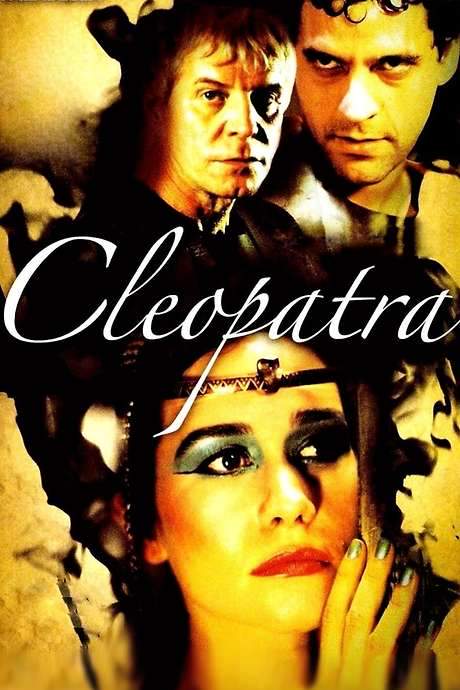
Cleopatra (1970) movie poster

Plot Summary

Cleopatra (1970) Plot Summary Explained

Release, runtime and language
1970 · 155 mins · English
Directed by
Michel Auder
Starring
Christopher Walken, Viva, Marco St. John, Nico, Taylor Mead, Gerard Malanga

The film mirrors Warhol and Morrissey’s relationship to Hollywood, using the 1963 Joseph Mankiewicz Cleopatra—starring Elizabeth Taylor and Richard Burton—as a framework. Auder’s troupe watched that classic and then improvised each scene. The cast is drawn from Warhol’s circle, including Viva, Louis Waldon, Taylor Mead, Ondine, Andrea Feldman, Gerard Melanga and others.

On this page (5)
  1. 1 What happens: full plot
  2. 2 Plot questions answered
  3. 3 Movie threads
  4. 4 Movies like Cleopatra
  5. 5 Every angle

Full plot summary · contains spoilers

What Happens in Cleopatra: Full Plot Summary

The whole story of Cleopatra (1970) explained, from the opening scene to the final frame: every key event, every twist and what it all adds up to. Read it as a quick recap before the sequel, to check a scene you missed, or to finally understand what really happened.

In the far future, a trio of humans—Jirō Tani, Hal Witcher, and Maria Fellow—stumbles upon a chilling revelation: an alien race called the Pasateli intends to conquer humankind using a mysterious scheme known as the Cleopatra Plan. With a time machine at their disposal, the three scientists of sorts decide to leap across centuries and into the very heart of ancient Egypt’s drama, hoping to uncover the truth and put a stop to this interstellar plot. Their mission hinges on inhabiting the bodies of key figures within Cleopatra’s legendary court, a risky intrusion that blends science fiction with historical fantasy in a way that unsettles even the bravest travelers. The first and most daring step is to place themselves inside the living world of the queen herself, and in this moment, the narrative becomes a collision of eras, ideas, and desires.

The story then shifts to a volatile chapter in the Roman conquest of Egypt, where a clandestine Egyptian faction plans to strike at the heart of Caesar’s power. Their bold tactic involves sending Cleopatra on a dangerous path to seduce and murder Julius Caesar. The Romans quickly uncover the rebellion and move to crush it, forcing Cleopatra to flee with her trusted handmaidens Libya and Apollodoria. In a twist that blends mysticism with political intrigue, Cleopatra seeks aid from an ancient priestess who, through magical means, grants her an irresistibly seductive allure intended to complete the mission. It is within this charged atmosphere that our time-travelers materialize, their minds now occupying the bodies of Cleopatra’s circle: Maria in the form of Libya, Hal inhabiting the priestess’s pet leopard Rupa, and Jirō becoming Ionius, a Greek captive who proves as resourceful as he is defiant.

As Cleopatra journeys to meet Caesar, the dynamics of power and passion collide. Caesar, overwhelmed by Cleopatra’s beauty, elevates her status and designates her queen of Egypt. The seduction is not just political—it becomes a theater of sorts, where Cleopatra’s influence grows as the Roman public begins to rally behind Ionius, who uses his knowledge of future technology to create modern hand grenades, catapulting him into a place of unexpected celebrity. This popularity sends tremors through the Senate, which conspires to kill both Caesar and Ionius to curb their rising influence. The plot thickens as Libya and Apollodoria push Cleopatra toward the act of assassination, while Cleopatra herself wrestles with a shift in priorities: personal desire and romance begin to supersede the original mission.

The drama intensifies when Cleopatra returns to Rome, where Caesar’s murder unfolds at the hands of his own senators. After the fall of Caesar, his adopted son Octavian—who will become Augustus—assumes command. Cleopatra’s attempts to seduce Octavian face a brutal obstacle: he is homosexual and seemingly immune to her charms, forcing Cleopatra to recalibrate her strategy. Meanwhile, Antony—Caesar’s trusted ally—falls for Cleopatra, forging a dangerous alliance that jeopardizes the political balance. In a surprising turn, Octavian shows more mercy toward Ionius, sparing his life, while the clash of loyalties and ambitions rages on. The story builds toward a climactic confrontation at the Battle of Actium, where Octavian’s fleet defeats Antony’s Egyptian forces. Antony dies by his own hand, and Cleopatra, left to face capture, endures a moment of heartbreak and ultimate despair when Caesar’s memory—and her own chances of influence—slip away.

The capture that follows is a crushing denouement for Cleopatra. Refusing to surrender to a world that no longer believes in her, she confronts the end with courage, accepting the fate prescribed by history as she chooses to die by an asp’s venom rather than endure subjugation. The three time travelers—having witnessed the collapse of the Cleopatra Plan from within—return to their own era with a sobering conclusion: the Pasateli’s scheme was an attempt to inhabit the bodies of Earth’s most powerful men to destabilize leadership on a planetary scale. The revelation confirms that Earth was seconds away from being overwhelmed, and only a timely realization of the danger allowed humanity to root out the intruders before a catastrophic crisis could unfold.

Throughout the voyage, the tension between duty and desire threads through every scene. The civilization-crossing journey emphasizes how history can be both a weapon and a mirror, reflecting humanity’s enduring struggles with power, loyalty, and the lure of personal ambition. The travelers’ perspectives expand as they observe Caesar’s charisma, Cleopatra’s formidable intelligence, and Octavian’s political shrewdness colliding with ambition, romance, and betrayal. The narrative never loses sight of its core premise: an alien conspiracy manipulates historical figures under the guise of grandeur, only to be exposed by a quartet of modern minds who understand that the past is not merely a backdrop but a living, mutable stage.

In the end, the trio’s exposure of the Cleopatra Plan serves as a cautionary tale about how easily narratives of power can be engineered and how fragile the line is between liberation and domination when seduction and strategy intersect. The interplay of eras—ancient empires and a distant, technologically advanced future—creates a meditation on humanity’s resilience in the face of manipulation by forces beyond comprehension. The journey closes with the promise that, even when confronted with an overwhelming vendetta from spacefaring aggressors, Earth can endure—so long as its leaders remain vigilant and its history remains a record of insight rather than surrender.

Note: The first appearance of key figures from the cast is linked to their respective pages: Cleopatra and Caesar. The rest of the cast names appear only as contextual references without external links, in keeping with the provided cast information.

Last updated: October 09, 2025 at 09:19

Was this helpful?

Plot questions answered

Cleopatra Plot Explained: Your Questions Answered

The questions people ask most about Cleopatra (1970): what happens in the confusing scenes, why the characters do what they do, the twists, hidden details and what the ending means. Each answer contains spoilers.

Q1

What is the Cleopatra Plan in the movie?

The Cleopatra Plan is an alien scheme by the Pasateli race to conquer Earth by inhabiting the bodies of beautiful human women and using seduction to destroy Earth's male leaders. The time travelers discover this conspiracy in the future and travel back to ancient Egypt to infiltrate and stop the plan before it can be executed.

  • cleopatra plan
  • pasateli
  • alien conspiracy
  • time travelers
Q2

Who are the three time travelers in the film?

The three time travelers are Jirō Tani, Hal Witcher, and Maria Fellow, scientists from the far future who discover the Pasateli's Cleopatra Plan. They use a time machine to project their minds into the bodies of people in Cleopatra's era: Maria becomes Cleopatra's handmaiden Libya, Hal inhabits a leopard named Rupa belonging to a priestess, and Jirō becomes Ionius, a Greek captive enslaved by Romans.

  • jiro tani
  • hal witcher
  • maria fellow
  • time travelers
  • cleopatra court
Q3

Why do the time travelers go back to Cleopatra's era?

The time travelers go back to Cleopatra's era because they discovered the Pasateli's Cleopatra Plan, an alien conspiracy to conquer Earth by manipulating historical figures through seduction and political intrigue. They infiltrate Cleopatra's court to learn the nature of the threat and find a way to stop it before it endangers the present day.

Foreshadowing: The discovery of the Cleopatra Plan in the future sets the entire mission in motion.

  • time travel
  • ancient egypt
  • pasateli
  • stop plan
Q4

How do the time travelers infiltrate Cleopatra's court?

The time travelers project their minds into the bodies of people already in Cleopatra's era. Maria Fellow becomes Libya, one of Cleopatra's handmaidens. Hal Witcher inhabits Rupa, the pet leopard of an ancient priestess. Jirō Tani becomes Ionius, a Greek captive enslaved by the Romans. This allows them to observe events from within Cleopatra's inner circle.

  • body swapping
  • libya
  • ionius
  • rupah
  • infiltration
Q5

Why can't Cleopatra seduce Octavian?

Cleopatra fails to seduce Octavian because he is homosexual and seemingly immune to her charms. After Caesar's assassination, Cleopatra attempts to use the same seductive tactics that worked on Caesar, but Octavian's sexual orientation prevents her from influencing him politically through romance.

  • octavian
  • cleopatra seduction
  • homosexual
  • caesar's successor
Q6

What happens when Ionius fights in the arena with a handgun?

Caesar captures Ionius and forces him into gladiatorial combat to win public favor. To ensure Ionius's victory, Caesar provides him with a modern handgun, a weapon far ahead of its time. Ionius becomes enormously popular in Rome, which alarms the senators who then plot to kill both Caesar and Ionius to stop their rising influence.

Foreshadowing: This arena event directly triggers the Senate's conspiracy against Caesar.

  • ionius
  • arena
  • handgun
  • caesar
  • roman senate
Q7

Why is Caesar assassinated in the movie?

Caesar is assassinated by his own senators because they perceive him and Ionius as threats to Roman power. Ionius's surprising popularity from his arena victory with the handgun, combined with Caesar's elevation of Cleopatra as queen, alarms the Senate. They conspire to kill both Caesar and Ionius to prevent them from gaining too much influence.

Foreshadowing: Ionius's rising popularity and Caesar's relationship with Cleopatra set the stage for the assassination plot.

  • caesar assassination
  • roman senate
  • ionius
  • plot
Q8

What happens at the Battle of Actium?

At the Battle of Actium in 31 BC, Octavian's fleet defeats Antony and Cleopatra's Egyptian forces. This decisive Roman victory ends Antony and Cleopatra's alliance and their attempt to challenge Roman power. Antony dies by his own hand after the defeat, and Cleopatra is captured, leading to the tragic finale of her story.

Foreshadowing: The political alliance between Antony and Cleopatra directly leads to this military confrontation with Octavian.

  • battle of actium
  • antony
  • octavian
  • egyptian fleet defeat
Q9

How does Cleopatra die in the film?

Cleopatra chooses to die rather than be captured and paraded as a Roman trophy. After Antony dies and Octavian captures her, she commits suicide by allowing an asp's venom to kill her, accepting the fate that history records for the legendary Egyptian queen.

  • cleopatra death
  • asp
  • suicide
  • octavian capture
Q10

What is the Pasateli's plan to conquer Earth?

After returning to the future, the time travelers reveal that the Cleopatra Plan was the Pasateli's attempt to assume the forms of Earth's most beautiful women to seduce and destroy male leaders, destabilizing planetary leadership. Earth was seconds away from being overwhelmed, but the travelers' timely warning allowed humanity to root out the alien infiltrators before the invasion succeeded.

  • pasateli invasion
  • alien infiltrators
  • human bodies
  • save earth
Q11

Why do Libya and Apollodoria push Cleopatra to murder Caesar?

Libya and Apollodoria, Cleopatra's handmaidens, urge her to complete the original mission of seducing and assassinating Julius Caesar as part of the Egyptian rebellion against Roman rule. However, Cleopatra hesitates as personal desire and romance with Caesar begin to supersede the political mission, creating tension between duty and her growing feelings.

  • libya
  • apollodoria
  • cleopatra murder caesar
  • rebellion
Q12

Does Earth successfully stop the Pasateli invasion?

Yes, Earth successfully defeats the Pasateli. After the time travelers return and reveal the Cleopatra Plan, Earth mobilizes immediately. Nations coordinate to identify and purge the alien infiltrators who have already begun taking human disguises. The threat is eliminated before it can fully materialize, saving humanity from the coordinated invasion.

  • earth victory
  • pasateli defeat
  • alien invasion stopped
  • humanity saved

Movie threads

More Movies Like Cleopatra, by Mood & Story

Curated lists built around what makes Cleopatra tick: the same mood, the same kind of story or the same emotional payoff. Each list explains why these movies belong together.

Experimental Historical Films like Cleopatra

Films that boldly reinterpret the past through a modern, experimental lens. Discover movies like Cleopatra that take creative liberties with history. This collection features films that use the past as a framework for improvisation, artistic commentary, or meta-narrative exploration, offering a unique and intellectually charged viewing experience for fans of unconventional historical drama.

  • meta
  • experimental
  • melancholic
  • self-referential
  • improvised
  • tragic
  • Tone: tense, melancholic, self-referential
  • Pacing: variable, contemplative
Why these movies?

The story pattern: Stories in this thread deconstruct established history, often using it as a jumping-off point for improvisation, satire, or a critique of cinematic conventions. They follow a loose, associative structure rather than a strict linear plot, focusing on the process of creation and the friction between the past and present.

Why they belong together: These films are grouped together by their shared approach to history as a malleable concept. They prioritize artistic expression and conceptual framing over factual accuracy, creating a distinct, often avant-garde, vibe that connects them more through method than through subject matter.

Tense Tragic Epics like Cleopatra

Sweeping stories where ambition, love, and fate collide with devastating consequences. If you liked the high-stakes drama and tragic romance of Cleopatra, explore these movies. This thread features epic-scale stories where political intrigue, power struggles, and doomed love affairs lead to a heavy, bittersweet conclusion, perfect for viewers seeking emotionally intense historical or speculative fiction.

  • tragic
  • tense
  • epic
  • doomed romance
  • fateful
  • desperate
  • Tone: tense, tragic, desperate
  • Pacing: fast, high-stakes
Why these movies?

The story pattern: The narrative pattern follows influential characters navigating complex webs of political intrigue and personal desire. Their quest for power is inextricably linked with a deep, often destructive romance. The story builds with fast-paced betrayals and escalating tension towards an inevitable, tragic collapse of their ambitions and love.

Why they belong together: These movies share a potent mix of high emotional weight, tense pacing, and a tragic, fateful atmosphere. They are united by the core theme of grand ambition being thwarted by personal passions, creating a specific vibe of majestic despair and dramatic inevitability.

If you liked this

Movies Like Cleopatra

Similar movies to Cleopatra: the same genre, themes or kind of story. Each one comes with its own plot summary, timeline and ending explained.

Browse all movie summaries

Every angle

Cleopatra (1970) Explained: Plot, Timeline & Characters

Everything about Cleopatra in one place: what happens in the plot summary, the timeline in chronological order, the characters and meaning and a spoiler-free summary. What's After the Movie adds the cast, box office and post-credit scenes.

Coming soon on iOS and Android

The Plot Explained Movie Summary App

Plot summaries, endings explained and timelines on your phone. Catch up on any movie in minutes, save your favorites and never miss a twist again.

Be the first to know when we launch. Your email stays private, always.

Learn more about the app