Plot Explained Spoilers guaranteed!
Plot Explained

Browse by genre

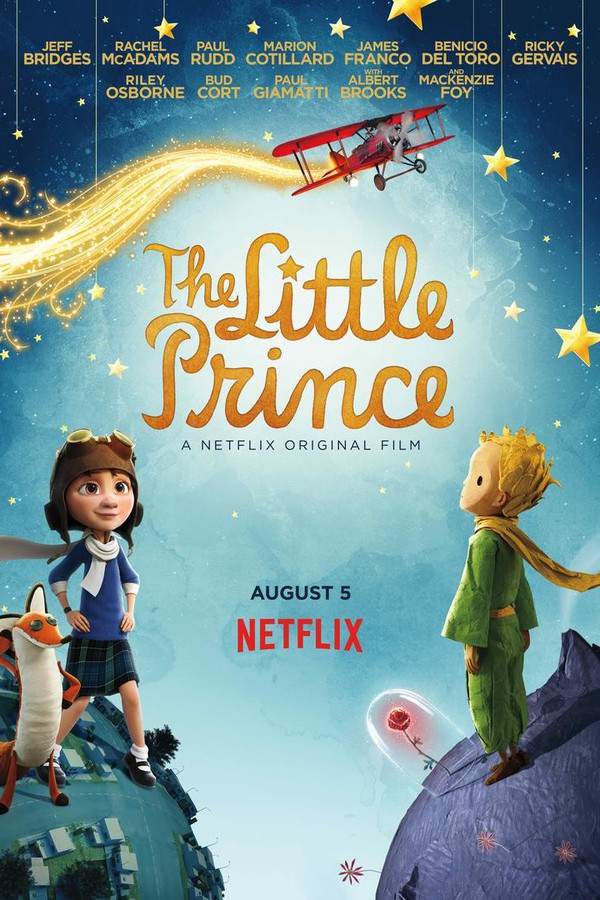
The Little Prince (2016) movie poster

Timeline

The Little Prince (2016) Timeline Explained – Every Event in Order

Release, runtime and language
2016 · 108 min · English
Loading streaming availability…
Directed by
Mark Osborne

A young girl's life changes when she befriends her eccentric neighbor, who introduces her to a wondrous world beyond imagination. Together, they embark on a magical journey with the Little Prince, encountering fantastical characters and breathtaking landscapes. Through their adventures, she rediscovers the wonder of childhood and learns valuable lessons about love, loss, and the importance of seeing with her heart.

On this page (6)
  1. 1 Where to watch
  2. 2 Events in order (15)
  3. 3 Timeline questions answered
  4. 4 The book behind the movie
  5. 5 Movie threads
  6. 6 Every angle
Loading streaming availability…

15 events in order · contains spoilers

The Little Prince Timeline: Events in Chronological Order

Every key event of The Little Prince (2016) in order, scene by scene, with when and where it takes place. Use it to untangle flashbacks, time jumps and parallel storylines, to refresh your memory before the sequel or to find the exact scene you are thinking of.

  1. Narrator's Observation

    The narrator introduces a drawing of a boa constrictor that has swallowed an elephant, showing it to adults. They consistently misinterpret it as a hat, which leads the narrator to understand that adults cannot fathom the imagination of a child. This realization shapes his interactions with them, as he decides to only discuss 'reasonable' matters.

  2. Pilot Crash

    The narrator becomes an aircraft pilot, and while flying, he experiences a severe accident. His plane crashes in the arid expanse of the Sahara desert, leaving him isolated in a vast and desolate landscape, far removed from civilization.

    Where
    Sahara Desert
  3. Meeting the Little Prince

    While trying to fix his aircraft before his water supply runs out, the narrator encounters a young boy who introduces himself as 'the little prince.' Their meeting marks the beginning of a special bond as the prince shares his unique perspective on life, drawing the narrator into his world.

    Where
    Sahara Desert
  4. Request for a Drawing

    The little prince asks the narrator to draw him a sheep. After a few unsuccessful attempts, the narrator grows frustrated but ultimately draws a box, telling the prince the sheep is inside, which fulfills the prince’s request and demonstrates his imagination.

  5. Life on Asteroid B 612

    The prince begins recounting his life story, revealing that he used to live on a small asteroid called 'B 612.' He describes the asteroid's unique features, including three volcanoes and various plants that he tended to, showcasing his sense of responsibility.

    Where
    Asteroid B 612
  6. Caring for the Rose

    Among the plants on his asteroid, the prince speaks about a special rose that he cared for deeply. He protected her from the elements and pests, nurturing their bond despite his frustrations with her self-centeredness, which led to his eventual desire to explore the universe.

    Where
    Asteroid B 612
  7. Departure from Asteroid

    Feeling taken advantage of and unappreciated by his rose, the little prince decides to leave his home. He cherishes their farewell, but the rose apologizes for not fully demonstrating her affection, planting a seed of doubt in the prince’s mind about his love for her.

    Where
    Asteroid B 612
  8. Exploration of Other Planets

    As the prince journeys through space, he visits six different planets, each inhabited by an adult. Each encounter reveals the ridiculousness of adult behavior, reinforcing the prince's feelings of confusion and loneliness as he contemplates his own existence.

  9. Misdirection and Disillusionment

    Upon arriving on Earth, the prince initially believes it is deserted. His exploration leads to disappointments, such as climbing a mountain to gain perspective but only encountering a desolate landscape and an echo, furthering his feeling of isolation.

    Where
    Earth
  10. Confronting the Rosebushes

    The prince stumbles upon a field of rosebushes, which deeply saddens him. This encounter shatters his previous belief that his rose was unique, leading him to question his self-worth as a prince and prompting an emotional response filled with despair.

  11. Meeting the Fox

    The prince encounters a fox, who teaches him about the concept of taming. Through this interaction, he learns that love and relationships require time to cultivate, and that through his unique connection with his rose, she is special in his eyes.

  12. Realization of Love

    The fox imparts crucial wisdom that the real significance of feelings lies in the heart rather than in appearances. This revelation helps the prince understand that his rose’s uniqueness stems from the love and care he has given her.

  13. Thirst and Despair

    After spending several days in the desert, the narrator and the prince find themselves on the brink of death from thirst. The prince becomes despondent, thinking of his home and his beloved rose, intensifying the urgency of their situation.

    Where
    Sahara Desert
  14. The Well and Final Farewell

    They discover a well that revives their spirits, but the prince soon confides in the narrator about his desire to return home. Their emotional farewell becomes palpable as the prince prepares for his departure, leaving behind a poignant message about life and love.

    Where
    Sahara Desert
  15. The Prince's Departure

    In a bittersweet moment, the prince allows a snake to bite him, signaling his return to his asteroid. The narrator is heartbroken, forced to confront the loss, and resolves to honor the prince's memory, gazing at the stars and remembering his laughter.

    Where
    Sahara Desert

Last updated: December 24, 2024 at 10:01

Was this helpful?

Timeline questions answered

The Little Prince Timeline Explained: Your Questions Answered

When does it happen, and why in that order? The questions people ask about the chronology of The Little Prince (2016): time jumps, flashbacks, cause and effect between scenes and the correct order of events, each answered with spoilers.

Q1

Why did the Little Prince leave his asteroid?

The Little Prince left his asteroid because he felt manipulated by his rose. Although he loved her deeply, she constantly embellished her afflictions to gain his attention and sympathy. Feeling unappreciated and confused by her behavior, he decided to explore the universe to understand adult concerns and find answers to his questions.

Foreshadowing: Earlier, the prince tended to the rose daily, watering her and protecting her with a glass globe, showing his devotion before his disillusionment grew.

  • little prince
  • asteroid
  • rose
  • departure
  • love
  • disillusionment
Q2

Why did the rose manipulate the Little Prince?

The rose manipulated the prince because it was her nature, she delighted in embellishing her ailments to receive attention and care. She genuinely loved the prince but expressed it through dramatizing her weaknesses rather than direct affection, which created confusion about her true feelings.

Foreshadowing: The rose would cough dramatically even when she was not ill, a behavior the prince observed but could not fully understand.

  • rose
  • manipulation
  • attention
  • love
  • relationship
Q3

What did the fox teach the Little Prince about love?

The fox taught the prince about 'taming', the process of creating meaningful connections by investing time and emotion into a relationship. The fox explained that the prince's rose became unique not because she was inherently special, but because he devoted time, care, and love to her. This made her the most important flower in the universe to him.

Foreshadowing: The fox appeared after the prince wept upon discovering the rosebushes, suggesting he was ready to understand the value of genuine connection.

  • fox
  • taming
  • love
  • rose
  • connection
  • bond
Q4

Why did the Little Prince let the snake bite him?

The Little Prince allowed the snake to bite him because he wanted to return to his asteroid and his beloved rose. The snake, which possesses a mystical ability to send creatures back home, offered this as the only way for the prince to escape Earth. He chose this final departure because he could not bear to continue existing without his rose.

Foreshadowing: Earlier, the snake told the prince it could send him home if he ever longed to return, foreshadowing this ultimate choice.

  • snake
  • bite
  • return home
  • departure
  • sacrifice
Q5

Why did the rosebushes make the Little Prince so sad?

The rosebushes made the prince deeply sad because he realized his beloved rose was not unique, he had believed she was the only rose in existence, but now saw thousands of identical flowers. This shattered his sense of specialness and made him question whether his love for her was justified or merely self-delusion.

Foreshadowing: The prince had left his asteroid believing his rose was singular and precious, so encountering countless replicas threatened everything he thought he knew about their relationship.

  • rosebushes
  • uniqueness
  • sadness
  • love
  • realization
Q6

Why couldn't the adults see the elephant in the drawing?

The adults could only see a hat because they had lost the imaginative perspective that children possess. As the narrator explains, adults are obsessed with 'reasonable' matters and practical concerns, they view things through logic and convention rather than imagination. This is why the narrator concludes that adults need everything explained in factual, tangible terms.

Foreshadowing: The narrator's childhood experience with the drawing establishes early that the story will contrast childlike wonder against adult practicality.

  • adults
  • children
  • imagination
  • drawing
  • perspective
  • elephant
Q7

What does the well in the desert represent?

The well in the desert represents hope, renewal, and the discovery of meaning through connection. When both the narrator and prince were dying of thirst, they found the well together, this shared struggle and discovery strengthened their bond. The well also symbolizes the intangible resources (love, friendship, purpose) that sustain people beyond physical survival.

Foreshadowing: The prince's earlier reflections on love and the fox's lessons about taming prepared him to recognize that genuine connection, symbolized by the well, is what truly matters.

  • well
  • desert
  • hope
  • thirst
  • connection
  • renewal
Q8

Why did the Little Prince want a sheep in a box?

The prince wanted the sheep in a box because he was looking for something that matched his imagination, he needed to believe in the possibility rather than see a literal representation. When the narrator drew a box and said the sheep was inside, the prince was satisfied because he could imagine it however he wished. This reflects the story's theme that imagination requires space and trust.

Foreshadowing: The prince had previously asked for a sheep to eat the baobab sprouts threatening his asteroid, showing he valued the idea of protection over the actual animal.

  • sheep
  • box
  • imagination
  • prince
  • drawing
Q9

What is the message about seeing with the heart?

The message about seeing with the heart is that true meaning and beauty cannot be perceived through physical sight alone, they require emotional understanding and intuition. The fox tells the prince that 'important things can only be seen with the heart, not the eyes.' This lesson helps the prince realize his rose is precious not because of how she looks, but because of the love he invested in her.

Foreshadowing: The fox's wisdom comes after the prince's visual journey across Earth fails to provide the answers he sought, showing that external observation is insufficient.

  • heart
  • eyes
  • truth
  • meaning
  • wisdom
  • fox
Q10

Why did the Little Prince and narrator have to separate?

They had to separate because the prince chose to return to his asteroid to be with his rose. The prince realized he had been ungrateful for what he had, and his love for the rose required him to go back. The narrator was heartbroken but understood this was necessary, the prince's departure was both a literal return home and a symbolic acceptance of his responsibilities to what he loves.

Foreshadowing: The prince's growing nostalgia for his rose throughout their desert days foreshadowed his decision to leave the narrator and Earth.

  • farewell
  • separation
  • narrator
  • prince
  • return
  • loss
Q11

How did the narrator survive in the desert?

The narrator survived by fixing his crashed plane while stranded in the Sahara Desert. He had limited water supplies and faced the urgent need to repair his aircraft before resources ran out. His survival became intertwined with his connection to the Little Prince, who helped him understand deeper meanings about life and love during their eight days together.

Foreshadowing: The narrator's initial problem, repairing his plane, remains present throughout the story, ultimately resolving as he fixes it after the prince's departure.

  • narrator
  • survival
  • desert
  • plane
  • crash

Movie threads

More Movies Like The Little Prince, by Mood & Story

Curated lists built around what makes The Little Prince tick: the same mood, the same kind of story or the same emotional payoff. Each list explains why these movies belong together.

Movies with melancholic whimsy like The Little Prince

Stories that blend enchanting fantasy with poignant reflections on life and loss. If you enjoyed the bittersweet, imaginative journey of The Little Prince, explore more movies like it. This list features films that masterfully combine a whimsical, fantastical tone with reflective, melancholic themes. You'll find similar stories about imagination, childhood wonder, and poignant life lessons in beautiful animated and live-action dramas.

  • whimsical
  • melancholic
  • reflective
  • dreamlike
  • bittersweet
  • contemplative
  • Tone: whimsical, melancholic
  • Pacing: steady, contemplative
Why these movies?

The story pattern: These narratives often unfold through a frame story or a journey into a symbolic world. A character, often disillusioned or lonely, is introduced to a realm of wonder that helps them process real-world emotions like grief or loneliness. The conflict is more internal and philosophical, leading to an ending that acknowledges sadness but finds hope in the lessons learned.

Why they belong together: These films are grouped together because they share a unique and specific emotional blend: the light, playful energy of whimsy is consistently balanced with a deep, reflective melancholy. They have a steady pacing that allows for contemplation and a moderate emotional weight that deals with heavy themes in an accessible, often beautiful way.

Movies with stories within stories like The Little Prince

Films where a main character's journey is illuminated by allegorical tales. For viewers who loved the narrative structure of The Little Prince, this collection highlights other films that use a similar story-within-a-story device. Discover movies where a central plot is enriched by allegorical tales, flashbacks, or fantastical recounts that reveal deeper truths about the characters and themes, perfect for fans of layered, contemplative storytelling.

  • allegorical
  • reflective
  • contemplative
  • layered
  • imaginative
  • philosophical
  • Tone: reflective, allegorical
  • Pacing: steady, episodic
Why these movies?

The story pattern: The narrative pattern involves a character in a specific situation (the frame) who encounters or is told a series of allegorical stories. These tales are not mere diversions; they are essential to understanding the frame narrative's central conflict. The pacing is often steady, alternating between the grounded reality of the frame and the symbolic world of the inner stories, building towards a unified thematic resolution.

Why they belong together: These movies are connected by their distinctive plot structure. They create meaning through the dialogue between two narrative layers—one immediate and concrete, the other symbolic and imaginative. This approach allows for exploring complex themes like personal growth and existential questions in a more digestible and emotionally engaging way.

Every angle

The Little Prince (2016) Explained: Plot, Timeline & Characters

Everything about The Little Prince in one place: what happens in the plot summary, the timeline in chronological order, the characters and meaning and a spoiler-free summary. What's After the Movie adds the cast, box office and post-credit scenes.

Coming soon on iOS and Android

The Plot Explained Movie Summary App

Plot summaries, endings explained and timelines on your phone. Catch up on any movie in minutes, save your favorites and never miss a twist again.

Be the first to know when we launch. Your email stays private, always.

Learn more about the app