













Plot Explained Spoilers guaranteed!
Plot Explained

Browse by genre

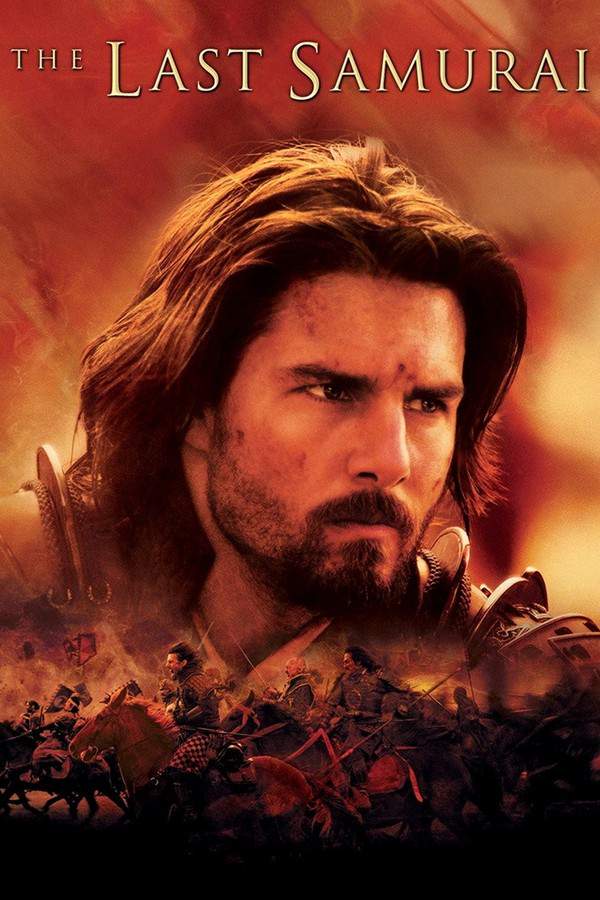
The Last Samurai (2003) movie poster

Timeline

The Last Samurai (2003) Timeline Explained – Every Event in Order

Release, runtime and language
2003 · 154 min · English
JustWatch #492 135
Directed by
Edward Zwick
Starring
Ken Watanabe, Billy Connolly, Tom Cruise
Budget
$140M

During the era of the Meiji Restoration in Japan, a disillusioned American Civil War veteran is hired to train the new Imperial army. He soon becomes immersed in the Samurai culture, finding himself caught between his loyalty to the Emperor and his growing respect for the traditional warrior ways. A clash of cultures and eras unfolds, challenging his beliefs and forcing him to confront his own sense of honor and purpose amidst a changing nation.

On this page (7)
  1. 1 Where to watch
  2. 2 Events in order (15)
  3. 3 Timeline questions answered
  4. 4 Movie threads
  5. 5 Movies like The Last Samurai
  6. 6 Categories
  7. 7 Every angle

Where to watch

Where to Watch The Last Samurai (2003)

Where can you watch The Last Samurai? Stream, rent or buy it in the US, including on fuboTV, HBO Max and MGM Plus: current JustWatch availability with up-to-date prices.

Streaming availability powered by JustWatch

15 events in order · contains spoilers

The Last Samurai Timeline: Events in Chronological Order

Every key event of The Last Samurai (2003) in order, scene by scene, with when and where it takes place. Use it to untangle flashbacks, time jumps and parallel storylines, to refresh your memory before the sequel or to find the exact scene you are thinking of.

  1. Nathan Algren's Haunting Past

    In the tumultuous year of 1876, former U.S. Army Captain Nathan Algren grapples with the shadows of his past, haunted by memories of the American Indian Wars. His inner turmoil reveals the emotional scars left by warfare and the atrocities he witnessed.

    When
    1876
  2. Colonel Bagley's Offer

    Colonel Bagley, Algren's former commander, approaches him with a morally challenging proposition. He offers Algren the chance to train the newly established Imperial Japanese Army, appealing to his financial needs despite Algren's resentment towards him.

  3. Journey to Japan

    Algren accepts the offer and travels to Japan alongside his long-time friend, Sergeant Zebulon Gant. Upon arriving, they are introduced to Simon Graham, a British translator who understands the intricacies of samurai culture.

    Where
    Japan
  4. Disillusionment with Imperial Soldiers

    Algren quickly realizes that the Imperial soldiers are mainly conscripted peasants who lack basic training and discipline. His efforts to train them face immediate setbacks when word of a samurai assault prompts a chaotic mobilization.

  5. The Battle Chaos

    During the ill-fated battle, under the command of a reluctant general, Algren steps up to lead the poorly prepared soldiers. The mission descends into panic and chaos, resulting in Gant’s tragic death amid the violence.

  6. Capture by the Samurai

    Algren is overwhelmed in battle and expects death but is spared by Katsumoto, the leader of the samurai. This act of honor allows the former samurai general to commit seppuku, highlighting the stark contrast between their values.

  7. Learning in Captivity

    In Katsumoto's village, Algren faces initial hostility but gradually earns acceptance through his eagerness to learn. Under the mentorship of Taka, Katsumoto's sister, he begins to reconcile his past while delving into Japanese culture.

    Where
    Katsumoto's village
  8. Ninja Ambush

    Algren’s loyalty is tested when ninjas launch a surprise attack on Katsumoto. He heroically intervenes, saving Katsumoto's life, and in doing so, uncovers Omura's sinister scheme to eliminate the samurai.

  9. Audience with Emperor Meiji

    Katsumoto, with Algren at his side, seeks an audience with the Emperor of Japan in Tokyo. They arrive to find that the Imperial Army is now under the control of Bagley, revealing the extent of Omura’s manipulation of the emperor.

    Where
    Tokyo, Japan
  10. Katsumoto's Arrest Order

    During a tense governmental meeting, Omura orders Katsumoto's arrest for carrying a sword and demands he commit seppuku as a way to restore his honor. This marks a pivotal moment in the struggle between tradition and modernization.

  11. Algren's Resilience

    Despite Bagley's invitation to reclaim his command, Algren chooses to align with Katsumoto's warriors for a daring rescue mission. Amid the ensuing chaos, Katsumoto's son, Nobutada, makes the ultimate sacrifice to ensure their escape.

  12. Epic Confrontation

    As the Imperial Army advances, Katsumoto struggles with self-doubt. Algren convinces him to join the samurai, leading to an epic battle against the forces of modernization, showcasing the relentless valor and spirit of the samurai.

  13. The Price of Honor

    Katsumoto leads a reckless cavalry charge into Bagley's ranks, a final stand against overwhelming odds. Despite Algren's confrontation with Bagley, the samurai suffer heavy casualties from relentless gunfire, highlighting the tragic cost of honor.

  14. Katsumoto's Final Act

    As Katsumoto lies dying, he asks Algren to assist him in performing seppuku, a noble act of defiance against the subjugation of his people. Surrounded by kneeling samurai, he meets his end as they pay their respects and embody a lasting legacy.

  15. Algren's Return to the Village

    In the aftermath of the turmoil, Algren returns to the village, drawn by an unexplainable connection to Taka. His journey is not just about rekindling love but also confronting the demons of his past, anchoring the lessons learned from his experiences.

    Where
    Katsumoto's village

Last updated: November 21, 2024 at 10:25

Was this helpful?

Timeline questions answered

The Last Samurai Timeline Explained: Your Questions Answered

When does it happen, and why in that order? The questions people ask about the chronology of The Last Samurai (2003): time jumps, flashbacks, cause and effect between scenes and the correct order of events, each answered with spoilers.

Q1

Why does Katsumoto spare Algren's life after capturing him?

Katsumoto spares Algren because he recognizes a fellow warrior trapped between two worlds. When Hasegawa, the former samurai general who failed to lead the imperial soldiers, is ordered by Katsumoto to commit seppuku, he hesitates. Algren then steps forward to take responsibility, showing the honor and courage Katsumoto respects. This act of taking responsibility for one's failures, rather than fleeing, earns Algren his life, a decision that also serves as a lesson to Hasegawa about true warrior values.

Foreshadowing: Earlier in the battle, when Hasegawa refuses to lead the soldiers, Algren steps up despite knowing the mission is doomed, a pattern of taking responsibility that Katsumoto notices.

  • katsumoto
  • algren
  • captured
  • samurai
  • honor
  • seppuku
  • hasegawa
Q2

Why does Algren choose to help the samurai instead of remaining with the Imperial Army?

Algren chooses the samurai after witnessing the corruption and manipulation behind the Emperor's court. When he travels to Tokyo with Katsumoto, he sees that Emperor Meiji is merely a pawn controlled by Omura. More importantly, Algren uncovers that Omura orchestrated the ninja attack on Katsumoto's village to eliminate the samurai. Realizing he has been used as a tool to advance Omura's personal vendetta against a noble culture, Algren rejects Bagley's offer to reclaim command and commits to helping Katsumoto.

Foreshadowing: Algren's disillusionment begins when he realizes the imperial soldiers are untrained peasants being sent to their deaths for Omura's profit.

  • algren
  • samurai
  • imperial army
  • omura
  • betrayal
  • loyalty
Q3

Why does Emperor Meiji reject Omura's trade agreement at the end?

Emperor Meiji rejects Omura's deal after Algren presents him with Katsumoto's sword and urges him to remember the values the samurai fought for. The sword symbolizes the samurai's honor, sacrifice, and the cultural heritage being destroyed in pursuit of modernization. The Emperor recognizes that complete Westernization, promoted by Omura, would sever Japan from its roots. Algren's act of bringing the sword to the palace, combined with the massacre of the samurai by Gatling guns, convinces Meiji that Omura's methods are morally bankrupt and that Japan must balance progress with tradition.

Foreshadowing: Katsumoto's final words and his willingness to die for his beliefs directly influence Algren's decision to bring the sword to the Emperor.

  • emperor meiji
  • omura
  • trade deal
  • sword
  • modernization
  • tradition
Q4

Why does Katsumoto choose to commit seppuku despite being rescued?

Katsumoto chooses seppuku because his rebellion has failed and he cannot accept living under a government that has betrayed the Emperor's true purpose. Though rescued from execution, his son Nobutada has died enabling the escape, and the remaining samurai have been decimated. Katsumoto views death by his own hand as the ultimate assertion of his honor, dying on his own terms as a free samurai rather than living as a subject of a corrupted system. By requesting Algren's help, he also passes his legacy to someone who truly understands both worlds.

Foreshadowing: Throughout the film, Katsumoto repeatedly discusses honor and the proper way for a warrior to die, establishing his philosophical acceptance of seppuku.

  • katsumoto
  • seppuku
  • honor
  • death
  • samurai
  • nobutada
Q5

Why does the Imperial Army captain trained by Algren stop firing on the samurai?

The captain stops firing because he recognizes the massacre as a betrayal of everything Algren taught him about soldiering and honor. When the Gatling guns mow down the remaining samurai charging bravely, the captain realizes that killing disarmed or defeated opponents is not combat, it's slaughter. His decision to halt fire represents the moral conscience Algren tried to implant in the imperial forces, though it comes too late to save the samurai.

Foreshadowing: Algren's training emphasized discipline and respect for warriors, values the captain internalized despite the chaos of battle.

  • captain
  • gatling gun
  • samurai
  • massacre
  • honor
  • algren
Q6

What triggers the final battle between the samurai and the Imperial Army?

The final battle is triggered when Katsumoto, grief-stricken over his son's death and the destruction of his people, orders a desperate cavalry charge against Bagley's heavily fortified position. Knowing defeat is inevitable with imperial reinforcements approaching, Katsumoto chooses an honorable last stand rather than surrender or flee. Algren joins the charge after Katsumoto asks him to continue fighting, transforming what began as a rescue mission into a suicidal assault meant to prove the samurai's courage one final time.

Foreshadowing: The rescue mission itself was designed to save Katsumoto from execution, but Nobutada's sacrifice forces the survivors into a corner with no retreat.

  • katsumoto
  • cavalry charge
  • bagley
  • final battle
  • nobutada
  • samurai
Q7

Why does Nobutada sacrifice himself during the rescue mission?

Nobutada sacrifices himself to ensure his father Katsumoto and the others can escape from the imperial forces during the rescue attempt. When the escape route is compromised and imperial soldiers close in, Nobutada deliberately draws attention to himself, holding off the enemy long enough for his father and Algren to reach safety. His death represents the ultimate expression of filial duty and samurai loyalty, placing the group's survival above his own life.

Foreshadowing: Earlier interactions show Nobutada's deep reverence for his father and his willingness to defend samurai values at any cost.

  • nobutada
  • katsumoto
  • sacrifice
  • rescue
  • son
  • samurai
Q8

Why does Omura want the samurai eliminated?

Omura wants the samurai destroyed because they represent the greatest obstacle to his vision of rapid modernization and Western-style industrialization in Japan. The samurai's adherence to traditional warrior codes conflicts with Omura's plans to import Western technology, negotiate favorable trade deals with the United States, and consolidate economic power. By orchestrating conflicts between the imperial forces and the samurai, Omura uses the government's military apparatus to eliminate his cultural and political rivals while profiting from the chaos.

Foreshadowing: Omura's control over the Emperor and the Imperial Army becomes evident when he arranges for Katsumoto's arrest on trumped-up charges.

  • omura
  • samurai
  • modernization
  • industrialization
  • trade
  • power
Q9

Why does Taka, a widow of a samurai killed by Algren, agree to mentor him?

Taka mentors Algren despite his having killed her husband because she recognizes his genuine desire to understand and respect Japanese culture. Initially hostile, Taka observes Algren's willingness to humble himself, learn the language, and adopt samurai traditions. She understands that redemption through learning and respect is more valuable than vengeance. Additionally, her role as Katsumoto's sister gives her a broader perspective, she sees potential in Algren to bridge two cultures and potentially save the samurai from destruction.

Foreshadowing: Taka's kindness to Algren begins after he shows respect by bowing and accepting the food offered to prisoners, demonstrating humility.

  • taka
  • algren
  • mentorship
  • kenjutsu
  • redemption
  • forgiveness
Q10

Does Algren actually return to the village at the end of the film?

Yes, the film implies Algren returns to Katsumoto's village. Graham observes that Algren's true whereabouts are known only to a few, and deduces that Algren has gone back, drawn by his unexplained connection to Taka. This return represents Algren's complete transformation, choosing a life of meaning with someone who helped him find his way, rather than remaining in the Western world that left him haunted.

Foreshadowing: The unspoken affection between Algren and Taka develops throughout his time in captivity, culminating in glances that suggest deeper feelings.

  • algren
  • taka
  • village
  • return
  • ending
  • love
Q11

How does Bagley die and why does Algren kill him?

Bagley is killed by Algren during the final cavalry charge when they confront each other in hand-to-hand combat. Algren kills Bagley because Bagley represents everything corrupt in the Imperial Army, the exploitation of soldiers, the manipulation of the Emperor, and the destruction of a noble culture for profit. The fight is also personal: Bagley manipulated Algren into training soldiers who were then used as cannon fodder, and he ordered the massacre of the samurai Algren had come to respect.

Foreshadowing: Bagley's earlier willingness to use untrained conscripts as decoys establishes his disregard for soldiers' lives.

  • bagley
  • algren
  • death
  • fight
  • kill
  • colonel
Q12

Why does Emperor Meiji accept Katsumoto's sword from Algren?

Emperor Meiji accepts the sword because it represents the truth he has been denied, his court has been corrupted by Omura, and the samurai who fought for the Emperor's vision were murdered rather than honored. By presenting the sword, Algren provides the Emperor with concrete evidence of the samurai's loyalty and sacrifice. The sword also serves as a symbol that Meiji can use to reject Omura's influence and reclaim his authority over Japan's direction.

Foreshadowing: The Emperor previously seemed powerless against Omura, but the sword gives him the symbolic justification he needs to act.

  • emperor meiji
  • sword
  • katsumoto
  • algren
  • omura
  • authority

Movie threads

More Movies Like The Last Samurai, by Mood & Story

Curated lists built around what makes The Last Samurai tick: the same mood, the same kind of story or the same emotional payoff. Each list explains why these movies belong together.

Movies of spiritual awakening and culture clash like The Last Samurai

Characters finding redemption and a new identity by immersing in a foreign culture. If you appreciated the journey of cultural immersion in The Last Samurai, explore movies where characters find redemption and purpose by embracing a foreign way of life. These stories often feature epic settings, heavy emotional weight, and a deep respect for tradition amidst inevitable change.

  • spiritual
  • respectful
  • epic
  • honor-bound
  • conflicted
  • tragic
  • Tone: bittersweet, respectful, melancholic
  • Pacing: steady, epic
Why these movies?

The story pattern: The narrative follows a protagonist, often from a modern or 'civilized' background, who is initially an antagonist or observer of a traditional culture. Through immersion, they undergo a spiritual and moral re-education, forging deep bonds and ultimately finding their loyalty divided between their old life and their newfound sense of honor and family.

Why they belong together: These films are grouped together by their core theme of personal transformation through cultural immersion. They share a heavy emotional weight, a bittersweet tone due to the often-tragic fate of the traditional culture, and a focus on themes of redemption, honor, and identity.

Epic stories of tragic honor and sacrifice like The Last Samurai

Epic stories where noble ideals are upheld at a great, personal cost. For viewers who valued the themes of honor and sacrifice in The Last Samurai, this collection features movies where characters face overwhelming odds for a noble cause. Expect high-stakes drama, intense battle sequences, and endings that are bittersweet yet deeply respectful of the characters' choices.

  • tragic
  • honor-bound
  • melancholic
  • epic
  • cathartic
  • respectful
  • Tone: bittersweet, tragic, honorable
  • Pacing: steady, building climax
Why these movies?

The story pattern: The plot revolves around a group or individual clinging to a rigid code of honor in the face of an unstoppable, modernizing force. The narrative builds steadily towards a climactic confrontation where victory is measured not by survival, but by the integrity of the sacrifice. The ending acknowledges the tragedy of loss while celebrating the enduring legacy of their principles.

Why they belong together: This thread connects films through their shared core of tragic heroism. They possess a high intensity, a steady pacing that builds toward a fateful climax, and a uniformly bittersweet ending feel that stems from honoring a lost cause with dignity.

If you liked this

Movies Like The Last Samurai

Similar movies to The Last Samurai: the same genre, themes or kind of story. Each one comes with its own plot summary, timeline and ending explained.

Browse all movie summaries

Categories

Movie Lists Featuring The Last Samurai

The Last Samurai appears in these hand-built movie categories. Each one groups movies by a specific mood, theme or story type, with their plot summaries and endings explained.

View all movie categories

Every angle

The Last Samurai (2003) Explained: Plot, Timeline & Characters

Everything about The Last Samurai in one place: what happens in the plot summary, the timeline in chronological order, the characters and meaning and a spoiler-free summary. What's After the Movie adds the cast, box office and post-credit scenes.

Coming soon on iOS and Android

The Plot Explained Movie Summary App

Plot summaries, endings explained and timelines on your phone. Catch up on any movie in minutes, save your favorites and never miss a twist again.

Be the first to know when we launch. Your email stays private, always.

Learn more about the app