Plot Explained Spoilers guaranteed!
Plot Explained

Browse by genre

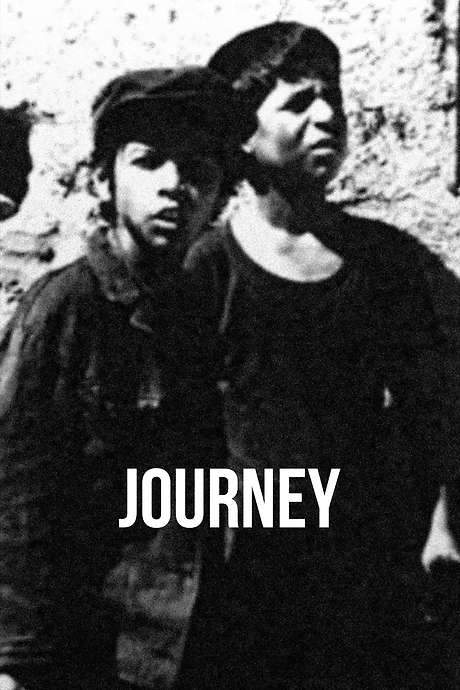
The Journey (2017) movie poster

Timeline

The Journey (2017) Timeline Explained – Every Event in Order

Release, runtime and language
2017 · 94 min · English
Echo score 63
Loading streaming availability…
Directed by
Nick Hamm
Starring
John Hurt, Timothy Spall, Barry Ward, Toby Stephens, Freddie Highmore, Catherine McCormack

Against the backdrop of Northern Ireland's long-standing conflict, Ian Paisley and Martin McGuinness, previously bitter rivals, unexpectedly find themselves on a road trip through Scotland. As they journey through the country's stunning scenery, the two men discover unexpected common ground. Their initial animosity gradually fades, replaced by a budding mutual understanding and a fragile hope for a peaceful resolution to the troubles.

On this page (6)
  1. 1 Where to watch
  2. 2 Events in order (13)
  3. 3 Timeline questions answered
  4. 4 Movie threads
  5. 5 Movies like The Journey
  6. 6 Every angle
Loading streaming availability…

13 events in order · contains spoilers

The Journey Timeline: Events in Chronological Order

Every key event of The Journey (2017) in order, scene by scene, with when and where it takes place. Use it to untangle flashbacks, time jumps and parallel storylines, to refresh your memory before the sequel or to find the exact scene you are thinking of.

  1. First meeting in St Andrews

    In October 2006, the Northern Ireland peace process is debated in St Andrews, Scotland. Ian Paisley and Martin McGuinness meet for the first time and begin negotiations. They carry deep-seated distrust toward each other, setting a tense tone for the talks.

    When
    October 2006
    Where
    St Andrews, Scotland
  2. Weather forces plan to relocate homeward

    Bad weather closes the nearby airport, so the plan is to drive Paisley to another airport for a private jet. McGuinness agrees to the change but only if he travels in the car and plane with Paisley. The mood remains practical yet wary as diplomacy begins under pressure.

    When
    October 2006
    Where
    Between St Andrews and the alternate airport
  3. MI5 surveillance begins

    Unbeknownst to them, MI5 is monitoring the car with spy cameras and a microphone. They communicate with the young driver, who is given leeway to speak to passengers and prompt discussion. The two men stay guarded as the journey continues.

    When
    October 2006
    Where
    Inside the van
  4. Forest diversion and tyre trouble

    The driver takes a diversion into a forest, triggering suspicion as the security detail departs. The van brakes hard and slides into a stack of timber, puncturing a tyre. The driver claims to have hit a deer, but Paisley and McGuinness see no blood on the car.

    When
    During the journey
    Where
    Forest road, Scotland
  5. In the woods, the debate deepens

    While walking in the woods, the two enemies continue to argue their points and defend their actions. McGuinness wonders if the trip has been planned to end in assassination, and both weigh the risk of violence. They discover a fatally wounded deer and grapple with the moral implications of what they are discussing.

    When
    During the journey
    Where
    Woods near the road
  6. Church of martyrs and the Enniskillen bombing

    The two reach a disused Protestant church where Paisley points to martyrs in the stained glass, citing Foxe's Book of Martyrs. They wander to a nearby cemetery and discuss the Enniskillen bombing. Paisley rages at the IRA while McGuinness reveals a private moment about the bombing that unsettles him, and Paisley accuses him of crocodile tears.

    When
    Later in the journey
    Where
    Disused church and cemetery, along the route
  7. A clash of temper and a glimmer of conciliation

    The heated argument convinces McGuinness that there is no point continuing, and he refuses to re-enter the van. Paisley acknowledges that his own 'bark' can be worse than his bite, hinting at a possible willingness to seek peace beneath the surface. The tension lingers as they move on toward the airport.

    When
    Later
    Where
    Near the road and van
  8. Fuel stop and Paisley's influence

    The journey nears the airport and they stop at a service station to refuel. The driver's credit card is bent and initially fails, risking a delay. Paisley uses his public presence to persuade the clerk to retry the number, and it works, allowing them to continue toward the jet.

    When
    Approaching the airport
    Where
    Service station on the route to the airport
  9. The MI5 driver reveals his role

    The driver confronts McGuinness and Paisley, admitting he is an MI5 operative tasked with protecting them and guiding a peaceful conversation. He explains that his agendas are peaceful and aimed at dialogue, not harm. McGuinness tries to relay the point to Paisley, but the news underscores the fragility of their trust.

    When
    Approaching private jet
    Where
    Inside the van at the service station
  10. Angina and companionship

    Paisley collapses in the van with angina, and McGuinness helps him retrieve his medication and settle him down. The moment shifts the balance of control back to the elder statesmen, underscoring the human cost of the political theater. The two men lean on each other as they press toward a possible breakthrough.

    When
    Moments after the MI5 reveal
    Where
    Inside the van
  11. Private reflection on martyrdom and peace

    Paisley gazes at the stained glass and reflects on his own potential martyrdom and how peace might come without violence. McGuinness challenges him to consider the sacrifices required on both sides, emphasizing the arduous path to reconciliation. They discuss the long game of peace and what it would mean for their people.

    When
    Before reaching the hangar
    Where
    Private moment in the van
  12. Hangar meeting and the famous ultimatum

    The van reaches a secure airport hangar where a private jet waits under heavy protection. Paisley issues an ultimatum: he will back the peace accords if McGuinness offers an apology for IRA actions. McGuinness refuses, insisting that apologising would betray his principles, and the two part with a tense but hopeful handshake.

    When
    End of journey
    Where
    Airport hangar
  13. Handshake and the sealing of peace

    The conflicting leaders shake hands as friends, acknowledging their mutual enmity but choosing to press forward for peace. The film ends with real photographs of Paisley and McGuinness working together as Northern Ireland's leaders. The handshake marks the sealing of the peace process, if only symbolically.

    When
    End of journey / after the trip
    Where
    Airport hangar

Last updated: October 09, 2025 at 16:18

Was this helpful?

Timeline questions answered

The Journey Timeline Explained: Your Questions Answered

When does it happen, and why in that order? The questions people ask about the chronology of The Journey (2017): time jumps, flashbacks, cause and effect between scenes and the correct order of events, each answered with spoilers.

Q1

Why did Martin McGuinness agree to ride in the car with Ian Paisley?

McGuinness agreed to ride with Paisley after bad weather forced them to change their travel plans. The original flight was grounded, so Paisley needed to be driven to a different airport for a private jet. McGuinness agreed to the new arrangement but only on the condition that he would travel in the same car and plane as Paisley, essentially ensuring he wasn't being set up or isolated during the journey.

Foreshadowing: This decision to share a vehicle becomes the foundation for the entire deepening conversation that follows.

  • martin mcguinness
  • ian paisley
  • road trip
  • trust
  • journey
Q2

Why was the driver working for MI5 and what was his mission?

The young driver was an MI5 operative tasked with monitoring the conversation between Paisley and McGuinness. However, his real mission was not to trap them but to shepherd a peaceful outcome. He used his position to allow frank talk between the two men while the security apparatus watched from the shadows. Eventually, he revealed his identity, confirming that the agenda was peaceful dialogue, not harm.

Foreshadowing: Early hints of the driver's unusual knowledge and freedom to prompt discussion foreshadow his true identity.

  • mi5
  • driver
  • surveillance
  • security
  • operative
Q3

Why did the driver take the van into the forest?

The driver deliberately diverted into a forest road, a move that immediately raised McGuinness's suspicion about whether the trip was an assassination setup. The security detail departed, leaving the two enemies alone in the woods. Whether this was a calculated MI5 strategy to force dialogue or simply a wrong turn remains ambiguous, but it became the catalyst for their most unguarded conversations.

Foreshadowing: The forest isolation forces the two men to confront each other without the buffer of their political teams.

  • forest
  • detour
  • woods
  • suspicion
  • isolation
Q4

What was the significance of the dead deer in the woods?

While walking in the forest, they encountered a fatally wounded deer. The driver claimed he had hit it, but there was no blood on the car, raising questions about the story. The deer became a symbolic moment, representing vulnerability, death, and the moral weight of the violence both men had been responsible for or exposed to throughout the Troubles.

Foreshadowing: The dying deer mirrors the fragile state of the peace process itself.

  • deer
  • forest
  • symbolism
  • death
  • violence
Q5

Why was the discussion about the Enniskillen bombing so important?

The Enniskillen bombing was a pivotal moment in the Northern Ireland conflict that killed eleven people. When they discussed it at the disused Protestant church, McGuinness confessed that the bombings sometimes made him question the path of violence. This was a rare admission of doubt from the former IRA leader. Paisley responded with rage, accusing McGuinness of crocodile tears, exposing how raw the wound remained despite years of political negotiation.

Foreshadowing: This confrontation forces both men to reckon with the human cost of their respective sides' actions.

  • enniskillen bombing
  • church
  • ira
  • grief
  • confession
Q6

Why did Ian Paisley collapse with angina during the journey?

Paisley collapsed with angina in the van after the MI5 revelation, a moment that shifted the dynamic entirely. McGuinness responded by helping him retrieve his medication and steadying him, an act of physical vulnerability that broke down the political posturing between them. The older man, at eighty-one, confronted his own mortality and reflected on wanting to be remembered for peace rather than violence.

Foreshadowing: This moment of shared weakness becomes the turning point where genuine connection replaces political performance.

  • angina
  • paisley
  • health
  • vulnerability
  • collapse
Q7

Why did Martin McGuinness refuse to apologize for IRA actions?

In the final hangar scene, Paisley issued an ultimatum: he would back the peace accords only if McGuinness apologized for IRA actions. McGuinness refused, stating that apologizing would betray his principles and the identity he had built. Instead, he spoke of the "long game", the idea that reconciliation requires outliving destructive impulses rather than making symbolic gestures that could be seen as surrender.

Foreshadowing: This refusal defines the limits of reconciliation: peace without betrayal of core beliefs.

  • apology
  • mcguinness
  • ira
  • peace deal
  • principles
Q8

What did the handshake between Paisley and McGuinness represent?

Despite McGuinness's refusal to apologize, the two men shook hands in the hangar, choosing a future over persistent grievance. This gesture sealed their shift toward collaboration. The film ends with real photographs showing them serving together as First Minister and Deputy First Minister, the ultimate confirmation that this personal journey led to political reconciliation.

Foreshadowing: The handshake directly leads to their historic power-sharing government.

  • handshake
  • reconciliation
  • peace
  • future
  • partnership
Q9

What did McGuinness mean by the "long game"?

McGuinness repeatedly referenced the "long game", a strategy of patient, long-term reconciliation that does not seek immediate victory or symbolic concessions. He explained that any private apology would betray his principles and the cause he had fought for. The long game meant accepting the slow, difficult process of building peace without erasing the past or compromising identity.

Foreshadowing: This philosophy underpins McGuinness's entire approach to the peace process throughout the journey.

  • long game
  • patience
  • reconciliation
  • strategy
Q10

Why was the fuel stop significant in the film?

At a service station, the driver's credit card failed after the tire incident, risking delay. Paisley used his public charisma to persuade the clerk to retry the card number, which worked. This moment showcased the odd balance of power, Paisley's public influence meeting private vulnerability, and foreshadowed the fragile trust that would develop between them.

Foreshadowing: This demonstrates how Paisley's public persona could still be useful even in a private, vulnerable setting.

  • fuel
  • service station
  • card
  • paisley
  • influence
Q11

What was the significance of the stained glass church scene?

In a disused Protestant church, Paisley pointed to stained glass depicting figures from Foxe's Book of Martyrs, Protestant saints killed for their faith. This moment juxtaposed sacred imagery with the brutal cost of decades of conflict. It grounded Paisley's identity in a tradition of suffering and martyrdom, which later informed his reflection on wanting his legacy to be about peace.

Foreshadowing: This scene sets up Paisley's later contemplation of martyrdom and what kind of legacy he wants to leave.

  • church
  • stained glass
  • foxe
  • martyrs
  • paisley

Movie threads

More Movies Like The Journey, by Mood & Story

Curated lists built around what makes The Journey tick: the same mood, the same kind of story or the same emotional payoff. Each list explains why these movies belong together.

Dialogue-driven road trip movies like The Journey

Opposing characters find unexpected common ground on a transformative journey. For viewers who enjoyed The Journey, this list features movies where a physical journey forces ideological opponents to confront their differences. Discover similar stories of dialogue-driven reconciliation and personal transformation, set against a backdrop of historical or political conflict.

  • tense
  • hopeful
  • reflective
  • dialogue-heavy
  • intimate
  • transformative
  • Tone: tense, reflective, hopeful
  • Pacing: slow, deliberate
Why these movies?

The story pattern: The narrative pattern involves placing two or more characters from opposing sides of a conflict into a confined, mobile setting like a car. Through a series of conversations and shared experiences on the road, their hardened positions begin to soften, leading to a breakthrough that holds significance beyond their personal relationship.

Why they belong together: Movies in this thread are grouped by their use of the 'road trip' structure as a crucible for dialogue and character change. They share a focus on verbal conflict over physical action, a slow pacing that allows relationships to develop authentically, and a tone that moves from tense wariness to cautious hope.


Slow-burn political negotiation movies similar to The Journey

Intimate negotiations where personal vulnerabilities shape historic outcomes. If you liked the tense, dialogue-heavy drama of The Journey, explore these films about fraught political talks. Find movies that capture the slow burn of negotiation, the weight of history, and the personal transformations that occur when adversaries choose dialogue over conflict.

  • tense
  • melancholic
  • intimate
  • wary
  • reflective
  • heavy
  • Tone: tense, melancholic, intimate
  • Pacing: slow burn
Why these movies?

The story pattern: The plot revolves around a stalemate or conflict that requires protagonists to engage in prolonged dialogue. The narrative is confined, often to a single room or vehicle, emphasizing the psychological weight of the discussions. Progress is measured in small, significant gestures and verbal concessions, building towards a fragile resolution.

Why they belong together: These films share a specific mood: a tense, intimate atmosphere where the fate of many rests on the words of a few. They are characterized by slow pacing, heavy emotional weight, and a focus on the psychological dance of negotiation, making the experience intensely reflective and cathartic.

If you liked this

Movies Like The Journey

Similar movies to The Journey: the same genre, themes or kind of story. Each one comes with its own plot summary, timeline and ending explained.

Browse all movie summaries

Every angle

The Journey (2017) Explained: Plot, Timeline & Characters

Everything about The Journey in one place: what happens in the plot summary, the timeline in chronological order, the characters and meaning and a spoiler-free summary. What's After the Movie adds the cast, box office and post-credit scenes.

Coming soon on iOS and Android

The Plot Explained Movie Summary App

Plot summaries, endings explained and timelines on your phone. Catch up on any movie in minutes, save your favorites and never miss a twist again.

Be the first to know when we launch. Your email stays private, always.

Learn more about the app