Plot Explained Spoilers guaranteed!
Plot Explained

Browse by genre

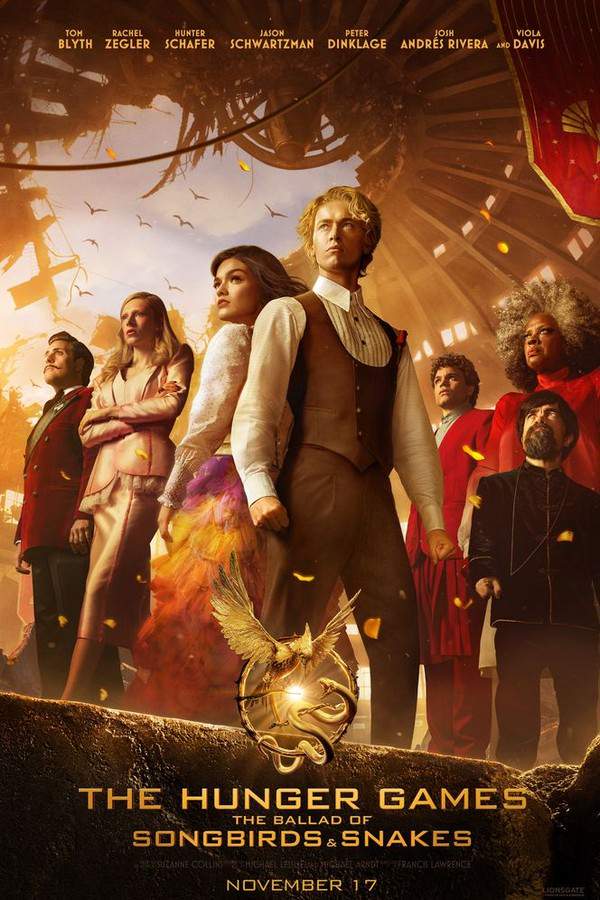
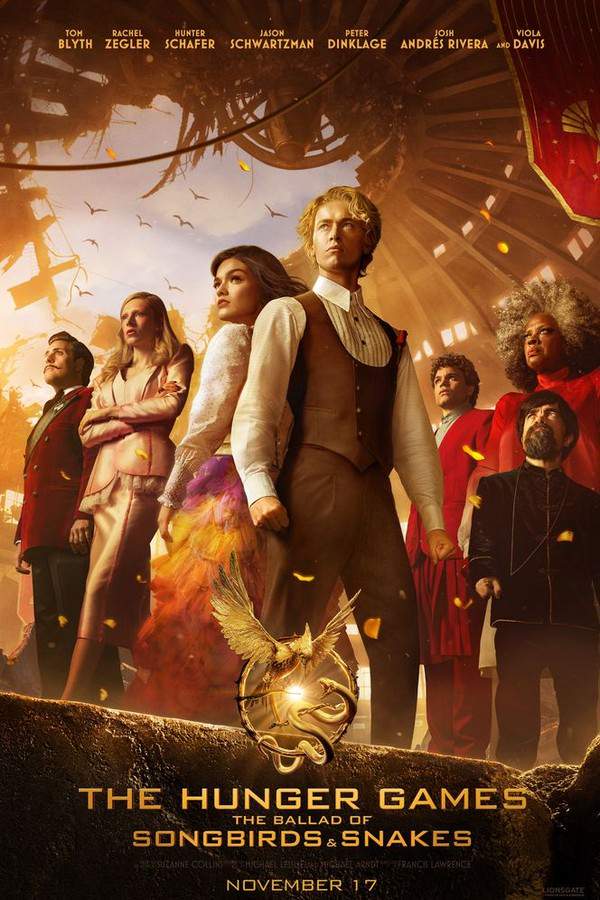
The Hunger Games: The Ballad of Songbirds and Snakes (2023) movie poster

Ending Explained

The Hunger Games: The Ballad of Songbirds and Snakes (2023) Ending Explained – Final Scene & Meaning

Release, runtime and language
2023 · 2 h 37 m · English
Echo score 62
JustWatch #220 17
Directed by
Francis Lawrence
Starring
Viola Davis, Tom Blyth, Clemens Schick, Rachel Zegler, Fionnula Flanagan, Max Raphael
Budget
$100M

Set in a war-torn Panem years before the events of the original films, this story follows a young Coriolanus Snow as he’s assigned to mentor Lucy Gray Baird, a tribute from the impoverished District 12. Facing financial ruin and eager to restore his family’s prestige, Snow sees this as an opportunity to prove himself. As the 10th Hunger Games unfolds, he finds himself unexpectedly drawn to his rebellious and captivating tribute, navigating a complex and dangerous situation that will shape his future.

On this page (8)
  1. 1 Where to watch
  2. 2 What happens at the end
  3. 3 Final events in order
  4. 4 Ending questions answered
  5. 5 The book behind the movie
  6. 6 Movie threads
  7. 7 Movies like The Hunger Games: The Ballad of Songbirds and Snakes
  8. 8 Every angle

Where to watch

Where to Watch The Hunger Games: The Ballad of Songbirds and Snakes (2023)

Where can you watch The Hunger Games: The Ballad of Songbirds and Snakes? Stream, rent or buy it in the US, including on Netflix, Netflix Standard and YouTube TV: current JustWatch availability with up-to-date prices.

Streaming availability powered by JustWatch

Ending explained · contains spoilers

What Happens at the End of The Hunger Games: The Ballad of Songbirds and Snakes?

How The Hunger Games: The Ballad of Songbirds and Snakes (2023) ends, what the final scene means, which earlier moments set it up and how to read the ending if the film leaves it open. The full ending explained, with every spoiler.

Throughout the story, Coriolanus Snow starts as a young man shaped by a harsh upbringing and the collapse of his family’s fortune. His experiences during the Dark Days—witnessing brutal acts of survival and losing his father—serve to develop his understanding of power and control. Initially, his involvement in the Hunger Games is motivated by a desire to restore his family’s honor and secure a prosperous future, but as the story progresses, his actions reveal a deeper interest in manipulation and the pursuit of absolute authority.

During the games, Coryo’s cunning and willingness to bend the rules begin to show how he is willing to exploit the situation. His attempts to seem honest and protect Lucy Gray are driven more by strategic ambition than genuine kindness. As the arena becomes increasingly brutal and chaotic, he kills out of necessity and moral crisis, but these acts also serve to harden him further. His plan to use Lucy’s singing and emotional appeal to boost the game’s viewership initially seems to reinforce his talent for manipulation, but ultimately, it foreshadows his future as a ruthless leader who thrives on spectacle and control.

The climax of the story has Lucy Gray escaping from the arena, and Coryo secretly saving her by sneaking her scent with his handkerchief to avoid the deadly snakes. Their victory is officially declared, but Coryo’s deception is exposed by the authorities, leading to his punishment—serving as a peacekeeper in District 8. His move to the 12th district and his reunion with Lucy Gray suggest a complex hope for a future together, but things quickly turn sour as Coryo becomes embroiled in political intrigue and violence. He betrays Sejanus and others involved in rebellion, which results in their executions, revealing his increasing willingness to betray his morals for self-preservation and ambition.

As he drifts further into the darkness, Coryo’s paranoia and ambition drive him to conceal evidence and push Lucy Gray away. A final confrontation in the wilderness ends with him getting bitten by a snake after suspecting Lucy Gray’s betrayal, which further isolates him. Returning to the Capitol, he ascends the ranks and is mentored by Gaul, eventually becoming the ruthless President Snow we come to know. The story concludes with Snow visiting the statue of Justice, symbolizing his complete transformation into a tyrannical figure. His moral decay is cemented by the realization that his own choices, more than environment or circumstances, have shaped his path to tyranny. The fate of Lucy Gray remains uncertain, lost in the wilderness, a haunting reminder of what could have been, but the ending emphasizes that Snow’s evil was ultimately a product of deliberate decisions—his own becoming the real source of his darkness.
Last updated: June 25, 2025 at 09:01

Was this helpful?

The last 4 events

How The Hunger Games: The Ballad of Songbirds and Snakes Ends: The Final Events in Order

The last events of The Hunger Games: The Ballad of Songbirds and Snakes (2023) in chronological order, the run-up to the ending explained above. The complete timeline has all 14 events, scene by scene.

Open the full timeline
  1. The Deadly Finale

    The Games culminate in a dramatic finale marked by genetically altered snakes that become lethal weapons against the tributes. This blood-stained spectacle results in devastating losses for many participants.

  2. Coriolanus's Rise to Power

    Following the Games, Coriolanus is awarded the Plinth Prize and a coveted scholarship, propelling him toward influence within the Capitol. However, the shadow of his decisions looms over his newfound status.

    Where
    Capitol
  3. Lucy's Fate Remains Uncertain

    As Coriolanus ascends in power, the fate of Lucy Gray remains a mystery. Her survival becomes a poignant symbol of the sacrifices made in pursuit of ambition and loyalty amid the brutality of the Games.

    Where
    District 12
  4. Conclusion of the Game's Aftermath

    The ending leaves viewers reflecting on the heavy costs of ambition and loyalty showcased throughout the narrative. Coriolanus's journey sets the stage for the broader saga of power, oppression, and survival.

Ending questions answered

The Hunger Games: The Ballad of Songbirds and Snakes Ending: Your Questions Answered

The questions people ask most about the ending of The Hunger Games: The Ballad of Songbirds and Snakes (2023): what the final scene means, how the twist works, what happens to each character and how to read the ending. Each answer contains spoilers.

Q1

Why does Coriolanus become President Snow?

Coriolanus transforms into President Snow through a gradual process of moral decay driven by his own choices. After his deception in the 10th Hunger Games is exposed, he serves as a peacekeeper in District 8 before being transferred to District 12. He betrays Sejanus and other rebels to secure his position, progressively abandoning his morals for self-preservation and ambition. The ending reveals that his tyranny was not forced by circumstances but was a product of deliberate decisions, his own choices becoming the real source of his darkness.

Foreshadowing: His early manipulation of Lucy Gray's emotional appeal foreshadows his future as a leader who thrives on spectacle and control.

  • coriolanus snow
  • president snow
  • transformation
  • tyrant
  • moral decay
Q2

What happens to Lucy Gray at the end?

Lucy Gray's fate remains uncertain and ambiguous. After Coriolanus suspecting her of betrayal, a final confrontation occurs in the wilderness where he gets bitten by a snake. Following this incident, Lucy Gray disappears into the wilderness and is never seen again. The ending suggests she either escaped into the woods or died, leaving her fate unresolved as a haunting reminder of what could have been for Coriolanus.

Foreshadowing: Her earlier escape from the arena demonstrated her resourcefulness and ability to survive in the wild.

  • lucy gray
  • fate
  • ending
  • wilderness
  • missing
Q3

Why does Coriolanus betray Sejanus?

Coriolanus betrays Sejanus and other rebels involved in the District 12 uprising to save himself and advance his political career. When Sejanus becomes involved in rebellion activities, Coriolanus sees an opportunity to eliminate his former friend and impress the Capitol leadership. He provides information that leads to Sejanus's execution, demonstrating his willingness to sacrifice anyone for his own survival and ambition.

Foreshadowing: His earlier willingness to exploit Lucy Gray for his gain established his pattern of using people for personal advancement.

  • sejanus
  • betrayal
  • execution
  • rebellion
  • capitol
Q4

What does the snake bite symbolize in the ending?

The snake bite represents Coriolanus's complete isolation and the consequences of his paranoia. After suspecting Lucy Gray of betrayal, he attacks her in the wilderness and is bitten by a snake, ironically the same snakes he used to save her in the arena. This moment cements his isolation from genuine human connection, as the only person who might have loved him is either dead or lost because of his own actions.

Foreshadowing: The snakes in the arena were initially used to save Lucy Gray, making the final snake bite a bitter reversal of that moment.

  • snake bite
  • symbolism
  • isolation
  • paranoia
  • betrayal
Q5

What does the statue of Justice represent at the end?

The statue of Justice symbolizes Coriolanus's complete transformation into a tyrannical ruler who perverts the concept of justice. At the film's conclusion, Snow visits this statue in the Capitol, marking his ascension to power. The irony is profound, he has achieved his goals through betrayal, manipulation, and murder, yet presents himself as a figure of justice. The statue represents how he will use the rhetoric of justice to justify his brutal oppression of the districts.

Foreshadowing: His early experiences during the Dark Days shaped his understanding of power and control, setting the foundation for this corrupted vision of justice.

  • statue of justice
  • symbolism
  • capitol
  • tyranny
  • power
Q6

Why does Lucy Gray run away from Coriolanus?

Lucy Gray becomes suspicious of Coriolanus after witnessing his involvement in the murders of the Covey and his growing paranoia. She realizes that the man she loved has become dangerous and willing to kill to protect his position. Her discovery of his hidden bag of mixed drinks, the evidence he used to poison the rebels, confirms her fears that he has completely abandoned his humanity. She flees into the wilderness rather than become another victim of his ambition.

Foreshadowing: Her survival instincts and ability to read people, honed by her time in the arena, help her recognize the danger he poses.

  • lucy gray
  • runs away
  • discovers evidence
  • flees
  • wilderness
Q7

Was Coriolanus always evil or did he become evil?

The ending emphasizes that Coriolanus's evil was ultimately a product of his own deliberate choices rather than circumstances. While his harsh upbringing during the Dark Days and his family's financial ruin shaped him, the film concludes that he had opportunities to choose differently. His transformation into President Snow was not inevitable, it was the result of repeated choices to prioritize ambition over morality, power over compassion, and self-preservation over loyalty.

Foreshadowing: Even in the arena, he made calculated decisions that revealed his capacity for manipulation and violence.

  • coriolanus
  • evil
  • nature vs nurture
  • choices
  • moral decay
Q8

Why does Coriolanus kill the Covey?

Coriolanus kills the Covey (the group of performers Lucy Gray belonged to) as part of his strategy to suppress the rebellion and protect his position in District 12. When the rebels use the Covey's hideout for meetings, Coriolanus sees an opportunity to eliminate evidence of his own involvement and appease the Capitol. He poisons the well where the Covey gathers, resulting in their deaths, demonstrating his complete willingness to commit mass murder to maintain his status.

Foreshadowing: His earlier kills in the arena, though initially出于 necessity, showed his capacity for brutal violence.

  • covey
  • murder
  • poisoning
  • rebellion
  • district 12
Q9

Does Coriolanus truly love Lucy Gray?

Coriolanus's feelings for Lucy Gray appear genuine at first but become increasingly intertwined with his ambition. His initial attraction to her rebellious spirit and talent is real, but his strategic use of her singing to boost the Games' viewership reveals his tendency to exploit even personal connections for gain. As he descends into paranoia and tyranny, his love transforms into possession, when he suspects she might betray him, he attacks her rather than risk losing control. The ending suggests his feelings were always compromised by his need for power and control.

Foreshadowing: His early manipulation of her emotional appeal for strategic advantage foreshadowed how their relationship would ultimately collapse.

  • love
  • lucy gray
  • manipulation
  • ambition
  • relationship
Q10

Why is Coriolanus sent to District 12?

Coriolanus is sent to District 12 as punishment for his deception in the 10th Hunger Games. After he secretly saves Lucy Gray by sneaking her scent on his handkerchief to avoid the deadly snakes, his scheme is discovered by the authorities. Rather than executing him, the Capitol exiles him to District 12 as a peacekeeper. This assignment ironically brings him back to where Lucy Gray originated, setting the stage for their reunion and subsequent downfall.

Foreshadowing: His earlier plan to use Lucy Gray's singing to boost viewership already showed his willingness to bend Capitol rules for personal gain.

  • district 12
  • peacekeeper
  • punishment
  • exile
  • capitol

Movie threads

More Movies Like The Hunger Games: The Ballad of Songbirds and Snakes, by Mood & Story

Curated lists built around what makes The Hunger Games: The Ballad of Songbirds and Snakes tick: the same mood, the same kind of story or the same emotional payoff. Each list explains why these movies belong together.

Movies about the origin of a villain like The Hunger Games: The Ballad of Songbirds and Snakes

Complex stories that trace a character's moral collapse and rise to power. If you were fascinated by the young Coriolanus Snow's journey, explore other movies like The Hunger Games: The Ballad of Songbirds and Snakes that delve into the origin of villainy. These similar films feature ambitious characters facing moral corruption, showing how circumstances and choices can lead a protagonist to become an antagonist.

  • morally complex
  • unsettling
  • gripping
  • tragic
  • ambitious
  • dark transformation
  • Tone: dark, morally complex
  • Pacing: variable, character-driven
Why these movies?

The story pattern: The narrative typically follows a central character who begins with potential for goodness or is driven by understandable motives like ambition or survival. Through a series of pivotal events, moral compromises, and betrayals, the character's integrity erodes, culminating in their embrace of a darker, more powerful identity. The story is a tragedy of potential lost.

Why they belong together: These movies are grouped together because they share a core focus on a specific character arc: the protagonist's fall from grace. They create a compelling and often uncomfortable experience by blending sympathy with condemnation, exploring themes of power, corruption, and the loss of innocence.

Grim dystopian survival stories like The Hunger Games: The Ballad of Songbirds and Snakes

Stories set in oppressive futures where survival demands brutal choices. Fans of the oppressive world of Panem will enjoy these movies like The Hunger Games: The Ballad of Songbirds and Snakes. Discover similar dystopian stories featuring desperate characters fighting for survival against brutal systems, class divides, and life-or-death games in bleak futuristic settings.

  • tense
  • oppressive
  • desperate
  • gripping
  • brutal
  • rebellious
  • Tone: dark, tense, oppressive
  • Pacing: variable, shifting from setup to action
Why these movies?

The story pattern: Narratives in this thread are defined by their setting—an unjust, often futuristic society—which becomes the primary source of conflict. Characters must navigate deadly rules, from literal fight-to-the-death arenas to oppressive political regimes. The plot revolves around the physical and psychological struggle to endure and possibly resist a corrupt system.

Why they belong together: These films are connected by their shared foundation in a bleak dystopian world that dictates the story's high stakes and dark tone. The similarity comes from the oppressive atmosphere, the focus on survival against overwhelming odds, and the exploration of themes like class warfare and systemic cruelty.

If you liked this

Movies Like The Hunger Games: The Ballad of Songbirds and Snakes

Similar movies to The Hunger Games: The Ballad of Songbirds and Snakes: the same genre, themes or kind of story. Each one comes with its own plot summary, timeline and ending explained.

Browse all movie summaries

Every angle

The Hunger Games: The Ballad of Songbirds and Snakes (2023) Explained: Plot, Ending, Timeline & Characters

Everything about The Hunger Games: The Ballad of Songbirds and Snakes in one place: what happens in the plot summary, the timeline in chronological order, the characters and meaning, the ending explained and a spoiler-free summary. What's After the Movie adds the cast, box office and post-credit scenes.

Coming soon on iOS and Android

The Plot Explained Movie Summary App

Plot summaries, endings explained and timelines on your phone. Catch up on any movie in minutes, save your favorites and never miss a twist again.

Be the first to know when we launch. Your email stays private, always.

Learn more about the app