Plot Explained Spoilers guaranteed!
Plot Explained

Browse by genre

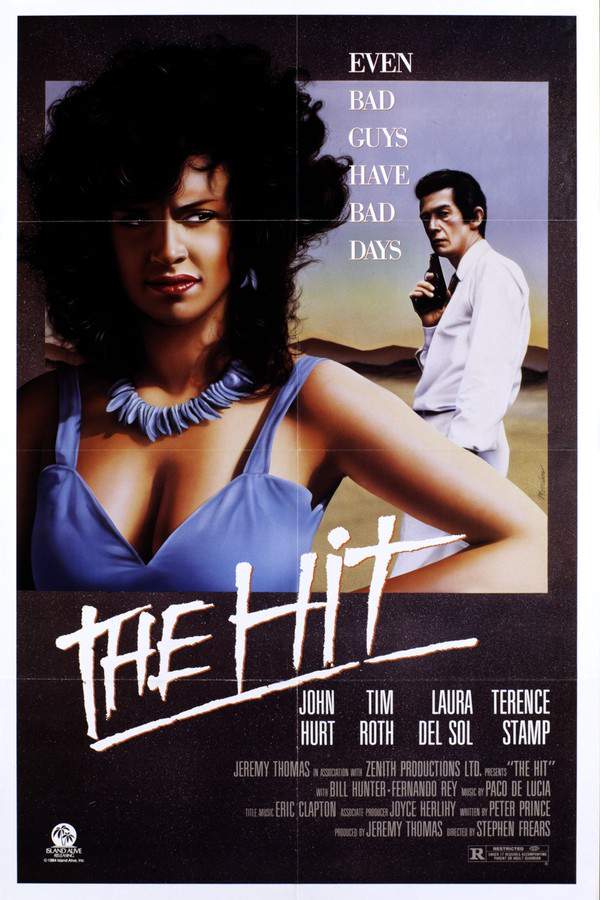
The Hit (1985) movie poster

Plot Summary

The Hit (1985) Plot Summary Explained

Release, runtime and language
1985 · 98 min · English
JustWatch #5,052 12
Directed by
Stephen Frears
Starring
Terence Stamp, Jim Broadbent, A.J. Clarke, Albie Woodington, Bernie Searle, Brian Royal

Two hardened assassins, played by John Hurt and Tim Roth, are tasked with transporting a former informant, portrayed by Terence Stamp, across Europe. Their mission quickly turns into a dangerous pursuit as they are forced to evade authorities and confront unexpected challenges while navigating a web of deceit and betrayal in a gritty crime drama.

On this page (6)
  1. 1 Where to watch
  2. 2 What happens: full plot
  3. 3 Plot questions answered
  4. 4 Movie threads
  5. 5 Movies like The Hit
  6. 6 Every angle

Where to watch

Where to Watch The Hit (1985)

Where can you watch The Hit? Stream, rent or buy it in the US, including on Amazon Prime Video, Amazon MX Player and Amazon Prime Video Free: current JustWatch availability with up-to-date prices.

Streaming availability powered by JustWatch

Full plot summary · contains spoilers

What Happens in The Hit: Full Plot Summary

The whole story of The Hit (1985) explained, from the opening scene to the final frame: every key event, every twist and what it all adds up to. Read it as a quick recap before the sequel, to check a scene you missed, or to finally understand what really happened.

London gangster Willie Parker agrees to testify against his criminal partners in exchange for a very generous offer from the police. As he steps out of the witness box at his trial, the defendants threaten and sing the Vera Lynn classic We’ll Meet Again, a haunting echo of the price he paid for his cooperation. Ten years pass, and Parker is living a comfortable retirement in Spain. His world is upended when four Spanish youths kidnap him and hand him over to a weary British hit man, Braddock, and his sharp, volatile young apprentice, Myron, hired by the crime boss Parker helped convict. The kidnapping goes awry when the youths crash into a local policeman assigned to guard Parker, and three of them are killed by a bomb hidden in a briefcase they believe contains their payment. Braddock is seasoned, world-weary, and unshakeable, while Myron brings a restless energy and a touch of menace to every move he makes. Parker, for his part, maintains a carefree air, insisting that death is simply a stage in life he has learned to accept after a decade of living with the threat hanging over him.

Braddock assigns Myron to drive them to an Madrid apartment, only to discover the owner is away and the place is occupied by an acquaintance. The occupant is Harry, a middle‑aged Australian with a young, non‑English speaking Spanish girlfriend named Maggie who comes home while they’re talking. Parker deliberately reveals his identity to them, prompting Braddock to take Maggie as insurance. Harry hands over the keys to the owner’s white Mercedes, but Braddock’s suspicion about Harry’s willingness to stay quiet drives him back upstairs to confront him—and he kills Harry.

With the group bound for the French border in hopes of reaching Paris where the crime boss supposedly waits, Parker quietly sows seeds of discord between Braddock and Myron. Unbeknownst to them, the Spanish police, led by a seasoned inspector, begin tracing the trail of bodies. At a roadside bar, Myron lashes out at four youths who laugh at him, revealing the tension that exists beneath his cheerful veneer. He also begins to feel protective of Maggie, and a tense confrontation with her deepens the cracks in the group dynamic. Maggie, who clearly understands English, speaks with Braddock and bites his hand, an act that seems to thrill Braddock with a strange, masochistic pleasure.

The trio drives to a track that climbs into woodland by a river, where they pause to rest. Braddock leaves Myron with Parker and takes Maggie to refill the car’s petrol. Maggie tries to alert the station attendant to her plight, forcing Braddock to kill the attendant. He pursues Maggie, but either cannot or will not shoot her. When they return, Parker has slipped away while Myron dozes, watching him by a waterfall. Parker declares that he is not afraid of death, insisting it is merely part of life’s journey.

The next day, Braddock halts the car on a remote hillside, ten miles from the border, and reveals that Paris is no longer part of the plan. He disarms Myron, tossing his gun into the scrub, and Parker, terrified, begs to reach Paris before he dies. Braddock shoots Parker in the back as he tries to run, then turns the gun on Myron and kills him as Maggie looks on. In a desperate struggle, Maggie knocks Braddock unconscious, leaving him alive but vulnerable. Braddock then drives away, changes into hiking clothes, and disappears into the forest.

When the police finally catch up, Maggie identifies Braddock, and he is shot as he tries to cross the border on foot. The dying killer’s last gesture is a sly wink at Maggie as the authorities close in, a final, cryptic note to a chase that has threaded through loyalty, fear, and the lure of Paris.
Last updated: November 22, 2025 at 15:57

Was this helpful?

Plot questions answered

The Hit Plot Explained: Your Questions Answered

The questions people ask most about The Hit (1985): what happens in the confusing scenes, why the characters do what they do, the twists, hidden details and what the ending means. Each answer contains spoilers.
Q1

Why is Parker not afraid of dying in The Hit?

After ten years of living with the threat of retaliation for testifying against his criminal partners, Parker has made peace with mortality. He tells Myron that death is simply another stage in life's journey, and he's reached a philosophical acceptance of his fate. This calm demeanor unsettles his captors and becomes a recurring theme throughout the film, representing his detachment from the survival instinct that drives others.

Foreshadowing: Early in the film, the defendants threaten Parker in court by singing "We'll Meet Again," foreshadowing that his death would eventually come.

  • parker
  • death acceptance
  • testimony
  • retirement
  • witness protection
Q2

Why does Braddock kill Parker instead of taking him to Paris?

Braddock reveals on the hillside that Paris was never part of the plan, he intentionally misled everyone including Myron about their destination. He kills Parker to prevent him from reaching the crime boss who hired the hit, effectively double-crossing his own employer. The exact reason remains ambiguous: it could be that Braddock decided to keep the money for himself, or that he simply lost interest in completing the job as contracted.

Foreshadowing: Braddock's early decision to keep Maggie as insurance rather than simply completing the job hints at his willingness to act outside the original plan.

  • braddock
  • parker
  • paris
  • killing
  • double cross
  • job
Q3

What is Parker doing when he sows discord between Braddock and Myron?

Parker deliberately manipulates the tension between Braddock and Myron by making quiet observations and subtle comments that plant seeds of suspicion between them. He recognizes that their partnership is unstable, Myron is volatile and eager while Braddock is world-weary and controlled. By exacerbate their differences, Parker may be hoping they will turn on each other or at least become less focused on delivering him to his death.

Foreshadowing: This tactic becomes evident early in the journey when Parker makes pointed comments about Myron's youth and Braddock's experience.

  • parker
  • myron
  • braddock
  • manipulation
  • discord
  • partnership
Q4

Why does Braddock kill Harry in the Madrid apartment?

Braddock kills Harry because he becomes suspicious of his willingness to simply hand over the keys and stay quiet about the situation. Braddock reasons that anyone who would cooperate so easily with a group of armed kidnappers must have ulterior motives or will inevitably go to the police. This cold calculation reflects Braddock's paranoid, methodical approach to eliminating potential threats.

Foreshadowing: The fact that Harry readily hands over the keys without demanding explanations triggers Braddock's suspicion.

  • braddock
  • harry
  • madrid
  • killed
  • apartment
  • suspicion
Q5

Why does Braddock let Maggie live throughout the journey?

Braddock shows a strange fascination with Maggie throughout their journey. When she bites his hand, he reacts with what appears to be masochistic pleasure rather than anger. Later, when he chases her after she tries to alert the petrol station attendant, he cannot bring himself to shoot her. This suggests a complex attraction or respect for her defiance that prevents him from killing her, though he readily kills others who stand in his way.

Foreshadowing: Maggie biting Braddock's hand and drawing blood establishes early that she has a strange effect on him.

  • maggie
  • braddock
  • alive
  • survives
  • attraction
  • defiance
Q6

Why does Braddock kill Myron at the end?

After disarming Myron and revealing that Paris was never the destination, Braddock turns the gun on Myron and kills him without hesitation. This suggests Braddock views Myron as either a liability who knows too much about the original job, or simply someone who has become expendable now that Braddock has decided to abandon the original plan entirely. Myron's death completes Braddock's total betrayal of everyone involved in the operation.

Foreshadowing: Myron's growing attachment to Maggie and his volatile personality make him increasingly unpredictable, which likely makes him dangerous to Braddock's new plans.

  • braddock
  • myron
  • kills
  • betrayal
  • border
  • hillside
Q7

Why does Maggie identify Braddock to the police?

Despite Braddock sparing her life, Maggie chooses to identify him to the authorities after witnessing him murder Parker and Myron. Her decision represents her rejection of the violence she was forced to endure and her refusal to let Braddock escape accountability. Though Braddock showed her a strange mercy, she cannot overlook the brutal killings she witnessed and the trauma she experienced.

Foreshadowing: Maggie never stopped resisting Braddock, from biting him to trying to alert the petrol station attendant, showing her fundamental opposition to him.

  • maggie
  • braddock
  • police
  • identify
  • arrest
  • testimony
Q8

What does Braddock's final wink at Maggie mean?

As Braddock lies dying after being shot at the border, he gives Maggie a sly, cryptic wink. This final gesture suggests a complex final connection between them, perhaps a final act of defiance, an acknowledgment of their strange bond, or a last attempt to unsettle her. It leaves his true feelings toward Maggie ambiguous: was it a gesture of affection, a final manipulation, or simply his characteristic bravado until the end?

Foreshadowing: Throughout the journey, Braddock's reactions to Maggie's defiance suggested an unusual fascination with her.

  • braddock
  • maggie
  • wink
  • ending
  • dying
  • meaning
Q9

Why does Parker deliberately reveal his identity to Harry and Maggie?

Parker reveals his identity to the strangers in the Madrid apartment, knowing this will force Braddock to keep Maggie as insurance and potentially kill Harry. This appears to be part of Parker's strategy to create chaos and complications for his captors. By involving innocent bystanders, he may be hoping to create opportunities for escape or to accelerate the deterioration of the group's dynamics.

Foreshadowing: Parker consistently demonstrates a willingness to manipulate situations to his advantage throughout the film.

  • parker
  • identity
  • reveal
  • harry
  • maggie
  • strategy
Q10

Why do the Spanish youths kidnap Parker?

The four Spanish youths kidnap Parker and hand him over to Braddock and Myron because they were hired by the crime boss Parker helped convict. They likely expected a substantial payment for delivering the former informant. The operation goes wrong when they crash into a police guard, and the hidden bomb in what they thought was their payment kills three of them, revealing the crime boss's typical disregard for anyone who works for him.

Foreshadowing: The use of a bomb in a briefcase as payment foreshadows the violent, double-crossing nature of the criminal underworld.

  • spanish youths
  • kidnap
  • parker
  • payment
  • bomb
  • crime boss
Q11

What is the significance of "We'll Meet Again" in the opening scene?

As Willie Parker leaves the witness box after testifying against his criminal partners, the defendants threaten him by singing the Vera Lynn classic "We'll Meet Again." This haunting song serves as a ominous warning that Parker will face consequences for his betrayal. The lyrics about meeting again 'some sunny day' become ironic given Parker's eventual fate and the film's title 'The Hit,' establishing the film's themes of inevitable retribution.

Foreshadowing: The song's message of inevitable reunion directly foreshadows Parker's ultimate fate.

  • we'll meet again
  • vera lynn
  • song
  • threat
  • parker
  • testimony
  • betrayal
Q12

Why does Braddock kill the petrol station attendant?

Braddock kills the petrol station attendant because Maggie tries to alert him to her plight, signaling that she is in danger. When the attendant approaches the car, Maggie's attempts to communicate her situation force Braddock to eliminate the witness. This demonstrates Braddock's ruthless efficiency in removing anyone who might compromise the mission or expose their location.

Foreshadowing: Maggie has been silently resisting throughout the journey, and this attempt at communication finally forces Braddock's hand.

  • braddock
  • petrol attendant
  • killed
  • maggie
  • witness
  • escape

Movie threads

More Movies Like The Hit, by Mood & Story

Curated lists built around what makes The Hit tick: the same mood, the same kind of story or the same emotional payoff. Each list explains why these movies belong together.

Fatalistic crime thrillers with bleak endings like The Hit

Characters confront their mortality on a grim journey with a predetermined, bleak end. Movies like The Hit where a tense road trip becomes a philosophical confrontation with death. If you enjoyed the grim, fatalistic atmosphere and the sense of an unavoidable bleak ending, this collection of crime dramas and thrillers captures that same feeling of characters navigating a path pre-destined for disaster.

  • fatalistic
  • uneasy
  • melancholic
  • philosophical
  • grim
  • atmospheric
  • Tone: tense, bleak, philosophical
  • Pacing: steady, deliberate
Why these movies?

The story pattern: The narrative is typically a linear journey, often a chase or a mission, that serves as a metaphor for a character's reckoning with their past actions. The plot structure reinforces the theme of inevitability, with each step bringing the characters closer to a conclusion that offers no redemption or escape, only a stark confrontation with consequences.

Why they belong together: These films are grouped by their shared atmosphere of existential dread and their commitment to a tragic, unforgiving worldview. They combine a steady, deliberate pacing with high emotional weight and a tense, philosophical tone, creating a cohesive experience for viewers who appreciate stories where hope is a liability.

Psychological manipulation thrillers with tense dynamics like The Hit

Captors and captives trade roles in a tense battle of wits and manipulation. If you liked the psychological chess match in The Hit, where Terence Stamp's character unravels his captors, you'll find similar tension in these movies. This list features thrillers and dramas centered on intense character studies, where verbal sparring and mental manipulation create a claustrophobic, high-stakes atmosphere, even on an open road.

  • psychological
  • tense
  • unsettling
  • cerebral
  • manipulative
  • claustrophobic
  • Tone: tense, unsettling, cerebral
  • Pacing: steady, building
Why these movies?

The story pattern: The plot often revolves around a confined situation—a car journey, a single room, a isolated location—that serves as a pressure cooker for psychological warfare. The narrative focus is on character dialogue and subtle power shifts rather than external action, building steadily towards a violent climax that is triggered by the mental collapse of one party.

Why they belong together: These movies are united by their focus on cerebral conflict over physical action. They share a high intensity driven by psychological torment, a consistently tense tone, and a steady pacing that allows the character dynamics to simmer and erupt. The experience is heavy and unsettling, prioritizing intellectual dread over jump scares.

If you liked this

Movies Like The Hit

Similar movies to The Hit: the same genre, themes or kind of story. Each one comes with its own plot summary, timeline and ending explained.

Browse all movie summaries

Every angle

The Hit (1985) Explained: Plot, Timeline & Characters

Everything about The Hit in one place: what happens in the plot summary, the timeline in chronological order, the characters and meaning and a spoiler-free summary. What's After the Movie adds the cast, box office and post-credit scenes.

Coming soon on iOS and Android

The Plot Explained Movie Summary App

Plot summaries, endings explained and timelines on your phone. Catch up on any movie in minutes, save your favorites and never miss a twist again.

Be the first to know when we launch. Your email stays private, always.

Learn more about the app