Plot Explained Spoilers guaranteed!
Plot Explained

Browse by genre

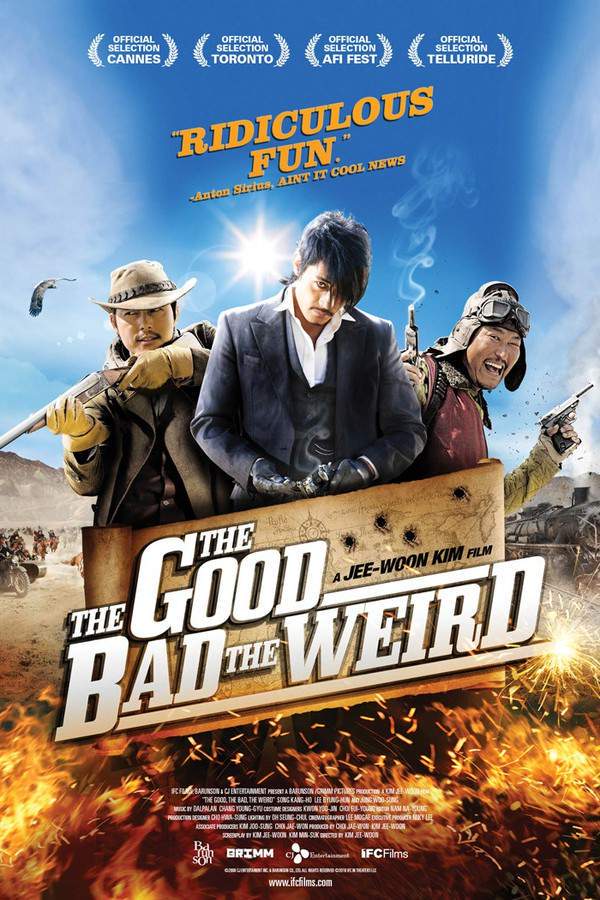
The Good, the Bad, the Weird (2008) movie poster

Timeline

The Good, the Bad, the Weird (2008) Timeline Explained – Every Event in Order

Release, runtime and language
2008 · 130 mins · Korean
Directed by
Kim Jee-woon
Starring
Don Lee, Shoken Kunimoto, Hakuryu, Lee Tae-rim, Song Kang-ho, Park Jin-woo
Budget
$10M

Set in 1930s Manchuria, three Korean outlaws—a bounty hunter known as the Good, a hitman called the Bad, and a thief dubbed the Weird—are drawn into a deadly contest for a treasure map. Their pursuit pits them against the Japanese army and Chinese and Russian bandits, each racing to claim the legendary riches the map promises.

On this page (5)
  1. 1 Events in order (13)
  2. 2 Timeline questions answered
  3. 3 Movie threads
  4. 4 Movies like The Good, the Bad, the Weird
  5. 5 Every angle

13 events in order · contains spoilers

The Good, the Bad, the Weird Timeline: Events in Chronological Order

Every key event of The Good, the Bad, the Weird (2008) in order, scene by scene, with when and where it takes place. Use it to untangle flashbacks, time jumps and parallel storylines, to refresh your memory before the sequel or to find the exact scene you are thinking of.

  1. Mission assigned: steal the treasure map

    In the desert of Manchuria, Park Chang-yi is hired to retrieve a treasure map from a Japanese official traveling by train. He plans to intercept the official and claim the map for himself and his gang. The mission sets the stage for a deadly interception that will pull several factions into conflict.

    When
    1939
    Where
    Manchuria, aboard the train
  2. Tae-goo steals the map and hijacks the train

    Tae-goo, The Weird, steals the map during the hijacking of the train. The Bad's plan unfolds as chaos erupts and the Japanese and Manchurian guards, along with civilians, are slaughtered. The theft triggers a violent pursuit that brings multiple pursuers into the hunt.

    When
    1939
    Where
    On the train, Manchuria
  3. Do-won enters the hunt

    Do-won, The Good, arrives to claim the bounty on Chang-yi. He tracks the players, becoming a new threat to Tae-goo and Chang-yi as the pursuit intensifies. The fragile balance between good and bad factions begins to tilt toward all-out chase.

    When
    1939
    Where
    Around the hijacked train vicinity
  4. Tae-goo escapes the pursuers

    Tae-goo escapes with the map, deftly eluding both the Bad and the Good. He races across the desert as the pursuers tighten their circles, each faction determined to reclaim the prize. The chase widens into a broader desert pursuit.

    When
    1939
    Where
    Manchurian desert outskirts
  5. Ghost Market bandits join the chase

    A fourth force—the Manchurian bandits—enters the pursuit, hoping to sell the map at the Ghost Market. Their presence raises the stakes and introduces a new layer of danger as rival groups converge on Tae-goo. The pursuit becomes a chaotic multi-front ordeal.

    When
    1939
    Where
    Desert routes toward Ghost Market
  6. Tae-goo's motive: gold and Qing secrets

    Tae-goo clings to the belief that the map hides gold and Qing dynasty secrets, driving him to persevere through every setback. He hopes the legends surrounding the treasure will translate into wealth and survival. The map's true contents remain shrouded as the chase continues.

    When
    1939
    Where
    Desert/ruins in Manchuria
  7. Bounties rise; the Japanese Army enters the hunt

    Bounties multiply as the Imperial Japanese Army races to reclaim the map, believing it could save the Japanese Empire. Soldiers, bandits, and bounty hunters all compete to control Tae-goo and the map. The conflict expands beyond personal vendetta into a larger regional crisis.

    When
    mid-late 1939
    Where
    Manchuria frontlines
  8. Final chase erupts: factions converge

    In the final act, the Japanese army, Manchurian bandits, Do-won, Chang-yi, and his gang converge on Tae-goo in a sprawling desert chase. Shootouts erupt as each group fights for dominance and the map. The desert becomes a theatre for a reckless, kinetic pursuit.

    When
    Final act
    Where
    Desert chase route, Manchuria
  9. Violence escalates; casualties and explosion

    The battle claims many casualties as the Japanese army slaughters bandits, while Do-won retaliates with brutal force and detonates an explosion to drive the army away. The combat reduces the players to a handful of survivors and raises the stakes of the hunt. The chaotic firefight underscores how thin the odds have become for everyone chasing the map.

    When
    Final act
    Where
    Desert battlefield
  10. Treasure revealed as a boarded hole; oil erupts

    The trio reach the treasure site only to find a boarded-over hole, debunking the legend of vast riches. The moment is punctuated by the desert suddenly belching crude oil, a grotesque windfall that was never meant to be treasure. The discovery shifts everyone’s priorities and tempers the final confrontations.

    When
    Final confrontation
    Where
    Treasure site, desert
  11. Identity revealed; the Finger Chopper mystery

    Chang-yi recognizes Tae-goo as the Finger Chopper, the man who once cut his finger in a knife fight. Do-won has been chasing a different suspect, which fuels a bitter vendetta between them. The revelation intensifies the looming standoff as loyalties crumble.

    When
    Final confrontation
    Where
    Treasure site
  12. Final standoff ends in death; oil seals fate

    Three-way standoff erupts into gunfire and chaos. Tae-goo and Do-won survive the exchange, while Chang-yi is killed. The oil geyser erupts as the empty hole claims its dramatic final moment, marking the end of the chase for most involved.

    When
    End
    Where
    Desert, near treasure
  13. Aftermath: new chase begins

    Do-won survives alongside Tae-goo, and a new bounty on Tae-goo launches another chase across the Manchurian desert. The landscape remains dangerous, and the map’s legend continues to drive new confrontations. The story closes on the promise of further pursuit.

    When
    Post-climax
    Where
    Manchuria desert

Last updated: October 09, 2025 at 10:50

Was this helpful?

Timeline questions answered

The Good, the Bad, the Weird Timeline Explained: Your Questions Answered

When does it happen, and why in that order? The questions people ask about the chronology of The Good, the Bad, the Weird (2008): time jumps, flashbacks, cause and effect between scenes and the correct order of events, each answered with spoilers.

Q1

Why does the treasure turn out to be oil instead of gold?

The map leads to a boarded-over hole in the desert where the treasure is supposed to be buried. When the three survivors reach the site, they find nothing but an empty cavern beneath the boards. Suddenly, a geyser of crude oil erupts from the ground, a cruel twist that turns the legendary treasure into worthless black gold. The film uses this absurd revelation to underscore its darkly comic tone, showing that the violent pursuit was ultimately for nothing tangible.

Foreshadowing: Tae-goo's belief that the map hides 'gold and Qing dynasty secrets' builds expectations that the film deliberately subverts.

  • treasure map
  • oil
  • gold
  • twist ending
  • desert
  • absurdity
Q2

How does Chang-yi recognize Tae-goo at the treasure site?

Chang-yi recognizes Tae-goo as the infamous Finger Chopper, a legendary knife fighter who once cut off Chang-yi's finger in a past encounter. This identity revelation occurs when the three survivors face off at the boarded hole, and it adds a personal layer to their conflict beyond just the map. The recognition transforms their confrontation from a simple treasure dispute into a grudge match with existing bad blood.

Foreshadowing: The early mention of Chang-yi as a feared bandit hints at a violent past that would resurface.

  • finger chopper
  • chang-yi
  • tae-goo
  • identity reveal
  • past conflict
Q3

Why does the Imperial Japanese Army want the treasure map?

The Imperial Japanese Army pursues the map believing it could save the Japanese Empire. Set in 1939, months before World War II begins, Japan is in crisis and desperate for resources. The map represents a potential windfall of wealth or strategic advantage that could reverse their fortunes. This motivation elevates the conflict beyond criminal rivalry into a larger geopolitical struggle.

Foreshadowing: The timeline notes the Japanese believe the map could 'save the Japanese Empire,' establishing stakes beyond personal greed.

  • japanese army
  • empire
  • map
  • resource
  • war
  • 1939
Q4

Why was Do-won chasing the wrong person for the bounty?

Do-won, the bounty hunter known as the Good, had been hunting Park Chang-yi to collect the bounty on his head. However, after reaching the treasure site and learning about the Finger Chopper revelation, Do-won realizes he had been mistaken, his rival throughout the chase was actually Tae-goo, not Chang-yi. This mistaken identity adds to the film's chaotic, ironic tone where nothing turns out as expected.

Foreshadowing: Do-won enters the hunt specifically to claim the bounty on Chang-yi, but the film never confirms he actually caught his target until the end.

  • do-won
  • mistaken identity
  • bounty
  • chang-yi
  • tae-goo
Q5

Why does Tae-goo want the treasure map so badly?

Tae-goo believes the map hides both gold and Qing dynasty secrets, long buried before the dynasty's collapse. This dual motivation drives him to persist through every setback, shootout, and betrayal. The promise of ancient royal wealth and potentially valuable secrets makes the map irresistible to a thief of his ambitions. His conviction sustains the entire chase, even as others question what the map is really worth.

Foreshadowing: The summary explicitly states Tae-goo 'clings to the belief that the map hides gold and Qing dynasty secrets.'

  • tae-goo
  • gold
  • qing dynasty
  • secrets
  • treasure
  • motivation
Q6

What happens in the final showdown between the three protagonists?

After the explosion scatters most pursuers and reduces the player count to just three, Chang-yi, Tae-goo, and Do-won reach the treasure site together. They engage in a tense Mexican standoff, each pointing their weapon at the others. The exchange of gunfire kills Chang-yi, while both Tae-goo and Do-won are shot but survive. The three-way confrontation represents the climax where all their competing goals collide in a fatal exchange.

Foreshadowing: The final chase converges all factions, setting up the inevitability of a three-way confrontation.

  • mexican standoff
  • final showdown
  • chang-yi
  • tae-goo
  • do-won
  • gunfire
Q7

Why does Park Chang-yi hijack the train to get the map?

Park Chang-yi, the Bad, is hired to seize the treasure map from a Japanese official traveling by train. He plans to intercept the official and claim the map for himself and his gang. However, Tae-goo steals the map during the chaos of the hijacking, forcing Chang-yi to pursue him instead of completing his original job. The train hijacking sets the entire chain of events in motion.

Foreshadowing: The timeline establishes Chang-yi's mission as the catalyst that draws all factions into conflict.

  • chang-yi
  • train
  • hijacking
  • map
  • japanese official
Q8

Who survives at the end of the movie?

Both Tae-goo and Do-won survive their wounds from the final standoff, while Chang-yi dies in the desert. However, the story does not end there, a new bounty is placed on Tae-goo's head, prompting Do-won to pursue him once again across the Manchurian desert. The ending suggests the cycle of chase and violence will continue indefinitely, reinforcing the film's bittersweet, cyclical tone.

Foreshadowing: The final timeline event explicitly describes a 'new chase begins' after the confrontation.

  • ending
  • survival
  • tae-goo
  • do-won
  • chang-yi
  • death
  • chase
Q9

Why do the Manchurian bandits join the treasure hunt?

A fourth force, the Manchurian bandits, enters the pursuit hoping to sell the map at the Ghost Market. Unlike the other factions who want the treasure for themselves, these bandits are purely mercenary. Their goal is to profit by peddling the map to the highest bidder rather than claiming the riches directly. Their addition raises the stakes and creates a chaotic multi-front conflict.

Foreshadowing: The timeline introduces the Ghost Market bandits as a fourth force seeking to profit from the map.

  • ghost market
  • bandits
  • manchurian
  • map
  • factions
Q10

Why is the ending considered bittersweet?

The ending combines anticlimactic discovery with unresolved conflict. The treasure turns out to be worthless oil, making the entire violent pursuit pointless. Yet two of the protagonists, Tae-goo and Do-won, survive and immediately resume their chase with a new bounty. This creates a feeling of cyclical, pointless conflict where no one truly wins, but the violence continues regardless. The darkly comic tone tempers the bleakness with absurdist irony.

Foreshadowing: The meta notes explicitly describe the ending as 'bittersweet, blending the anticlimactic discovery of oil with the survival of two rivals who immediately resume their chase.'

  • bittersweet ending
  • cycle
  • oil
  • chase
  • dark comedy
  • anticlimax

Movie threads

More Movies Like The Good, the Bad, the Weird, by Mood & Story

Curated lists built around what makes The Good, the Bad, the Weird tick: the same mood, the same kind of story or the same emotional payoff. Each list explains why these movies belong together.

Absurdist Chase Thrillers like The Good, the Bad, the Weird

High-stakes pursuits where the prize is as pointless as the violence used to attain it. If you enjoyed the relentless, chaotic chase and cynical humor of The Good, the Bad, the Weird, explore more movies like it. These films feature high-energy pursuits of dubious prizes, blending intense action sequences with absurdist comedy and a bleak outlook on human greed.

  • chaotic
  • absurd
  • gritty
  • thrilling
  • cynical
  • futile
  • Tone: tense, cynical, absurd
  • Pacing: fast, chaotic
Why these movies?

The story pattern: The narrative follows a simple, linear chase structure where multiple rival factions compete for a MacGuffin. The journey is punctuated by explosive set pieces and darkly humorous interactions, building towards an ending that often reveals the ultimate goal to be meaningless, turning the entire violent pursuit into a nihilistic joke.

Why they belong together: They are grouped by their unique blend of fast-paced, high-intensity action and a pervasive tone of futility and absurdity. The shared experience is one of thrilling spectacle mixed with a cynical, often bleak, perspective on the consequences of greed and conflict.

Stylized Outlaw Westerns similar to The Good, the Bad, the Weird

Morally ambiguous anti-heroes clash in desolate settings for fortune and glory. Fans of The Good, the Bad, the Weird will enjoy these similar stylized outlaw Westerns. Discover movies with morally gray characters, intense rivalries, and high-stakes action set in rugged, atmospheric landscapes, capturing the same gritty and thrilling vibe.

  • gritty
  • desolate
  • tense
  • thrilling
  • stylish
  • rivalry
  • Tone: tense, gritty, desolate
  • Pacing: fast, steady
Why these movies?

The story pattern: The plot centers on a trio or group of competing anti-heroes, each with their own code, drawn into conflict over a valuable object or reward. The narrative is driven by their dynamic interactions, spectacular action set pieces, and the oppressive atmosphere of a lawless frontier setting.

Why they belong together: They share a core aesthetic and narrative DNA: a focus on outlaw archetypes, a tense rivalry-driven plot, a fast pace with high-intensity action, and a visually striking, desolate setting that amplifies the feeling of isolation and danger.

If you liked this

Movies Like The Good, the Bad, the Weird

Similar movies to The Good, the Bad, the Weird: the same genre, themes or kind of story. Each one comes with its own plot summary, timeline and ending explained.

Browse all movie summaries

Every angle

The Good, the Bad, the Weird (2008) Explained: Plot, Timeline & Characters

Everything about The Good, the Bad, the Weird in one place: what happens in the plot summary, the timeline in chronological order, the characters and meaning and a spoiler-free summary. What's After the Movie adds the cast, box office and post-credit scenes.

Coming soon on iOS and Android

The Plot Explained Movie Summary App

Plot summaries, endings explained and timelines on your phone. Catch up on any movie in minutes, save your favorites and never miss a twist again.

Be the first to know when we launch. Your email stays private, always.

Learn more about the app