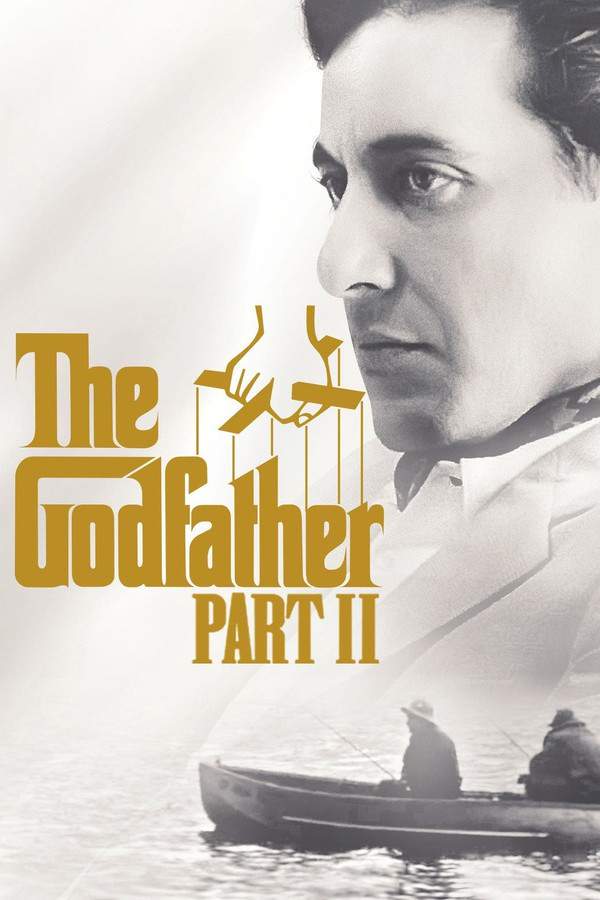
The Godfather: Part II

The Godfather: Part II

JustWatch#1,12230

Year: 1974

Runtime: 200 min

Language: English

Director: Francis Ford Coppola

Budget: $13M

DramaThrillerCrime

Michael Corleone struggles to maintain power and legitimacy for his family in 1958, facing challenges from rivals and internal conflicts. The film also explores his father Vito's journey as a young immigrant in New York City, depicting his rise from poverty to prominence in the criminal underworld during 1917. These interwoven narratives reveal the origins of the Corleone empire and the sacrifices made to secure its future, examining themes of family, loyalty, and the corrupting influence of power.

Warning: spoilers below!

Haven’t seen The Godfather: Part II yet? This summary contains major spoilers. Bookmark the page, watch the movie, and come back for the full breakdown. If you're ready, scroll on and relive the story!

The Godfather: Part II (1974) – Full Plot Summary & Ending Explained

Read the complete plot breakdown of The Godfather: Part II (1974), including all key story events, major twists, and the ending explained in detail. Discover what really happened, and what it all means.

As the story unfolds, spanning countless years, it intricately depicts the powerful saga of The Godfather, diving deep into the early years of Vito Corleone, one of the most iconic figures in organized crime.

Set against the picturesque yet violent backdrop of the Sicilian town of Corleone in 1901, a harrowing family massacre orchestrated by the merciless Don Ciccio marks the beginning of Vito Andolini’s journey. The young Vito, barely nine years old, witnesses the horrific murder of his father, Antonio, which compels him to flee to New York City, adopting the name “Vito Corleone.” Fast forward to 1917, Vito finds himself carving out a life in Little Italy with his devoted wife, Carmela, and their baby son, Sonny. However, his troubles begin when the sly Black Hand extortionist, Don Fanucci, intervenes in Vito’s livelihood, leading to his dismissal from a local grocery store.

Just as Vito’s prospects appear dim, he receives an unexpected offer from seasoned Mafia operative, Peter Clemenza, who entrusts him with a stash of firearms. As a token of gratitude, Clemenza involves Vito in a bold heist to steal a prized rug, a symbolic gesture that marks Vito’s informal initiation into the world of organized crime.

As the Corleone family expands to welcome sons Fredo and Michael, Vito, Clemenza, and their new ally, Salvatore Tessio, begin their ventures by illegally selling stolen dresses door-to-door. This audacious pursuit soon attracts the unwanted attention of Don Fanucci, who demands a significant payoff of $600, threatening to expose their nefarious dealings to law enforcement.

In a bold display of leadership, Vito devises a calculated plan to confront Fanucci, stating confidently, > “I’ll make him an offer he can’t refuse.” Although his associates initially doubt the approach, they ultimately align with Vito’s vision. The tension escalates as Vito and Fanucci meet in a packed restaurant, where celebrations for San Rocco fill the air.

Utilizing the festive uproar as cover, Vito skillfully eliminates Fanucci at the entrance to his home, snatching a crisp $100 bill from Fanucci’s wallet and disposing of the weapon, thereby establishing his reputation as an astute and formidable player in the crime world.

Years later, in 1922, Vito and his family visit Sicily to initiate an olive oil importing business. During this trip, Vito pays respects to the ailing Don Ciccio, not yet realizing that the past will soon catch up with him. When Vito reveals his true identity, he exacts brutal revenge by avenging his family’s murder, leaving Ciccio mortally wounded before escaping with his ally, Don Tommasino. This harrowing experience serves to cement Vito’s position within the violent world he now inhabits.

Fast forward to 1958; Michael, now the head of the Corleone family, navigates the complexities of leadership during his son’s First Communion party. Here, he grapples with the incursions of the Rosato brothers and the demands of Senator Pat Geary, a representative who embodies anti-Italian sentiments. Despite the tension simmering in the Bronx territory, Michael refuses to yield, instead refusing to pay off Geary as night descends upon his home. A brazen assassination attempt heightens Michael’s awareness of potential betrayal within his ranks, prompting him to confront Tom Hagen regarding suspicions of treachery.

In chaotic turn of events, a confrontation with the Rosatos leads to violence, leaving both sides injured but alive. Meanwhile, in an unexpected encounter at a brothel, Tom attempts to secure Geary’s allegiance in exchange for absolution, while Michael’s Machiavellian strategy continues to alter the delicate balance of power in the family.

As Michael and his allies arrive in Cuba, the promise of lucrative business opportunities turns to disillusionment amidst civil unrest. The New Year’s Eve celebration soon takes a dark turn when Michael uncovers Fredo’s dangerous ties to Johnny Ola, sowing seeds of distrust that force Michael to take extreme measures against his own brother.

Back in the United States, Michael grapples with familial strife, culminating in revelations of betrayal from both Kay and Fredo. The intricacies of power, loyalty, and vengeance come to a head as the family’s dynamic continues to shift perilously.

With the loss of his mother, Michael finds himself entrenched in a spiral of loss and regret, solidifying his reign within the crime world yet at what emotional cost? Shadows of the past loom large over a once-unified family, leaving Michael to contemplate the toll that ambition and legacy have rendered upon those he loves.
Last updated: November 22, 2024 at 19:09

Was this helpful?

The Godfather: Part II (1974) Plot Questions Answered – Summary FAQ

Explore frequently asked questions about The Godfather: Part II (1974) with spoiler-rich answers covering the full plot summary, major story beats, character motivations, hidden details, and ending meaning. This movie summary FAQ helps explain confusing scenes, plot twists, and narrative decisions in clear, searchable detail.

Q1

Why does Vito flee Sicily after witnessing his father's murder?

A.

Vito witnesses Don Ciccio's men murder his father Antonio for refusing to pay tribute. Knowing Ciccio will likely kill him next to eliminate the family line, the nine-year-old Vito escapes by boat to New York, where he adopts the surname Corleone from his hometown to hide his identity and survive.

vitosicilydon ciccioescapefamily massacre
Q2

How does Vito become involved in organized crime in America?

A.

After losing his grocery store job to Black Hand extortionist Don Fanucci, Vito receives firearms from mobster Peter Clemenza as thanks for hiding him. Vito then participates in a rug heist with Clemenza and Tessio, marking his unofficial entry into crime. When Fanucci demands $600 to stop threatening their door-to-door stolen goods operation, Vito sees an opportunity to rise.

Earlier scenes show Vito struggling to provide for his family, establishing why criminal opportunity appeals to him.

vitopeter clemenzatessiofanuccicrime rise
Q3

Why does Vito kill Don Fanucci, and what does he gain?

A.

Vito kills Fanucci during San Rocco festival celebrations to eliminate the extortionist threatening his family and business. By refusing to pay the $600 demand and confronting Fanucci at his home, Vito establishes himself as a powerful alternative to Fanucci. He takes $100 from Fanucci's wallet and disposes of the gun, cementing his reputation and keeping his family safe from blackmail.

Vito's earlier line about making Fanucci 'an offer he can't refuse' foreshadows this violent confrontation.

fanuccimurdervitoreputationextortion
Q4

Why does Vito return to Sicily and kill Don Ciccio?

A.

In 1922, Vito returns under the guise of starting an olive oil business but actually seeks revenge against Don Ciccio, the man who ordered his father murdered and forced him to flee as a child. When Vito reveals his identity as Antonio Andolini's son, he slashes Ciccio's throat and leaves him to die, avenging his family while escaping with ally Don Tommasino.

The opening 1901 scene establishes Ciccio as the source of Vito's trauma, making this revenge a thematic payoff.

vitocicciosicilyrevengeolive oil business
Q5

Why does Michael refuse to pay Senator Geary during the First Communion?

A.

Senator Pat Geary demands payment from the Corleone family, representing the corrupt political system that profited from organized crime while publicly condemning Italian-Americans. Michael refuses to pay, viewing it as a matter of family honor and power, paying would signal weakness and invite further exploitation. This defiance sets up the assassination attempt on Michael that night.

Earlier scenes establish Michael's willingness to use violence to protect family honor, foreshadowing his uncompromising stance.

michaelsenator gearyFirst Communionbriberypower
Q6

Why does Michael suspect betrayal within his own family after the assassination attempt?

A.

An assassination attempt occurs at Michael's home during the First Communion party, orchestrated by the Rosato brothers. Michael realizes someone inside his operation provided information about his security, because the attack happened so quickly after his meeting with the Rosatos. This forces him to confront Tom Hagen about possible treachery among his men.

The earlier scene where Michael discusses business with the Rosatos directly before the attack establishes the timeline of betrayal.

michaelassassinationbetrayalrosato brotherstom hagen
Q7

Why does Fredo betray Michael in Cuba?

A.

Fredo feels passed over and resentful, he was passed over as family successor despite being older than Michael, and he resents being treated as incompetent. In Cuba, Fredo meets with Johnny Ola (Hyman Roth's associate) and provides information that helps the assassins find Michael at the brothel. Fredo's insecurity and desire for importance make him vulnerable to manipulation by the family's enemies.

Earlier scenes show Fredo's resentment when Michael takes command, and Fredo's incompetence in handling business matters.

fredobetrayalcubajohnny olaresentment
Q8

Why does Michael order Fredo's death despite being his brother?

A.

Michael discovers Fredo's direct involvement in the assassination attempt in Cuba, when Fredo admits he knew about the plot but claims he didn't want Michael killed, Michael realizes Fredo is either too weak or too dangerous to trust. Given the family's history of killing traitors and the need to prevent future betrayal, Michael orders Fredo's death. The final scene confirms Fredo is killed while fishing.

The earlier scene where Michael pretends to forgive Fredo in Cuba, then later tells Kay 'I know it was Fredo' establishes his knowledge and eventual decision.

fredomurderbrotherbetrayalfamily loyalty
Q9

Why does Michael's marriage to Kay fall apart?

A.

Kay represents the American, legitimate life Michael claims to want, but his actions consistently contradict this. He lies to Kay about his business, orders murders she later discovers, and excludes her from family decisions. When Kay confronts Michael about ordering Fredo's death, their marriage effectively ends, she realizes she married a man capable of anything, and her attempts to salvage their relationship have failed.

Earlier scenes show Kay's growing unease with Michael's criminal world and her futile attempts to understand his true intentions.

kaymarriagemichaeldivorcebetrayallies
Q10

Why does the film show Vito's past alongside Michael's present?

A.

The dual timeline directly compares Vito's rise to power with Michael's consolidation of it, showing how both men sacrificed morality and family for the crime empire. Vito built the family from poverty and violence; Michael now protects and expands it through the same violent means. The structure reveals that Michael is following exactly in his father's footsteps, suggesting the corruption is cyclical and unavoidable.

The opening scenes of Vito's childhood massacre parallel the closing scenes of Michael's isolation, emphasizing the circular nature of the family's fate.

dual timelinevitomichaelparallelcorruptionlegacy
Q11

Why is Michael completely alone at the end of the film?

A.

Michael achieves everything he wanted, power, protection of the family, elimination of rivals, but at tremendous personal cost. He has ordered the deaths of his brother Fredo, his brother-in-law Carlo, and countless enemies. His wife Kay is estranged, his mother has died, and his eldest son Sonny is long dead. The final shot of Michael alone in the darkened room symbolizes that his pursuit of power has left him utterly isolated.

Earlier scenes show Michael rejecting love and connection in favor of cold calculation, setting up his inevitable loneliness.

michaelisolationlonelinesspowercostfamily loss
Mobile App Preview

Coming soon on iOS and Android

The Plot Explained Mobile App

From blockbusters to hidden gems - dive into movie stories anytime, anywhere. Save your favorites, discover plots faster, and never miss a twist again.

Sign up to be the first to know when we launch. Your email stays private, always.

Explore Movie Threads

Discover curated groups of movies connected by mood, themes, and story style. Browse collections built around emotion, atmosphere, and narrative focus to easily find films that match what you feel like watching right now.

Movies about the rise and fall of crime empires like The Godfather: Part II

Epic tales charting the ascent and moral decay of organized crime dynasties.If you admired the intricate portrayal of a crime family's legacy in The Godfather: Part II, explore other epic sagas that delve into the building and eventual crumbling of criminal empires. These films share a focus on power, loyalty, and the heavy toll of a life of crime, offering similar grand narratives and complex character studies.

epicgrimsolemntragicsuspensefulpessimisticbrooding

Narrative Summary

Narratives in this thread typically span long periods, detailing the strategic acquisition of power, internal rivalries, and the inevitable conflicts that threaten the empire's stability. They often contrast the founding generation's brutal pragmatism with the successor's psychological isolation, creating a tragic arc of achievement built on loss.

Why These Movies?

Movies are grouped here for their shared epic scale, focus on organized crime structures, and thematic depth exploring power, legacy, and betrayal. They deliver a similarly heavy, contemplative experience through complex storytelling and a dark, pessimistic tone.

Movies about the corrosive cost of power like The Godfather: Part II

Stories where the pursuit of power leads to moral collapse and isolation.Fans of The Godfather: Part II's exploration of Michael Corleone's isolation will find similar themes in these films about ambition's dark side. Discover stories where characters gain influence but lose their soul, featuring heavy emotional weight, complex protagonists, and bleak or bittersweet conclusions about the price of power.

psychologicalbleaktragicsolemnmorally complexisolatedbrooding

Narrative Summary

The narrative pattern follows a protagonist making increasingly difficult moral choices to achieve a goal, often leading to betrayal and alienation from those they love. The story arc is typically a downward spiral into loneliness, where external success is matched by internal ruin.

Why These Movies?

These films are united by their profound exploration of a central theme: how ambition and power corrupt an individual. They share a dark tone, heavy emotional weight, and a compelling, often tragic, character study that leaves a lasting, melancholic impression.

Unlock the Full Story of The Godfather: Part II

Don't stop at just watching - explore The Godfather: Part II in full detail. From the complete plot summary and scene-by-scene timeline to character breakdowns, thematic analysis, and a deep dive into the ending - every page helps you truly understand what The Godfather: Part II is all about. Plus, discover what's next after the movie.

The Godfather: Part II Timeline

Track the full timeline of The Godfather: Part II with every major event arranged chronologically. Perfect for decoding non-linear storytelling, flashbacks, or parallel narratives with a clear scene-by-scene breakdown.

The Godfather: Part II Timeline

Characters, Settings & Themes in The Godfather: Part II

Discover the characters, locations, and core themes that shape The Godfather: Part II. Get insights into symbolic elements, setting significance, and deeper narrative meaning - ideal for thematic analysis and movie breakdowns.

Characters, Settings & Themes in The Godfather: Part II

The Godfather: Part II Spoiler-Free Summary

Get a quick, spoiler-free overview of The Godfather: Part II that covers the main plot points and key details without revealing any major twists or spoilers. Perfect for those who want to know what to expect before diving in.

The Godfather: Part II Spoiler-Free Summary

More About The Godfather: Part II

Visit What's After the Movie to explore more about The Godfather: Part II: box office results, cast and crew info, production details, post-credit scenes, and external links - all in one place for movie fans and researchers.

More About The Godfather: Part II

Similar Movies to The Godfather: Part II

Discover movies like The Godfather: Part II that share similar genres, themes, and storytelling elements. Whether you’re drawn to the atmosphere, character arcs, or plot structure, these curated recommendations will help you explore more films you’ll love.