







Plot Explained Spoilers guaranteed!
Plot Explained

Browse by genre

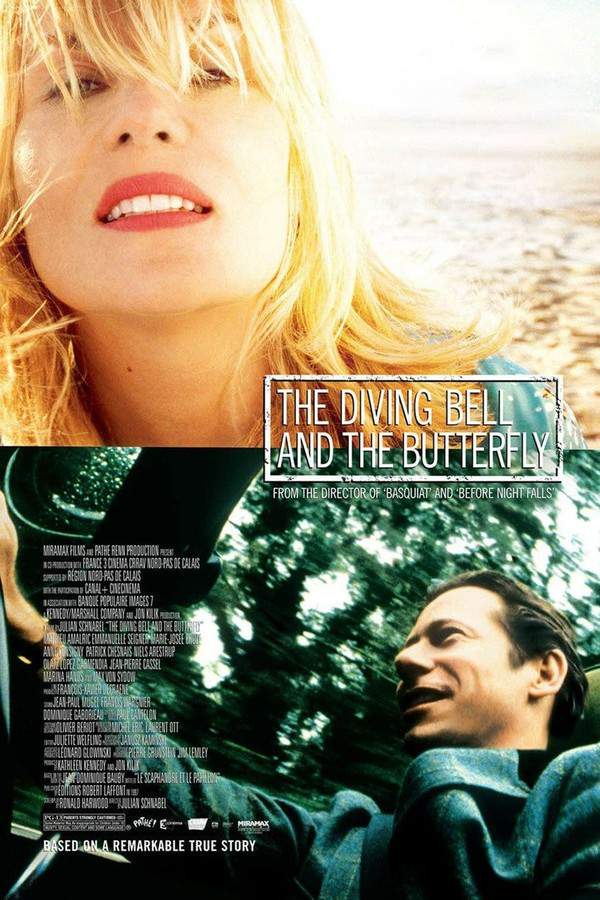
The Diving Bell and the Butterfly (2007) movie poster

Timeline

The Diving Bell and the Butterfly (2007) Timeline Explained – Every Event in Order

Release, runtime and language
2007 · 112 min · French
Directed by
Julian Schnabel
Starring
Mathieu Amalric, Emmanuelle Seigner, Marie-Josée Croze

Following a devastating stroke, Jean-Dominique Bauby, the witty and dynamic editor-in-chief of Elle magazine, finds himself trapped within a virtually paralyzed body, able to move only his left eyelid. Despite this profound physical limitation, Bauby perseveres, using this single muscle to communicate with the help of a logopedic therapist. Through a laborious system of blinking, he begins to reconnect with the world and rediscover the power of his imagination, revisiting cherished memories and ultimately finding a way to express himself creatively.

On this page (6)
  1. 1 Where to watch
  2. 2 Events in order (14)
  3. 3 Timeline questions answered
  4. 4 The book behind the movie
  5. 5 Movie threads
  6. 6 Every angle

Where to watch

Where to Watch The Diving Bell and the Butterfly (2007)

Where can you watch The Diving Bell and the Butterfly? Stream, rent or buy it in the US, including on Hoopla, Kanopy and Amazon Video: current JustWatch availability with up-to-date prices.

Streaming availability powered by JustWatch

14 events in order · contains spoilers

The Diving Bell and the Butterfly Timeline: Events in Chronological Order

Every key event of The Diving Bell and the Butterfly (2007) in order, scene by scene, with when and where it takes place. Use it to untangle flashbacks, time jumps and parallel storylines, to refresh your memory before the sequel or to find the exact scene you are thinking of.

  1. Jean-Do Awakens

    The film opens with Jean-Dominique Bauby waking from a deep three-week coma in a hospital in Berck-sur-Mer, France. This awakening marks the beginning of his profound journey as he learns to navigate his new reality.

    Where
    Berck-sur-Mer, France
  2. Locked-In Syndrome Diagnosis

    After a brief moment of hopeful prognosis from a doctor, a neurologist reveals to Bauby that he is suffering from locked-in syndrome. This devastating condition leaves him physically paralyzed but fully mentally aware, altering the course of his life completely.

    Where
    Berck-sur-Mer Hospital
  3. Communicating Through Blinks

    Faced with his inability to speak, Bauby works with a speech therapist who introduces a new communication system. By blinking his left eye, he begins to convey his thoughts and feelings through a painstaking letter-reading process, fostering a connection with the outside world.

    Where
    Berck-sur-Mer Hospital
  4. Flashbacks Begin

    As the narrative unfolds, viewers experience flashbacks revealing Bauby's previous life. These glimpses provide context about his past, including significant moments that shaped his identity and aspirations.

  5. Visit to Lourdes

    One notable flashback involves Bauby's spiritual visit to Lourdes, highlighting his search for hope and healing. This moment reinforces the film's exploration of inner strength amid unthinkable challenges.

    Where
    Lourdes, France
  6. Imaginary Escapes

    Throughout Bauby's hospital stay, he vividly imagines serene beaches and majestic mountains. These imaginative sequences serve to contrast his physical confinement with the freedom of his thoughts and creativity.

  7. Reflections on Life

    Bauby reflects on his time as the editor of *Elle*, revealing his passions and the life he once led. His memories stir a longing to reclaim a sense of purpose, despite his overwhelming limitations.

  8. Determined to Write

    Motivated by his aspiration to write a memoir, Bauby enlists the help of a publishing representative. Using his unique communication method, he begins the arduous task of encoding his thoughts into words.

  9. Metaphor of the Butterfly

    Throughout the film, Bauby describes his existence as akin to a butterfly trapped within depths reminiscent of a deep-sea diving suit. This powerful metaphor encapsulates his vibrant spirit longing for freedom despite physical restraints.

  10. Reconnecting With Family

    Bauby's interactions with family and friends reveal his emotional landscape. He contemplates his relationships with his children, their mother, and close companions, reflecting a mix of love, sorrow, and loss.

  11. Tragic Double Loss

    The emotional stakes rise as Bauby recalls a friend kidnapped in Beirut and the toll of confinement it takes on individuals. These memories resonate deeply with his own situation, illustrating a broader theme of shared suffering and resilience.

  12. Completion of the Memoir

    Bauby finally completes his memoir, pouring his heart into the pages despite the challenges he faced. There is an air of anticipation as he awaits feedback from readers and critics, marking a significant milestone in his struggle.

  13. Death of Jean-Do

    Tragically, just two days after his memoir's publication, Bauby succumbs to pneumonia. His passing draws a poignant conclusion to the story, encapsulating his brief but impactful journey toward self-expression.

  14. Echoes of a Life

    The film closes with poignant imagery of ice glaciers cracking in reverse, a visual metaphor for Bauby's spirit and memories returning to nature. This scene, accompanied by the haunting sound of 'Ramshackle Day Parade,' lingers in the viewer's mind.

Last updated: November 15, 2024 at 20:26

Was this helpful?

Timeline questions answered

The Diving Bell and the Butterfly Timeline Explained: Your Questions Answered

When does it happen, and why in that order? The questions people ask about the chronology of The Diving Bell and the Butterfly (2007): time jumps, flashbacks, cause and effect between scenes and the correct order of events, each answered with spoilers.

Q1

What is locked-in syndrome and how does it affect Jean-Do?

Locked-in syndrome is an extremely rare condition where a person becomes almost completely physically paralyzed while retaining full mental awareness. In the film, Jean-Do can only move his left eyelid after his stroke. He is trapped inside his body, unable to speak or move, but his mind remains completely intact and alert. This is why the doctors initially give an overly optimistic prognosis, they didn't recognize the specific nature of his condition.

Foreshadowing: The film opens by showing viewers Jean-Do's inner thoughts before revealing that others around him cannot hear them, hinting at his isolated mental state.

  • locked-in syndrome
  • paralysis
  • physical disability
  • brain stem stroke
Q2

How does Jean-Do communicate with others after his stroke?

Jean-Do communicates by blinking his left eye. His speech therapist reads out letters of the alphabet, and he blinks when she reaches the letter he wants to select. This painstaking process allows him to communicate one letter at a time, which he uses to dictate his memoir to a transcriptionist. It is the only way he can express his thoughts and needs.

Foreshadowing: Early in the film, when Jean-Do thinks he's voicing his thoughts aloud but others ignore him, viewers realize he cannot speak.

  • blinking
  • communication
  • alphabet method
  • speech therapist
Q3

Why does Jean-Do decide to write a memoir?

Jean-Do decides to write a memoir because he wants to reclaim his identity and purpose despite his condition. Before his stroke, he was the editor of the French fashion magazine Elle and had always wanted to write a book. Rather than simply waiting to die, he chooses to use his mind and imagination to create something meaningful, transforming his suffering into literature.

Foreshadowing: Earlier flashbacks show Jean-Do's ambitions as a writer, including his plan to reinterpret The Count of Monte Cristo from a female perspective.

  • memoir
  • writing
  • Elle magazine
  • book
  • authoring
Q4

What does the title "The Diving Bell and the Butterfly" mean?

Jean-Do uses the diving bell metaphor to describe his trapped physical state, an old-fashioned deep-sea diving suit that keeps him imprisoned in murky water. The butterfly represents his vivid imagination and free spirit, which still soars despite his physical confinement. Together, the title captures the central theme of the film: a vibrant mind trapped in a paralyzed body, longing for freedom.

Foreshadowing: The film opens with imagery of underwater sequences, visually establishing the diving bell metaphor from the beginning.

  • diving bell
  • butterfly
  • metaphor
  • freedom
  • confinement
  • imagination
Q5

How does Jean-Do die in the film?

Jean-Do dies from pneumonia just two days after his memoir is published. The film shows his death as a quiet, sad moment, he had achieved his goal of completing and publishing his book, but did not live long enough to experience its full impact or read the critics' responses.

Foreshadowing: Throughout the film, Bauby's fragile physical condition is emphasized, with medical staff repeatedly warning about the severity of his situation.

  • death
  • pneumonia
  • memoir publication
  • passing away
Q6

What was Jean-Do's life like before his stroke?

Before his stroke, Jean-Do was the editor-in-chief of the prestigious French fashion magazine Elle. He lived an energetic, dynamic life filled with intellectual pursuits, social connections, and creative ambitions. He had three children, a partner he never married, a mistress, and many friends. The film shows flashbacks to his previous life, including a visit to Lourdes, to illustrate the dramatic contrast with his new reality.

Foreshadowing: The film immediately contrasts his current immobility with flashbacks showing him active, walking, and engaged in his work.

  • Elle magazine
  • editor
  • career
  • flashbacks
  • previous life
Q7

What is the purpose of the flashbacks and imaginative sequences in the film?

The flashbacks reveal Jean-Do's past life, showing who he was before his stroke, including his time at Elle, his visit to Lourdes, and his relationships. The imaginative sequences, where he pictures beaches, mountains, and encounters with the Empress Eugénie, represent his inner freedom and creativity. These sequences contrast his physical imprisonment with the vastness of his mind and memory.

Foreshadowing: The imaginative scenes begin early in his hospital stay, showing that his mind has not been affected by the stroke.

  • flashbacks
  • memories
  • imagination
  • inner world
  • fantasy sequences
Q8

Who are the important people in Jean-Do's life shown in the film?

The film shows several important people in Jean-Do's life: his three children, their mother (referred to as his partner whom he never married), his mistress, his elderly father, and various friends. A key figure is his speech therapist who helps him communicate through blinking. A publishing representative who had previously worked with him also helps transcribe his memoir. He also thinks about a friend who was kidnapped in Beirut and held in solitary confinement for four years, which resonates with his own sense of confinement.

Foreshadowing: The film establishes the complexity of his relationships early, showing that he had a rich emotional life before his condition.

  • children
  • family
  • father
  • friends
  • speech therapist
  • relationships
Q9

How does Jean-Do actually write his memoir with his condition?

Jean-Do writes his memoir through an extremely laborious process. His speech therapist or a transcriptionist reads through the French alphabet. For each letter he wants to use, he blinks when she reaches that letter. This letter-by-letter process is how he constructs every word, every sentence, and ultimately the entire book. A publishing house representative who had known him before helps with the transcription. Despite taking immense effort, he manages to complete his memoir.

Foreshadowing: The film shows just how time-consuming this process is, with entire scenes devoted to selecting single letters.

  • transcription
  • dictation
  • letter by letter
  • publishing
  • writing process
Q10

What is the emotional journey Jean-Do experiences in the film?

Jean-Do's emotional journey moves from initial despair and frustration at his trapped state, through moments of depression and anger, to eventual acceptance and determination. He finds meaning by focusing on his imagination and his ability to create. Rather than surrendering to hopelessness, he channels his energy into writing and reconnecting with his loved ones through his unique form of communication. The film balances his profound sense of loss with moments of joy and humor.

Foreshadowing: Even in early scenes, Jean-Do uses dark humor to cope with his situation, showing his resilient spirit.

  • emotions
  • acceptance
  • determination
  • spirit
  • resilience
  • hope
Q11

What is the significance of the friend who was kidnapped in Beirut?

Jean-Do reflects on a friend who was kidnapped in Beirut and held captive in solitary confinement for four years. This memory resonates deeply with his own experience of being trapped, though in entirely different circumstances. The friend represents another form of confinement, making Jean-Do reflect on the nature of imprisonment and how people cope with isolation. This connection deepens the film's themes of physical and psychological imprisonment.

Foreshadowing: This memory appears as Jean-Do reflects on different forms of being trapped or confined.

  • Beirut
  • kidnapping
  • solitary confinement
  • imprisonment
  • confinement

Movie threads

More Movies Like The Diving Bell and the Butterfly, by Mood & Story

Curated lists built around what makes The Diving Bell and the Butterfly tick: the same mood, the same kind of story or the same emotional payoff. Each list explains why these movies belong together.

Movies about the triumph of imagination like The Diving Bell and the Butterfly

Stories where imagination and memory overcome immense physical or external constraints. If you were moved by the way Jean-Dominique Bauby used his imagination to escape paralysis, you'll appreciate these movies like The Diving Bell and the Butterfly. This list features similar stories where characters overcome physical or situational constraints through the power of memory, creativity, and the human spirit.

  • reflective
  • hopeful
  • triumphant
  • dreamlike
  • lonely
  • melancholic
  • Tone: melancholic, hopeful
  • Pacing: slow, reflective
Why these movies?

The story pattern: Narratives in this thread often juxtapose a character's stark, constrained present reality with vivid, non-linear journeys into their past or imagination. The central conflict is internal—a psychological battle to find meaning and freedom when the body or environment is a prison. The journey is one of rediscovery and creative expression against all odds.

Why they belong together: These films are grouped together because they share a core theme of internal liberation. They balance a melancholic or heavy tone with flashes of hope and triumph, achieved not through external action but through introspection, memory, and the enduring power of creativity in the face of adversity.

Contained melancholic dramas similar to The Diving Bell and the Butterfly

Intimate, slow-burn dramas set in limited spaces, focusing on profound personal struggle. For viewers who appreciated the intimate, claustrophobic setting of The Diving Bell and the Butterfly, this list features similar movies with a slow pace and melancholic tone. These dramas focus deeply on a character's internal struggle within a limited physical space, creating a powerful and reflective viewing experience.

  • claustrophobic
  • melancholic
  • reflective
  • lonely
  • slow burn
  • intimate
  • Tone: melancholic, reflective
  • Pacing: slow, deliberate
Why these movies?

The story pattern: The narrative pattern is one of intense focus on a single protagonist grappling with a life-altering situation. The limited setting creates a sense of claustrophobia that enhances the emotional weight. The plot is often less about external events and more about the gradual, laborious process of internal acceptance, communication, or coming to terms with a new reality.

Why they belong together: These films share a specific combination of a slow, deliberate pacing, a heavy emotional weight, and a setting that physically embodies the protagonist's struggle. The melancholic tone is persistent, arising from the intimate portrayal of suffering, yet often contains threads of human connection and quiet dignity.

Every angle

The Diving Bell and the Butterfly (2007) Explained: Plot, Timeline & Characters

Everything about The Diving Bell and the Butterfly in one place: what happens in the plot summary, the timeline in chronological order, the characters and meaning and a spoiler-free summary. What's After the Movie adds the cast, box office and post-credit scenes.

Coming soon on iOS and Android

The Plot Explained Movie Summary App

Plot summaries, endings explained and timelines on your phone. Catch up on any movie in minutes, save your favorites and never miss a twist again.

Be the first to know when we launch. Your email stays private, always.

Learn more about the app