


















Plot Explained Spoilers guaranteed!
Plot Explained

Browse by genre

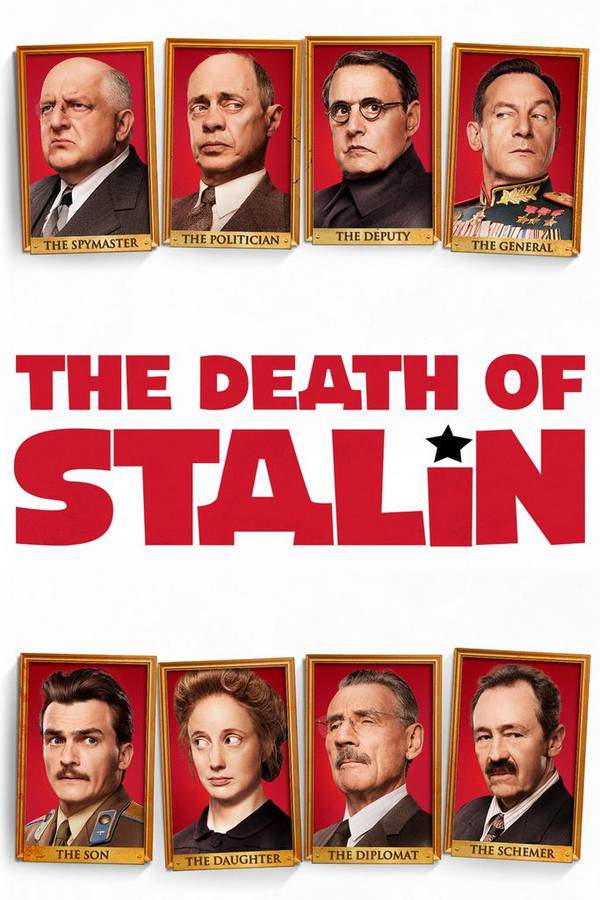
The Death of Stalin (2018) movie poster

Characters & Themes

The Death of Stalin (2018) Characters, Setting & Themes Explained

Release, runtime and language
2018 · 107 min · English
Echo score 85
JustWatch #1,016 54
Directed by
Armando Iannucci
Starring
Olga Kurylenko, Steve Buscemi, Jason Isaacs, Michael Palin, Andrea Riseborough, Paddy Considine
Budget
$13M

Following the sudden death of Joseph Stalin, a power vacuum erupts in Moscow. A collection of ruthless and ambitious officials, including Georgy Malenkov, Nikita Khrushchev, and Lavrentiy Beria, begin a darkly comedic and chaotic battle for control of the Soviet Union. As they maneuver for position, the nation faces a period of uncertainty and potential anarchy, leading to unexpected and often absurd consequences.

On this page (8)
  1. 1 Where to watch
  2. 2 Characters explained (5)
  3. 3 Where & when it takes place
  4. 4 Themes & meaning (2)
  5. 5 Character & meaning questions
  6. 6 The book behind the movie
  7. 7 Movie threads
  8. 8 Every angle

Where to watch

Where to Watch The Death of Stalin (2018)

Where can you watch The Death of Stalin? Stream, rent or buy it in the US, including on AMC+, fuboTV and Paramount Plus Premium: current JustWatch availability with up-to-date prices.

Streaming availability powered by JustWatch

5 main characters · contains spoilers

The Death of Stalin Characters Explained: Who Is Who

The main characters of The Death of Stalin (2018), heroes and villains: what drives them, how they change over the course of the story and what each of them reveals about the film's bigger ideas.

  • Maria Veniaminovna Yudina

    played by Olga Kurylenko

    A determined and talented pianist, Maria finds herself embroiled in an oppressive political scenario. Initially resistant to Stalin's demands, her complex character showcases resilience and the moral dilemmas faced by those under tyrannical rule.

    • 👩‍🎤 Pianist
    • 🎼 Musician
  • Nikita Khrushchev

    played by Steve Buscemi

    A shrewd and ambitious politician, Khrushchev embodies the tumultuous spirit of the power struggles after Stalin's death. His strategic maneuvers reveal a complex character capable of both ruthlessness and opportunism as he seeks to consolidate his power.

    • ⚖️ Politician
    • 💡 Reformist
  • Vyacheslav Molotov

    played by Michael Palin

    A long-time stalwart of Soviet policy, Molotov represents loyalty and the old guard amidst shifting loyalties. His situation reflects the fragile position of those who once supported Stalin, now facing the risk of purges.

    • 📜 Politician
    • 🤝 Ally
  • Lavrenti Beria

    played by Simon Russell Beale

    As the head of the NKVD, Beria is a cunning and ruthless figure, adept at manipulation. His character epitomizes the darker side of political ambition, willing to eliminate rivals to secure power.

    • 🔪 Villain
    • 🔍 Manipulator
  • Georgy Malenkov

    played by Jeffrey Tambor

    Initially appointed as chairman after Stalin's death, Malenkov struggles with the overwhelming pressures of power and quickly becomes a pawn in Beria's games. His character reflects the themes of fear and complicity in a volatile political environment.

    • 👔 Leader
    • 🤔 Indecisive

Last updated: October 22, 2024 at 22:04

Was this helpful?

Setting

Where and When Does The Death of Stalin Take Place?

The setting of The Death of Stalin (2018): the year and time period, the places and locations, and how they shape the characters, the mood and the tension of the story.

Time period

1953-1956

This period marked a significant transformation in the Soviet political landscape, starting with the sudden death of Joseph Stalin and leading to a power struggle among his closest associates. The events of this time showcase a blend of political machinations and reform attempts, significantly impacting the future of the Soviet Union.

Location

Kuntsevo Dacha, Moscow, Soviet Union

The Kuntsevo Dacha is a notable summer residence primarily used by high-ranking members of the Soviet government, including Joseph Stalin. Known for its lush surroundings, this residence became a stage for critical political maneuvers during the chaotic period following Stalin's death, steeped in intrigue and power struggles.

  • 🏛️ Historical
  • 🎵 Music Venue

Last updated: October 22, 2024 at 22:04

Was this helpful?

2 major themes

The Death of Stalin Meaning: Themes & Message Explained

What is The Death of Stalin (2018) really about? The emotional, social and philosophical themes the film keeps returning to, its symbolism and the message beneath the surface.

  • Power Struggle

    The film delves into the intense struggle for leadership following Stalin's death, highlighting how ambition can drive individuals to manipulate and betray each other. The chaos of this power vacuum reveals the dire consequences of political ambition and the lengths to which characters will go to secure their positions.

  • Music and Manipulation

    Music serves as a backdrop for both the chaos and manipulation that unfolds throughout the story. The frantic reattempt to capture Mozart's performance symbolizes the lengths to which individuals go to please those in power, portraying how art intertwines with the political landscape.

Last updated: October 22, 2024 at 22:04

Was this helpful?

Character & theme questions

The Death of Stalin Characters & Meaning: Your Questions Answered

The questions people ask about The Death of Stalin (2018): who the characters really are, their relationships, what the symbols mean, where it takes place and what the movie is really about. Each answer contains spoilers.

Q1

Where does the movie take place?

The Death of Stalin is primarily set in Moscow, specifically at the Kuntsevo Dacha, a Soviet government summer residence used by high-ranking officials. This location becomes the stage for the political machinations following Stalin's death.

  • moscow
  • kuntsevo dacha
  • soviet union
  • setting
  • location
Q2

What time period does the film cover?

The film spans from 1953 to 1956, beginning immediately after Joseph Stalin's sudden death and covering the subsequent power struggle among his closest associates.

  • 1953
  • 1956
  • stalin death
  • post-stalin
  • soviet era
  • time period
Q3

What is the main theme of the film?

The central theme is the ruthless power struggle that erupts after Stalin's death, where ambition drives officials to manipulate and betray each other. The film shows how the vacuum of leadership brings out the worst in people desperate to secure their positions.

  • power struggle
  • ambition
  • political machinations
  • leadership
  • stalin legacy
Q4

How does music function in the movie?

Music serves as both a backdrop and a tool for manipulation throughout the film. The frantic effort to obtain and re-record a Mozart piano performance for Stalin illustrates how art becomes entangled with political survival and pleasing those in power.

  • music
  • mozart
  • piano
  • maria judina
  • manipulation
  • art and politics
Q5

Who is Lavrentiy Beria in the story?

Lavrentiy Beria is depicted as the head of the NKVD and the most cunningly dangerous figure in the power struggle. His character represents the dark side of political ambition, willing to eliminate anyone who stands between him and ultimate control of the Soviet Union.

  • lavrenti beria
  • nkvd
  • villain
  • political ambition
  • ruthless
Q6

Who is Nikita Khrushchev in the film?

Nikita Khrushchev is portrayed as a shrewd, ambitious politician who navigates the chaotic post-Stalin landscape with strategic cunning. His character evolves from an opportunist into someone capable of consolidating power, though the film presents his victory as merely a change of faces within the brutal system.

  • nikita khrushchev
  • successor
  • political maneuver
  • ambition
  • soviet leader
Q7

Who is Maria Yudina in the movie?

Maria Yudina is a talented pianist who finds herself trapped in the oppressive political climate of Stalin's Soviet Union. Her character represents the moral dilemmas faced by artists under tyrannical rule, showcasing resilience in the face of political pressure.

  • maria yudina
  • pianist
  • artist
  • olga kurylenko
  • resilience
Q8

Who is Georgy Malenkov in the story?

Georgy Malenkov is initially appointed as chairman following Stalin's death but quickly becomes overwhelmed by the pressures of power. His character illustrates the vulnerability of those caught between competing forces, becoming a pawn in Beria's schemes.

  • georgy malenkov
  • chairman
  • weak leader
  • pawn
  • political pressure
Q9

Who is Vyacheslav Molotov in the film?

Vyacheslav Molotov represents the old guard of Soviet politics, a long-time stalwart who once supported Stalin. His situation highlights the precarious position of those who served the former leader, now facing potential purges as loyalties shift.

  • vyacheslav molotov
  • old guard
  • loyalty
  • stalinist
  • political vulnerability
Q10

What is the Kuntsevo Dacha?

The Kuntsevo Dacha is a prestigious Soviet government summer residence located in Moscow, used by high-ranking officials including Stalin. In the film, it becomes the critical setting where the power struggles and political maneuvers unfold following Stalin's death.

  • kuntsevo dacha
  • residence
  • moscow
  • stalin home
  • political setting
Q11

What is the tone of the movie?

The Death of Stalin employs a darkly comedic tone that stems from the absurdity of a brutal totalitarian system, not from lightness or optimism. The film treats its historical subject matter with cynical humor while addressing heavy themes of purges, executions, and political machinations.

  • dark comedy
  • cynical
  • absurd
  • totalitarian
  • tone
  • style

Movie threads

More Movies Like The Death of Stalin, by Mood & Story

Curated lists built around what makes The Death of Stalin tick: the same mood, the same kind of story or the same emotional payoff. Each list explains why these movies belong together.

Absurdist political satires like The Death of Stalin

Darkly comedic dramas where ruthless figures battle for control of chaotic systems. If you enjoyed The Death of Stalin, discover more movies about ruthless political power struggles that mix high-stakes tension with darkly comedic absurdity. These films feature chaotic plots, cynical characters, and satirical takes on totalitarianism, providing a similar blend of history, humor, and high-intensity drama.

  • cynical
  • tense
  • absurd
  • ruthless
  • chaotic
  • satirical
  • Tone: dark, cynical, absurd
  • Pacing: fast, chaotic
Why these movies?

The story pattern: These narratives typically begin with a sudden shift in power—a death, a coup, or a crisis—that triggers a frantic and often ridiculous free-for-all among ambitious, morally bankrupt officials. The plot unfolds through a series of strategic maneuvers, betrayals, and escalating absurdities, leading to a conclusion that is seldom a clear victory for good but rather a cynical change in leadership.

Why they belong together: Movies in this thread share a unique tonal blend: the high-intensity dread of a serious political thriller mixed with the farcical humor of watching powerful people act in petty, chaotic, and illogical ways. They are united by a cynical view of power, a fast-paced and chaotic structure, and a darkly comedic sensibility.

Movies with chaotic bureaucracy like The Death of Stalin

Stories where institutional madness creates intense, fast-paced, and absurd consequences. Find more films like The Death of Stalin that depict the intense chaos within powerful bureaucracies. These movies share a fast pace, high tension, and an absurdist tone, exploring what happens when rigid systems fracture and the people inside them engage in a desperate, often darkly humorous struggle for survival and control.

  • chaotic
  • tense
  • oppressive
  • absurd
  • bureaucratic
  • frenetic
  • Tone: tense, absurd, oppressive
  • Pacing: fast, escalating
Why these movies?

The story pattern: The narrative pattern involves a large, rigid system suddenly becoming unstable. A diverse cast of characters, each with their own agenda, must navigate the new chaos, leading to a domino effect of bureaucratic blunders, strategic miscalculations, and frantic attempts to seize control. The journey is less about a single hero and more about the collective, often futile, maneuvering within a broken system.

Why they belong together: These films are grouped by their shared focus on the collapse of order within complex systems. They create a specific vibe of high-intensity confusion, where the pacing is urgent, the tone is bleakly humorous, and the setting feels both oppressive and foolish. The similarity lies in the experience of watching smart people make desperate moves in an absurdly broken world.

Every angle

The Death of Stalin (2018) Explained: Plot, Timeline & Characters

Everything about The Death of Stalin in one place: what happens in the plot summary, the timeline in chronological order, the characters and meaning and a spoiler-free summary. What's After the Movie adds the cast, box office and post-credit scenes.

Coming soon on iOS and Android

The Plot Explained Movie Summary App

Plot summaries, endings explained and timelines on your phone. Catch up on any movie in minutes, save your favorites and never miss a twist again.

Be the first to know when we launch. Your email stays private, always.

Learn more about the app