Plot Explained Spoilers guaranteed!
Plot Explained

Browse by genre

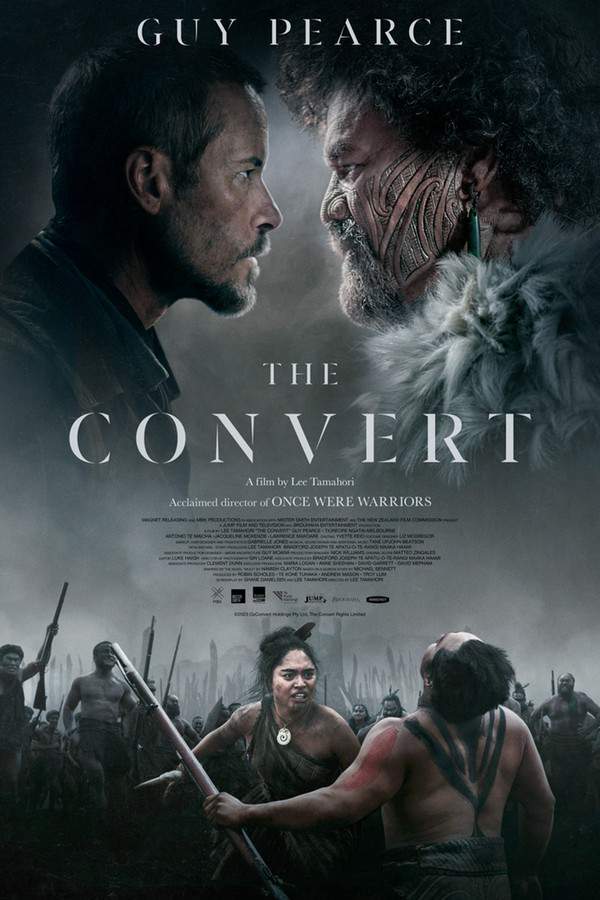
The Convert (2024) movie poster

Timeline

The Convert (2024) Timeline Explained – Every Event in Order

Release, runtime and language
2024 · 1 h 59 m · English
Echo score 78
Loading streaming availability…
Directed by
Lee Tamahori
Starring
Guy Pearce, Duane Evans Jr., Tioreore Ngatai-Melbourne, Dean O'Gorman, Jacqueline McKenzie, Lawrence Makoare

In 1830s Britain, a lay preacher with a troubled past arrives at a remote settlement, where his history is stirred anew by conflict between Maori tribes. As violence escalates, his faith is challenged, forcing him to confront the forces that threaten to consume him and determine his ultimate fate.

On this page (6)
  1. 1 Where to watch
  2. 2 Events in order (14)
  3. 3 Timeline questions answered
  4. 4 Movie threads
  5. 5 Movies like The Convert
  6. 6 Every angle
Loading streaming availability…

14 events in order · contains spoilers

The Convert Timeline: Events in Chronological Order

Every key event of The Convert (2024) in order, scene by scene, with when and where it takes place. Use it to untangle flashbacks, time jumps and parallel storylines, to refresh your memory before the sequel or to find the exact scene you are thinking of.

  1. Arrival in New Zealand

    In 1830, Thomas Munro, a lay minister from Britain, arrives in New Zealand on a storm-stricken ship. His journey begins amid the chaos between conflicting Māori tribes on the shores of this new land.

    When
    1830
    Where
    New Zealand
  2. Intervention in Tribal Conflict

    During a clash between two Māori tribes, Munro intervenes to save Rangimai, the daughter of Maianui. He trades his horse to Akatarewa, the other tribe's rangatira, ensuring her safety from impending harm.

  3. Settling in Epworth

    After the confrontation, Rangimai is brought to a British settlement called Epworth, where Munro is assigned missionary work. He begins his role as her religious tutor, introducing her to Christianity.

    Where
    Epworth
  4. Facing Prejudice

    As Munro navigates his duties, he witnesses the discrimination faced by Rangimai and Pahirua, a Māori warrior assigned to protect her. Their struggles highlight the tension between the settlers and the indigenous people.

    Where
    Epworth
  5. Murder of Pahirua

    Pahirua is secretly murdered, and Munro learns of the settlers' fabricated cover story regarding his death. He grapples with his conscience but chooses to refrain from reporting the truth to Maianui.

  6. Advice to Maianui

    Munro advises Maianui against seeking revenge for Pahirua's murder. Instead, he suggests that Maianui raise the rent the settlers pay as a means to assert tribal authority over their land.

  7. Teaching the Warriors

    In a bid to equip Maianui's warriors, Munro teaches them a faster method of loading their flintlock muskets. This knowledge is pivotal in preparing them for future conflicts.

    Where
    Wharenui
  8. Sharing His Past

    While at a gathering in the tribe's wharenui, Munro shares the traumatic experience of his past in the British Army. His reflections on a massacre in a school reveal his quest for redemption.

    Where
    Wharenui
  9. Attempt at Reconciliation

    In an effort to foster peace, Munro visits Akatarewa's land on the British ship that brought him to New Zealand. He seeks to negotiate a reconciliation between the two tribes.

    Where
    Akatarewa's Land
  10. Conflict Escalates

    Akatarewa rebuffs Munro's peace efforts, resulting in his warriors capturing the ship with muskets onboard. This act sets the stage for an inevitable and violent clash between the tribes.

  11. Final Battle

    Munro ultimately joins Maianui's forces in the decisive battle against Akatarewa's tribe. Utilizing their newly acquired musket skills, Maianui’s warriors achieve victory.

  12. Execution of Akatarewa

    In the aftermath of their triumph, Maianui executes Akatarewa. This brutal action marks not only a personal vendetta but also a turning point for future tribal relations.

  13. Rangimai's Decision

    To pave the way for lasting peace, Rangimai agrees to marry Akatarewa's son, a pivotal moment that symbolizes potential reconciliation between the tribes.

  14. Four Years Later

    Four years after the conflict, Munro, now marked with a tā moko, serves as a counselor to the combined Māori tribes. He aids them in negotiations with a British delegation regarding a Customs post.

    Where
    Epworth

Last updated: October 24, 2024 at 07:54

Was this helpful?

Timeline questions answered

The Convert Timeline Explained: Your Questions Answered

When does it happen, and why in that order? The questions people ask about the chronology of The Convert (2024): time jumps, flashbacks, cause and effect between scenes and the correct order of events, each answered with spoilers.

Q1

Why does Thomas Munro trade his horse to save Rangimai?

Munro trades his horse to Akatarewa, the rival tribe's rangatira, to save Rangimai from being killed during the tribal clash. This act establishes Munro's character as someone willing to sacrifice his own possessions for others, and it marks the beginning of his connection to Maianui's tribe. The horse trade also symbolically represents Munro's willingness to enter into the Māori world, as horses were valuable assets in 1830s New Zealand.

Foreshadowing: This early act of sacrifice foreshadows Munro's eventual full commitment to the Māori tribe, including joining their final battle.

  • thomas munro
  • rangimai
  • horse trade
  • maianui
  • akatarewa
Q2

Why does Munro refuse to tell Maianui the truth about Pahirua's murder?

Munro chooses not to report the settlers' cover story about Pahirua's death because he believes that revealing the truth would only escalate violence. As someone haunted by his own past of leading a massacre, Munro understands the cycle of violence and tries to prevent another blood feud between the settlers and Māori. Instead, he advises Maianui to raise the rent the settlers pay, using economic pressure rather than violent retribution.

  • pahirua
  • murder
  • maianui
  • settlers
  • cover up
Q3

Why does Munro advise Maianui to raise rent instead of seeking revenge for Pahirua?

Munro advises this approach because he believes violent revenge would only create more bloodshed and potentially destroy the fragile coexistence between settlers and Māori. Having experienced the horrors of war during his time as a British soldier, Munro tries to steer Maianui toward a non-violent form of resistance that asserts tribal authority without triggering another cycle of killing. The rent increase serves as a strategic way to push settlers without open conflict.

  • rent
  • maianui
  • revenge
  • settlers
  • violence
Q4

What was Munro's past crime that he confesses to the Māori elders?

Munro reveals that as a soldier in the British Army, he led a charge against what was believed to be an enemy stronghold, which turned out to be a school. The attack resulted in the massacre of innocent women and children. This traumatic event is the reason Munro became a lay minister, he sought spiritual redemption for his actions. Sharing this confession with the Māori elders marks a turning point where Munro fully trusts the tribe with his darkest secret.

  • munro
  • massacre
  • british army
  • school
  • redemption
  • past
Q5

Why does Munro join the final battle against Akatarewa's tribe?

Munro joins the battle because his peace mission has failed and he realizes that Akatarewa now possesses the captured ship's artillery, making Maianui's tribe vulnerable. Having taught the Māori warriors the faster musket-loading technique, Munro feels invested in their survival. Additionally, his confession at the wharenui has fully integrated him into the tribe, and his desire for redemption drives him to fight alongside people who have accepted him despite his past.

  • munro
  • battle
  • maianui
  • akatarewa
  • musket
  • war
Q6

Why does Rangimai agree to marry Akatarewa's son?

Rangimai agrees to marry Akatarewa's son as a political arrangement to ensure lasting peace between the two tribes after the battle. Maianui has spared the young man's life, and by uniting the families through marriage, Rangimai transforms an enemy into an ally. This sacrifice represents her growth from a girl Munro saved at the beginning of the film into a woman who actively shapes the future of her people.

  • rangimai
  • marriage
  • akatarewa son
  • peace
  • treaty
  • tribes
Q7

What does the tā moko on Munro's face represent?

The tā moko, a traditional Māori facial tattoo, symbolizes Munro's complete transformation and assimilation into Māori culture. Four years after the battle, he now serves as a counsellor to the combined tribe, having fully abandoned his British identity. The tattoo marks him as someone who has been accepted into the tribe and represents his redemption, he has found purpose and belonging among the people he once came to convert.

  • tā moko
  • tattoo
  • munro
  • maori
  • transformation
  • identity
Q8

Why does Akatarewa reject Munro's peace offer and capture the ship?

Akatarewa rejects Munro's reconciliation attempt because he sees the British ship and its cargo of muskets as an opportunity to gain a decisive military advantage over Maianui's tribe. Rather than accepting peace, Akatarewa chooses to capture the artillery for the upcoming clash. This act of greed and aggression ultimately leads to the final battle, where his tribe is defeated.

  • akatarewa
  • peace
  • ship
  • muskets
  • capture
  • battle
Q9

Why does Munro teach the Māori warriors a faster way to load flintlock muskets?

Munro teaches the warriors this technique to help level the playing field against Akatarewa's tribe, which already possesses firearms. As someone who has killed many with such weapons during his soldier days, Munro uses his military knowledge to help the Māori defend themselves. This decision also reflects his deepening commitment to the tribe, he is actively preparing them for the conflict he knows is coming.

  • musket
  • flintlock
  • maianui
  • warriors
  • teaching
  • battle
Q10

How does Munro reconcile his Christian faith with participating in tribal warfare?

Munro struggles with this conflict throughout the film. His journey from lay preacher to warrior represents a complete transformation of his faith. After witnessing the settlers' prejudice, the murder of Pahirua, and the failure of his peaceful mission, Munro concludes that sometimes violence is necessary to protect the innocent. His tā moko at the end symbolizes that his spiritual path has fundamentally changed, he finds redemption not through Christian doctrine but through direct action and sacrifice for his adopted people.

  • faith
  • christianity
  • war
  • violence
  • redemption
  • conversion
Q11

What happens in the customs post negotiation four years later?

Four years after the battle, Munro serves as a counsellor to the combined Māori tribe during negotiations with a British delegation seeking to establish a Customs and Excise post at Epworth. This role marks the culmination of his transformation, Munro now uses his understanding of both British and Māori cultures to help the tribe navigate colonial pressures. The outcome shows that while military victory was achieved, the political struggle over land and sovereignty continues.

  • customs
  • excise
  • negotiation
  • british
  • epworth
  • treaty
Q12

Why do the settlers discriminate against Rangimai and Pahirua at Epworth?

The settlers at Epworth discriminate against Rangimai and Pahirua because they view Māori people as inferior and are hostile to anyone who associates with them. Despite living on Maianui's tribe's land by agreement, the settlers resent the presence of Rangimai and her protector. This prejudice is a driving force in the film, highlighting the cultural collision between British colonialism and Māori sovereignty. It also creates the tension that leads to Pahirua's murder and Munro's moral crisis.

  • settlers
  • discrimination
  • rangimai
  • pahirua
  • prejudice
  • maori

Movie threads

More Movies Like The Convert, by Mood & Story

Curated lists built around what makes The Convert tick: the same mood, the same kind of story or the same emotional payoff. Each list explains why these movies belong together.

Movies like The Convert: Historical Dramas of Moral Collapse

Stories where individuals are caught between clashing cultures and their own compromised ethics. If you liked the cultural friction and ethical dilemmas in The Convert, explore more movies that delve into the complex moral landscapes of colonial and frontier settings. These similar dramas feature intense character studies set against a backdrop of historical conflict and personal compromise.

  • grim
  • tense
  • introspective
  • oppressive
  • confrontational
  • historical
  • Tone: dark, confrontational, somber
  • Pacing: steady, character-driven
Why these movies?

The story pattern: A protagonist, often an outsider, enters a culturally divided setting where they must navigate conflicting loyalties and escalating violence. Their personal journey is one of moral questioning, as their initial beliefs are challenged by the brutal realities of prejudice, warfare, and survival, leading to a redefinition of their purpose.

Why they belong together: These films are grouped by their shared focus on the psychological toll of cultural imperialism and the ambiguity of redemption in violent historical contexts. They share a dark, heavy tone, steady pacing that allows for deep introspection, and a focus on the personal cost of larger societal conflicts.

Bittersweet Redemption Stories like The Convert

Journeys where peace or personal salvation comes at a profound and tragic cost. Find more films like The Convert where characters find a form of redemption or peace after a heavy moral journey, but the ending is tinged with sadness and sacrifice. These movies share a bittersweet, heavy emotional tone and explore the high price of resolution.

  • somber
  • redemptive
  • bittersweet
  • heavy
  • introspective
  • costly victory
  • Tone: bittersweet, somber, redemptive
  • Pacing: steady, escalating
Why these movies?

The story pattern: The narrative follows a tormented individual or a fractured community through a crucible of violence and hard choices. While a form of resolution or personal peace is ultimately found, it is not a clean victory. The ending acknowledges the scars, losses, and compromises that were necessary to achieve it.

Why they belong together: Movies in this thread are united by their emotionally complex conclusions. They reject simple happy endings, instead delivering a profound sense of closure that is simultaneously hopeful and sorrowful. They share a heavy emotional weight, a dark tone, and a focus on the ambiguous nature of redemption.

If you liked this

Movies Like The Convert

Similar movies to The Convert: the same genre, themes or kind of story. Each one comes with its own plot summary, timeline and ending explained.

Browse all movie summaries

Every angle

The Convert (2024) Explained: Plot, Ending, Timeline & Characters

Everything about The Convert in one place: what happens in the plot summary, the timeline in chronological order, the characters and meaning, the ending explained and a spoiler-free summary. What's After the Movie adds the cast, box office and post-credit scenes.

Coming soon on iOS and Android

The Plot Explained Movie Summary App

Plot summaries, endings explained and timelines on your phone. Catch up on any movie in minutes, save your favorites and never miss a twist again.

Be the first to know when we launch. Your email stays private, always.

Learn more about the app