













Plot Explained Spoilers guaranteed!
Plot Explained

Browse by genre

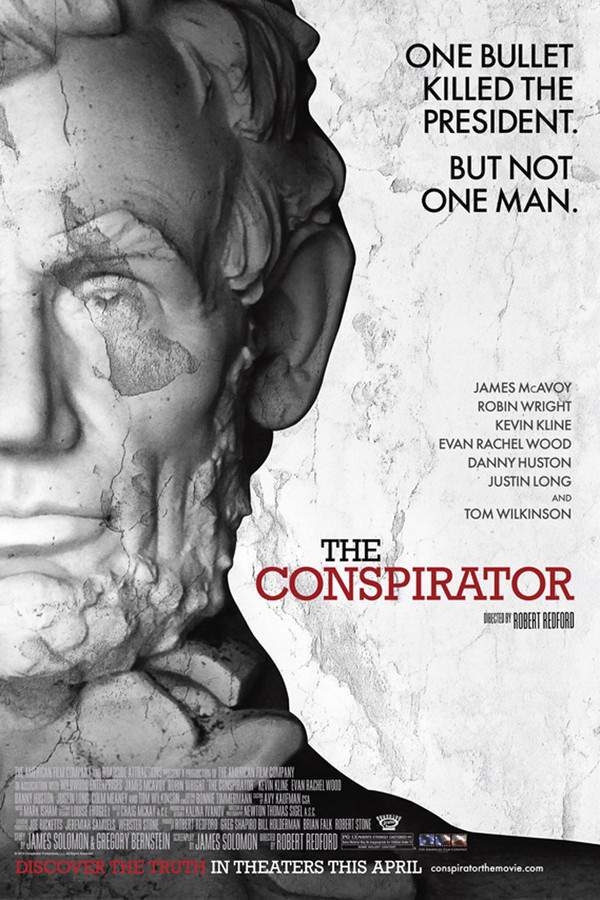
The Conspirator (2011) movie poster

Timeline

The Conspirator (2011) Timeline Explained – Every Event in Order

Release, runtime and language
2011 · 123 min · English
JustWatch #6,527 1
Budget
$25M

In the aftermath of President Lincoln's assassination, idealistic lawyer Frederick Aiken takes on the challenging case of Mary Surratt, a woman accused of involvement in the conspiracy. As Aiken investigates, he navigates a web of political turmoil and personal risk, uncovering layers of deception and questioning the true extent of Surratt's guilt. The film explores themes of loyalty, justice, and the complexities of a nation grappling with tragedy.

On this page (6)
  1. 1 Where to watch
  2. 2 Events in order (16)
  3. 3 Timeline questions answered
  4. 4 Movie threads
  5. 5 Movies like The Conspirator
  6. 6 Every angle

Where to watch

Where to Watch The Conspirator (2011)

Where can you watch The Conspirator? Stream, rent or buy it in the US, including on Kanopy, Plex and Tubi TV: current JustWatch availability with up-to-date prices.

Streaming availability powered by JustWatch

16 events in order · contains spoilers

The Conspirator Timeline: Events in Chronological Order

Every key event of The Conspirator (2011) in order, scene by scene, with when and where it takes place. Use it to untangle flashbacks, time jumps and parallel storylines, to refresh your memory before the sequel or to find the exact scene you are thinking of.

  1. End of the Civil War Celebration

    On April 14, 1865, the nation celebrates the conclusion of the Civil War, marked by General Robert E. Lee's surrender at Appomattox Court House. Frederick Aiken, a lawyer and Union veteran, along with his friends and wife, revels in the jubilant atmosphere of the moment.

    When
    April 14, 1865
    Where
    Appomattox Court House, Virginia
  2. Lincoln's Assassination

    On the same night of the celebrations, John Wilkes Booth enters Ford's Theater and shoots President Abraham Lincoln in the back of the head. In the chaos that ensues, Booth also attacks Henry Rathbone before leaping onto the stage and declaring 'Sic Semper Tyrannis!' as he escapes.

    When
    April 14, 1865
    Where
    Ford's Theater, Washington D.C.
  3. Lincoln's Death

    The next morning, as word about Lincoln's assassination spreads, the critically injured President is moved to a nearby boarding house. Despite the efforts to save him, he succumbs to his wounds early the following day, profoundly impacting the nation.

    When
    April 15, 1865
    Where
    Boarding House near Ford's Theater
  4. Vice President Johnson Takes Office

    In the aftermath of Lincoln's death, Vice President Andrew Johnson ascends to the presidency. His leadership signals a new and turbulent era for the United States during a time of profound national grief and uncertainty.

  5. Search for Assassination Conspirators

    Following the assassination, Secretary of War Edwin Stanton orders the arrest of all suspected conspirators, including Mary Surratt. The authorities quickly intensify their efforts to unearth those involved in the plot against the President.

  6. Booth and Herold's Escape

    While Booth and David Herold manage to avoid capture for several days following the assassination, their luck eventually runs out. Union soldiers discover their hideout and set the barn ablaze, prompting Herold to surrender.

    Where
    Maryland
  7. Booth's Death

    Booth is confronted by Union soldiers in the barn where he is hiding and, when he attempts to brandish his rifle, he is shot dead by Sergeant Boston Corbett. This moment marks the end of the manhunt for one of America's most notorious assassins.

    Where
    Barn in Maryland
  8. Aiken Takes on Mary Surratt’s Defense

    Mary Surratt's Defense Attorney, Reverdy Johnson, struggles to defend her due to his Southern sympathies. He ultimately enlists Frederick Aiken's help to provide a more robust defense, presenting the challenges of navigating the complex political climate.

  9. Aiken Investigates

    Visiting Mary Surratt in her cell, Aiken learns of her concerns for her daughter, Anna. Determined to gather evidence that may help prove her innocence, he discovers a crucial ticket linking Louis J. Weichmann to Booth, igniting further investigation.

    Where
    Mary Surratt's Cell
  10. Weichmann's Testimony

    When Louis Weichmann takes the stand, his testimony reveals John's secret meetings with Booth and other conspirators. Aiken skillfully questions Weichmann, challenging the credibility of his claims while simultaneously connecting the dots of conspiracy.

    Where
    Courtroom
  11. Mary's Defense Strategy

    In a private meeting, Mary Surratt claims that the initial plan was to kidnap Lincoln, asserting that Booth acted independently. This revelation complicates Aiken's understanding of her guilt and the dynamics at play within the conspiracy.

  12. Testimony Against Mary

    During the trial, prosecutor Joseph Holt calls John Lloyd to testify against Mary Surratt, accusing her of orchestrating the assassination plot. Aiken's aggressive questioning exposes Lloyd’s alcoholism, creating a volatile scene in the courtroom.

    Where
    Courtroom
  13. Aiken's Membership Revoked

    Aiken faces personal repercussions as he learns that his membership with the prestigious Century Club has been revoked due to his defense of Mary Surratt. This decision strains his relationship with his wife Sarah, ultimately leading to her leaving him.

    Where
    Century Club
  14. Anna's Testimony

    Aiken pleads with Anna to testify on behalf of her mother, pointing out discrepancies in the evidence against Mary. Anna's eventual testimony shifts some blame onto her brother John, complicating the narrative around Mary’s involvement.

  15. Mary's Execution

    Despite Aiken's relentless pursuit to appeal Mary Surratt’s conviction and secure her freedom, she is found guilty and sentenced to execution. This grim outcome is orchestrated by the influence of Secretary Stanton and represents the tragic end to a highly controversial trial.

  16. Aiken's New Journey

    Fifteen months after the tumult of the trial, Aiken visits John Surratt, who is now captured and imprisoned. Following this, Aiken turns towards a new chapter in his life, taking a position as the first City Editor for The Washington Post.

Last updated: November 22, 2024 at 18:32

Was this helpful?

Timeline questions answered

The Conspirator Timeline Explained: Your Questions Answered

When does it happen, and why in that order? The questions people ask about the chronology of The Conspirator (2011): time jumps, flashbacks, cause and effect between scenes and the correct order of events, each answered with spoilers.

Q1

Why did Frederick Aiken agree to defend Mary Surratt?

Frederick Aiken was asked to take on Mary Surratt's defense by his mentor, Reverdy Johnson, who was struggling to mount an effective defense due to his Southern sympathies. Though Aiken initially had doubts about Mary's innocence, he agreed to serve as co-counsel because he believed in the fundamental right to a fair trial, even for someone accused of a crime as heinous as assassinating the President. His sense of duty as a Union veteran and lawyer compelled him to take on this politically dangerous case.

Foreshadowing: Aiken's commitment to justice is established early when he agrees to help investigate Mary's concerns about her daughter Anna.

  • frederick aiken
  • mary surratt
  • defense lawyer
  • trial
  • loyalty
Q2

Was Mary Surratt actually guilty of conspiring in Lincoln's assassination?

The film presents substantial ambiguity around Mary's guilt. While the prosecution argued she knowingly hosted conspirators at her boarding house and provided weapons, Mary claimed the original plan was only to kidnap Lincoln, not kill him, and that Booth acted independently. Aiken struggled throughout the trial to prove her innocence, and the evidence against her was largely circumstantial, relying heavily on testimony from witnesses like John Lloyd and Louis Weichmann.

Foreshadowing: The ticket with the initials 'LJW' that Aiken discovers becomes crucial in challenging the prosecution's narrative.

  • mary surratt
  • guilt
  • conspiracy
  • lincoln assassination
  • boarding house
Q3

Why was Mary Surratt executed when other conspirators received life sentences?

Mary Surratt was found guilty on all charges and originally sentenced to life in prison. However, Secretary of War Edwin Stanton intervened and influenced President Andrew Johnson to override the sentence, leading to her execution alongside David Herold, George Atzerodt, and Lewis Powell. This was highly unusual, as Surratt was a woman in an era when women were rarely executed, and the decision remains controversial. The other conspirators, Samuel Mudd, Samuel Arnold, Michael O'Laughlen, and Edman Spangler, received prison sentences but not death.

Foreshadowing: Stanton's influence over the trial was established early through his mandate to arrest all suspects.

  • mary surratt
  • execution
  • life sentence
  • edwin stanton
  • andrew johnson
Q4

What was John Wilkes Booth's original plan before assassinating Lincoln?

According to Mary Surratt's defense during the trial, Booth originally planned to kidnap President Lincoln rather than kill him. The conspirators discussed abducting Lincoln and holding him for ransom as leverage to release Confederate prisoners of war. Mary claims Booth misinformed the group about the President's whereabouts just two weeks before the assassination, leading him to act alone and change the plan from kidnapping to murder. This revelation suggested that many of the conspirators, including Mary, may not have known about the assassination plot.

Foreshadowing: The shift from kidnap to assassination is hinted at in the early chaos following the assassination when Booth declares his motive as avenging the South.

  • john wilkes booth
  • kidnapping
  • assassination
  • abraham lincoln
  • conspiracy plan
Q5

Who was Louis J. Weichmann and why was his testimony important?

Louis J. Weichmann was a seminary friend of John Surratt (Mary's son) who had been living at the boarding house. He testified for the prosecution that he witnessed John Surratt meeting secretly with John Wilkes Booth and other conspirators at the house. Aiken skillfully questioned Weichmann's credibility, exposing inconsistencies in his testimony and suggesting he may have been involved in the conspiracy himself. The ticket with the initials 'LJW' that Aiken discovered became important evidence in challenging the prosecution's case against Mary.

Foreshadowing: Aiken finds the crucial ticket with 'LJW' initials while investigating in Mary's cell.

  • louis weichmann
  • testimony
  • john surratt
  • booth
  • evidence
Q6

What happened to John Surratt after Mary Surratt's execution?

John Surratt, Mary's son and one of the suspected conspirators, managed to escape capture and fled abroad. He was eventually captured fifteen months after the trial and imprisoned. When Aiken visited him in prison, John expressed gratitude for Aiken's kindness toward his mother but rejected the rosary Aiken offered as a gesture of comfort. The film notes that a year after this meeting, the U.S. Supreme Court established the landmark ruling in Ex parte Milligan, affirming the right to be tried by a civilian jury even during wartime.

Foreshadowing: The search for John Surratt is mentioned early in the timeline as authorities intensify their efforts.

  • john surratt
  • captured
  • imprisoned
  • escape
  • rosary
Q7

Why did Aiken lose his Century Club membership?

Aiken's defense of Mary Surratt came at a significant personal cost. When he entered the prestigious Century Club, he learned that his membership had been revoked because of his decision to defend a woman accused of involvement in President Lincoln's assassination. This professional and social ostracism reflected the intense public sentiment against anyone perceived as sympathetic to the conspirators. The loss of his membership symbolized the broader rejection Aiken faced for taking on this controversial case.

Foreshadowing: This moment comes after Aiken's aggressive cross-examination of witnesses in court.

  • century club
  • membership
  • revoked
  • aiken
  • social ostracism
Q8

What was the significance of the Ex parte Milligan ruling mentioned at the end?

The film concludes by noting that one year after John Surratt's imprisonment, the U.S. Supreme Court ruled in Ex parte Milligan that citizens have the fundamental right to be tried by a civilian jury, even during wartime. This landmark decision established that military tribunals cannot try civilians in areas where civilian courts are operating. While the film doesn't directly connect this ruling to Mary Surratt's case, it suggests that Aiken's efforts contributed to a legacy of protecting civilian rights, providing a sense of historical purpose to his otherwise tragic defeat in saving Mary.

Foreshadowing: Aiken's fight to obtain a writ of habeas corpus foreshadows the constitutional issues at stake.

  • ex parte milligan
  • supreme court
  • civilian jury
  • military tribunal
  • precedent
Q9

Why did Sarah leave Aiken after he defended Mary Surratt?

Sarah Weston Aiken, Frederick's wife, left him after learning that his Century Club membership had been revoked due to his defense of Mary Surratt. The social stigma and political consequences of his decision proved too great for their marriage to withstand. The film depicts this as a turning point where Aiken's professional commitment to justice directly conflicted with his personal life, forcing him to choose between public acceptance and his moral principles.

Foreshadowing: The tension between Aiken's legal duties and social expectations builds throughout the trial.

  • sarah aiken
  • marriage
  • leaves
  • century club
  • divorce
Q10

What was the significance of the binoculars mentioned during John Lloyd's testimony?

During the trial, Chief Prosecutor Joseph Holt called innkeeper John Lloyd to testify that Mary Surratt had provided him with binoculars and instructed him to prepare pistols and whiskey for the night of Lincoln's assassination. This testimony was central to portraying Mary as the orchestrator of the conspiracy. However, Aiken's aggressive cross-examination revealed that Lloyd was an alcoholic, undermining his credibility. Lloyd was ultimately dragged out of the courtroom in a fit of rage after Aiken exposed his alcoholism, significantly weakening the prosecution's case.

Foreshadowing: The binoculars are introduced as key evidence during the courtroom sequence.

  • binoculars
  • john lloyd
  • testimony
  • evidence
  • pistols
Q11

Why did Anna Surratt testify against her mother?

Aiken pleaded with Anna Surratt to testify on behalf of her mother, hoping her testimony would reveal discrepancies in the evidence against Mary. Eventually, Anna did provide a sworn statement, but her testimony actually shifted some of the blame onto her brother John, suggesting he was more directly involved in the conspiracy than Mary. This complex position reflects the loyalty conflicts within the Surratt family, as Anna struggled between protecting her mother and revealing the truth about her brother's actions.

Foreshadowing: Mary's concern for her daughter Anna is established early when she asks Aiken to check on her.

  • anna surratt
  • testimony
  • john surratt
  • blame
  • family loyalty
Q12

What role did Secretary of War Edwin Stanton play in Mary Surratt's trial?

Secretary of War Edwin Stanton was the driving force behind the investigation and prosecution of the conspirators. He mandated the arrest of all suspects, including Mary Surratt, and oversaw the military tribunal that tried the conspirators. Stanton's influence was crucial in ensuring the harsh sentences, including overriding Mary's life sentence to order her execution. The film portrays Stanton as a powerful political figure manipulating the trial process to achieve a swift and decisive outcome, raising questions about whether justice was truly served.

Foreshadowing: Stanton's order for mass arrests is one of the first events after Lincoln's death.

  • edwin stanton
  • secretary of war
  • arrest
  • execution
  • influence

Movie threads

More Movies Like The Conspirator, by Mood & Story

Curated lists built around what makes The Conspirator tick: the same mood, the same kind of story or the same emotional payoff. Each list explains why these movies belong together.

Legal Dramas After National Trauma like The Conspirator

When a nation seeks justice, one lawyer must defend the undefendable. For viewers who appreciate movies like The Conspirator, this collection features courtroom dramas set in the aftermath of profound national tragedies. These films explore the tension between the rule of law and public sentiment, often focusing on a single lawyer's difficult fight for justice against overwhelming political forces.

  • tense
  • solemn
  • gripping
  • anxious
  • serious
  • morally complex
  • Tone: tense, solemn, morally complex
  • Pacing: steady, procedural
Why these movies?

The story pattern: The narrative follows a legal professional, often an idealist, who is thrust into defending a controversial figure accused of involvement in a catastrophic national event. The journey involves uncovering difficult truths, facing public scorn, and grappling with the question of whether true justice can be served when emotions are running high, often culminating in a bittersweet or morally ambiguous conclusion.

Why they belong together: Movies are grouped here because they share a specific setting and conflict: a courtroom under the shadow of a recent, large-scale tragedy. They are united by a heavy emotional weight, a tense tone driven by political anxiety, and a central theme questioning the integrity of justice systems under extreme duress.
Somber Historical Investigations like The Conspirator

Uncovering difficult truths in the shadow of a pivotal historical event. If you liked the investigative and moral gravity of The Conspirator, this list features movies that share its somber, gripping approach to history. These films follow characters uncovering the truth behind significant events, often facing personal risk and ethical dilemmas, all set against a backdrop of national trauma or political upheaval.

  • somber
  • serious
  • gripping
  • melancholic
  • solemn
  • anxious
  • Tone: somber, serious, melancholic
  • Pacing: steady, investigative
Why these movies?

The story pattern: The plot centers on a methodical investigation into a well-known historical event, focusing on a key figure or a lesser-known angle. The protagonist, often an outsider or a reluctant participant, peels back layers of official narratives to confront uncomfortable truths about guilt, complicity, and the messy realities of justice, leading to a conclusion that is more thought-provoking than triumphant.

Why they belong together: This thread groups movies based on their shared vibe: a somber, serious tone applied to a historical investigation. They connect through a steady pacing that allows for deep immersion, a high level of intensity from the high-stakes subject matter, and a consistently heavy emotional weight that deals with themes of truth, betrayal, and legacy.

If you liked this

Movies Like The Conspirator

Similar movies to The Conspirator: the same genre, themes or kind of story. Each one comes with its own plot summary, timeline and ending explained.

Browse all movie summaries

Every angle

The Conspirator (2011) Explained: Plot, Timeline & Characters

Everything about The Conspirator in one place: what happens in the plot summary, the timeline in chronological order, the characters and meaning and a spoiler-free summary. What's After the Movie adds the cast, box office and post-credit scenes.

Coming soon on iOS and Android

The Plot Explained Movie Summary App

Plot summaries, endings explained and timelines on your phone. Catch up on any movie in minutes, save your favorites and never miss a twist again.

Be the first to know when we launch. Your email stays private, always.

Learn more about the app