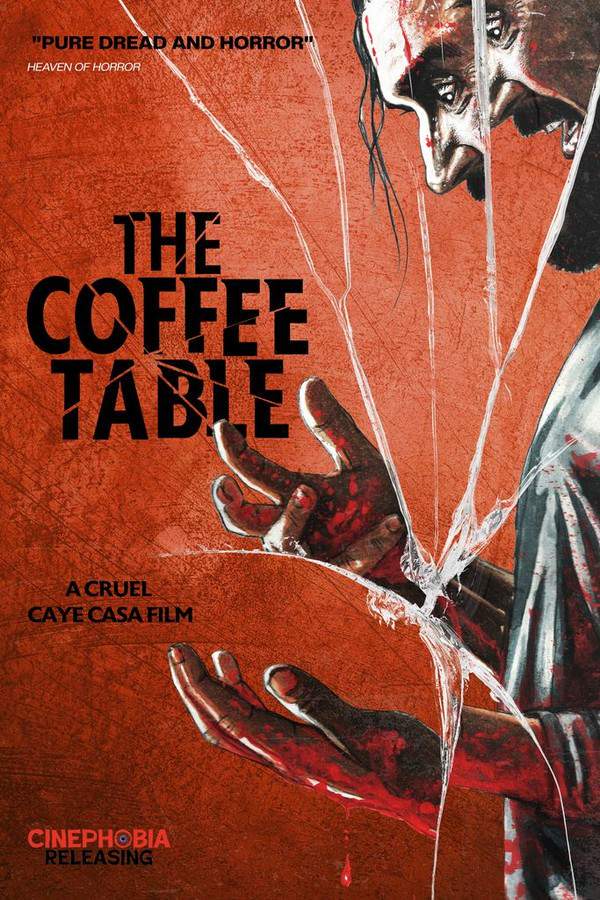
This quirky comedy-drama-horror hybrid explores the complicated romance of Jesus and Maria as they face the trials of becoming new parents. While Maria's strong personality presents challenges, their love is tested further by unexpected and unsettling events that emerge from the darkness.
Find where to stream, rent, or buy The Coffee Table (2024) in the US with current JustWatch availability, up-to-date pricing, and platform listings for subscription, rental, and digital purchase options.
Warning: spoilers below!
Haven’t seen The Coffee Table yet? This summary contains major spoilers. Bookmark the page, watch the movie, and come back for the full breakdown. If you're ready, scroll on and relive the story!
Trace every key event in The Coffee Table (2024) with our detailed, chronological timeline. Perfect for unpacking nonlinear stories, spotting hidden connections, and understanding how each scene builds toward the film’s climax. Whether you're revisiting or decoding for the first time, this timeline gives you the full picture.
Last updated: November 17, 2024 at 15:49
Find frequently asked questions about the The Coffee Table (2024) timeline, including chronological order, nonlinear jumps, cause-and-effect links, and scene sequence clarifications. This timeline FAQ helps explain when key events happen, how moments connect, and why the story unfolds in that specific order.
Jesús buys the table to assert his independence and decision-making power in the relationship. María had critiqued the salesman's pitch so effectively that Jesús felt stripped of his ability to make his own choice. By purchasing the table despite her objections, he essentially tells her that he still gets to decide, even if the decision is against her preferences. This tension reflects underlying power dynamics in their relationship as new parents.
The table's glass pane shatters during the scene where Jesús is alone with the newborn Cayetano. While the salesman claimed the glass was unbreakable, the actual mechanism isn't fully explained in the summary, the shatter simply occurs, triggering the tragic accident. This marketed reliability becomes a dark irony, as the very feature promised as safe becomes the instrument of tragedy.
The salesman's overzealous claims about the table's durability foreshadow the devastating failure of that claim.
Jesús is alone with baby Cayetano while María is out buying groceries and wine. As Jesús struggles to calm the crying infant, the glass coffee table shatters, presumably due to some pressure or impact, and the falling glass causes fatal injuries to the newborn. The exact moment and mechanics aren't detailed, but Jesús returns to find the baby decapitated, with the severed head left under a chair.
Jesús attempts to shield María from the traumatic reality because he knows the accident occurred while he was solely responsible for their child. Overwhelmed by guilt and shock, he panics and tries to manage the situation by cleaning up and hiding the body before she returns. His desperate attempt to control the narrative reflects his inability to confront both the horror of what happened and his role in it.
Jesús retreats to the bathroom and writes a suicide note because he sees no way out of the catastrophic situation. He's traumatized by the accidental death of his child, guilt-ridden over being the sole caretaker when it happened, and unable to face María with the truth. The note represents his complete mental breakdown and his attempt to pre-emptively end his own life before dealing with the consequences of the tragedy.
The evening escalates chaotically as the truth unravels. Ruth's dog discovers the baby's severed head, triggering Jesús into catatonia. María, under extreme psychological pressure, breaks down completely and grabs the baby's head, rushing to the balcony. The authorities eventually arrive to find both Jesús and María dead alongside their decapitated child. The exact sequence of their deaths isn't specified, but the cumulative trauma leads to their suicide or fatal breakdown.
María experiences a complete psychological breakdown when she finally learns the truth about Cayetano's death. The combination of the shocking discovery, the stress of hosting guests, Cristina's pregnancy announcement contrasting with her loss, and Jesús' erratic behavior proves overwhelming. She grabs the severed head and rushes to the balcony in a moment of acute trauma, representing the complete shattering of her sanity.
The salesman returns to deliver the replacement screw that Jesús had requested earlier, completely unaware of the tragedy that has occurred in the apartment. His arrival is darkly ironic, he shows up at the worst possible moment and even attempts to flirt with Jesús while the aftermath of the accident is still unfolding. This adds a layer of absurd black comedy to the horror, highlighting the cruel timing of ordinary life intersecting with catastrophe.
Ruth's dog follows its senses to the location where Jesús had hidden or placed the baby's severed head, leading to the traumatic discovery during the chaotic dinner party. The dog's detection triggers the final unraveling of Jesús' fragile state, pushing him into catatonia as the truth becomes impossible to conceal from the guests.
Carlos, visibly traumatized and trapped in a police car after the events, utters "La mesita del comedor" (which translates to "the little dining table") as a haunting final line. This phrase, echoing the coffee table that started the tragic chain of events, represents how his mind fixates on the mundane object that indirectly caused all the devastation. It symbolizes the inexplicable nature of tragedy, how something as ordinary as buying furniture could lead to such horrific consequences.
Discover curated groups of movies connected by mood, themes, and story style. Browse collections built around emotion, atmosphere, and narrative focus to easily find films that match what you feel like watching right now.
Everyday life shatters in an instant, plunging a home into horror.If you liked the shocking turn of events in The Coffee Table, explore more movies where domestic tranquility is shattered by unforeseen horror. These films often start with familiar family dynamics before accelerating into a tense, tragic spiral, blending dark comedy with profound grief.
These narratives typically begin by establishing a flawed but relatable domestic sphere, only to introduce a catastrophic event—often accidental and deeply ironic—that traps the characters in a single location. The plot then unfolds in a tense, real-time cascade of psychological unraveling, desperate cover-ups, and the crushing weight of guilt, leading to an inescapably bleak conclusion.
They are grouped by their shared structure: a sharp pivot from mundane to monstrous, a contained setting that amplifies claustrophobia, and a tone that balances horrific tragedy with moments of unsettling black comedy. The emotional journey is uniformly one of rapid descent into grief and madness.
A character's sanity fractures under the immediate weight of unbearable guilt.For viewers seeking more films like The Coffee Table that explore the immediate and shattering psychological impact of trauma. These stories focus on a character's rapid mental descent, portraying guilt and grief in a visceral, often claustrophobic way.
The narrative is intensely focused on the protagonist's interior state, using limited settings and real-time pacing to mirror their feelings of entrapment. Hallucinations, intrusive thoughts, and a fractured sense of reality depict their unraveling. The external plot is secondary to the internal, emotional catastrophe, which typically progresses without relief toward a complete psychological breakdown.
They share a core focus on the subjective experience of trauma. The similarity lies in the intense, first-person portrayal of a mind coming apart, the high emotional weight, the use of suspense to reflect mental anguish, and the overwhelmingly bleak conclusion that offers no catharsis.
Don't stop at just watching - explore The Coffee Table in full detail. From the complete plot summary and scene-by-scene timeline to character breakdowns, thematic analysis, and a deep dive into the ending - every page helps you truly understand what The Coffee Table is all about. Plus, discover what's next after the movie.
Read a complete plot summary of The Coffee Table, including all key story points, character arcs, and turning points. This in-depth recap is ideal for understanding the narrative structure or reviewing what happened in the movie.
Discover the characters, locations, and core themes that shape The Coffee Table. Get insights into symbolic elements, setting significance, and deeper narrative meaning - ideal for thematic analysis and movie breakdowns.
What really happened at the end of The Coffee Table? This detailed ending explained page breaks down final scenes, hidden clues, and alternate interpretations with expert analysis and viewer theories.