Plot Explained Spoilers guaranteed!
Plot Explained

Browse by genre

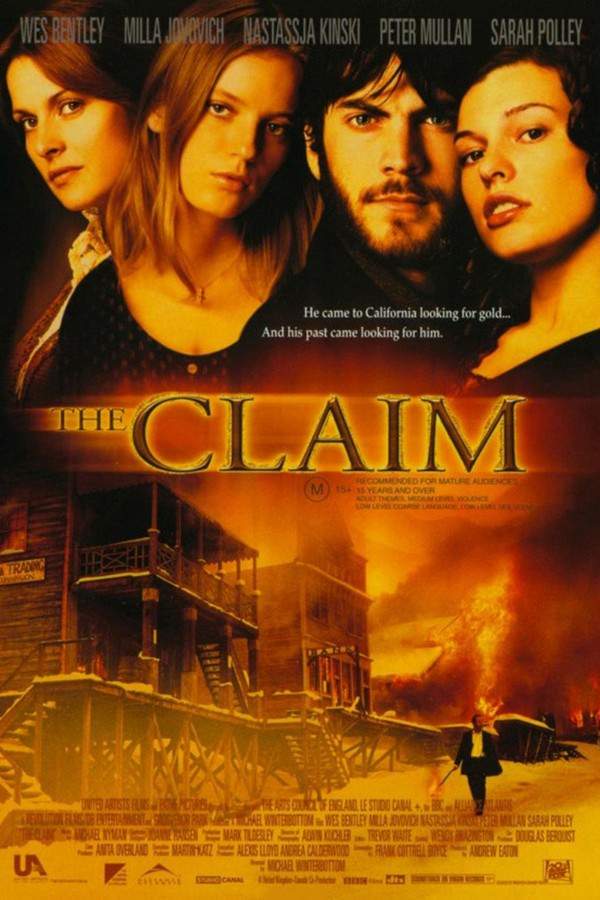
The Claim (2000) movie poster

Plot Summary

The Claim (2000) Plot Summary Explained

Release, runtime and language
2000 · 120 min · English
JustWatch #26,314 3
Directed by
Michael Winterbottom
Starring
Wes Bentley

In the rugged territory of Kingdom Come, the ambitious pioneer Dillon has built a thriving mining town. However, the arrival of three mysterious strangers disrupts the peace and prosperity. Long-buried secrets from Dillon’s past begin to emerge, threatening to unravel everything he has built. He is forced to face the repercussions of his ambition and the heavy price of achieving success, confronting a darkness that could destroy his hard-won kingdom.

On this page (7)
  1. 1 Where to watch
  2. 2 What happens: full plot
  3. 3 Plot questions answered
  4. 4 The book behind the movie
  5. 5 Movie threads
  6. 6 Movies like The Claim
  7. 7 Every angle

Where to watch

Where to Watch The Claim (2000)

Where can you watch The Claim? Stream, rent or buy it in the US, including on ScreenPix Amazon Channel , Tubi TV and Amazon Video: current JustWatch availability with up-to-date prices.

Streaming availability powered by JustWatch

Full plot summary · contains spoilers

What Happens in The Claim: Full Plot Summary

The whole story of The Claim (2000) explained, from the opening scene to the final frame: every key event, every twist and what it all adds up to. Read it as a quick recap before the sequel, to check a scene you missed, or to finally understand what really happened.

Daniel Dillon, portrayed by Peter Mullan, is an Irish immigrant who made his way to Kingdom Come, a town rooted deep in the Sierra Nevada mountains during the Gold Rush of 1849. Fast forward to 1867, and Dillon boasts a vault overflowing with gold, making him the proprietor of virtually all significant commerce in the area. This means that anyone looking to mine for gold, secure a hotel room, engage in banking, or even commit a crime must navigate the intricate web of Dillon’s influence.

Donald Dalglish, a surveyor played by Wes Bentley, represents the interests of the Central Pacific Railroad, tasked with determining the best route for a new train line either through Kingdom Come or its surroundings. Dillon is particularly interested in ensuring that the railway passes through his town, as it promises to inject even more business into his ventures.

Dillon’s acquaintance with Lucia, a mysterious woman played by Milla Jovovich, adds another dimension to his life. Lucia's enigmatic role in the town involves singing in Portuguese, acting as a liaison for Dillon, and sourcing women for visiting men. She attempts to arrange an introduction between Dalglish and Dillon, but initially, Dalglish hesitates. However, as he uncovers the complicated relationship between Dillon and Lucia, he reconsiders.

Traveling with Dalglish are two women of notable importance: the fragile yet beautiful Elena Burn (Nastassja Kinski) and her lovely teenage daughter Hope (Sarah Polley). They come to the town on a mission to find Dillon. In a poignant moment, Elena directs Hope to present a rosary to Dillon, who recognizes her immediately but cannot catch her. Hope soon persuades Dalglish to take her on a survey run the following day.

The arrival of these women threatens to unravel a dark secret that Dillon has fiercely guarded for two decades. Through flashbacks, we learn that Dillon first came to the mountains with his Polish wife, also named Elena, and their infant daughter, Hope. On a bitterly cold night, they stumbled across a shack owned by a worn-out gold prospector named Burn (Tom McCamus). In a desperate move for wealth, Dillon had traded his wife and child to Burn for a small gold claim that eventually made him rich. It’s revealed that Dillon had given the original rosary to Elena to soothe baby Hope's cries.

Under Dillon's orders, Lucia assumes responsibility for Hope's appearance, dressing her attractively to appeal to Dalglish. At a local event, she sings while Hope plays the piano and recites a poem. During this time, Dillon inquires about Burn, Hope's supposed father, creating a palpable tension as Hope grapples with her fractured family connections.

As events unfold, Dillon learns that Elena is in town looking for him, having fallen on hard times after Burn’s passing. She asks him for financial support to care for Hope. Dillon struggles with his emotions, grappling with his history while wanting to maintain control over his new life.

Feeling cornered, Dillon ends his relationship with Lucia, bestowing upon her material gifts instead of emotional commitment. Lucia's heart shatters, aware that Dillon's interest in Hope complicates their legacy further. While the town prepares for festivities, hope turns into uncertainty as the tension builds between Dillon and Dalglish amidst rising stakes regarding the railroad's path.

After Dillon's attempts at brief reconciliations and festive marriages with Elena, matters deteriorate, and tensions explode, literally, with devastating consequences for those involved. The narrative crescendos with Dillon’s heart-wrenching realization of his losses as he watches Kingdom Come fade into ashes, leaving behind only memories.

Ultimately, as the town dwindles, his recklessness leads to tragic endings, culminating in a frozen farewell as both Hope and Dalglish find themselves caught in a web of nostalgia and grief, witnessing the aftermath of Dillon's destructive decisions. The former townspeople scattered to Lisboa, named after Lucia's homeland, as the past's ghosts refuse to stay buried under the snow and ashes of lost dreams.
Last updated: November 03, 2024 at 21:44

Was this helpful?

Plot questions answered

The Claim Plot Explained: Your Questions Answered

The questions people ask most about The Claim (2000): what happens in the confusing scenes, why the characters do what they do, the twists, hidden details and what the ending means. Each answer contains spoilers.

Q1

Why did Daniel Dillon trade his wife and child for a gold claim?

On a bitterly cold night in 1849, Dillon stumbled across a shack owned by a worn-out gold prospector named Burn. In a desperate move to secure wealth and a future for himself during the Gold Rush, Dillon traded his Polish wife Elena and their infant daughter Hope to Burn in exchange for a small gold claim that eventually made him rich. This decision haunts him for two decades and forms the central betrayal of the film.

Foreshadowing: The film hints at this dark secret early through the mysterious arrival of Elena and Hope in town.

  • Dillon
  • trading family
  • gold claim
  • Burn
  • abandonment
Q2

Who is Hope and what is her connection to Dillon?

Hope is the infant daughter Dillon abandoned when he traded his family to Burn in 1849. The present-day Hope is the teenage daughter of Elena Burn (the woman who married the prospector Burn after Dillon left). When Elena and Hope arrive in Kingdom Come, they are seeking Dillon, making Hope the living embodiment of his past betrayal. The current Elena Burn is not Dillon's original wife, she married Burn after he took the original Elena and Hope.

Foreshadowing: The rosary moment, where Hope presents the rosary to Dillon, immediately signals a deep connection.

  • Hope
  • Elena Burn
  • Dillon daughter
  • family secret
Q3

What is the significance of the rosary that Hope gives to Dillon?

The rosary originally belonged to Dillon's Polish wife Elena. He gave it to her to soothe baby Hope's cries during their journey through the mountains. When the adult Hope presents this rosary to Dillon, it serves as an unmistakable recognition symbol, he immediately understands who she is. The rosary represents his guilt and the tangible link between his past and present families.

Foreshadowing: Elena instructs Hope to give the rosary to Dillon, creating an immediate moment of recognition.

  • rosary
  • recognition
  • guilt
  • symbol
Q4

Why is Dillon so determined to get the railroad to pass through Kingdom Come?

By 1867, Dillon controls virtually all commerce in Kingdom Come, mining, hotels, banking, and more. The railroad represents a massive opportunity to expand his business empire further. If the train line passes through his town, it would bring increased traffic, new customers, and greater wealth, cementing his status as the town's unchallenged king.

Foreshadowing: Dalglish's arrival as a Central Pacific Railroad surveyor sets this plot in motion early.

  • railroad
  • Kingdom Come
  • business
  • expansion
Q5

Why does Lucia help Dillon manipulate Hope?

Lucia acts as Dillon's liaison and facilitator in town. Under his orders, she styles Hope attractively to appeal to Dalglish, hoping to influence the railroad surveyor's decisions. Lucia is emotionally invested in Dillon but agrees to help because she believes it will secure their future together. She is unaware that Hope is actually the daughter from Dillon's past, not just another woman to be used.

Foreshadowing: Lucia's role as Dillon's facilitator is established early when she tries to arrange his introduction to Dalglish.

  • Lucia
  • Hope
  • manipulation
  • Dillon
Q6

Why does Dillon end his relationship with Lucia?

When Elena arrives seeking financial help for Hope, Dillon feels cornered by the return of his past. Rather than confront his guilt, he distances himself from Lucia, giving her material gifts instead of emotional commitment. Lucia realizes that Dillon's emotional ties to Hope, and his past, threaten whatever legacy they might have had together. His inability to face his past destroys their relationship.

Foreshadowing: Lucia's heartbreak is foreshadowed when she realizes the depth of Dillon's interest in Hope.

  • Lucia
  • relationship
  • abandonment
  • emotional distance
Q7

How does Kingdom Come get destroyed?

After Dillon's attempts at reconciliation with Elena and the tensions with Dalglish reach a breaking point, matters deteriorate into explosive confrontations. Dillon's increasingly reckless decisions, driven by guilt, desperation, and his need for control, culminate in devastating consequences. The town burns, marking the destruction of everything Dillon built and the lives of those around him.

Foreshadowing: The timeline builds tension through the escalating stakes around the railroad and Dillon's desperate reconciliations.

  • fire
  • destruction
  • Kingdom Come
  • explosion
Q8

What happened to Dillon's original wife Elena?

Dillon's original Polish wife Elena was traded to the prospector Burn along with their infant daughter Hope in 1849. The summary does not clarify her ultimate fate, but Elena Burn, the woman who arrives in town with her daughter Hope in 1867, is a different person. This Elena married Burn after he acquired the original Elena and Hope, becoming Hope's stepmother.

Foreshadowing: The flashback reveals only that Dillon traded his family to Burn, leaving their fate ambiguous.

  • original Elena
  • Polish wife
  • Burn
  • fate
Q9

Why does Dalglish agree to take Hope on the survey run?

Hope persuades Dalglish to take her on a survey run the day after she meets him. This is significant because it places Hope in close proximity to Dalglish, whom Dillon is trying to influence regarding the railroad route. The survey run also creates opportunity for character development between Hope and Dalglish.

Foreshadowing: Hope's persuasive request happens shortly after the rosary moment with Dillon.

  • Dalglish
  • Hope
  • survey
  • railroad
Q10

What happens to Lucia after Dillon pushes her away?

After Dillon ends their relationship and gives her material gifts instead of emotional commitment, Lucia's heart is broken. She realizes that Dillon's connection to Hope and his past prevents him from fully committing to her. Her final fate is unclear, but she represents another person abandoned by Dillon due to his inability to confront his guilt.

Foreshadowing: Lucia's heartbreak is foreshadowed when she understands the complexity of Dillon's interest in Hope.

  • Lucia
  • abandonment
  • breakup
  • destination
Q11

Why do the townspeople scatter to Lisboa?

After Kingdom Come is destroyed, the former townspeople scatter to Lisboa, a town named after Lucia's homeland. This represents the final dissolution of the community Dillon built. The name Lisboa (Lisbon) connects back to Lucia, suggesting perhaps that some follow her or that her influence remains even after the town's destruction.

Foreshadowing: Lucia's Portuguese singing and her connection to the town hint at this destination from early in the film.

  • Lisboa
  • townspeople
  • scattering
  • Lucia
Q12

What happens to Daniel Dillon at the end?

Dillon watches his town burn to ashes, destroyed by the consequences of his reckless decisions. His hard-won kingdom crumbles, and he loses everything, including any chance at redemption. The ending shows him in a state of frozen grief, with Hope and Dalglish witnessing the aftermath. His choices have led to tragic endings for both himself and those around him.

Foreshadowing: The timeline builds inexorably toward this tragic conclusion from the moment Dillon's secrets begin unraveling.

  • Dillon
  • ending
  • death
  • destruction
  • tragedy

Movie threads

More Movies Like The Claim, by Mood & Story

Curated lists built around what makes The Claim tick: the same mood, the same kind of story or the same emotional payoff. Each list explains why these movies belong together.

Frontier tragedies of ambition and moral collapse like in The Claim

Stories where ambition built on sin leads to an inescapable reckoning. If you liked The Claim's story of a pioneer's empire crumbling under the weight of his secrets, you'll find similar movies here. These dramatic tales feature protagonists facing the bleak repercussions of their ambition in rugged settings, often ending in tragedy. Discover other somber Westerns and historical dramas about moral decay and irreversible consequences.

  • tragic
  • somber
  • regretful
  • oppressive
  • atmospheric
  • desperate
  • Tone: dark, melancholic, tragic
  • Pacing: steady, deliberate
Why these movies?

The story pattern: This thread follows a classic tragic arc: a protagonist achieves great success, but their fortune is founded on a hidden, immoral act. The arrival of figures from their past or the exposure of their secret triggers a chain of events that dismantles their world. The narrative steadily builds tension towards an inevitable, devastating conclusion where the character is destroyed by their own choices.

Why they belong together: Movies in this thread share a dark, melancholic tone and a steady, deliberate pacing that allows dread to accumulate. They are united by themes of greed, moral failure, and the high cost of ambition, set against atmospheric backdrops that amplify the feeling of isolation and impending doom. The emotional journey is consistently heavy, leading to bleak or tragic endings.

Atmospheric slow burns with crushing emotional weight like The Claim

Deliberately paced dramas where a somber atmosphere builds towards emotional devastation. For viewers who appreciated the somber, steady build-up and heavy atmosphere of The Claim, this thread collects movies with a similar pacing and emotional impact. Find other deliberate, character-driven dramas where a melancholic mood slowly escalates into a profoundly sad or devastating conclusion. These films share a high emotional weight and a focus on psychological torment.

  • somber
  • melancholic
  • atmospheric
  • psychological
  • heavy
  • desperate
  • Tone: somber, melancholic, dark
  • Pacing: steady, slow burn
Why these movies?

The story pattern: Narratives in this thread unfold patiently, allowing the atmosphere and central emotional conflict to deepen over time. They often rely on flashbacks or gradual revelations to unpack a central trauma. The structure is less about sudden twists and more about the inevitable, crushing weight of truth and memory bearing down on the characters, resulting in an emotionally draining finale.

Why they belong together: These films are grouped by their shared immersive quality—a somber, atmospheric vibe that is sustained throughout. They possess a similar pacing that feels steady and deliberate, creating a sense of looming dread rather than frantic action. The combination of high emotional weight, a dark tone, and a focus on psychological suffering creates a cohesive, intense viewing experience.

If you liked this

Movies Like The Claim

Similar movies to The Claim: the same genre, themes or kind of story. Each one comes with its own plot summary, timeline and ending explained.

Browse all movie summaries

Every angle

The Claim (2000) Explained: Plot, Timeline & Characters

Everything about The Claim in one place: what happens in the plot summary, the timeline in chronological order, the characters and meaning and a spoiler-free summary. What's After the Movie adds the cast, box office and post-credit scenes.

Coming soon on iOS and Android

The Plot Explained Movie Summary App

Plot summaries, endings explained and timelines on your phone. Catch up on any movie in minutes, save your favorites and never miss a twist again.

Be the first to know when we launch. Your email stays private, always.

Learn more about the app