













Plot Explained Spoilers guaranteed!
Plot Explained

Browse by genre

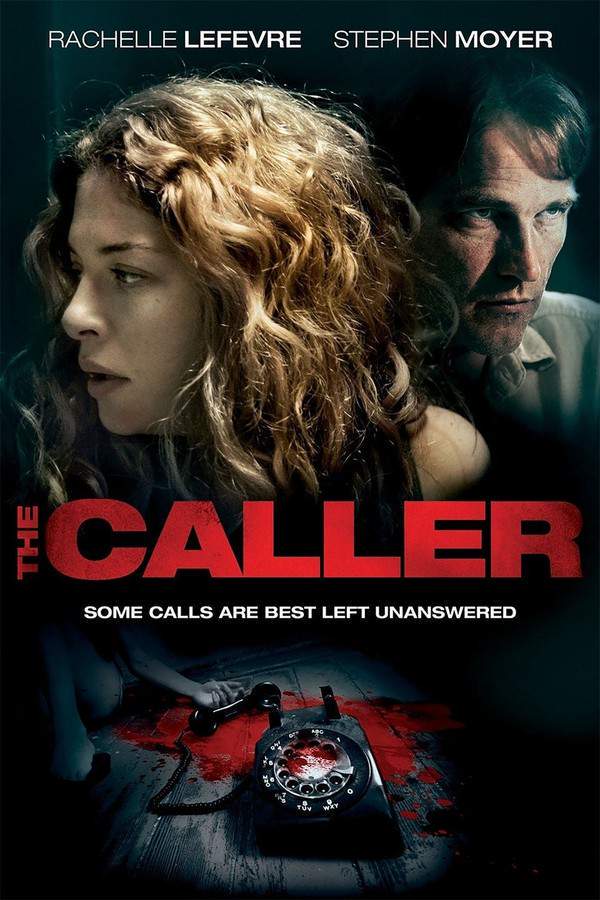
The Caller (2009) movie poster

Timeline

The Caller (2009) Timeline Explained – Every Event in Order

Release, runtime and language
2009 · 95 min · English
Directed by
Richard Ledes

A high-stakes executive, Jimmy Stevens, jeopardizes everything when he reveals his energy firm's unethical practices in Latin America. Facing imminent danger, he seeks the protection of enigmatic detective Frank Turlotte. To ensure his survival, Jimmy instructs Frank to provide constant surveillance, triggering a perilous and deadly pursuit.

On this page (6)
  1. 1 Where to watch
  2. 2 Events in order (12)
  3. 3 Timeline questions answered
  4. 4 Movie threads
  5. 5 Movies like The Caller
  6. 6 Every angle

Where to watch

Where to Watch The Caller (2009)

Where can you watch The Caller? Stream, rent or buy it in the US, including on Amazon Prime Video, Fawesome and Hoopla: current JustWatch availability with up-to-date prices.

Streaming availability powered by JustWatch

12 events in order · contains spoilers

The Caller Timeline: Events in Chronological Order

Every key event of The Caller (2009) in order, scene by scene, with when and where it takes place. Use it to untangle flashbacks, time jumps and parallel storylines, to refresh your memory before the sequel or to find the exact scene you are thinking of.

  1. Mary Moves into New Apartment

    Troubled divorcee Mary Kee begins her new life by moving into an apartment. She is trying to escape her bitter and abusive ex-husband while establishing herself in the new space. During her settling in, she discovers an old rotary telephone that catches her interest due to its antique charm.

  2. Mary Finds the Old Rotary Phone

    Mary places the vintage rotary telephone in her home after discovering it. She quickly becomes enamored with its antique appeal, making it a central feature in her apartment. Unbeknownst to her, this phone will become key to strange events to come.

  3. Strange Phone Calls Begin

    Mary starts receiving mysterious calls on the antique phone from a woman named Rose. The calls are unsettling and become more frequent, making Mary curious and slightly uneasy about the connection. She begins to develop an unlikely friendship with Rose through these conversations.

  4. Discovery of Rose's Past

    Mary learns from the handyman George, who has been there since 1979, that Rose had an abusive husband and tragically took her own life. Rose claims she is calling from 1979, creating questions about her true identity and motives. Mary begins to question the reality of her new friend.

  5. Rose Kills the Husband

    Rose reveals that she has killed her abusive husband and bricked him up in the pantry. Mary finds the pantry newly bricked up one day and realizes the extent of Rose's anger and supernatural influence. This revelation terrifies Mary and solidifies the threat Rose poses.

  6. Mary’s Relationship with John

    Mary starts a relationship with John, a teacher who knows about science and time. John becomes concerned that her ex-husband might be playing mind tricks on her. Later, John has to confront her ex-husband, who tries to intimidate him out of the apartment.

  7. Escalation of Terror

    As Rose's calls grow more disturbing, Mary's sense of terror escalates and she cuts off all contact with her. Rose responds with rage, claiming to have identified Mary as a 'tattletale.' Concurrently, George is found dead, and Mary learns that Rose murdered him in 1979, revealing her supernatural influence.

  8. Rose's Vengeance Extends to the Past

    Rose kills John as a young boy and buries him with the other victims in the pantry, which Mary discovers when she breaks down the bricks to reveal skeletons. Rose's vengeance now targets Mary's loved ones from her childhood, and Mary is driven to dispose of the remains.

  9. Attempted Defense and Failure

    Mary tries to use her knowledge of Rose's future actions to lead her into a traffic accident, but her plan fails. Rose's obsession with revenge deepens, and she goes into a mental institution before mysteriously vanishing in the present, leaving Mary desperate and haunted.

  10. The Final Confrontation

    Rose reappears in the present, attempting to kill Mary. Mary realizes she must act to save her younger self, guiding her via phone. Little Mary stabs 1979 Rose with a broken mirror shard, causing her to vanish. Mary then warns her younger self to escape the apartment.

  11. Altered Present and Final Macbeth

    After killing Rose, Mary finds herself living with her ex-husband again, and he violently blames her. She retaliates by killing him and bricking up his body in the pantry, altering the timeline dramatically. This indicates that her actions have significantly changed her reality.

  12. Deleted Ending

    In the alternate ending, Mary has moved away from the apartment. A young couple moves in, and the rotary phone rings again, suggesting that the supernatural influence or curse persists, and the cycle may repeat with new tenants.

Last updated: August 19, 2025 at 05:13

Was this helpful?

Timeline questions answered

The Caller Timeline Explained: Your Questions Answered

When does it happen, and why in that order? The questions people ask about the chronology of The Caller (2009): time jumps, flashbacks, cause and effect between scenes and the correct order of events, each answered with spoilers.

Q1

How can Rose call Mary from 1979 using the antique phone?

The vintage rotary phone somehow creates a temporal connection between 1979 and the present. Rose uses this phone to contact Mary across time, though the exact mechanics remain mysterious. This allows Rose to not only communicate with Mary but also to observe and manipulate events in both time periods.

Foreshadowing: Mary is immediately drawn to the antique phone when she discovers it, suggesting its significance before the strange calls begin.

  • rose
  • 1979
  • time travel
  • phone calls
  • rotary phone
Q2

What is the connection between Mary and Rose?

Rose sees herself in Mary because both women experienced abusive relationships. Rose recognizes Mary as a 'tattletale' who will expose her secrets, triggering her obsessive vendetta. The connection goes deeper though, Rose specifically targets Mary's childhood self, indicating she sees Mary as a younger version of herself or someone fundamentally tied to her own traumatic past.

Foreshadowing: Rose mentions understanding Mary's suffering from her difficult divorce, hinting at their shared history of abuse.

  • rose
  • mary
  • connection
  • abuse
  • cycle
Q3

Why does Rose kill the people closest to Mary?

When Mary tries to cut off contact with Rose, Rose becomes enraged and labels her a 'tattletale.' Rose then systematically eliminates anyone who might expose her crimes or interfere with her revenge. She kills George (the handyman), John's younger self, and a young mother and infant, all people connected to Mary through the apartment building.

Foreshadowing: Rose's jealousy intensifies when Mary begins spending time with John, foreshadowing her targeting of Mary's relationships.

  • rose
  • murders
  • revenge
  • tattletale
  • victims
Q4

Why does Mary kill her ex-husband at the end?

After Rose is killed, Mary's reality shifts dramatically, she finds herself still living with her abusive ex-husband instead of having escaped him. When he returns home hostile and threatening, Mary replicates Rose's solution to domestic abuse: she kills him and bricks his body in the pantry. This dark twist suggests Mary couldn't escape the cycle of violence and has become like Rose.

Foreshadowing: Mary discovers Rose murdered her own husband and hid him in the pantry, providing the template for her final act.

  • mary
  • husband
  • killing
  • cycle of violence
  • ending
Q5

How can Rose murder people in 1979 while communicating from the past?

Rose's calls from 1979 are not merely messages, she has the supernatural ability to physically interact with people in that time period. She kills George, his wife and infant, and young John while existing in 1979. This means Rose can move through time and directly harm anyone in that era, making her an extremely dangerous threat across both timelines.

Foreshadowing: George tells Mary that Rose killed her husband and hid the body, demonstrating her capacity for physical violence in 1979.

  • rose
  • murder
  • 1979
  • time travel
  • supernatural
Q6

What do the bricked-up bodies in the pantry represent?

The pantry bricks serve as a macabre recurring motif representing the hidden violence of domestic abuse. Rose bricks up her husband's body after killing him; Mary later bricks up the discovered skeletons to hide the murders; finally, Mary bricks up her own husband's body. This cycle symbolizes how abuse and violence get hidden and repeated across generations, with the pantry becoming a tomb for suppressed trauma.

Foreshadowing: Mary finds the pantry sealed with fresh bricks early in the story, a visual warning of the darkness to come.

  • pantry
  • bricks
  • bodies
  • abuse
  • hidden
  • cycle
Q7

Why does Mary's reality change after she kills Rose?

The timeline fundamentally shifts because Rose was a linchpin connecting the past and present. When Mary guides her younger self to kill Rose, she disrupts the causal chain. The altered reality shows Mary still trapped with her abusive ex-husband, suggesting that eliminating Rose didn't free Mary from her own trauma, instead, she becomes the one who must commit the same violent act Rose did to escape her situation.

Foreshadowing: Mary notices herself as a child in Rose's photos, hinting at their intertwined fates.

  • timeline
  • rose
  • death
  • reality change
  • causal loop
Q8

What happens to John in the past?

Rose travels to 1979 and kills John as a young boy, burying him with her other victims in the pantry. Mary discovers these skeletal remains when she breaks down the bricks. This explains why John disappears from Mary's present life, Rose eliminated him before he could ever grow up to meet her.

Foreshadowing: John's interest in time and science perhaps hints at his vulnerability to the temporal manipulation.

  • john
  • murdered
  • 1979
  • skeletons
  • pantry
Q9

Why does Mary try to cause Rose to have a traffic accident?

Mary attempts to use her knowledge of Rose's future to kill her before she can become a threat. Knowing Rose will leave the mental institution, Mary tries to manipulate events so Rose dies in a car crash. This shows Mary attempting to break the causal chain by eliminating Rose in the past, but the plan fails, Rose's obsession with revenge proves too powerful to circumvent.

Foreshadowing: John's knowledge about time concepts gives Mary the idea that she might be able to alter the past.

  • traffic accident
  • mary
  • rose
  • murder attempt
  • time travel
Q10

How does Mary defeat Rose in the final confrontation?

Older Rose breaks into the apartment to kill Mary, but Mary calls her younger self on the same rotary phone and instructs her to fight back. Young Mary stabs Rose with broken mirror glass, causing her to vanish. This creates a paradox, Rose disappears because she was killed in the past by a child she was targeting, breaking the time loop but fundamentally altering Mary's reality.

Foreshadowing: Mary discovers a broken mirror in the apartment earlier, which becomes the weapon used against Rose.

  • final confrontation
  • mary
  • rose
  • mirror
  • defeat
Q11

What happens in the deleted ending of the film?

In the deleted ending, Mary has moved away from the apartment, but a new couple moves in. The rotary phone begins ringing again, suggesting the curse continues with new victims. This reinforces the film's theme that the cycle of violence is unbreakable, the trauma and supernatural influence persist regardless of who lives in the apartment.

Foreshadowing: The repeated motif of the ringing phone throughout the film sets up this cyclical conclusion.

  • deleted ending
  • curse
  • cycle
  • new tenants
  • phone ringing

Movie threads

More Movies Like The Caller, by Mood & Story

Curated lists built around what makes The Caller tick: the same mood, the same kind of story or the same emotional payoff. Each list explains why these movies belong together.

Movies about inescapable cycles like The Caller

Stories where protagonists are caught in a terrifying, repetitive loop of trauma. Explore movies like The Caller, where characters are ensnared in terrifying cycles of violence, trauma, or time loops. If you liked the psychological trap and bleak inevitability of The Caller, these similar thrillers and dramas deliver that same sense of oppressive, inescapable dread.

  • inescapable
  • oppressive
  • desperate
  • haunting
  • paranoid
  • cyclical
  • Tone: dark, bleak, oppressive
  • Pacing: steady, deliberate
Why these movies?

The story pattern: Narratives in this thread often feature a protagonist discovering they are part of a predetermined cycle, such as a time loop or a generational pattern of abuse. Their attempts to break free paradoxically reinforce the cycle, leading to a bleak conclusion that underscores the theme of inevitability.

Why they belong together: These movies are grouped together for their shared exploration of cyclical trauma and their ability to generate a specific kind of existential dread. They share a dark tone, a complex narrative structure that reveals the loop, and a heavy emotional weight centered on powerlessness.


Claustrophobic paranoid thrillers like The Caller

Intense stories where a confined setting amplifies psychological terror and suspicion. Find more movies like The Caller that master the art of claustrophobic tension. These similar thrillers trap their characters in isolated situations, breeding deep paranoia and a constant, unnerving sense of being watched. If you liked the anxious, oppressive atmosphere of The Caller, this list is for you.

  • claustrophobic
  • paranoid
  • anxious
  • isolated
  • unnerving
  • oppressive
  • Tone: anxious, dark, tense
  • Pacing: steady build
Why these movies?

The story pattern: The narrative typically isolates a main character, cutting them off from reliable help. As threats become more personal and the environment feels increasingly restrictive, the protagonist's sanity is tested. The pacing is often steady, meticulously building unease until it becomes unbearable.

Why they belong together: These films are united by their masterful use of atmosphere to create a visceral feeling of being trapped. They share a high intensity, a dark tone, and a focus on the psychological unraveling of a character who can trust no one, resulting in a consistently anxious and oppressive viewing experience.

If you liked this

Movies Like The Caller

Similar movies to The Caller: the same genre, themes or kind of story. Each one comes with its own plot summary, timeline and ending explained.

Browse all movie summaries

Every angle

The Caller (2009) Explained: Plot, Timeline & Characters

Everything about The Caller in one place: what happens in the plot summary, the timeline in chronological order, the characters and meaning and a spoiler-free summary. What's After the Movie adds the cast, box office and post-credit scenes.

Coming soon on iOS and Android

The Plot Explained Movie Summary App

Plot summaries, endings explained and timelines on your phone. Catch up on any movie in minutes, save your favorites and never miss a twist again.

Be the first to know when we launch. Your email stays private, always.

Learn more about the app