Year: 1962
Runtime: 106 mins
Language: English
Director: Roger Kay
A delirious young woman finds herself imprisoned within a remote, labyrinthine mansion, at the mercy of a deranged mastermind who manipulates her perception of reality. The sinister atmosphere, distorted sets, and relentless psychological terror create a nightmarish struggle for escape, as her frantic attempts to uncover the truth are thwarted by eerie shadows and the madman's cruel games, turning every corridor into a trap.
Find where to stream, rent, or buy The Cabinet of Caligari (1962) in the US with current JustWatch availability, up-to-date pricing, and platform listings for subscription, rental, and digital purchase options.
Warning: spoilers below!
Haven’t seen The Cabinet of Caligari yet? This summary contains major spoilers. Bookmark the page, watch the movie, and come back for the full breakdown. If you're ready, scroll on and relive the story!
Trace every key event in The Cabinet of Caligari (1962) with our detailed, chronological timeline. Perfect for unpacking nonlinear stories, spotting hidden connections, and understanding how each scene builds toward the film’s climax. Whether you're revisiting or decoding for the first time, this timeline gives you the full picture.
Last updated: March 05, 2026 at 18:41
Find frequently asked questions about the The Cabinet of Caligari (1962) timeline, including chronological order, nonlinear jumps, cause-and-effect links, and scene sequence clarifications. This timeline FAQ helps explain when key events happen, how moments connect, and why the story unfolds in that specific order.
Caligari traps Jane because she is actually a patient at the mental asylum, not a visitor to his estate. The entire experience of being 'imprisoned' is Jane's distorted perception of her own psychoanalysis sessions. Caligari represents her psychiatrist, the guards are orderlies, and the estate is the asylum itself.
Caligari's excessive politeness and probing questions early in the film hint that something is medically, not criminally, wrong.
The pictures Caligari shows Jane are Rorschach inkblot tests, a standard psychological diagnostic tool. In Jane's distorted perception of reality within the asylum, these became 'disturbing pictures' that seemed designed to offend her sensibilities. The tests were part of her mental evaluation, not malevolent intimidation.
The pictures are presented as invasive and unsettling, which mirrors how a patient might perceive clinical psychological testing while in a confused mental state.
Paul is not a separate person but a manifestation within Jane's distorted perception. Caligari reveals that he and Paul are the same individual, representing Jane's fragmented view of her psychiatrist. Paul's 'help' and encouragement for Jane to confront Caligari was actually part of her own internal struggle to face her mental illness.
Paul's sudden appearances and his oddly intimate knowledge of Caligari's actions hint that he is not a distinct person.
The revelation that Caligari and Paul are one person serves as a pivotal psychological breakthrough in Jane's treatment. This moment represents the collapse of her fragmented delusion, where she finally confronts the truth that the 'cruel mastermind' and the 'helpful ally' were never separate entities. This forces her to recognize that her entire experience has been a constructed mental narrative.
Paul's suspiciously detailed knowledge of Caligari's plans and his ability to appear wherever Caligari has just been foreshadows their unified identity.
The corridor of wildly shifting, dreamlike imagery represents the collapse of Jane's perceptual reality. This visual sequence serves as the transition between her constructed delusion and the eventual reveal of truth. The disorienting visuals embody the breakdown of her mental defenses as she approaches the realization that her entire experience is a projection of her disturbed mind.
The corridor appears after the major revelation about Caligari and Paul, symbolizing Jane's consciousness shifting from one reality to another.
Jane is a mental patient undergoing psychiatric treatment at the asylum. Her 'imprisonment' at Caligari's estate is a delusion where she perceived standard therapeutic procedures as sinister captivity. Her desperate attempts to 'escape' represent her resistance to treatment and her fractured perception of reality during her illness.
The film consistently hints that Jane cannot trust her surroundings, suggesting her mind is the source of distortion rather than external forces.
Ruth's 'torture' was actually electroconvulsive shock treatment, a common psychiatric therapy in the early 1960s. In Jane's distorted perception, this medical procedure appeared as brutal torture inflicted by the 'madman' Caligari. The scene reflects how Jane interpreted standard asylum treatments as violent persecution.
Ruth's sudden disappearance after the 'torture' and her later calm demeanor make sense only when understood as treatment that the patient recovers from.
Mark's revelation as Jane's son adds a final layer of tragic irony to her delusion. Throughout the perceived 'escape scenario,' Jane harbored romantic feelings for Mark, not realizing he was her own child. This warped relationship within her delusion underscores how completely her mental state distorted her perception of reality and interpersonal relationships.
Jane's unexplained romantic attraction to Mark despite the dangerous circumstances hints at a deeper, distorted connection.
Caligari's coat of arms, which appears sinister throughout the film, is actually a distorted version of a medical emblem. In Jane's perception, standard hospital and psychiatric symbols became medieval and threatening insignia. The warped emblem visually represents how her mind transformed the asylum environment into a gothic nightmare.
The coat of arms is introduced early with an ominous presence, but its medical origin is only revealed at the end.
The ending presents a bittersweet resolution: Jane is 'cured' and leaves the asylum, but this comes with the devastating realization that the entire harrowing ordeal, her imprisonment, torture, and desperate escape attempts, was never real. It was her own mind's distortion of therapeutic treatment. She is escorted out by Mark (her son), suggesting hope for recovery, but the weight of this false trauma remains.
The consistent building of hope for escape ultimately resolves not through external rescue but through internal acceptance of reality.
Discover curated groups of movies connected by mood, themes, and story style. Browse collections built around emotion, atmosphere, and narrative focus to easily find films that match what you feel like watching right now.
Characters trapped in distorted realities and manipulated by unseen forces.A collection of movies like The Cabinet of Caligari where characters grapple with psychological imprisonment and distorted realities. If you enjoyed the claustrophobic tension and mind games, you'll find similar disorienting and unsettling thrillers here.
Stories in this thread typically follow a protagonist held captive, not just physically but psychologically, by an antagonist who controls their perception. The narrative unfolds as a desperate struggle for escape and truth, often culminating in a twist that recontextualizes the entire ordeal.
These films are grouped by their core experience: the visceral fear of losing one's grip on reality while being systematically gaslit. They share a high-intensity, tense tone, heavy emotional weight, and a focus on the trauma of psychological manipulation.
Stories where freedom comes with the heavy cost of traumatic realization.Discover films with endings similar to The Cabinet of Caligari, where liberation is tinged with somber truth. If you were moved by its heavy emotional weight and complex, bittersweet resolution, these character-driven dramas and thrillers will resonate.
The narrative pattern involves a character undergoing a profound psychological ordeal, often related to trauma or mental illness. The climax reveals a painful truth or achieves a fragile stability, resulting in an ending that is neither purely tragic nor fully victorious, but profoundly bittersweet.
These movies are linked by their shared exploration of mental fragility and their emotionally heavy, complex conclusions. They balance high tension with deep sadness, leaving the viewer with a contemplative, somber feeling rather than a clean resolution.
Don't stop at just watching - explore The Cabinet of Caligari in full detail. From the complete plot summary and scene-by-scene timeline to character breakdowns, thematic analysis, and a deep dive into the ending - every page helps you truly understand what The Cabinet of Caligari is all about. Plus, discover what's next after the movie.
Read a complete plot summary of The Cabinet of Caligari, including all key story points, character arcs, and turning points. This in-depth recap is ideal for understanding the narrative structure or reviewing what happened in the movie.
Discover the characters, locations, and core themes that shape The Cabinet of Caligari. Get insights into symbolic elements, setting significance, and deeper narrative meaning - ideal for thematic analysis and movie breakdowns.
Discover movies like The Cabinet of Caligari that share similar genres, themes, and storytelling elements. Whether you’re drawn to the atmosphere, character arcs, or plot structure, these curated recommendations will help you explore more films you’ll love.
The Cabinet of Caligari (1962) Plot Summary & Movie Recap
The Cabinet of Caligari (1962) Scene-by-Scene Movie Timeline
The Cabinet of Caligari (1962) Spoiler-Free Summary & Key Flow
Movies Like The Cabinet of Caligari – Similar Titles You’ll Enjoy
Maniac (2013) Full Summary & Key Details
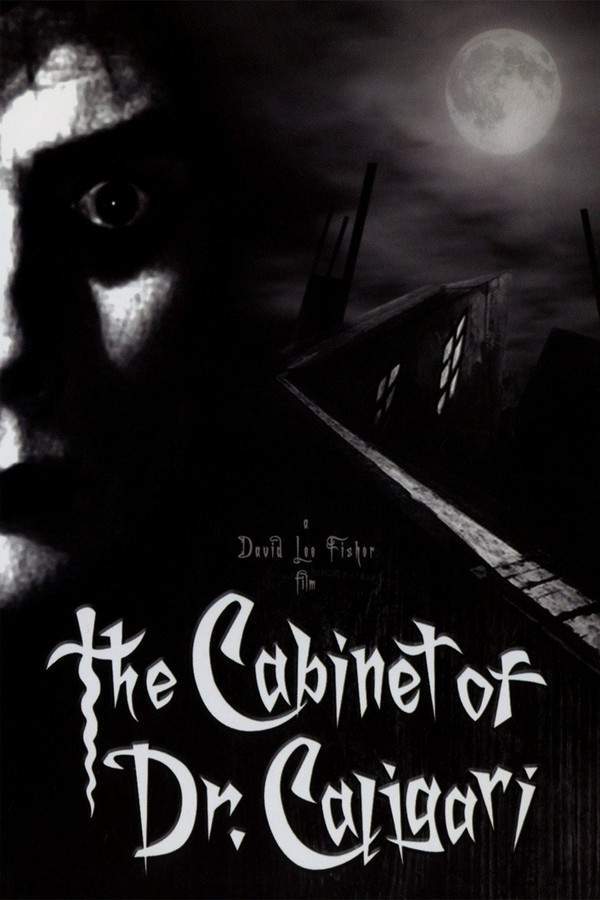
The Cabinet of Dr. Caligari (2006) Ending Explained & Film Insights
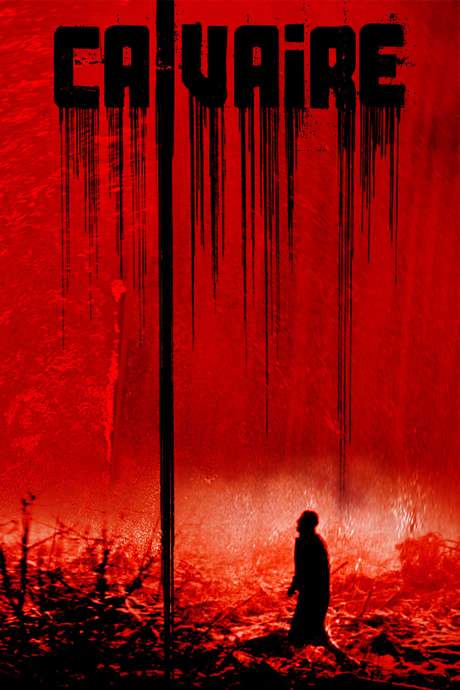
Calvaire (2004) Plot Summary & Ending Explained
Macabre (1980) Detailed Story Recap
Dr. Caligari (1989) Story Summary & Characters
The Cabinet of Dr. Ramirez (1991) Movie Recap & Themes
Crazy Desires of a Murderer (1977) Complete Plot Breakdown
Diabolique (1955) Story Summary & Characters
Repulsion (1965) Complete Plot Breakdown
The Mansion of Madness (1973) Story Summary & Characters
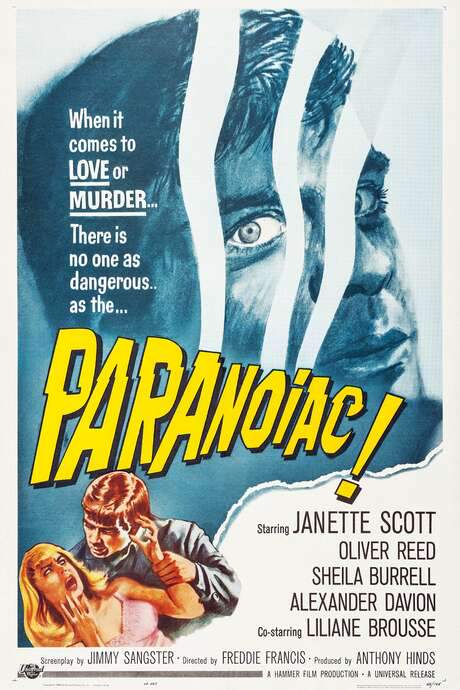
Paranoiac (1963) Ending Explained & Film Insights
Delirium (1972) Detailed Story Recap
Schizo (1976) Complete Plot Breakdown
The Cabinet of Dr. Caligari (1920) Detailed Story Recap
The Torture Chamber of Dr. Sadism (1967) Ending Explained & Film Insights