


Plot Explained Spoilers guaranteed!
Plot Explained

Browse by genre

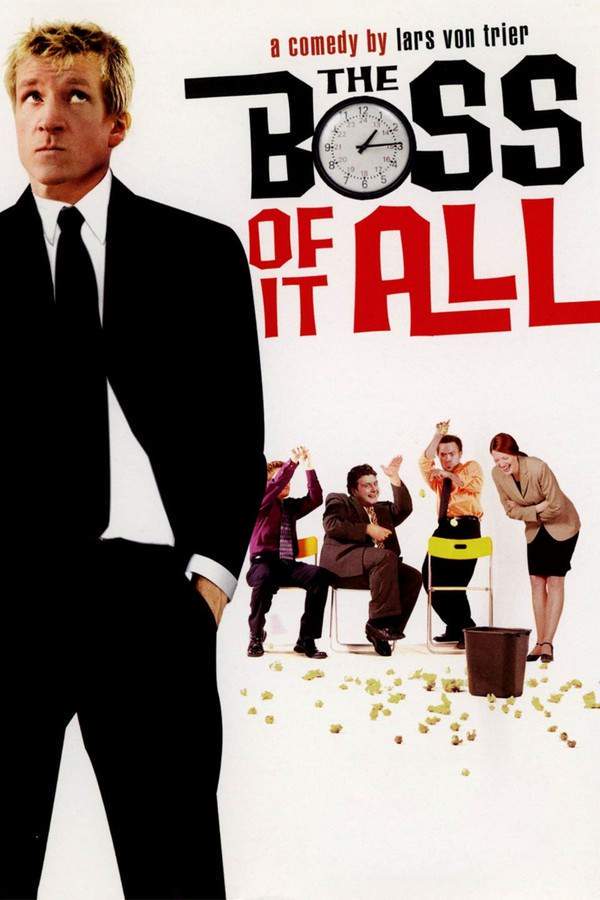
The Boss of It All (2007) movie poster

Timeline

The Boss of It All (2007) Timeline Explained – Every Event in Order

Release, runtime and language
2007 · 99 min · Danish
JustWatch #13,161 3

A tech mogul planning to sell his company encounters a surprising problem: the invented CEO persona he created has gained a separate existence. Desperate to finalize the sale, he enlists a struggling actor to portray the boss. This decision unexpectedly throws the actor into a complicated situation, blurring the lines between performance and reality, and leading to humorous consequences for everyone involved.

On this page (6)
  1. 1 Where to watch
  2. 2 Events in order (13)
  3. 3 Timeline questions answered
  4. 4 Movie threads
  5. 5 Categories
  6. 6 Every angle

Where to watch

Where to Watch The Boss of It All (2007)

Where can you watch The Boss of It All? Stream, rent or buy it in the US, including on MUBI: current JustWatch availability with up-to-date prices.

Streaming availability powered by JustWatch

13 events in order · contains spoilers

The Boss of It All Timeline: Events in Chronological Order

Every key event of The Boss of It All (2007) in order, scene by scene, with when and where it takes place. Use it to untangle flashbacks, time jumps and parallel storylines, to refresh your memory before the sequel or to find the exact scene you are thinking of.

  1. Film Introduction

    The film opens with Lars von Trier appearing only through a reflection, addressing the audience directly. He emphasizes that the following narrative should not be taken seriously, setting a comedic tone for the events that will unfold.

  2. Ravn's Job Offer

    Ravn, the owner of an IT company, hires an out-of-work actor named Kristoffer to impersonate him during a key meeting. This meeting is crucial as Ravn is looking to sell his company to an Icelandic firm.

    Where
    Ravn's office
  3. The Disastrous Meeting

    During the meeting with the Icelandic company, chaos unfolds as the Icelandic representative becomes furious. He accuses Danes of being overly sentimental, leading to a complete breakdown of negotiations.

  4. Ravn's Confession

    After the disastrous meeting, Ravn reveals a shocking truth to Kristoffer. He admits that he has been misleading his staff for ten years, claiming that the actual boss was residing in America and blaming the boss for operational failures.

  5. Kristoffer's New Role

    Kristoffer continues to pretend to be Ravn, working closely with the staff. However, he quickly learns that he is woefully unprepared and clueless about the company's inner workings.

  6. Misunderstood Proposal

    Kristoffer finds himself in a humorous predicament when he realizes that a vague email he sent was actually a marriage proposal. His lack of awareness results in a comical exchange with a confused employee.

  7. Lise's Revelation

    Kristoffer learns from Lise that the original six staff members invested $15,000 each to help Ravn start the business. This revelation complicates matters as they are under the impression they own part of the company.

  8. Ravn's Deceit

    Ravn's plan becomes increasingly dubious when Kristoffer realizes he intends to fire the six seniors and pocket the profits from selling the company without informing them. Kristoffer sees this as unethical.

  9. Bargaining Gone Wrong

    In a follow-up meeting with the Icelandic company president, Kristoffer attempts to negotiate a staggering $50 million increase over the original offer. His aggressive bargaining leads to the president storming out in frustration.

  10. Final Meeting

    A crucial final meeting is held with the Icelandic company, where the original six staff members are present. In a surprising twist, Ravn admits he is the true boss, a confession that is met with unexpected acceptance from everyone.

  11. Contemplation of Power

    Despite the successful meeting, Kristoffer wrestles with the power dynamics now that he legally owns the company. He reflects on whether to sell or maintain control, weighing his options carefully.

  12. The Decision to Sell

    After hearing the Icelandic CEO mention Gambini, Kristoffer is intrigued and decides to sell the company. Despite his previous thoughts of keeping it, he finalizes the decision impulsively.

  13. Final Departure

    As the film closes, the staff begins to pack their belongings, signaling the end of an era. Kristoffer delivers a dramatic Gambini monologue for the Icelandic boss, adding a whimsical touch to the ending.

Last updated: February 04, 2025 at 09:32

Was this helpful?

Timeline questions answered

The Boss of It All Timeline Explained: Your Questions Answered

When does it happen, and why in that order? The questions people ask about the chronology of The Boss of It All (2007): time jumps, flashbacks, cause and effect between scenes and the correct order of events, each answered with spoilers.

Q1

Why does Ravn hire an actor to pretend to be the company CEO?

Ravn invented a fictional CEO named Gambini living in America ten years earlier to avoid taking responsibility for any problems at his company. When he needed to sell the company to the Icelandic firm, he realized he couldn't face the buyers himself after lying about Gambini's existence for so long. Desperate to finalize the sale, he hired unemployed actor Kristoffer to impersonate him, believing an actor could handle the role convincingly.

  • ravn
  • actor
  • ceo
  • impersonation
  • gambini
  • deception
Q2

What was the $15,000 investment the staff made?

Each of the six original staff members invested $15,000 when Ravn was starting the company. They believed this money bought them an ownership stake in the business. In reality, Ravn kept the money as personal investment and never gave them any actual equity. When he planned to sell the company, he intended to fire all six staff members and keep the entire profit for himself without their knowledge.

  • staff
  • investment
  • fifteen thousand
  • ownership
  • ravn
  • deception
Q3

Why does Kristoffer decide to sell the company at the end?

Despite initially planning to expose Ravn's deception and potentially keep the company himself, Kristoffer impulsively agrees to sell after hearing the Icelandic CEO mention Gambini's name. The reference to this fictional figure that Kristoffer had been impersonating triggers something in him, and he chooses to finalize the deal rather than fight for control of the company.

  • kristoffer
  • sell
  • company
  • gambini
  • decision
  • impulse
Q4

Who is Pier Antonio Quarantotti Gambini and why does Kristoffer impersonate him?

Gambini is the fictional CEO that Ravn invented, a name he created while obsessing over a self-help book by Pier Antonio Quarantotti Gambini. When Kristoffer is hired, Ravn tells him to pretend to be this fictional CEO during meetings to sell the company. Kristoffer adopts the persona completely, even delivering a dramatic monologue in Gambini's style at the film's conclusion.

Foreshadowing: Ravn's obsession with the self-help book is mentioned early in the film.

  • gambini
  • pier antonio quarantotti
  • fictional ceo
  • impersonation
  • ravn
Q5

Why does the Icelandic company representative get so angry?

During the first meeting, the Icelandic representative explodes with rage, accusing the Danes of being overly sentimental and verbose. He finds the corporate approach and emotional language from the Danish side off-putting, causing him to storm out and derail the entire sale negotiation. This tantrum leads Ravn to realize he cannot face the buyers himself, prompting the plan to hire Kristoffer.

  • icelandic
  • meeting
  • anger
  • negotiation
  • danish
  • sentimental
Q6

How does Kristoffer find out about Ravn's deception?

Lise, one of the original six staff members, reveals to Kristoffer that everyone invested $15,000 with the understanding they owned part of the company. When Kristoffer discovers Ravn plans to sell the company and fire the staff while keeping all profits, he realizes the full extent of Ravn's deception and confronts him about the ethical breach.

Foreshadowing: Kristoffer gradually becomes confused by company matters he doesn't understand as the real owner.

  • kristoffer
  • lise
  • revelation
  • deception
  • staff
  • investment
Q7

Why do the staff accept Ravn's confession so easily?

When Ravn finally admits he is the actual boss and has been lying for ten years, the staff surprisingly responds with equanimity rather than anger. This likely reflects the film's absurdist tone, they may have suspected something was wrong all along, or the revelation simply comes as no surprise given the bizarre circumstances. Either way, they choose to keep the company rather than proceed with the sale.

  • staff
  • ravn
  • confession
  • acceptance
  • company
  • sale
Q8

Why does Kristoffer perform the Gambini monologue at the end?

In the final scene, as the staff packs up the office, Kristoffer delivers a passionate, theatrical monologue while channeling the Gambini persona for the Icelandic boss. This represents the culmination of his immersion in the role, having spent the film pretending to be this fictional character, he embraces the performance one last time as a whimsical farewell to the entire absurd situation.

Foreshadowing: Kristoffer repeatedly adopts the Gambini persona throughout the film when interacting with staff.

  • kristoffer
  • gambini
  • monologue
  • finale
  • performance
  • icelandic boss
Q9

What was the marriage proposal email Kristoffer sent accidentally?

Earlier in the film, Kristoffer had sent a vague email to the staff that he thought was simply answering a question. In reality, due to his misunderstanding of company matters, the email was interpreted as a marriage proposal to one of the employees. This creates a humorous situation where Kristoffer must navigate the confusion without knowing what he actually wrote.

  • kristoffer
  • email
  • marriage proposal
  • misunderstanding
  • comedy

Movie threads

More Movies Like The Boss of It All, by Mood & Story

Curated lists built around what makes The Boss of It All tick: the same mood, the same kind of story or the same emotional payoff. Each list explains why these movies belong together.

Absurd Workplace Comedies like The Boss of It All

Funny tales where elaborate corporate lies spiral into comedic chaos. If you enjoyed the farcical corporate deception in The Boss of It All, you'll appreciate these other movies that find humor in elaborate workplace ruses and the chaos they create. These films share a similar whimsical, satirical tone and a lighthearted take on the absurdities of professional life.

  • satirical
  • absurd
  • farce
  • misunderstandings
  • workplace humor
  • lighthearted
  • Tone: whimsical, satirical
  • Pacing: steady, comedic build-up
Why these movies?

The story pattern: The narrative typically involves a protagonist inventing a persona, situation, or company to solve a problem, leading to a snowballing series of lies. As more people become involved, the deception becomes increasingly difficult to maintain, resulting in a cascade of humorous misunderstandings and near-misses that test the characters' improvisational skills.

Why they belong together: These films are grouped by their shared premise of a high-stakes (but comedic) lie within a professional context, their whimsical tone that treats the ensuing chaos as farce rather than drama, and their steady pacing that builds humor through accumulating complications.

Movies about Performance and Identity like The Boss of It All

Stories where actors or impostors find their role consuming their real life. Fans of The Boss of It All who enjoyed its meta-fictional exploration of an actor becoming his role will find similar themes in these selections. These movies delve into the comedy and complexity that arises when a performed identity starts to feel real, blending humor with questions about authenticity.

  • meta-fictional
  • quirky
  • identity crisis
  • acting
  • humorous
  • playful
  • Tone: playful, meta-fictional
  • Pacing: steady, character-driven
Why these movies?

The story pattern: The central journey involves a character embracing a fictional persona, initially for pragmatic or artistic reasons. As they immerse themselves in the role, the boundaries between their performance and their genuine identity become blurred. This creates internal conflict and external comedy, often questioning what constitutes 'real' personality versus acting.

Why they belong together: These films are united by their thematic focus on identity, performance, and the absurd situations that arise when the two collide. They share a playful, often meta-fictional tone, a moderate narrative complexity stemming from the dual identities, and a light emotional weight that keeps the exploration humorous rather than deeply psychological.

Categories

Movie Lists Featuring The Boss of It All

The Boss of It All appears in these hand-built movie categories. Each one groups movies by a specific mood, theme or story type, with their plot summaries and endings explained.

View all movie categories

Every angle

The Boss of It All (2007) Explained: Plot, Timeline & Characters

Everything about The Boss of It All in one place: what happens in the plot summary, the timeline in chronological order, the characters and meaning and a spoiler-free summary. What's After the Movie adds the cast, box office and post-credit scenes.

Coming soon on iOS and Android

The Plot Explained Movie Summary App

Plot summaries, endings explained and timelines on your phone. Catch up on any movie in minutes, save your favorites and never miss a twist again.

Be the first to know when we launch. Your email stays private, always.

Learn more about the app