Plot Explained Spoilers guaranteed!
Plot Explained

Browse by genre

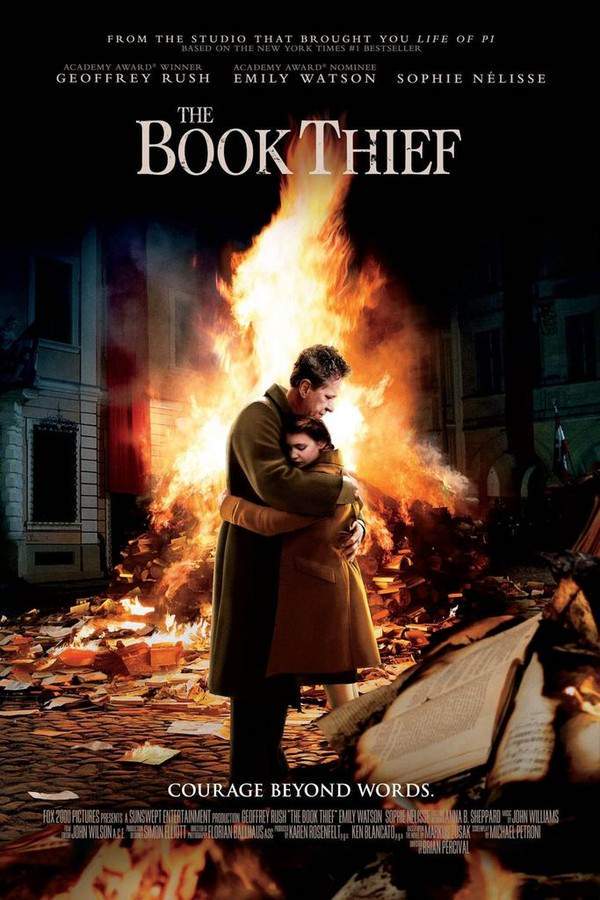
The Book Thief (2013) movie poster

Plot Summary

The Book Thief (2013) Plot Summary Explained

Release, runtime and language
2013 · 131 min · English
Loading streaming availability…
Directed by
Brian Percival
Starring
Emily Watson, Ben Schnetzer, Geoffrey Rush, Sophie Nélisse, Hildegard Schroedter, Nico Liersch

In 1938 Germany, as the country is engulfed by war, a young girl named Liesel finds comfort and escape through stolen books and the kindness of others. Raised by foster parents, Hans and Rosa Hubermann, she learns to read with Hans’ patient encouragement. While they navigate difficult circumstances and try to maintain a sense of normalcy, they risk everything by sheltering a Jewish young man in their home, placing their own safety in jeopardy and forcing them to confront the harsh realities of the era.

On this page (6)
  1. 1 Where to watch
  2. 2 What happens: full plot
  3. 3 Plot questions answered
  4. 4 The book behind the movie
  5. 5 Movie threads
  6. 6 Every angle
Loading streaming availability…

Full plot summary · contains spoilers

What Happens in The Book Thief: Full Plot Summary

The whole story of The Book Thief (2013) explained, from the opening scene to the final frame: every key event, every twist and what it all adds up to. Read it as a quick recap before the sequel, to check a scene you missed, or to finally understand what really happened.

In February 1938, Death becomes intrigued by a young girl named Liesel Meminger, who will soon capture his fascination. The tale begins with a deeply emotional moment as Liesel steals her first book, The Grave Digger's Handbook, after the death of her brother, who tragically passes away just before this event, causing the book to slip from the gravedigger's pocket. As she adjusts to her new life under the care of Rosa Hubermann and Hans Hubermann in Munich, she quickly bonds with her neighbor, Rudy Steiner, who becomes not just a friend but a steadfast ally.

Circumstances push Liesel and Rudy into the ranks of the Hitler Youth, a choice that takes them on a path fraught with challenges. Their adventure takes an unexpected twist when Liesel boldly grabs a singed book at a Nazi book-burning ceremony. This act leads Ilsa Hermann, the wife of the mayor, to notice Liesel, prompting her to invite the girl into her vast library—a dream come true for Liesel. However, this newfound freedom is precarious; the mayor soon discovers Liesel’s actions, resulting in the loss of her library privileges and the dismissal of Rosa from her job as a laundress.

As Kristallnacht unfolds in Munich, a desperate Max Vandenburg seeks refuge with the Hubermanns after his mother’s hurried exit. This connection goes deep, rooted in Hans' past where he once owed his life to Max's father during World War I. Initially recuperating in Liesel's room, Max and the spirited girl gradually build a friendship, united by their mutual disdain for Adolf Hitler.

When World War II begins, many young people in Liesel's neighborhood feel a rush of excitement, but the Hubermanns are aware of the dire reality as they offer Max a safe haven. As the conflict escalates, secrecy becomes vital, and Liesel finds joy in reading to Max, often sharing stories from the books she "borrowed" from the mayor’s library.

One pivotal day, Liesel slips into the mayor's residence for a literary adventure, with Rudy unknowingly shadowing her. When he discovers Max's journal left behind, he realizes that the Hubermanns are harboring someone significant. This revelation strengthens their bond, and in a courageous act of loyalty, Rudy endangers himself to recover the journal from a freezing river, proving he is worthy of Liesel's trust.

As wartime anxieties grow and local party members begin to investigate, the Hubermanns must protect Max's secret. During this chaotic period, Liesel finds strength in her love for books and her friendships, creating a resilience that becomes the foundation of her survival in a time overshadowed by war. The situation escalates when the police come for Lehman, a neighbor and Jew, leading to Hans's brutal confrontation with the soldiers. He realizes too late the danger he has brought upon his family by attempting to help.

Tragedy strikes when Liesel witnesses what seems to be Max being marched away with other Jews, her desperate cries for him ignored by the soldiers. It’s a heart-wrenching moment that forces her and Rosa to flee from the scene.

Soon after, Hans's life is upended once more when he returns home from military service, bearing physical scars from the front lines. Just as he begins to grapple with the realities of war, a false air raid alert leads to a catastrophic bombing that devastates their town and claims the lives of Rosa, Hans, Rudy's family, and Franz. The only one left standing amidst the ruins is Liesel, who had been lost in writing in Max’s journal in the safety of the basement.

Two years later, Liesel rises from the devastation like a phoenix reborn. Now working in the tailor shop owned by Rudy's father, she is taken by surprise when Max reappears, heralding the start of a new chapter in her life. The story closes with Liesel as an elderly woman surrounded by photographs of her past and present, a portrait of her younger self casting a long shadow, a reminder of the power of memory and storytelling to endure even the darkest of times.

Last updated: November 21, 2024 at 09:56

Was this helpful?

Plot questions answered

The Book Thief Plot Explained: Your Questions Answered

The questions people ask most about The Book Thief (2013): what happens in the confusing scenes, why the characters do what they do, the twists, hidden details and what the ending means. Each answer contains spoilers.

Q1

Why does Liesel steal books in The Book Thief?

Liesel steals her first book, The Grave Digger's Handbook, from a gravedigger's pocket at her brother's funeral. She does this because she is overwhelmed by grief after losing her brother and is drawn to the book as a way to hold onto something tangible from that traumatic day. This moment establishes her lifelong relationship with books as objects of comfort and rebellion against loss.

Foreshadowing: Earlier in the film, Death mentions he first noticed Liesel at her brother's graveside, setting up the significance of this first theft.

  • liesel meminger
  • stolen books
  • the grave digger's handbook
  • grief
  • theft
Q2

Why does Hans Hubermann hide Max in his house?

Hans agrees to hide Max Vandenburg because Max's father saved Hans's life during World War I. When Hans was wounded in no man's land, Max's father carried him to safety and gave him a gift of a accordion. Hans feels a debt of honor to protect Max, despite the grave danger of sheltering a Jewish person in Nazi Germany. This obligation is deeply personal and rooted in his wartime past.

Foreshadowing: The accordion that Hans plays throughout the story is the same one given to him by Max's father, symbolizing the connection that leads him to take this risk.

  • hans hubermann
  • max vandenburg
  • hiding jews
  • ww1
  • obligation
Q3

Does Max die in The Book Thief?

Max does not die in The Book Thief. Although Liesel witnesses what appears to be Max being arrested and marched away with other Jews, he actually survives the Holocaust. He reappears two years after the bombing, alive and well, visiting Liesel at Rudy's father's tailor shop. The scene where she sees him taken was a ruse to protect him, or he escaped during the chaos of the air raid.

Foreshadowing: Earlier, Liesel reads to Max about a boy who escapes from a train, a moment that foreshadows Max's own survival.

  • max vandenburg
  • survives
  • arrest
  • jewish
  • holocaus
Q4

Why does Rudy jump into the freezing river?

Rudy jumps into the freezing river to retrieve Max's journal, which falls out of Liesel's bag during one of their adventures. Rudy discovers the journal and realizes the Hubermanns are hiding a Jewish man. Despite this dangerous secret, he jumps into the icy river to recover the journal because he wants to prove his loyalty to Liesel and keep the journal safe. He nearly dies from hypothermia but is saved by Liesel.

Foreshadowing: This act of loyalty cements Rudy's role as Liesel's steadfast friend and foreshadows his later sacrifice during the bombing.

  • rudy steiner
  • journal
  • river
  • max
  • loyalty
Q5

Why does Hans confront the soldiers about Lehman?

Hans confronts the soldiers when they come to arrest Lehman, their Jewish neighbor. Despite knowing the danger, Hans physically blocks the soldiers and argues with them, trying to prevent them from taking Lehman. This act of defiance puts his own family at risk and stems from Hans's moral refusal to stand by while his neighbor is persecuted, though his intervention ultimately fails.

Foreshadowing: This confrontation directly leads to increased scrutiny on the Hubermann household, making it harder to keep Max hidden.

  • hans hubermann
  • lehman
  • soldiers
  • arrest
  • defiance
Q6

Who survives the bombing in The Book Thief?

Only Liesel survives the bombing of Munich. The air raid kills Rosa Hubermann, Hans Hubermann, Rudy's entire family (father, mother, and siblings), and Franz. Liesel survives because she was in the basement writing in Max's journal, which protected her from the blast. She emerges from the rubble as the sole survivor of her immediate circle.

Foreshadowing: Earlier, Liesel writes in the basement to stay safe during air raids, a routine that ultimately saves her life.

  • bombing
  • munich
  • survival
  • air raid
  • death
Q7

What happens to Rudy Steiner in The Book Thief?

Rudy Steiner dies in the bombing of Munich along with his entire family. He is one of the victims when the false air raid alert leads to a devastating attack on the town. Rudy dies without ever knowing that Liesel loved him back, though she finally kisses him as he dies in her arms in the rubble. His death is one of the most emotionally devastating moments in the story.

Foreshadowing: Earlier scenes of Rudy's constant pursuit of affection from Liesel and his loyalty make his death even more poignant.

  • rudy steiner
  • death
  • bombing
  • family
  • loss
Q8

Why is Death the narrator in The Book Thief?

Death narrates the story as an observer who becomes fascinated with Liesel amidst the chaos of World War II. The narrator explains that humans, with their capacity for both cruelty and kindness, have always intrigued Death. By telling the story through Death's perspective, the film emphasizes the randomness of death during wartime and highlights Liesel's resilience and love of words as a force that gives meaning to otherwise meaningless destruction.

Foreshadowing: Death mentions early on that he first noticed Liesel at her brother's graveside, making his interest in her personal from the start.

  • death
  • narrator
  • perspective
  • war
  • storytelling
Q9

How does Liesel survive the bombing?

Liesel survives the bombing because she was in the basement when the bombs fell. She had gone down to write in Max's journal, a private activity that became her refuge during air raids. The basement provides enough shelter from the blast, while everyone else in the house and nearby is killed. She emerges physically unharmed but emotionally shattered, the only one left from her adopted family.

Foreshadowing: Liesel's habit of writing in the basement during air raids, established earlier in the story, directly saves her life.

  • liesel meminger
  • survival
  • basement
  • bombing
  • journal
Q10

What happens at the end of The Book Thief?

At the end of The Book Thief, Liesel works at Rudy's father's tailor shop two years after the bombing. One day, Max unexpectedly returns, having survived the Holocaust. The story then cuts to an elderly Liesel, surrounded by photographs, reflecting on her past. She has kept the journal she wrote in during the war, the only physical reminder of everyone she lost, symbolizing how stories and memory endure beyond tragedy.

Foreshadowing: Max's promise to Liesel that words and stories are more powerful than bombs foreshadows her becoming a writer and his return.

  • ending
  • epilogue
  • max
  • reunion
  • memory

Movie threads

More Movies Like The Book Thief, by Mood & Story

Curated lists built around what makes The Book Thief tick: the same mood, the same kind of story or the same emotional payoff. Each list explains why these movies belong together.

Movies about finding humanity in war like The Book Thief

Stories of ordinary people choosing kindness amidst the brutality of conflict. If you were moved by how 'The Book Thief' showed small acts of courage during wartime, you'll appreciate these similar films. Discover other powerful dramas that explore kindness, resilience, and found family in the face of historical conflict and persecution.

  • somber
  • hopeful
  • grim
  • heartbreaking
  • resilient
  • historical
  • Tone: dark, somber, yet hopeful
  • Pacing: steady, character-driven
Why these movies?

The story pattern: Narratives in this thread typically follow civilians or soldiers caught in a vast historical conflict, focusing on their personal moral choices rather than the large-scale battles. The journey centers on maintaining one's integrity, protecting loved ones or strangers, and discovering that acts of humanity are the ultimate form of resistance against oppression.

Why they belong together: These movies are grouped together because they share a dark, somber tone underpinned by a persistent thread of hope. They balance the high intensity of wartime settings with steady, character-driven pacing, exploring heavy themes through the lens of personal relationships and quiet courage.

Movies where stories provide solace like The Book Thief

Characters who use literature and art as a refuge from oppression and despair. Love how 'The Book Thief' used stolen books as a symbol of hope? Explore more films where literacy, storytelling, and art are central to survival. These movies, similar in tone, show characters using creativity as a weapon and a refuge against overwhelming adversity.

  • melancholic
  • hopeful
  • thoughtful
  • literary
  • reflective
  • bittersweet
  • Tone: melancholic, bittersweet, reflective
  • Pacing: steady, contemplative
Why these movies?

The story pattern: The narrative pattern involves a protagonist facing a grim or oppressive reality who discovers an escape or a purpose through stories—whether reading, writing, or sharing them. This arc shows how engaging with narrative art helps the character process trauma, connect with others, and find an inner strength that external forces cannot destroy.

Why they belong together: These films share a bittersweet, melancholic mood and a steady, reflective pace. They are united by the central theme of art and literacy as transformative forces, exploring how creativity and knowledge empower individuals to endure and find meaning in the midst of tragedy and loss.

Every angle

The Book Thief (2013) Explained: Plot, Timeline & Characters

Everything about The Book Thief in one place: what happens in the plot summary, the timeline in chronological order, the characters and meaning and a spoiler-free summary. What's After the Movie adds the cast, box office and post-credit scenes.

Coming soon on iOS and Android

The Plot Explained Movie Summary App

Plot summaries, endings explained and timelines on your phone. Catch up on any movie in minutes, save your favorites and never miss a twist again.

Be the first to know when we launch. Your email stays private, always.

Learn more about the app