Year: 2005
Runtime: 120 mins
Language: English
Director: Tony Mitchell
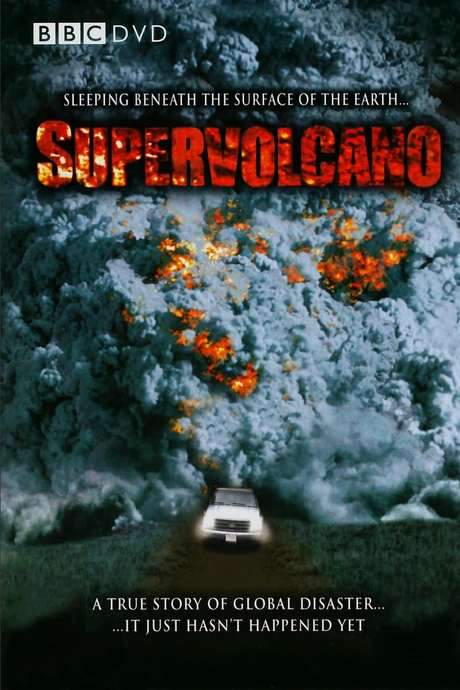
Yellowstone National Park sits on a massive volcanic system, a dormant ‘dragon’ that could awaken at any time; an earthquake cracks the crust, letting magma rise and prompting warning signs scientists first dismiss as minor. When the eruption proves inevitable, panic spreads as officials warn the public.
Warning: spoilers below!
Haven’t seen Supervolcano yet? This summary contains major spoilers. Bookmark the page, watch the movie, and come back for the full breakdown. If you're ready, scroll on and relive the story!
Read the complete plot breakdown of Supervolcano (2005), including all key story events, major twists, and the ending explained in detail. Discover what really happened, and what it all means.
Richard Lieberman, the scientist in charge of Yellowstone Volcano Observatory, leads a press conference with his colleagues Jock Galvin, Dave, Matt and Nancy, and their boss, Michael Eldridge, to present their new virtual imagery simulator VIRGIL, which Eldridge claims will greatly aid their research. The gathering is brisk, professional, and aimed at reassuring the public that they are prepared for any eventuality, even as a wary reporter in the room—Maggie Chin—asks about the possibility of an eruption. Rick dismisses the notion as a remote possibility, trying to keep the mood calm and focused on science rather than fear.
Soon after, an earthquake triggers a tsunami on one of the park’s lakes, and Maggie interviews Kenneth “Ken” Wylie on TV about his new book on volcanoes. Rick and Ken are brothers-in-law, and their later exchange grows tense as Rick accuses Ken of exploiting public anxiety to sell his book. The tension underscores a central tension in the film: the difference between keeping the public informed and managing the sensational narratives that can spiral into mass panic.
Meanwhile, the undersecretary of FEMA, Wendy Reiss, presses Rick for a hard look at worst-case scenarios if Yellowstone were to release a “super eruption.” He shares a sobering simulation that shows the potential reach of an ashfall across the United States, a visualization that raises the stakes for everyone involved. The moment crystallizes the stakes: even a routine hydrothermal event at Norris Geyser Basin can ripple outward as questions pile up from a growing crowd of reporters and viewers.
As the team runs more simulations on VIRGIL, they learn that even a moderate eruption could destabilize the broader magma chamber beneath Yellowstone and potentially trigger a much larger event. The possibility shifts from theoretical to immediate concern, prompting heightened vigilance across the park and in federal offices. Seismic chatter grows louder, and the ground begins to feel unsettled enough that the park’s authorities decide to close it for safety. Maggie persists, arriving at the park anyway, while Rick dispatches Matt to give her a guided tour that doubles as a data-gathering exercise. The team detects a harmonic tremor near Norris, a sign that an eruption of uncertain scale could be imminent.
News of the tension and the new danger leaks to the press, stoking a national panic. FEMA schedules a crucial press conference in Washington, DC, where Rick is pressured to downplay the threat and assure the public that the eruption will not be large. The scene highlights the strain between scientific caution and political expediency, a recurring theme in the film. As Rick travels back from the conference, the field office finishes tallying the latest data. They uncover troubling evidence: the top of the magma chamber contains enough eruptible magma to destabilize the chamber and trigger a super eruption. The realization hits with devastating clarity as the team rushes to interpret the new data and plan for what comes next.
The eruption begins in earnest, tearing through the landscape with frightening speed. The field office is severely damaged, and Jock is injured in the chaos. Matt investigates the eruption and contacts Dave to relay the news to Rick. A pyroclastic flow forces the team to abandon the main USGS office; Nancy and Matt try to outrun the advancing cloud in a truck, but the flow overwhelms them, and they are killed in the resulting devastation. The ash plume and tremors force a rapid reconfiguration of emergency response, with FEMA widening its protective measures and airspace closures as a precaution for thousands of travelers and residents.
Rick reaches out to Dave, who had relocated earlier to establish a backup office in a hotel in Bozeman. Meanwhile, the vent system drives ash east across the United States, closing major air routes and pushing authorities to seek shelter and containment. Rick’s plane fights its way through the ash and makes an emergency landing in Cheyenne. He and Ken decide to move toward a FEMA facility in Denver, but the ash renders those plans impractical, forcing them to seek a nearby military installation instead.
The eruption drives a dramatic collapse of structures as the ashfall intensifies and the venting continues. The motel roof collapses, destroying the backup office and killing Dave. Rick and Ken manage to reach a secure military installation, where they weather the worst of the event. Inside the installation, Rick coordinates with FEMA and pieces together the forecast: the vents will merge into one massive caldera, unleashing an eruption on the scale of the Huckleberry Ridge Event—the most dramatic chapter in Yellowstone’s long history.
As officials scramble to devise a plan to save the estimated 25 million people trapped by ash, Rick argues that evacuation by air is impractical and nearly impossible given the conditions. He pushes for a stark, grim approach: FEMA initiates the Walk to Life program, urging people to walk through the ash to safety rather than waiting for a risky airlift or relief operation. The approach is controversial but holds a grim logic given the scale of the disaster unfolding around them.
A week into the eruption, the ground above the emptied magma chamber begins to sink, signaling that the eruption is nearing its end. Yet the damage is already extensive, and much of the US must endure a volcanic winter, with atmospheric conditions rendering large portions of the country uninhabitable. The crisis claims lives and reshapes how the country thinks about natural disaster response. In the end, the Walk to Life program manages to save around 7.3 million people out of the original 25 million trapped, including Rick and Ken, whose resilience and teamwork underscore the human capacity to endure even the most cataclysmic events. The film closes on a somber but hopeful note, emphasizing caution, preparedness, and the quiet courage of those who confront extraordinary danger.
Last updated: October 09, 2025 at 15:09
Explore frequently asked questions about Supervolcano (2005) with spoiler-rich answers covering the full plot summary, major story beats, character motivations, hidden details, and ending meaning. This movie summary FAQ helps explain confusing scenes, plot twists, and narrative decisions in clear, searchable detail.
The scientists initially dismissed the eruption signs because their models and historical data suggested a massive eruption was extremely unlikely. Rick Lieberman, leading the Yellowstone Volcano Observatory, downplayed the risk during press conferences to maintain public calm. Additionally, early seismic activity could have been explained by minor geological events, and the VIRGIL simulator had not yet processed the critical data that would reveal the true danger level.
The opening press conference establishes Rick's cautious approach to public messaging, which later creates tension when the threat proves real.
Rick and Ken's tension stemmed from Ken's new book about volcanic danger, which Rick believed exploited public anxiety for profit. Rick accused Ken of sensationalizing volcano threats to sell books, while Ken felt his warnings were scientifically valid. This family conflict reflects the film's broader theme of balancing public warning with preventing mass panic.
Their early argument about responsible communication foreshadows the moral dilemmas Rick faces when dealing with FEMA and political pressures.
The VIRGIL simulator ran stress-test simulations on the Yellowstone magma chamber and revealed that even a moderate hydrothermal eruption could destabilize the broader magma chamber, potentially triggering a massive super eruption. This new data shifted the risk from theoretical concern to immediate threat, prompting the team to escalate warnings.
The VIRGIL demonstration at the opening press conference establishes it as the tool that ultimately reveals the truth.
FEMA pressured Rick to downplay the threat because a public admission of imminent catastrophic danger would trigger mass panic, overwhelm emergency response systems, and cause economic disruption. The undersecretary wanted Rick to say the eruption would not be large, prioritizing social stability over full scientific disclosure.
This scene mirrors the earlier tension between Rick and Ken about responsible fear-mongering versus honest warning.
Nancy and Matt were killed while attempting to outrun a pyroclastic flow in a truck after the USGS field office was severely damaged. The pyroclastic cloud advanced faster than they could escape, overwhelming their vehicle. Their deaths highlight the film's point that even trained scientists with field experience cannot outpace a supervolcanic eruption.
The earlier park closure and evacuation warnings set up the fatal outcome for characters who remained too long.
The Huckleberry Ridge Event refers to the largest historical volcanic eruption in Yellowstone's past, occurring around 2.1 million years ago. In the film, Rick calculated that the current eruption would match or exceed that scale, with vents merging into one massive caldera. This forecast meant the eruption would be continent-altering and make any evacuation by air practically impossible.
The VIRGIL simulations earlier had already shown potential ashfall across the entire United States.
The Walk to Life program was necessary because the ash plume had closed most airspace and rendered air evacuation extremely dangerous and impractical. With 25 million people trapped by thick ash, Rick argued that waiting for helicopters or planes would result in more deaths than having people walk through ash to safety. The program represented a grim calculation: some movement was better than certain death by waiting.
Rick's earlier insistence that evacuation would fail due to ash and airspace closures directly leads to this program.
The Walk to Life program saved approximately 7.3 million people out of the 25 million originally trapped by ash. While this represents a significant survival rate given the catastrophe, it underscores the massive loss of life and the overwhelming scale of the disaster.
The program's success rate reflects the grim odds Rick had calculated throughout the eruption.
The magma chamber collapsed because the eruption had expelled such a massive amount of magma that the empty chamber could no longer support the weight of the overlying rock. This collapse created a massive depression, or caldera, at the surface and signaled that the eruption was nearing its end. The ground above the emptied chamber began to sink, a phenomenon visible in the film's depiction of the late-stage eruption.
The discovery earlier that the top of the magma chamber contained enough eruptible magma foreshadows this catastrophic emptying.
Dave was killed when the roof of the motel collapsed under the weight of heavy volcanic ash accumulation. After the USGS field office was destroyed, Dave had relocated to a Bozeman hotel to establish backup operations. The ash proved too heavy for the building structure, crushing him in the collapse.
The film's earlier transition to backup operations in Bozeman sets up this tragic outcome.
Rick's plane was forced to land in Cheyenne because the volcanic ash plume had spread across the region, causing severe visibility problems and damaging aircraft engines. The ash contained fine glass particles and abrasive materials that could clog and damage jet engines, making continued flight impossible. This emergency landing forced Rick and Ken to seek alternative ground transport to reach safety.
The earlier ash plume and airspace closures had already disrupted travel across the region.
The tsunami at Yellowstone Lake was triggered by a significant earthquake that occurred near the park. This seismic event caused water displacement in the lake, generating a wave that was captured in news coverage and prompted Maggie Chin to interview Ken Wylie. The event served as an early indicator that seismic activity was increasing in the region.
This early seismic event hints at the larger volcanic activity building beneath Yellowstone.
Discover curated groups of movies connected by mood, themes, and story style. Browse collections built around emotion, atmosphere, and narrative focus to easily find films that match what you feel like watching right now.
Movies where experts race against time to manage an unstoppable catastrophe.If you liked the tense scientific crisis and bureaucratic struggles in Supervolcano, explore more movies like it. These films feature experts grappling with impending doom, from natural disasters to technological threats, all sharing a mood of grim urgency and high-stakes decision-making.
Stories in this thread typically follow a linear path from discovery to crisis. Scientists or specialists identify a grave threat, face skepticism or political hurdles, and then lead a desperate, often futile, effort to mitigate the disaster. The narrative tension comes from the collision of cold, hard data with human panic and institutional inertia.
These films are grouped by their shared focus on procedural realism in the face of catastrophe. They deliver a specific type of tension rooted in intellectual dread—the horror of knowing what's coming and the frantic, often flawed, human response. The experience is less about spectacle and more about the weight of responsibility.
Stories of large-scale catastrophe where survival comes at a profound cost.For viewers who appreciated the heavy emotional weight and bittersweet ending of Supervolcano, this list contains similar movies about enduring a cataclysm. These stories share an anxious, grim mood and explore the themes of human endurance and survival in a realistically depicted post-disaster landscape.
The narrative pattern involves a gradual or sudden descent into a world-altering catastrophe. The journey follows characters—sometimes everyday people, sometimes leaders—navigating the immediate chaos and the long, arduous road to a new normal. The conflict is against the overwhelming force of nature or circumstance, with endings that acknowledge survival but mourn what was lost.
These movies are united by their commitment to a plausible and emotionally resonant apocalypse. They avoid fantastical elements, instead emphasizing the gritty reality of survival, the psychological toll of mass death, and the bittersweet nature of any hope found in the ashes. The focus is on endurance, not escape.
Don't stop at just watching - explore Supervolcano in full detail. From the complete plot summary and scene-by-scene timeline to character breakdowns, thematic analysis, and a deep dive into the ending - every page helps you truly understand what Supervolcano is all about. Plus, discover what's next after the movie.
Track the full timeline of Supervolcano with every major event arranged chronologically. Perfect for decoding non-linear storytelling, flashbacks, or parallel narratives with a clear scene-by-scene breakdown.
Discover the characters, locations, and core themes that shape Supervolcano. Get insights into symbolic elements, setting significance, and deeper narrative meaning - ideal for thematic analysis and movie breakdowns.
Discover movies like Supervolcano that share similar genres, themes, and storytelling elements. Whether you’re drawn to the atmosphere, character arcs, or plot structure, these curated recommendations will help you explore more films you’ll love.
Supervolcano (2005) Scene-by-Scene Movie Timeline
Supervolcano (2005) Movie Characters, Themes & Settings
Supervolcano (2005) Spoiler-Free Summary & Key Flow
Movies Like Supervolcano – Similar Titles You’ll Enjoy
Dante's Peak (1997) Complete Plot Breakdown
Volcano (1997) Movie Recap & Themes
Monsters (2010) Film Overview & Timeline
The Volcano: Rescue from Whakaari (2022) Ending Explained & Film Insights
Eruption: LA (2018) Spoiler-Packed Plot Recap
Magma: Volcanic Disaster (2006) Story Summary & Characters
Disaster Zone: Volcano in New York (2006) Spoiler-Packed Plot Recap
Firestorm: Last Stand at Yellowstone (2006) Ending Explained & Film Insights
Nature Unleashed: Volcano (2005) Plot Summary & Ending Explained
Monsters of War (2021) Detailed Story Recap
Volcano (1942) Ending Explained & Film Insights
The Crater Lake Monster (1977) Ending Explained & Film Insights
Eruption (2009) Spoiler-Packed Plot Recap
Volcano (2009) Movie Recap & Themes
Volcano: Fire on the Mountain (1997) Ending Explained & Film Insights