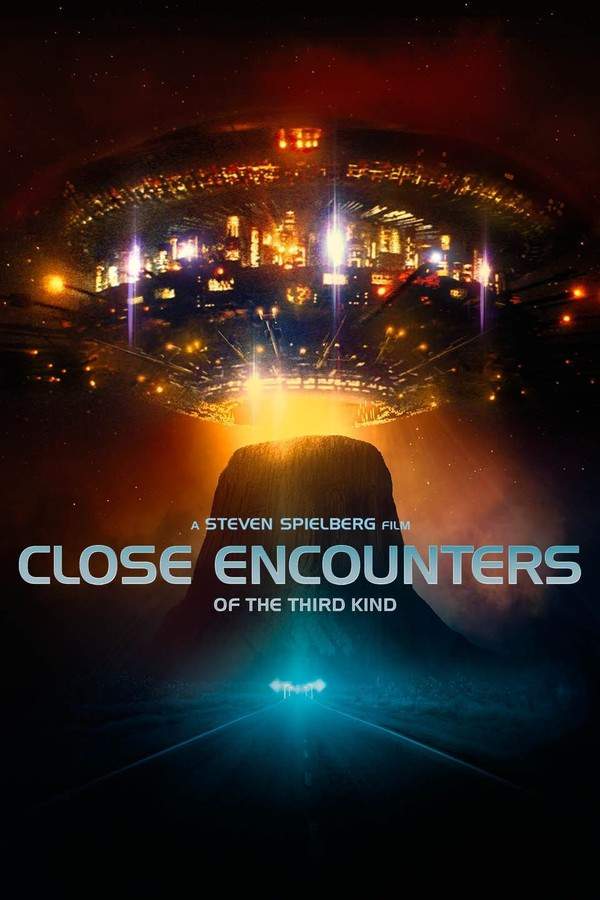
Fred Norwood, a skilled test pilot, takes the controls of the experimental X-109, a high-speed U.S. Air Force Lockheed F-104 Starfighter packed with advanced hardware, flying in formation with a chase plane. During the flight testing, a mysterious flying saucer suddenly appears, forcing Norwood into a nerve‑racking sequence of aerobatics as he fights to keep both aircraft safe. In a breathtaking display of precision, he pulls the X-109 out of a deadly dive at Mach 3.12 (about 2,320 mph, 3,402 ft per second from 30,000 feet), and against the odds, the two craft survive the harrowing encounter.
Back on the ground, the radar trace shows no other aircraft near him, and the officials monitoring his vital signs dismiss what he saw as a hallucination or an inversion of reality. The room grows tense as Blanchard, the pilot of the chase plane, echoes the conventional line and urges Fred to accept the skeptical explanation. With the room closing in, Fred’s resolve hardens; he refuses to let the incident slide into a forgotten anomaly.
Determined to prove what he witnessed, Fred takes to the skies again, patrolling in a USAF surplus North American P-51 Mustang equipped with a futuristic laser radar. He pushes himself toward exhaustion, his mind focused on the truth of that eerie craft. While he flies, his closest friend, Joe Vetry, lifts off in the Mustang when the radar picks up an unidentified object. For a while the signal holds, but then Joe’s plane vanishes from the screen entirely. When FAA crash investigators later report that Joe’s Mustang disintegrated in mid‑air—an event eerily reminiscent of the Mantell UFO incident—the emotional weight of Fred’s mission grows heavier.
Fred is summoned to Washington, D.C., where he meets Hank Peters, a formidable government figure who believes his account. Peters shows him a sketch of the same blue saucer, allegedly sourced from intelligence based in Red China, and—tapping Fred’s background with aircraft—confirms there are credible reports of the two humanoid aliens dying from Earth bacteria, their bodies said to have been cremated by villagers.
From there, a covert operation unfolds. In the Chinese drop zone, an American agent named Archibald leads the team to the saucer now hidden inside the ruins of a Catholic church, a site damaged by the authorities. The locals, unsettled by the political upheaval, give them help as they navigate a dangerous route, evading units of the People’s Liberation Army. Soon they cross paths with a party of Russian scientists led by Zagorsky and include the scientist Anna Karachev. The two American sides—led by Peters and Archibald—find themselves reluctantly cooperating with the Russians in the quest to uncover the mystery of the craft.
A blistering firefight erupts as the Chinese Army closes in, leaving a toll of casualties: two Russians, two Americans, and one Chinese soldier are killed. Despite the chaos, the three survivors—two Americans and one Russian scientist—board the saucer, activate its systems, and lift off. An autopilot mechanism seizes control and shoots them beyond Earth’s gravity, guiding their journey past the Moon and Mars on a collision course with Saturn. Faced with an overwhelming challenge, the trio must unite their knowledge and wits to wrest back control, and they succeed in steering the saucer back toward Earth—landing in Geneva, Switzerland.
As the screen fades to the aftermath, a potent reminder of humanity’s shared potential unfolds: a quote from President John F. Kennedy about mutual human cooperation in space flashes across the scene, underscoring the film’s core message that collaboration across nations—and even continents—holds the key to exploring the final frontiers.