Plot Explained Spoilers guaranteed!
Plot Explained

Browse by genre

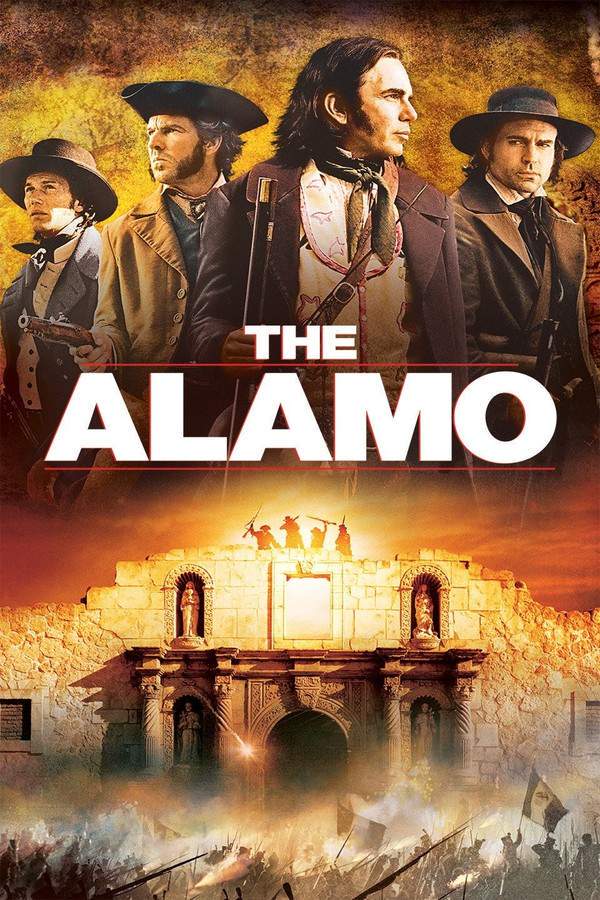
The Alamo (2004) movie poster

Plot Summary

The Alamo (2004) Plot Summary Explained

Release, runtime and language
2004 · 137 min · English
Loading streaming availability…
Directed by
John Lee Hancock
Starring
Billy Bob Thornton, Dennis Quaid, Jason Patric, Emilio Echevarría
Budget
$107M

As Texas fights for independence from Mexico, General Sam Houston leads a rebel force against the dictatorial General Santa Anna. Folk heroes Jim Bowie and Davy Crockett join Houston and a small band of defenders who make a final, desperate stand at the Alamo mission. Facing overwhelming odds, their courage and sacrifice become a symbol of resistance against tyranny and shape the future of the Texas Revolution.

On this page (6)
  1. 1 Where to watch
  2. 2 What happens: full plot
  3. 3 Plot questions answered
  4. 4 Movie threads
  5. 5 Movies like The Alamo
  6. 6 Every angle
Loading streaming availability…

Full plot summary · contains spoilers

What Happens in The Alamo: Full Plot Summary

The whole story of The Alamo (2004) explained, from the opening scene to the final frame: every key event, every twist and what it all adds up to. Read it as a quick recap before the sequel, to check a scene you missed, or to finally understand what really happened.

The film opens in March 1836 in the Mexican state of Coahuila y Tejas, at the site of the Alamo in the town of San Antonio de Bexar, where the aftermath of a fierce battle leaves the bodies of both Texan defenders and Mexican assailants scattered across the ground. The narrative then takes us back a year prior, where Sam Houston attends a lively party aimed at rallying support for migration to Texas. At this gathering, he encounters David Crockett, who has recently lost his congressional seat. Houston informs Crockett that newcomers to Texas are entitled to claim 640 acres of land, prompting Crockett to wryly inquire if this new republic will require a president.

In San Felipe, Texas, members of the provisional government convene to deliberate over their recent victory at the Alamo and Bexar against Mexican forces in the initial Battle of San Antonio de Bexar. With Texas rebelling against the tyrannical rule of President Santa Anna, who commands an army to reclaim the Alamo, the Texas War Party pushes for military action to advance into Mexico and confront the enemy at Matamoros. Meanwhile, the Opposition Party advocates for strengthening the Texan army and establishing a recognized government. Ultimately, the provisional government votes to remove Houston from his position as commander. Disheartened, Houston expresses his disdain to Jim Bowie over drinks and urges him to obliterate the Alamo.

William Barret Travis (played by Jason Patric) arrives in San Felipe, eager to earn respect as a lieutenant colonel in the Texas Army. His storyline reveals his troubled personal life, including a divorce stemming from his own abandonment and misconduct. Soon, he receives orders to head the defense at the Alamo, where he meets Col. James Neill (Brandon Smith), who informs him that Travis will be in charge while Neill is on leave. Alarmed by the prospect of facing a vastly superior Mexican army, Travis frantically sends out for reinforcements as a few small groups of Texans trickle in.

Crockett makes his entrance in San Antonio with a defiant proclamation: “I told them folks you’all can go to hell, I’m going to Texas.” The mood shifts as the defenders express urgency for Santa Anna's inevitable arrival, leaving Crockett confused about the status of the fighting. Soon after, the feared Santa Anna (Emilio Echevarría) arrives in San Antonio, catching the Texan fighters by surprise. The Texans retreat into the Alamo compound, preparing as best as they can for the impending siege. Amidst the increasing tension, Travis writes desperate appeals for help, but only a handful of men respond.

As Santa Anna's forces establish a blockade around the Alamo, the siege commences. A pivotal moment occurs when Bowie seeks a diplomatic resolution with General Manuel Castrillón (Castulo Guerra), only to have Travis abruptly end negotiations by firing a cannon, effectively dooming their chances for peace. Travis offers a chance for those inside to leave, but nearly everyone chooses to stay and defend the Alamo. Among them is Mrs. Susanna Dickinson (Laura Clifton), whose husband is determined to fight.

As the siege intensifies, Bowie falls gravely ill, unable to participate in the defense, while night after night the Mexican army taunts the Texans with music and prepares for an all-out assault. As dawn breaks on March 6, 1836, Crockett, hardly having slept, signals the alarm at the sight of the approaching enemy. The battle cry of the Mexican forces echoes: "Viva Santa Anna!" Despite fierce resistance, the Mexican army breaches the Alamo walls. Tragically, Travis meets his end, shot in the head, while Bowie valiantly fights but is ultimately overwhelmed.

Crockett and the remaining defenders retreat to the chapel, where they make a last stand. As the Mexican troops capture the structure, Crockett offers a mock surrender, suggesting he could safely lead them to Sam Houston. In an act of vengeance, Santa Anna orders him executed, and Crockett falls heroically.

Days later, as news of the Alamo's fall spreads, Houston takes charge of a ragged Texan army and orders a retreat known in history as the "Runaway Scrape," narrowly evading Santa Anna's advancing forces. Against his advisors' counsel, Santa Anna splits his army, underestimating the Texan resolve. Eventually, the Texan forces gain their footing at San Jacinto, surprising their adversaries during their mid-day rest.

On April 21, 1836, armed with cannons and support from Tejanos, Houston orchestrates a decisive assault during the Battle of San Jacinto, achieving significant success and capturing Santa Anna, who is forced to concede to Texan independence. The final moments of the film capture the haunting spirit of Crockett, playing his fiddle atop the Alamo, gazing out into the horizon, symbolizing the enduring legacy of those who fought.
Last updated: October 28, 2024 at 08:25

Was this helpful?

Plot questions answered

The Alamo Plot Explained: Your Questions Answered

The questions people ask most about The Alamo (2004): what happens in the confusing scenes, why the characters do what they do, the twists, hidden details and what the ending means. Each answer contains spoilers.

Q1

Why was Sam Houston removed from his position as commander?

The provisional government in San Felipe removed Houston from command because he advocated for a cautious strategy, waiting for the right moment to engage Santa Anna's forces. The War Party wanted aggressive action, pushing to advance into Mexico toward Matamoros. Frustrated with what they saw as his hesitation, the delegates voted to relieve him of command, though Houston warned them about the dangers of splitting their forces.

Foreshadowing: This removal sets up Houston's later redemption when he ultimately leads Texas to victory at San Jacinto.

  • sam houston
  • commander
  • texas provisional government
  • war party
  • removal
Q2

Why did Travis fire the cannon to end peace negotiations with General Castrillón?

Travis fired the cannon to signal to Bowie, who was meeting with General Castrillón to negotiate peaceful surrender terms, that he had no intention of negotiating. This decisive act ended any chance of a peaceful resolution and committed the Alamo defenders to fighting. It was a strategic choice that surprised even his own men and effectively doomed any possibility of the defenders walking away safely.

Foreshadowing: This moment hardens Santa Anna's resolve and ensures the siege will end in all-out battle.

  • william barret travis
  • cannon
  • negotiations
  • general castrillón
  • siege
Q3

Why did the Alamo defenders choose to stay instead of leaving when given the chance?

When Travis offered everyone the chance to leave, nearly every defender chose to stay. The reasons varied: many had nowhere else to go, some were bound by honor and loyalty to the cause of Texas independence, and others believed staying was strategically necessary to buy time for Houston's forces to regroup. Their choice represented a collective decision to sacrifice themselves rather than abandon the mission.

Foreshadowing: This collective sacrifice becomes the symbol of Texan resistance that motivates Houston's army at San Jacinto.

  • alamo defenders
  • honor
  • loyalty
  • texas independence
  • leave
Q4

Why did Santa Anna order Crockett executed after his mock surrender?

After the Mexican forces breached the chapel, Crockett and the remaining defenders retreated inside. Crockett offered a mock surrender, suggesting he could lead Santa Anna's forces safely to Sam Houston. Santa Anna, viewing this as an insult and recognizing Crockett as a famous folk hero whose presence could rally more Texan fighters, ordered him executed rather than taken prisoner. It was an act of vengeance and strategic elimination.

Foreshadowing: Crockett's death becomes the emotional climax that transforms the Alamo from military defeat into symbolic victory.

  • david crockett
  • execution
  • santa anna
  • vengeance
  • mock surrender
Q5

Why did Santa Anna split his army after the Alamo victory, leading to defeat at San Jacinto?

Overconfident after his victory at the Alamo, Santa Anna underestimated the Texan resolve. His advisors urged caution, but he chose to split his army to pursue the retreating Texans more aggressively. This decision left his forces divided and overextended. When Houston's army made their stand at San Jacinto on April 21, 1836, Santa Anna's separated forces were unable to reinforce each other in time, resulting in a catastrophic defeat and his capture.

Foreshadowing: This miscalculation directly enables the Texan victory that secures independence.

  • santa anna
  • split army
  • san jacinto
  • overconfidence
  • pursuit
Q6

Why was Bowie unable to fight during the siege?

Jim Bowie contracted a serious illness during the siege, likely dysentery or typhoid, which left him bedridden and unable to participate in the defense. This weakened the Alamo's leadership significantly, as Bowie was one of the most experienced commanders present. Travis was forced to lead the defense alone while Bowie could only watch from his sickbed until the final battle when he was eventually killed.

Foreshadowing: Bowie's illness removes one of the Alamo's key military leaders at the critical moment.

  • jim bowie
  • illness
  • dysentery
  • siege
  • bedridden
Q7

What was the Runaway Scrape?

The Runaway Scrape was the desperate retreat of Houston's ragtag army and Texas families across the Brazos River, fleeing from Santa Anna's advancing Mexican forces after the Alamo fell. For weeks, they moved eastward, burning bridges and destroying supplies to slow the Mexican pursuit. This retreat was strategically necessary to preserve Houston's growing army and avoid destruction until they could fight on more favorable terms.

Foreshadowing: This retreat allows Houston to gather strength and choose the battleground at San Jacinto.

  • runaway scrape
  • retreat
  • houston
  • mexican army
  • texas families
Q8

Why did only a handful of men respond to Travis's calls for help?

Travis sent desperate appeals for reinforcements as Santa Anna's forces closed in, but very few men answered the call. This was largely because the Texas militia was scattered and disorganized, many had already committed to other garrisons, and the provisional government had not yet mobilized a coordinated response. Additionally, word of the siege reached potential reinforcements too late for them to arrive before the assault.

Foreshadowing: This lack of support underscores the tragedy of the Alamo's isolation.

  • travis
  • reinforcements
  • appeals
  • militia
  • response
Q9

Why did Houston tell Bowie to obliterate the Alamo?

After being removed from command, a disgruntled Houston told Jim Bowie to destroy the Alamo rather than defend it. This was likely a moment of bitterness and strategic thinking, Houston knew the Alamo was indefensible against Santa Anna's approaching army and believed destroying it would deny the Mexicans a strategic position. It also reflected Houston's frustration with the government's decision to remove him.

Foreshadowing: This directive establishes the tension between Houston's strategic caution and the defenders' willingness to fight.

  • houston
  • bowie
  • destroy alamo
  • strategy
  • frustration
Q10

Why did Davy Crockett come to the Alamo?

Crockett traveled to Texas after losing his congressional seat in Tennessee, attracted by the promise of free land, 640 acres for new settlers. When he arrived in San Antonio, he learned the Alamo was about to be besieged by Santa Anna's forces. Rather than turning back, he chose to join the defenders, driven by his frontier adventurer spirit and likely a desire to prove himself in the fight for Texan independence.

Foreshadowing: Crockett's arrival adds a famous folk hero to the defending ranks, increasing the symbolic stakes of the battle.

  • davy crockett
  • texas
  • land claim
  • congress
  • alamo
Q11

Why was Santa Anna so determined to crush the Texas rebellion?

Santa Anna viewed the Texas rebellion as a direct threat to Mexican sovereignty and his own authority as president. He was angry that American settlers in Texas were challenging Mexican rule and wanted to make an example of the rebels to prevent further uprisings. His determination to recapture the Alamo was about restoring Mexican control over the territory and demonstrating that his government would not tolerate secession.

Foreshadowing: This inflexibility leads Santa Anna to make the strategic errors that cost him victory at San Jacinto.

  • santa anna
  • mexico
  • rebellion
  • texas independence
  • authority
Q12

How did Texas manage to defeat Santa Anna at San Jacinto despite earlier losses?

Texas won at San Jacinto through a combination of smart tactics and Santa Anna's mistakes. Houston's forces surprised the Mexican army during their afternoon rest on April 21, 1836, charging with cannons and cries of "Remember the Alamo." Santa Anna had split his army and underestimated Texan resolve. The quick battle lasted only eighteen minutes, resulting in Mexican casualties and Santa Anna's capture, forcing him to sign treaties granting Texas independence.

Foreshadowing: This victory transforms the Alamo's defeat into the decisive moment of the Texas Revolution.

  • san jacinto
  • victory
  • texas independence
  • santa anna captured
  • battle

Movie threads

More Movies Like The Alamo, by Mood & Story

Curated lists built around what makes The Alamo tick: the same mood, the same kind of story or the same emotional payoff. Each list explains why these movies belong together.

Movies about heroic last stands like The Alamo

Stories of courage and sacrifice when facing impossible battles. If you liked the tense, historical siege in The Alamo, explore more movies about desperate last stands. These films capture the courage and sacrifice of characters making a final defense against overwhelming forces, often blending heavy emotional weight with gripping, historically-inspired narratives.

  • tense
  • heroic
  • desperate
  • somber
  • gripping
  • tragic
  • Tone: tense, somber, heroic
  • Pacing: steady build to climax
Why these movies?

The story pattern: The narrative pattern follows a group or individual preparing for an unavoidable confrontation with a vastly superior enemy. The story builds tension as the threat approaches, culminating in a climactic battle where heroic sacrifice becomes a symbol of resistance. The journey often ends on a bittersweet note, with the immediate tragedy paving the way for a larger, hard-won victory or lasting legacy.

Why they belong together: These movies are grouped by their core premise of a doomed but principled defense. They share a high-intensity, tense tone, a steady pacing that builds towards a climactic siege, and a heavy emotional weight centered on themes of sacrifice and courage. The viewing experience is defined by a gripping, somber mood leading to a bittersweet resolution.

Bittersweet historical war epics like The Alamo

Historical dramas where great triumphs are earned through profound sacrifice. For viewers who enjoyed the bittersweet ending of The Alamo, this collection features historical epics where victory comes with a heavy cost. These movies blend intense battle scenes with deep emotional drama, exploring how individual sacrifice shapes the course of major historical events.

  • historical
  • somber
  • epic
  • gripping
  • tragic
  • hopeful
  • Tone: serious, bittersweet, heavy
  • Pacing: steady, epic scope
Why these movies?

The story pattern: Stories in this thread follow a clear historical event, often a war or revolution, where the central conflict leads to a pyrrhic victory. The narrative juxtaposes large-scale military or political strategy with the personal journeys of key figures, whose sacrifices become the foundation for the eventual success. The emotional journey moves from hope and determination through tragedy and loss, culminating in a resolution that acknowledges the high cost of the win.

Why they belong together: These films are united by their bittersweet emotional core and historical grounding. They share a steady, methodical pacing that allows for both political context and character development, leading to a heavy emotional payoff. The tone is consistently serious and often tense, focusing on the sobering reality that history's triumphs are rarely without profound loss.

If you liked this

Movies Like The Alamo

Similar movies to The Alamo: the same genre, themes or kind of story. Each one comes with its own plot summary, timeline and ending explained.

Browse all movie summaries

Every angle

The Alamo (2004) Explained: Plot, Timeline & Characters

Everything about The Alamo in one place: what happens in the plot summary, the timeline in chronological order, the characters and meaning and a spoiler-free summary. What's After the Movie adds the cast, box office and post-credit scenes.

Coming soon on iOS and Android

The Plot Explained Movie Summary App

Plot summaries, endings explained and timelines on your phone. Catch up on any movie in minutes, save your favorites and never miss a twist again.

Be the first to know when we launch. Your email stays private, always.

Learn more about the app