Plot Explained Spoilers guaranteed!
Plot Explained

Browse by genre

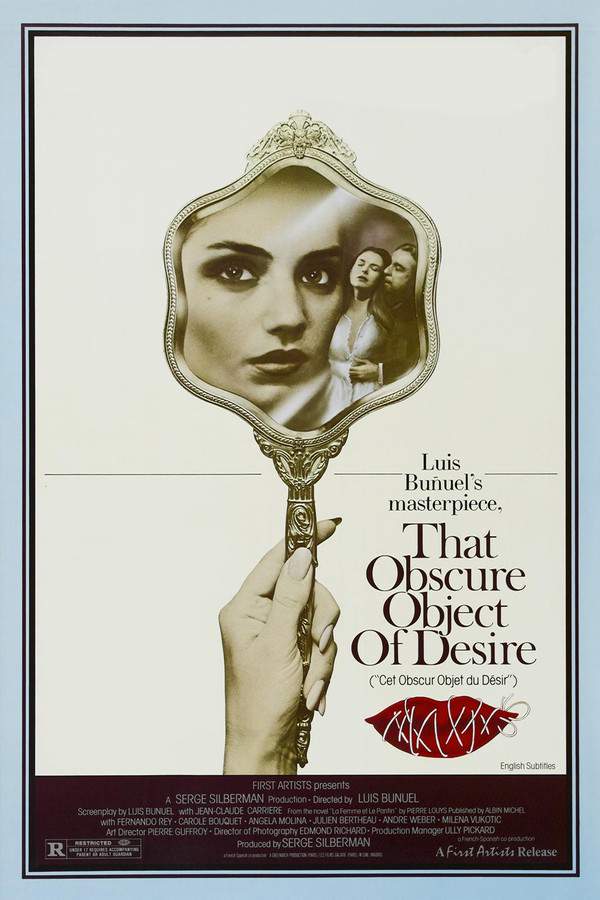
That Obscure Object of Desire (1977) movie poster

Characters & Themes

That Obscure Object of Desire (1977) Characters, Setting & Themes Explained

Release, runtime and language
1977 · 103 mins · French
Loading streaming availability…
Directed by
Luis Buñuel
Starring
Fernando Rey, Michel Piccoli, Ángela Molina, Carole Bouquet, André Lacombe, Julien Bertheau

After a wealthy Frenchman named Mathieu douses a beautiful young woman with a bucket of water from a train window, he recounts to fellow passengers the volatile, dysfunctional affair he shares with Conchita, a fiery 19‑year‑old flamenco dancer. The story spirals into cruelty, depravity and deceit, exposing love’s twisted foundations.

On this page (8)
  1. 1 Where to watch
  2. 2 Characters explained (4)
  3. 3 Where & when it takes place
  4. 4 Themes & meaning (3)
  5. 5 Character & meaning questions
  6. 6 Movie threads
  7. 7 Movies like That Obscure Object of Desire
  8. 8 Every angle
Loading streaming availability…

4 main characters · contains spoilers

That Obscure Object of Desire Characters Explained: Who Is Who

The main characters of That Obscure Object of Desire (1977), heroes and villains: what drives them, how they change over the course of the story and what each of them reveals about the film's bigger ideas.

  • Mathieu Faber (Fernando Rey)

    A middle-aged, wealthy Frenchman whose charm masks a volatile need for control over Conchita. He oscillates between desire and rejection, often displaying petty or abusive impulses. The memory-frame narration reveals insecurity beneath sophistication and a tendency to rationalize his behavior.

    • 💼 Wealth
    • 🔥 Obsession
    • 🧠 Psychology
    • 🎭 Romance
  • Conchita (Carole Bouquet)

    A young, impoverished flamenco dancer whose unpredictable moods drive Mathieu to the brink. She toys with his desires, disappears and reappears, and uses performance to keep him off-balance while pursuing her own freedom.

    • 💃 Dance
    • 💋 Seduction
    • 🎭 Unpredictability
  • Conchita (Ángela Molina)

    The other facet of Conchita’s persona, appearing and vanishing to create confusion and tension. Her flirtations mask power plays and a capricious approach to commitment, leaving Mathieu entangled in an unresolved pursuit.

    • 💃 Dance
    • 💋 Seduction
    • 🎭 Mystery
  • Judge on the Train (Jacques Debary)

    A friend of Mathieu's cousin and an observer of the couple’s volatile dynamic. He embodies institutional authority and represents the social gaze that frames their tumultuous relationship.

    • ⚖️ Justice
    • 👀 Observation

Last updated: October 04, 2025 at 18:33

Was this helpful?

Setting

Where and When Does That Obscure Object of Desire Take Place?

The setting of That Obscure Object of Desire (1977): the year and time period, the places and locations, and how they shape the characters, the mood and the tension of the story.

Time period

1960s

The film is set in the late 1960s, a time of political unrest and social upheaval in Europe. Bombings and shootings by left-wing groups frame the atmosphere with fear and volatility. Fashion, travel, and cosmopolitan city life reflect a Europe navigating change and fragility in personal relationships. The memory-narration situates the events within a bygone era of grand romantic gestures and public spectacle.

Location

Seville, Madrid, Paris, Train

The story traverses several European locales. Seville serves as Conchita’s origin in the flamenco world, while the pair’s relationship unfolds across a long train journey from Seville to Paris. Paris surfaces as a backdrop of urban life and public spaces, including a mall scene, before the mood shifts back toward Madrid at the end of the journey. The train itself becomes a moving stage where their volatile dynamic plays out in close quarters.

  • 🌍 Europe
  • 🚆 Train travel
  • 🏙️ Urban settings

Last updated: October 04, 2025 at 18:33

Was this helpful?

3 major themes

That Obscure Object of Desire Meaning: Themes & Message Explained

What is That Obscure Object of Desire (1977) really about? The emotional, social and philosophical themes the film keeps returning to, its symbolism and the message beneath the surface.

  • Obsession

    A consuming fixation drives the plot and distorts judgment. Mathieu fixates on Conchita, intensifying jealousy and control while alternating between desire and disdain. Conchita’s unpredictable swerves keep him unbalanced, revealing how obsession can fuel manipulation and dependency. The cycle of pursuit and retaliation exposes the self-destructive nature of intoxicating love.

  • Desire & Deception

    Desire operates as performance, with Conchita stringing Mathieu along through flirtation and ambiguity. The couple’s encounters are layered with deception, secrecy, and shifting identities, blurring what is real and what is imagined. Repeated separations and reconciliations highlight how seduction and secrecy fuel the relationship. The film uses theatricality to critique how longing can masquerade as intimacy.

  • Power

    Power dynamics underpin the romance, with wealth and social status granting Mathieu influence while Conchita asserts autonomy through provocation. The imbalance exposes gendered expectations and control within a changing European society. Public settings and escalating tension magnify the fragility of control as events spiral toward tragedy. The narrative probes how power is negotiated, performed, and challenged in intimate bonds.

Last updated: October 04, 2025 at 18:33

Was this helpful?

Character & theme questions

That Obscure Object of Desire Characters & Meaning: Your Questions Answered

The questions people ask about That Obscure Object of Desire (1977): who the characters really are, their relationships, what the symbols mean, where it takes place and what the movie is really about. Each answer contains spoilers.

Q1

Where is the story set?

The film unfolds across several European cities. Conchita comes from Seville, a city associated with flamenco culture. The main narrative takes place during a train journey from Seville to Paris, with the train serving as a confined space where their relationship plays out. Paris appears as a modern urban backdrop with scenes in public spaces like a mall, while Madrid returns at the end of the journey.

  • seville
  • madrid
  • paris
  • train journey
  • europe locations
Q2

When does the film take place?

The story is set in the late 1960s, a period marked by political unrest and social upheaval across Europe. The era is characterized by bombings and shootings by left-wing groups, creating an atmosphere of fear and volatility. This historical context shapes the mood of the film, linking personal relationships to the broader anxieties of the time.

  • 1960s
  • late 1960s
  • europe
  • political unrest
  • historical setting
Q3

Who is Mathieu Faber?

Mathieu Faber is a middle-aged, wealthy Frenchman who narrates the story from a train compartment. His charm masks a volatile need for control over Conchita. He oscillates between intense desire and rejection, often displaying petty or abusive impulses. The memory-frame narration reveals deep insecurity beneath his sophisticated exterior, and he consistently rationalizes his own problematic behavior.

  • mathieu faber
  • wealthy frenchman
  • control
  • obsession
  • manipulation
Q4

Who is Conchita?

Conchita is a young, impoverished flamenco dancer who becomes the object of Mathieu's obsession. She is portrayed as unpredictable, with shifting moods that keep Mathieu perpetually off-balance. She uses her talent for performance and flirtation to maintain power in their dynamic, disappearing and reappearing strategically while pursuing her own freedom from his control.

  • conchita
  • flamenco dancer
  • young woman
  • unpredictability
  • freedom
Q5

Why is Conchita played by two different actresses?

Conchita is played by both Carole Bouquet and Ángela Molina, representing different facets of her persona. This deliberate casting choice reinforces the theme of deception and unpredictability that defines her character. The two actresses appearing and vanishing creates confusion and tension, mirroring how Conchita constantly shifts identities and motivations within the relationship.

  • carole bouquet
  • ángela molina
  • dual casting
  • character duality
Q6

What is the theme of obsession about?

Obsession drives the film and distorts every character's judgment. Mathieu's fixation on Conchita intensifies his jealousy and need for control, creating a destructive cycle of desire and disdain. Conchita's unpredictable behavior keeps him perpetually unbalanced, revealing how obsession fuels manipulation and mutual dependency. The film explores how intoxicating love can become self-destructive.

  • obsession
  • jealousy
  • control
  • fixation
  • destructive love
Q7

What does the theme of desire and deception explore?

Desire in this film operates as a form of performance, with Conchita stringing Mathieu along through calculated flirtation and ambiguity. Their encounters are layered with deception, secrecy, and shifting identities, blurring what is real and what is imagined. The repeated cycles of separation and reconciliation show how seduction and secrecy become the fuel that keeps the toxic relationship alive.

  • desire
  • deception
  • seduction
  • secrecy
  • performance
  • ambiguity
Q8

What role does power play in the story?

Power dynamics fundamentally shape the romance between Mathieu and Conchita. Mathieu's wealth and social status grant him material influence, while Conchita asserts autonomy through provocation and emotional manipulation. The gender imbalance exposes societal expectations and control within the changing European context. As events escalate in public settings, the fragility of control becomes increasingly apparent.

  • power
  • control
  • wealth
  • gender dynamics
  • social status
  • autonomy
Q9

Why does the train play a central role?

The train journey from Seville to Paris serves as a moving stage where the couple's volatile dynamic unfolds in close quarters. This confined space amplifies every interaction, allowing tension to build continuously without escape. The train also symbolizes transition and journey, both physical and emotional, as characters travel between European cities while their relationship cycles through phases of attraction and conflict.

  • train journey
  • confined space
  • symbolism
  • european travel
  • tension
Q10

How does the 1960s European setting influence the story?

The late 1960s setting brings specific cultural context to the narrative. Bombings and shootings by left-wing groups frame the atmosphere with fear and volatility, adding a layer of societal dread to the personal drama. Fashion, travel, and cosmopolitan city life reflect a Europe navigating rapid change. The memory-narration places these events within a bygone era of grand romantic gestures and public spectacle.

  • 1960s europe
  • political violence
  • social change
  • cosmopolitan culture
  • historical context
Q11

Why is their relationship considered dysfunctional?

The relationship is defined by cycles of pursuit, retaliation, and emotional cruelty. Mathieu alternates between doting on Conchita and displaying petty or abusive behavior, while she responds with disappearances and calculated provocations. Neither character exhibits genuine warmth; instead, the dynamic is fueled by manipulation, humiliation, and mutual dependency. The constant emotional turmoil and psychological manipulation create a pattern of sustained abuse.

  • toxic relationship
  • emotional abuse
  • manipulation
  • dysfunction
  • cruelty

Movie threads

More Movies Like That Obscure Object of Desire, by Mood & Story

Curated lists built around what makes That Obscure Object of Desire tick: the same mood, the same kind of story or the same emotional payoff. Each list explains why these movies belong together.

Movies about obsessive relationships like That Obscure Object of Desire

Stories where romantic passion curdles into a dark cycle of manipulation and control. If you were captivated by the cruel dance between Mathieu and Conchita, this collection features similar movies about obsessive love and toxic power dynamics. Discover other films where desire becomes a destructive force, exploring manipulation, age gaps, and the blurred lines between love and control.

  • obsessive
  • frustrating
  • volatile
  • cruel
  • melancholic
  • anxious
  • Tone: dark, psychologically disturbing
  • Pacing: steady, character-driven
Why these movies?

The story pattern: Narratives in this thread typically follow a cyclical pattern of attraction, rejection, and conflict. The central relationship is the primary driver of the plot, often escalating in intensity and psychological damage. Character journeys focus on the erosion of self, the pursuit of an unattainable object of desire, and the revelation of love's dark, twisted foundations.

Why they belong together: Movies are grouped here for their shared exploration of love as a destructive, obsessive force. They create a heavy, often frustrating viewing experience through their dark tone, high emotional intensity, and focus on the volatile power struggles within a central, dysfunctional relationship.
Surreal and intense dramas like That Obscure Object of Desire

Where personal turmoil is amplified by a bizarre or unsettling atmosphere. Fans of the surreal tension and bizarre touches in That Obscure Object of Desire will find similar movies here. These films combine heavy emotional weight with an off-kilter atmosphere, using strange occurrences or symbolic settings to mirror the characters' volatile inner lives and dysfunctional relationships.

  • surreal
  • anxious
  • melancholic
  • unsettling
  • absurd
  • volatile
  • Tone: dark, surreal, melancholic
  • Pacing: steady, methodical
Why these movies?

The story pattern: The narrative pattern involves a straightforward, often obsessive character conflict set against a backdrop that feels dreamlike, absurd, or inexplicably chaotic. The surreal elements are not the main plot but serve to heighten the emotional stakes and underscore the irrational nature of the central drama, leading to ambiguous or unsettling conclusions.

Why they belong together: These movies are linked by their distinctive mix of a heavy, character-driven emotional core with a surreal or bizarre aesthetic. The experience is defined by this juxtaposition—the steady pacing of a drama combined with the uncanny tension of a world that feels slightly unreal.

If you liked this

Movies Like That Obscure Object of Desire

Similar movies to That Obscure Object of Desire: the same genre, themes or kind of story. Each one comes with its own plot summary, timeline and ending explained.

Browse all movie summaries

Every angle

That Obscure Object of Desire (1977) Explained: Plot, Timeline & Characters

Everything about That Obscure Object of Desire in one place: what happens in the plot summary, the timeline in chronological order, the characters and meaning and a spoiler-free summary. What's After the Movie adds the cast, box office and post-credit scenes.

Coming soon on iOS and Android

The Plot Explained Movie Summary App

Plot summaries, endings explained and timelines on your phone. Catch up on any movie in minutes, save your favorites and never miss a twist again.

Be the first to know when we launch. Your email stays private, always.

Learn more about the app