





Plot Explained Spoilers guaranteed!
Plot Explained

Browse by genre

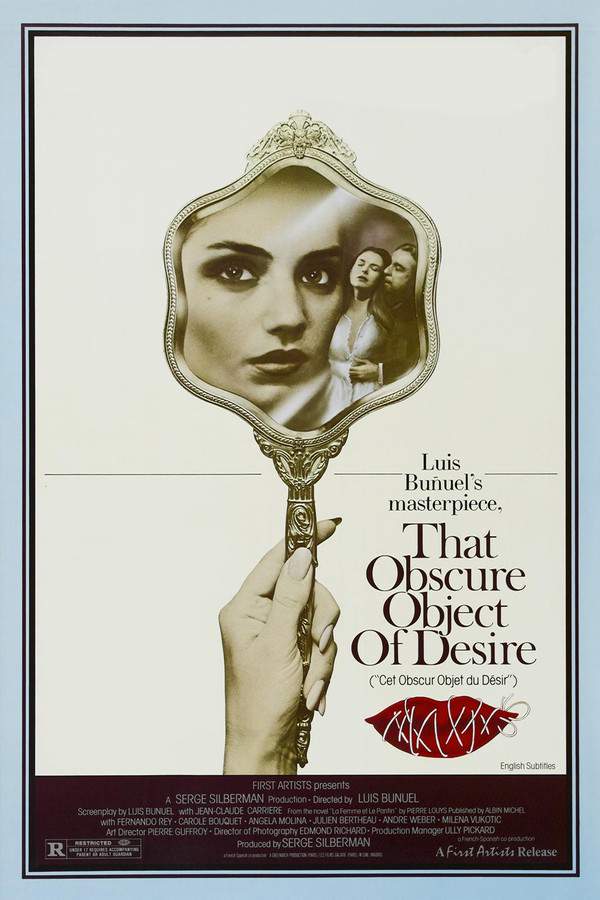
That Obscure Object of Desire (1977) movie poster

Timeline

That Obscure Object of Desire (1977) Timeline Explained – Every Event in Order

Release, runtime and language
1977 · 103 mins · French
JustWatch #24,065 2
Directed by
Luis Buñuel
Starring
Fernando Rey, Michel Piccoli, Ángela Molina, Carole Bouquet, André Lacombe, Julien Bertheau

After a wealthy Frenchman named Mathieu douses a beautiful young woman with a bucket of water from a train window, he recounts to fellow passengers the volatile, dysfunctional affair he shares with Conchita, a fiery 19‑year‑old flamenco dancer. The story spirals into cruelty, depravity and deceit, exposing love’s twisted foundations.

On this page (6)
  1. 1 Where to watch
  2. 2 Events in order (14)
  3. 3 Timeline questions answered
  4. 4 Movie threads
  5. 5 Movies like That Obscure Object of Desire
  6. 6 Every angle

Where to watch

Where to Watch That Obscure Object of Desire (1977)

Where can you watch That Obscure Object of Desire? Stream, rent or buy it in the US, including on Amazon Video, Apple TV Store and Fandango At Home: current JustWatch availability with up-to-date prices.

Streaming availability powered by JustWatch

14 events in order · contains spoilers

That Obscure Object of Desire Timeline: Events in Chronological Order

Every key event of That Obscure Object of Desire (1977) in order, scene by scene, with when and where it takes place. Use it to untangle flashbacks, time jumps and parallel storylines, to refresh your memory before the sequel or to find the exact scene you are thinking of.

  1. Train opening: Mathieu flees from Conchita

    The film opens with Mathieu traveling from Seville to Paris, attempting to distance himself from Conchita. A bruised Conchita pursues him aboard the moving train, and he dramatically douses her with a bucket of water. The scene sets up their volatile dynamic and the flashback to come.

    When
    Opening
    Where
    Train, Seville to Paris
  2. Passengers question the act

    Fellow compartment passengers witness the dramatic act and question Mathieu about his motive. He begins to recount the history of his tumultuous relationship with Conchita. He frames their romance against the backdrop of terrorist bombings and shootings, foreshadowing the political backdrop of the story.

    When
    During journey (flashback)
    Where
    Train compartment
  3. Conchita's virgin vow and age claim

    Conchita insists she is 18 and vows to remain a virgin until marriage, adding an air of mystique and provocation. She teases Mathieu with sexual promises but never allows true satisfaction. The tension between desire and restraint becomes a recurring pattern.

    When
    Flashback
    Where
    Memory of past events
  4. The corset scene that prevents sex

    In one scene she wears a tightly laced canvas corset, which Mathieu cannot untie, making intercourse impossible. The moment underscores how control and restraint define their relationship. It fuels Mathieu's frustration and obsession.

    When
    Flashback
    Where
    Conchita's room
  5. Hidden lover revealed

    Mathieu discovers Conchita hiding a young man in her room, revealing double lives and further complicating trust between them. The secret provokes anger, suspicion, and a cycle of jealousy. The memory underscores the instability of their bond.

    When
    Flashback
    Where
    Conchita's room
  6. Breakups and reconciliations

    Conchita's unpredictable antics cause repeated breakups and reunions between them. Mathieu remains drawn to her despite constant disappointment and confusion. The relationship functions as a volatile tension set amid a wider political violence.

    When
    Flashback
    Where
    Various locations
  7. Nude dancing and house purchase

    Conchita appears dancing nude for tourists in a Seville nightclub, provoking Mathieu's fury. He ultimately forgives her and buys her a house, attempting to stabilize the relationship through possession and shelter. The sequence blends passion with a troubling, transactional dynamic.

    When
    Flashback
    Where
    Seville nightclub; house purchase
  8. Moving in and gate confrontation

    After moving into the house, Conchita refuses to let Mathieu in at the gate, declaring hatred and warning that physical contact sickens her. The moment crystallizes the emotional trap of their bond, where proximity triggers conflict. It foreshadows the couple's precarious future.

    When
    Flashback
    Where
    House gate
  9. Public sex scene with a young man

    Conchita appears to begin sexual intercourse with a young man in plain view of Mathieu, who turns away rather than watch. The scene intensifies Mathieu's sense of humiliation and loss of control. It marks a turning point in the private-public tension of their relationship.

    When
    Flashback
    Where
    In front of the house (visible to Mathieu)
  10. Hijacking and threat

    That same night, Mathieu is held up at gunpoint as his car is hijacked, adding danger and instability to the volatile romance. The outside world of violence mirrors their inside turmoil. The incident increases the sense that nothing is safe from disruption.

    When
    Flashback
    Where
    Road/urban setting
  11. Fake confession and beating

    Conchita attempts to reconcile, claiming the sex was fake and that her 'lover' is a homosexual friend. Mathieu responds with anger and violence, beating her and leaving her bruised and bandaged. The scene collapses the line between forgiveness and harm.

    When
    Flashback
    Where
    Their home
  12. Train ending and Madrid stroll

    The passengers seem satisfied with Conchita's explanation, and she dumps a bucket of water on Mathieu again. The couple reconciles once more and disembarks in Madrid, walking arm in arm through the city. The ending suggests a fragile peace amid ongoing tension.

    When
    End of train journey
    Where
    Madrid
  13. Terrorist broadcast in a Paris mall

    In a Paris mall later, loudspeakers announce alliances among extremist groups and counter-movements, hinting at a world on the brink. The couple continues their walk, seemingly indifferent to the political storm.

    When
    Later
    Where
    Paris mall
  14. Bloody seamstress and final explosion

    They pass a seamstress repairing a bloody nightgown, and their argument escalates as a bomb explodes. The explosion appears to kill them, tying their doomed romance to a world of violence. The final moment is a bleak commentary on cycles of desire and destruction.

    When
    Final moment
    Where
    Paris mall / street

Last updated: October 07, 2025 at 09:44

Was this helpful?

Timeline questions answered

That Obscure Object of Desire Timeline Explained: Your Questions Answered

When does it happen, and why in that order? The questions people ask about the chronology of That Obscure Object of Desire (1977): time jumps, flashbacks, cause and effect between scenes and the correct order of events, each answered with spoilers.

Q1

Why does Mathieu keep returning to Conchita despite her cruelty?

Mathieu is obsessed with Conchita because she strategically withholds sexual satisfaction while constantly teasing him with promises. This creates an almost addictive cycle of desire and frustration that he cannot break. Despite her betrayals, hiding lovers, public humiliation, and violence, her intermittent moments of affection keep him hooked. The film suggests their relationship mirrors the surrounding political violence: chaotic, destructive, and inescapable.

  • mathieu
  • conchita
  • obsession
  • toxic relationship
  • manipulation
Q2

Why does Conchita tease Mathieu sexually but never sleep with him?

Conchita uses sexual teasing as a tool of control rather than genuine intimacy. She claims to be a virgin until marriage but wears a tightly laced corset that makes intercourse physically impossible, and she constantly promises then withdraws. This pattern keeps Mathieu in a state of frustrated desire, giving her power over him. Her refusal isn't about virtue, it's a deliberate strategy of manipulation.

  • conchita
  • virginity
  • corset
  • sexual control
  • tease
Q3

What is the significance of the bucket of water at the beginning and end?

The water-dousing frames the entire story in a循环. At the opening, Mathieu throws water on Conchita to stop her from boarding the train; at the end, she returns the gesture. This symmetry suggests their relationship is an endless cycle of attack and reconciliation, cruelty and forgiveness. The act also exposes Mathieu's petty cruelty, he uses the water not out of anger but stubbornness, demonstrating the same emotional violence that defines their bond.

Foreshadowing: Earlier scenes establish their pattern of violence followed by reconciliation

  • bucket
  • water
  • cycle
  • opening
  • ending
  • symbolism
Q4

Why does Mathieu buy Conchita a house after seeing her dance nude?

After discovering Conchita dancing nude in a Seville nightclub, Mathieu experiences a strange shift: first fury, then forgiveness, then an attempt to possess her through domesticity. Buying the house is his way of trying to control and contain her sexuality by creating a respectable, sheltered life for her. It reflects his belief that ownership equals security, ironic given that Conchita immediately refuses to let him past the gate once they move in.

  • house
  • purchase
  • possession
  • nude dancing
  • sevilla
Q5

Why does Conchita have sex with another man in front of Mathieu?

Conchita arranges a public sexual encounter with a young man specifically for Mathieu to witness, then claims it was staged with a homosexual friend. Whether the encounter is real or performative, its purpose is to humiliate and test Mathieu's control. When he simply walks away instead of reacting with rage, she escalates by reconciliation attempts that provoke violence. The scene demonstrates how both characters use sex as a weapon.

  • public sex
  • humiliation
  • young man
  • jealousy
  • confrontation
Q6

What is the significance of the terrorist bombings in the background?

The terrorist bombings and political violence serve as an external mirror of Mathieu and Conchita's relationship. The left-wing bombings create an atmosphere of chaos and unpredictability that parallels the couple's internal turmoil. By framing their story against this backdrop, the film suggests their destructive dynamic is not isolated but reflective of a world consumed by cycles of violence and counter-violence.

  • terrorism
  • bombings
  • political violence
  • background
  • context
Q7

Do Mathieu and Conchita die in the bomb explosion?

The ending deliberately leaves their fate ambiguous. A bomb explodes as they argue near a Paris mall, and the film cuts to black without confirming whether they are killed. The ambiguity suggests their relationship was already a kind of slow destruction, the bomb may simply be the final, literal manifestation of the chaos that defined their entire affair. Whether they die or survive, the ending implies their connection is fatal to at least something.

Foreshadowing: The political broadcasts and bloody nightgown foreshadow violent death

  • bomb
  • explosion
  • death
  • ending
  • fate
  • ambiguity
Q8

Why does Conchita claim to be 18 when she appears older?

Conchita's age is deliberately ambiguous, she insists she is 18 but often looks and acts older. This uncertainty serves her manipulative strategy, allowing her to project youthful innocence when useful while demonstrating mature cunning in other moments. The ambiguity also reflects how Mathieu sees her: as an object of desire he cannot fully comprehend or control, perpetually mysterious and unfixed.

  • age
  • 18
  • ambiguity
  • conchita
  • mystery
Q9

Why does their relationship cycle between violence and reconciliation?

Mathieu and Conchita are locked in a pattern where cruelty deepens intimacy. Conchita provokes Mathieu with hidden lovers and public humiliations; Mathieu responds with violence, leaving her bruised. Each cycle ends with reconciliation, but the violence intensifies. Neither can exist without the tension, the reconciliation feels like surrender, the violence like passion. This poisonous interdependence is what the film presents as their "love."

Foreshadowing: The opening water-throwing establishes their violent动态

  • violence
  • cycle
  • reconciliation
  • abuse
  • pattern
Q10

Why does Conchita refuse to let Mathieu through the gate after moving in?

Immediately after Mathieu purchases a house to give them domestic stability, Conchita blocks him at the gate and declares she hates physical contact with him. This reversal exposes the emptiness of his attempt to possess her through property. She rejects the role of kept woman and uses the gate as a psychological barrier, her refusal to let him in demonstrates that she controls the relationship regardless of who provides the roof.

  • gate
  • house
  • rejection
  • possession
  • control
Q11

Why is the story told as a flashback on a train?

The train setting establishes that Mathieu is literally fleeing Conchita while retelling their story, a confession that reveals his guilt and obsession. The flashback structure allows the narrative to spiral through memories without chronological order, emphasizing how past and present intertwine for Mathieu. The passengers' presence adds an audience to his confession, suggesting he seeks understanding or absolution from strangers.

  • train
  • flashback
  • structure
  • confession
  • narrative
Q12

What is the purpose of the car hijacking scene?

The hijacking introduces external danger into the narrative, Mathieu is held at gunpoint and his car is stolen. This outside violence mirrors the internal violence of his relationship with Conchita, reinforcing that the world itself is chaotic and threatening. The scene also shows Conchita's indifference to Mathieu's peril, suggesting her reconciliation was never genuine concern but another layer of manipulation.

  • hijacking
  • gun
  • danger
  • violence
  • external threats

Movie threads

More Movies Like That Obscure Object of Desire, by Mood & Story

Curated lists built around what makes That Obscure Object of Desire tick: the same mood, the same kind of story or the same emotional payoff. Each list explains why these movies belong together.

Movies about obsessive relationships like That Obscure Object of Desire

Stories where romantic passion curdles into a dark cycle of manipulation and control. If you were captivated by the cruel dance between Mathieu and Conchita, this collection features similar movies about obsessive love and toxic power dynamics. Discover other films where desire becomes a destructive force, exploring manipulation, age gaps, and the blurred lines between love and control.

  • obsessive
  • frustrating
  • volatile
  • cruel
  • melancholic
  • anxious
  • Tone: dark, psychologically disturbing
  • Pacing: steady, character-driven
Why these movies?

The story pattern: Narratives in this thread typically follow a cyclical pattern of attraction, rejection, and conflict. The central relationship is the primary driver of the plot, often escalating in intensity and psychological damage. Character journeys focus on the erosion of self, the pursuit of an unattainable object of desire, and the revelation of love's dark, twisted foundations.

Why they belong together: Movies are grouped here for their shared exploration of love as a destructive, obsessive force. They create a heavy, often frustrating viewing experience through their dark tone, high emotional intensity, and focus on the volatile power struggles within a central, dysfunctional relationship.
Surreal and intense dramas like That Obscure Object of Desire

Where personal turmoil is amplified by a bizarre or unsettling atmosphere. Fans of the surreal tension and bizarre touches in That Obscure Object of Desire will find similar movies here. These films combine heavy emotional weight with an off-kilter atmosphere, using strange occurrences or symbolic settings to mirror the characters' volatile inner lives and dysfunctional relationships.

  • surreal
  • anxious
  • melancholic
  • unsettling
  • absurd
  • volatile
  • Tone: dark, surreal, melancholic
  • Pacing: steady, methodical
Why these movies?

The story pattern: The narrative pattern involves a straightforward, often obsessive character conflict set against a backdrop that feels dreamlike, absurd, or inexplicably chaotic. The surreal elements are not the main plot but serve to heighten the emotional stakes and underscore the irrational nature of the central drama, leading to ambiguous or unsettling conclusions.

Why they belong together: These movies are linked by their distinctive mix of a heavy, character-driven emotional core with a surreal or bizarre aesthetic. The experience is defined by this juxtaposition—the steady pacing of a drama combined with the uncanny tension of a world that feels slightly unreal.

If you liked this

Movies Like That Obscure Object of Desire

Similar movies to That Obscure Object of Desire: the same genre, themes or kind of story. Each one comes with its own plot summary, timeline and ending explained.

Browse all movie summaries

Every angle

That Obscure Object of Desire (1977) Explained: Plot, Timeline & Characters

Everything about That Obscure Object of Desire in one place: what happens in the plot summary, the timeline in chronological order, the characters and meaning and a spoiler-free summary. What's After the Movie adds the cast, box office and post-credit scenes.

Coming soon on iOS and Android

The Plot Explained Movie Summary App

Plot summaries, endings explained and timelines on your phone. Catch up on any movie in minutes, save your favorites and never miss a twist again.

Be the first to know when we launch. Your email stays private, always.

Learn more about the app