Plot Explained Spoilers guaranteed!
Plot Explained

Browse by genre

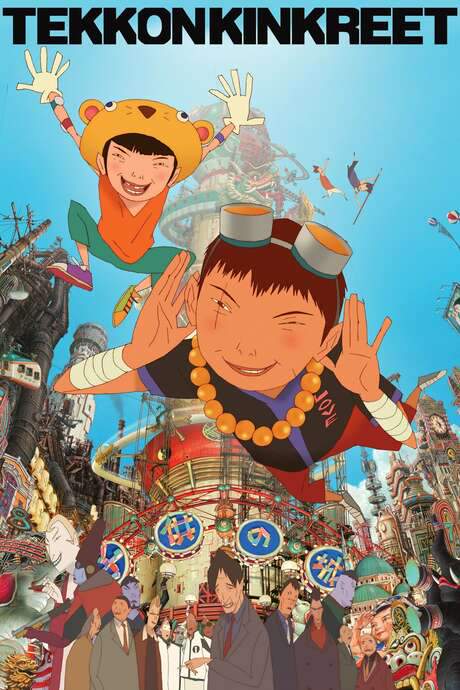
Tekkonkinkreet (2006) movie poster

Timeline

Tekkonkinkreet (2006) Timeline Explained – Every Event in Order

Release, runtime and language
2006 · 103 mins · Japanese
Loading streaming availability…
Directed by
Michael Arias
Starring
Min Tanaka, Masahiro Motoki, Mugihito, Nao Ômori, Kankuro Kudo, Yoshinori Okada

Two penniless street kids known only as Black and White eke out a living in the gritty, neon‑lit alleys of Treasure Town. When a powerful megacorporation moves in to raze the neighborhood and replace it with an amusement park, the inseparable duo rallies the town’s residents and fights desperately to protect their home.

On this page (6)
  1. 1 Where to watch
  2. 2 Events in order (12)
  3. 3 Timeline questions answered
  4. 4 The book behind the movie
  5. 5 Movie threads
  6. 6 Every angle
Loading streaming availability…

12 events in order · contains spoilers

Tekkonkinkreet Timeline: Events in Chronological Order

Every key event of Tekkonkinkreet (2006) in order, scene by scene, with when and where it takes place. Use it to untangle flashbacks, time jumps and parallel storylines, to refresh your memory before the sequel or to find the exact scene you are thinking of.

  1. Formation of the Cats

    Two orphans Black and White roam the streets of Takaramachi, forming an inseparable bond and calling themselves the Cats. Black rules the streets with ruthless efficiency, while White clings to childlike fantasies that soften the harsh world around him. Their alliance marks the fragile beginnings of their joint fight for survival.

    When
    early in the story
    Where
    Takaramachi
  2. Black's brutal assault on yakuza enforcers

    Black launches a brutal assault on three yakuza enforcers working for Snake, turning a street skirmish into a dangerous confrontation. The attack signals Black's willingness to claim the city by force and escalates the conflict around him.

    When
    early in the conflict
    Where
    Takaramachi streets
  3. Snake's plan: Dragon, Butterfly, Tiger

    Snake escalates the war by deploying three enhanced killers—Dragon, Butterfly, and Tiger—to eliminate Black and White. The city becomes a chessboard for lethal confrontations as each killer's arrival raises the stakes.

    When
    after Snake's escalation
    Where
    Takaramachi
  4. White fights Dragon; wounded; custody

    White defends himself and kills Dragon in self-defense, but Butterfly wounds White severely. Authorities take White into protective custody, tearing him away from Black and forcing a painful separation. Black is left to navigate the growing danger alone.

    When
    during the Butterfly attack and custody
    Where
    Takaramachi streets
  5. Black's descent into the minotaur

    With White out of reach, Black slips into a downward spiral, his violence intensifying as the minotaur within him grows stronger. He becomes a more dangerous and unstable figure as the city watches his every move.

    When
    after White's capture
    Where
    Takaramachi
  6. Kimura forced to murder Suzuki

    In a parallel thread, Kimura is forced by Snake to murder his mentor Suzuki. The act begins a personal moral collapse and drags him deeper into the yakuza conflict consuming the city.

    When
    mid-story
    Where
    city
  7. Kimura revolts and kills Snake

    Kimura ultimately rebels against Snake and kills him, hoping to escape Takaramachi with his pregnant wife. His act of defiance shifts the balance of power and changes the trajectory of both his life and the city.

    When
    mid-story
    Where
    Takaramachi
  8. Kimura is assassinated before escape

    Before he can leave the city, Kimura is assassinated, ending his bid for freedom. His wife is left behind in shock as the couple's plan falls apart and the danger lingers in the streets.

    When
    mid to late
    Where
    Takaramachi
  9. White returns and finds Black at the fair

    White returns to Takaramachi and finds Black at a fair, deliriously clutching a doll he believes is his friend. The scene juxtaposes innocence with the lingering violence that haunts them. Their reunion is charged with relief and unresolved tension.

    When
    late
    Where
    Takaramachi fair
  10. Doll shattered; Black on the edge

    Another attack shatters the doll, and Black teeters on the edge, nearly succumbing to the minotaur's pull. The moment tests his resolve and the strength of White's return. The danger remains just beneath the surface.

    When
    during the attack
    Where
    Takaramachi fair
  11. Black overcomes the minotaur

    White helps him resist, and Black regains control just as the minotaur is about to take over. He fights through the violence and reasserts his humanity, keeping the peace within himself. Their bond strengthens in this moment of self-control.

    When
    immediately after
    Where
    Takaramachi fair
  12. Beach ending: bond restored

    Black and White reunite and end the story playing together on a beach, signaling the restoration of their bond. The peaceful scene contrasts with the violence that preceded it and seals their enduring partnership. The Cats finally find a moment of simple happiness together.

    When
    final scene
    Where
    beach

Last updated: February 20, 2026 at 12:11

Was this helpful?

Timeline questions answered

Tekkonkinkreet Timeline Explained: Your Questions Answered

When does it happen, and why in that order? The questions people ask about the chronology of Tekkonkinkreet (2006): time jumps, flashbacks, cause and effect between scenes and the correct order of events, each answered with spoilers.

Q1

Why does Black attack the yakuza enforcers working for Snake?

Black attacks the yakuza enforcers because they represent the external force threatening his territory and way of life. As the self-proclaimed ruler of Takaramachi, Black sees the yakuza as invaders attempting to claim the streets he and White have claimed as their domain. His brutal assault is a declaration of war, signaling his refusal to surrender his territory without a fight. This act directly draws Snake's attention and sets the events of the film in motion.

Foreshadowing: Earlier scenes establish Black as a ruthless protector who treats Takaramachi as his personal kingdom, making this aggressive response consistent with his character.

  • black character
  • yakuza
  • attack
  • snake
  • takaramachi
  • territory
Q2

How does White kill Dragon the assassin?

White kills Dragon in self-defense during one of Snake's assassination attempts. Though White appears childlike and often retreats into fantasy, she is forced to defend herself when Dragon attacks. She manages to kill the enhanced killer, though the victory comes at a severe cost, she is badly wounded by Butterfly in the same confrontation. This event marks the first time White is forced to kill and signals the harsh reality that even she cannot remain innocent in the violent world they inhabit.

Foreshadowing: White's occasional moments of sharp awareness and her ability to perceive things Black misses hint at a deeper resilience beneath her childlike exterior.

  • white
  • dragon
  • kill
  • assassin
  • self-defense
  • butterfly
Q3

What is the minotaur that Black becomes?

The minotaur is Black's violent alter ego that emerges when he loses control. It represents his psychological transformation from a protective street fighter into a mindless, brutal force of destruction. When White is taken into protective custody, Black spirals into madness and becomes consumed by this violent persona, raving and attacking anyone around him. The minotaur is essentially a manifestation of the trauma and violence that Black has repressed, and it nearly consumes him entirely before White's return helps him regain control.

Foreshadowing: Black's ruthless fighting style and his total domination of Takaramachi's streets plant the seeds for this violent psychological break.

  • minotaur
  • black
  • alter ego
  • violence
  • madness
  • psychological
Q4

Why is Kimura forced to murder his mentor Suzuki?

Kimura is forced to murder Suzuki as a test of loyalty to Snake and the yakuza organization. Suzuki is Kimura's mentor within the yakuza structure, and Snake orders the killing to ensure Kimura's complete submission to his will. The murder represents Kimura's moral breaking point, he must destroy the person who trained and guided him to prove his commitment to the criminal organization. This act marks the beginning of Kimura's personal moral collapse as he is pulled deeper into the violent world of the yakuza.

Foreshadowing: Kimura is established as an ordinary man trapped in extraordinary circumstances, making his forced choice a pivotal character moment.

  • kimura
  • suzuki
  • mentor
  • murder
  • yakuza
  • forced
  • loyalty
Q5

Why does Kimura rebel against and kill Snake?

Kimura rebels against Snake after being forced to murder his mentor Suzuki. The act breaks something in him, and he decides he can no longer serve a man who would order such betrayals. He kills Snake hoping to free himself from the yakuza's grip and escape with his pregnant wife. Kimura's rebellion represents his attempt to reclaim his humanity and start fresh, but his act of defiance ultimately leads to his assassination before he can flee the city.

Foreshadowing: Kimura's reluctance to join the yakuza and his discomfort with their methods establish him as a reluctant participant capable of rebellion.

  • kimura
  • snake
  • betrayal
  • rebellion
  • assassination
  • escape
Q6

Why does Black become violent and unstable after White is taken away?

Black's mental stability is directly tied to his bond with White. White represents the last remnant of his humanity and innocence in the brutal world they inhabit. When authorities take White into protective custody, Black loses the only thing anchoring him to his former self. Without White's stabilizing presence, his violent impulses intensify and the minotaur within him takes over. His breakdown demonstrates that his strength and ruthlessness were never independent, they were balanced by White's presence and her ability to ground him.

Foreshadowing: The duo's inseparable bond and their self-identification as 'the Cats' establish White as essential to Black's psychological equilibrium.

  • black
  • white
  • separation
  • custody
  • violence
  • breakdown
  • minotaur
Q7

What happens to Kimura at the end of the movie?

Kimura is assassinated before he can escape Takaramachi with his pregnant wife. After killing Snake in an act of rebellion, he attempts to flee the city but is cut down by assassins sent to eliminate him. His death is swift and tragic, he achieves his moment of defiance against Snake but never gets the chance to start a new life with his family. His wife is left behind in shock, and his storyline ends as a cautionary tale about the impossibility of escaping the yakuza world.

Foreshadowing: Kimura's brief rebellion and hope for escape create anticipation for his fate, making his assassination the inevitable tragic conclusion.

  • kimura
  • death
  • assassination
  • escape
  • wife
  • pregnant
Q8

What is the significance of the doll Black clings to at the fair?

The doll represents Black's desperate attempt to hold onto his connection with White after she is taken away. When Black becomes lost in his minotaur personality, he fixates on the doll as a substitute for his lost companion. It becomes his psychological anchor, a physical reminder of the bond that defines his identity. When the doll is destroyed during another attack, Black teeters on the edge of complete madness, showing just how fragile his grip on sanity has become without White.

Foreshadowing: The duo's childlike names and their self-identification as the Cats foreshadow this regression to a childlike coping mechanism.

  • doll
  • fair
  • black
  • white
  • loss
  • psychological
  • anchor
Q9

Is the beach ending at the end of the movie real?

The beach ending appears to be a symbolic representation of the restored bond between Black and White rather than a literal location. After the intense violence and psychological trauma of the story, the peaceful beach scene represents the solace they find in each other and the restoration of their partnership. It serves as a bittersweet conclusion, their bond is saved, but it comes after tremendous suffering and loss. The dreamy quality of the scene, combined with the earlier fantastical elements involving White's imagination, suggests this is more emotional truth than literal reality.

Foreshadowing: White's tendency to retreat into fantasy and the film's blend of surreal imagery with gritty realism prepare viewers for this symbolic conclusion.

  • beach
  • ending
  • final scene
  • reunion
  • bond
  • symbolic
  • bittersweet
Q10

Why does Snake want to demolish Takaramachi?

Snake wants to demolish Takaramachi to make way for a gleaming theme park, representing the corporate gentrification that destroys communities for profit. As a corporate magnate, Snake sees the slum as valuable real estate that can be transformed into an entertainment destination. His plan involves removing the gang-controlled territory and its residents to build something profitable. This corporate greed sets the central conflict in motion, the powerful corporation against the desperate community of Takaramachi and the two orphans fighting to protect their home.

Foreshadowing: The film's depiction of Takaramachi as a violent, decaying slum sets up the inevitable clash with corporate interests seeking redevelopment.

  • snake
  • corporation
  • takaramachi
  • theme park
  • destruction
  • gentrification
Q11

How does White return to Black after being in protective custody?

White manages to return to Takaramachi after being taken into protective custody by the authorities. While the film does not explicitly detail her escape or release, her return is significant because it marks the restoration of the psychological anchor Black desperately needs. Her arrival at the fair where Black is raving becomes the pivotal moment that saves him from completely succumbing to his minotaur persona. The exact mechanics of her return matter less than its emotional significance, she comes back just in time to help Black fight through his violent breakdown.

Foreshadowing: The authority figures' intervention in taking White away establishes them as a temporary force that cannot permanently separate the duo.

  • white
  • return
  • custody
  • protective
  • black
  • reunion

Movie threads

More Movies Like Tekkonkinkreet, by Mood & Story

Curated lists built around what makes Tekkonkinkreet tick: the same mood, the same kind of story or the same emotional payoff. Each list explains why these movies belong together.

Grimy Urban Fantasies like Tekkonkinkreet

Stories where magical or fantastical elements emerge from decaying, oppressive cityscapes. Explore movies like Tekkonkinkreet that blend fantasy with urban decay. These similar films feature gritty, atmospheric cityscapes where surreal events and raw, emotional storytelling collide, perfect for fans of emotionally heavy, stylized animation and live-action stories.

  • gritty
  • atmospheric
  • dreamlike
  • oppressive
  • melancholic
  • urban decay
  • Tone: dark, melancholic, atmospheric
  • Pacing: variable, atmospheric
Why these movies?

The story pattern: The narrative pattern often centers on characters fighting to protect a fragile sense of home or innocence within a corrupt, decaying city. The conflict typically pits a raw, emotional core—often embodied by children or outsiders—against overwhelming forces of greed and destruction, using fantastical elements to heighten the emotional stakes.

Why they belong together: Movies are grouped here because they share a distinct aesthetic combining brutal, lived-in urban environments with elements of the fantastic. They balance high-intensity action and heavy emotional weight with a melancholic, atmospheric tone, creating a unique vibe of magical realism rooted in grit.

Fractured Protectors like in Tekkonkinkreet

Stories where traumatized guardians risk their sanity to protect a symbolic innocence. Find movies with characters similar to Black from Tekkonkinkreet. If you liked the story of a psychologically damaged guardian fighting to protect innocence, these films feature similar intense arcs of loyalty, mental turmoil, and bittersweet responsibility.

  • psychological
  • intense
  • violent
  • loyalty
  • trauma
  • protective
  • Tone: dark, intense, bittersweet
  • Pacing: variable, character-driven
Why these movies?

The story pattern: The narrative follows the guardian's psychological deterioration under pressure, exploring how their methods to protect what they love become increasingly violent and self-destructive. The story is a tight, intense character study that often culminates in a bittersweet resolution, where protection is achieved but at a significant personal cost.

Why they belong together: These movies are grouped by their focus on a specific character archetype: the traumatized protector. They share a dark tone, high intensity, and heavy emotional weight, driven by a complex protagonist whose fierce loyalty is intertwined with their mental unravelling.

Every angle

Tekkonkinkreet (2006) Explained: Plot, Timeline & Characters

Everything about Tekkonkinkreet in one place: what happens in the plot summary, the timeline in chronological order, the characters and meaning and a spoiler-free summary. What's After the Movie adds the cast, box office and post-credit scenes.

Coming soon on iOS and Android

The Plot Explained Movie Summary App

Plot summaries, endings explained and timelines on your phone. Catch up on any movie in minutes, save your favorites and never miss a twist again.

Be the first to know when we launch. Your email stays private, always.

Learn more about the app