Plot Explained Spoilers guaranteed!
Plot Explained

Browse by genre

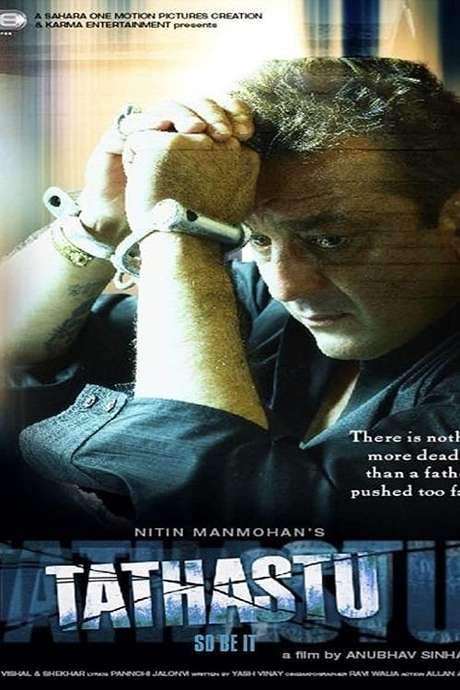
Tathastu (2006) movie poster

Plot Summary

Tathastu (2006) Plot Summary Explained

Release, runtime and language
2006 · 113 mins · Hindi
Loading streaming availability…
Directed by
Anubhav Sinha
Starring
Sanjay Dutt, Gulshan Grover, Darshan Jariwala, Jaya Prada, Ameesha Patel

Desperate circumstances compel a humble mill worker, whose child is gravely ill, to take the law into his own hands. Frustrated by a system that offers no relief, he arms himself and storms the hospital, demanding attention. His dramatic, armed protest finally forces the public and officials to recognize his plight.

On this page (6)
  1. 1 Where to watch
  2. 2 What happens: full plot
  3. 3 Plot questions answered
  4. 4 Movie threads
  5. 5 Movies like Tathastu
  6. 6 Every angle
Loading streaming availability…

Full plot summary · contains spoilers

What Happens in Tathastu: Full Plot Summary

The whole story of Tathastu (2006) explained, from the opening scene to the final frame: every key event, every twist and what it all adds up to. Read it as a quick recap before the sequel, to check a scene you missed, or to finally understand what really happened.

Ravi Rajput hails from a struggling family; his father worked as a mill foreman and vocational schooling was a luxury they could not afford. He grows up attending a municipal school, takes a job at the same mill, and marries Saru. Together they welcome a son, Gaurav, whose milestones—first steps, first words—fill the couple with pride. Yet the quiet joy of parenthood is crushed when Gaurav suddenly faints during a game of cricket, a moment that upends their lives and sets off a chain of desperate choices.

The family rushes Gaurav to the nearest hospital in Bandra, where two doctors, Dr. Nita and Dr. Sen, reveal the grim truth: their son’s only chance is a heart transplant, but the procedure requires a payment of 15 lakhs in short order. A heart is allegedly available, but the hospital will not operate without the funds. Ravi’s search for support begins with his insurance policy, which is abruptly refused renewal on an obscure clause, and his longtime employer, who declines to authorize more than Rs. 75,000. With time slipping away, Ravi’s options shrink rapidly, and the doctor warns that Gaurav could be discharged soon and may not survive long after.

Driven to the brink, Ravi takes a drastic step and weaponizes his desperation, taking hostage roughly thirty people inside the hospital. The situation attracts the attention of the police, led by DCP Rane, who is instructed to neutralize the threat at all costs. As the siege unfolds, the hostages come to see Ravi not as a monster but as a man fighting for his child—an image reinforced by his unselfish acts: he ensures a pregnant woman can give birth with proper care, helps a woman escaping domestic abuse, and aids an elderly man whose son prioritizes money over family. The public, watching the hostage drama unfold in the media, begins to rally around Ravi, casting him in the role of a dark but principled hero who fights a broken system to save a child.

Inside the hospital, a glimmer of hope appears when, after a tense stand-off, doctors tell Ravi that Gaurav will soon receive the transplant. He decides to release the hostages, thinking his son’s life will be saved. But a shock awaits him: the surgery underway is not for his son but for an elderly politician—the President of the ruling party, Narayan Swami. In a moment of fevered resolve, Ravi contemplates ending his own life to donate his heart to his son. He steps out with the hostages and his wife, vowing to sacrifice everything for Gaurav, in front of a crowd that has grown immensely supportive.

Before he can pull the trigger, a deputy leader from the party interrupts, claiming to have spoken with the President. The President has supposedly agreed to sacrifice his own life so that the heart can go to Ravi’s child. The deputy assures Ravi that the government will cover all surgical expenses, and the crowd erupts in applause. But a whispered question from the deputy leader’s assistant—“what about the President?”—unmasks the manipulation: this is politics. The deputy admits as much: if the President’s sacrifice were real, the public’s support would translate into a political windfall; by fabricating it, they imagined a powerful surge at the polls.

Ravi is arrested and brought to court, where the judge shows leniency based on the hostages’ testimony and grants him a relatively light sentence of six months. Outside the courtroom, the spectacle of politics continues to unfold, even as Ravi’s supporters cheer for what they believe he stood for. The film closes on a quietly hopeful note: Gaurav is seen playing cricket again, while [Ravi] and [Saru] watch him from a distance, their lives forever marked by a choice born of love, desperation, and the harsh truth of a system that can blur moral lines in the name of power.
Last updated: October 09, 2025 at 16:45

Was this helpful?

Plot questions answered

Tathastu Plot Explained: Your Questions Answered

The questions people ask most about Tathastu (2006): what happens in the confusing scenes, why the characters do what they do, the twists, hidden details and what the ending means. Each answer contains spoilers.

Q1

Why does Ravi take hostages at the hospital?

Ravi takes roughly thirty people hostage because every legitimate avenue to save his son has been closed. His insurance policy was denied renewal on an obscure clause, his employer refused to authorize more than Rs. 75,000, and the hospital demanded 15 lakhs upfront for Gaurav's heart transplant. In Tathastu, this desperate act is his only way to force the system to acknowledge his child's life-or-death situation.

Foreshadowing: Early scenes establish Ravi's limited financial options and the family's inability to afford vocational schooling.

  • ravi rajput
  • hostage
  • hospital
  • desperate
  • insurance denial
Q2

What medical condition requires Gaurav to need a heart transplant?

Gaurav suddenly faints during a cricket game, which leads doctors Dr. Nita and Dr. Sen to diagnose a critical heart condition requiring immediate transplantation. In Tathastu, the medical urgency is extreme, the procedure must happen quickly or Gaurav will not survive long after discharge. The 15 lakh cost becomes the barrier that drives the entire conflict.

Foreshadowing: Gaurav's milestones and healthy childhood moments contrast sharply with the sudden collapse.

  • gaurav
  • heart transplant
  • medical condition
  • faints
  • cricket
Q3

Why was Ravi's insurance policy refused for renewal?

Ravi's insurance policy was abruptly refused renewal based on an obscure clause that the administration used to deny coverage. This refusal eliminated one of his potential lifelines when he desperately needed funds for Gaurav's surgery. In Tathastu, this bureaucratic rejection represents how systemic failures push ordinary people toward extreme measures.

Foreshadowing: The family's struggling background and inability to afford vocational schooling hint at their precarious financial position.

  • insurance policy
  • denied
  • obscure clause
  • renewal refused
Q4

Why do the hostages begin to sympathize with Ravi?

The hostages see Ravi not as a criminal but as a father fighting for his child's survival. He demonstrates humanity during the siege by ensuring a pregnant woman can give birth safely, helping a woman escape domestic abuse, and aiding an elderly man whose son prioritizes money over family. In Tathastu, these selfless acts transform public perception from fear to admiration.

Foreshadowing: Ravi's humble mill worker background establishes him as an ordinary man, not a hardened criminal.

  • hostages
  • sympathize
  • raju rajput
  • selfless acts
  • public perception
Q5

Why does the heart transplant go to politician Narayan Swami instead of Gaurav?

The hospital reveals that the available heart was allocated to Narayan Swami, the President of the ruling party, not Gaurav. This shocking twist in Tathastu exposes how the medical system prioritizes political power over a child's life. Ravi's realization that the system has betrayed his trust intensifies his resolve and leads to his contemplation of self-sacrifice.

Foreshadowing: The hospital's initial refusal to operate without funds hints at institutional corruption and selective priorities.

  • narayan swami
  • politician
  • heart transplant
  • gaurav
  • betrayal
Q6

Why does Ravi consider ending his own life to save Gaurav?

Ravi contemplates suicide because he believes he can donate his own heart to his son if no other option exists. This fevered resolve in Tathastu represents a parent's ultimate sacrifice when the system offers no relief. He steps out with his wife and the hostages, vowing to give everything for Gaurav's survival.

Foreshadowing: Ravi's desperation escalates throughout as each option closes, building toward this extreme consideration.

  • ravi
  • suicide
  • self-sacrifice
  • donate heart
  • gaurav
Q7

What political manipulation does the deputy leader reveal?

The deputy leader fabricates a claim that the President agreed to sacrifice his life so Gaurav could receive the heart transplant. His assistant's whispered question about the President unmasks the deception, this was purely for political windfall at the polls. In Tathastu, this manipulation shows how power exploits public sympathy for electoral gain.

Foreshadowing: The growing public support for Ravi sets up how politicians could weaponize this sympathy.

  • deputy leader
  • political manipulation
  • president
  • sacrifice
  • election
Q8

Why does Ravi receive only six months in court?

The judge shows leniency based on the hostages' testimony, which portrayed Ravi as a principled fighter rather than a criminal. The court in Tathastu recognizes his intent was to save his child, not commit violence for its own sake. This relatively light sentence acknowledges the desperation behind his actions while still condemning the violent method.

Foreshadowing: The hostages' changing perception of Ravi during the siege foreshadows their supportive testimony.

  • court
  • six months
  • light sentence
  • judge
  • hostage testimony
Q9

Does Gaurav survive and get the heart transplant by the end?

Yes, Gaurav is seen playing cricket again at the end of Tathastu, implying he received the heart transplant and survived. The final scene shows Ravi and Saru watching him from a distance, their lives forever marked by the desperate choice they made. However, this victory remains bittersweet due to the political manipulation that facilitated it.

Foreshadowing: The deputy leader's promise about covering surgical expenses hints at eventual medical intervention.

  • gaurav
  • survives
  • cricket
  • heart transplant
  • ending
Q10

Why does the public begin to view Ravi as a hero?

The media coverage transforms Ravi into a dark but principled symbol of someone fighting a broken system to save a child. In Tathastu, the public channels their broader anger against medical and political establishments through his hostage drama. This support grows as people recognize his motive was love and desperation, not criminal intent.

Foreshadowing: Ravi's humble background and genuine desperation make him relatable to ordinary viewers.

  • public
  • hero
  • media
  • broken system
  • sympathy
Q11

How much money did Ravi's employer provide for the surgery?

Ravi's longtime employer authorized only Rs. 75,000, which fell massively short of the 15 lakhs required for Gaurav's heart transplant. This refusal in Tathastu represents one of many dwindling options that pushed Ravi toward desperation. The employer's limited contribution demonstrates how institutional support failed the family.

Foreshadowing: Ravi's mill worker job and struggling family background establish limited financial resources.

  • employer
  • 75000
  • funds
  • mill worker
  • financial shortfall
Q12

What role does DCP Rane play during the hospital siege?

DCP Rane leads the police response and is instructed to neutralize the threat at all costs while minimizing harm to hostages. In Tathastu, his team balances duty with growing public sympathy for Ravi, creating tension between law enforcement and public mood. The siege unfolds with negotiations, media scrutiny, and strategic police positioning.

Foreshadowing: The escalating crisis and media attention necessitate high-level police intervention.

  • dcp rane
  • police
  • siege
  • neutralize threat
  • hostages
Q13

Why does the ending feel bittersweet despite Gaurav's survival?

The ending feels bittersweet because Gaurav's survival was facilitated by cynical political manipulation rather than genuine justice or systemic change. In Tathastu, Ravi receives a light sentence but the family remains forever marked by trauma and the harsh truth that power can blur moral lines. Their victory came at the cost of exposing how easily compassion gets weaponized.

Foreshadowing: The deputy leader's exposed deception foreshadows the tainted nature of the resolution.

  • bittersweet
  • ending
  • political manipulation
  • trauma
  • moral lines
Q14

What specific events triggered Ravi's decision to take hostages?

The insurance denial, employer's refusal to provide adequate funds, and the hospital's 15 lakh demand created a perfect storm of desperation. With time slipping away and Gaurav facing discharge without treatment, Ravi's options shrank rapidly in Tathastu. The doctor's warning that Gaurav may not survive long after discharge was the final trigger for his drastic action.

Foreshadowing: Each rejection builds pressure sequentially, from insurance to employer to hospital deadlines.

  • triggered
  • hostage
  • insurance denial
  • employer refusal
  • time pressure
Q15

How does Ravi help the pregnant woman during the siege?

Ravi ensures the pregnant woman can give birth with proper medical care despite the hostage situation. This unselfish act in Tathastu reinforces his image as a man fighting for life rather than a criminal. The hostages witness this humanity, which strengthens their sympathy and shifts public perception toward viewing him as principled.

Foreshadowing: Ravi's parental love for Gaurav extends to protecting other vulnerable lives during the crisis.

  • pregnant woman
  • give birth
  • medical care
  • unselfish act
  • humanity

Movie threads

More Movies Like Tathastu, by Mood & Story

Curated lists built around what makes Tathastu tick: the same mood, the same kind of story or the same emotional payoff. Each list explains why these movies belong together.

Movies about desperate moral stands like Tathastu

Ordinary people pushed to extreme measures by an unjust system. If you liked Tathastu, you'll appreciate these films featuring ordinary people taking extreme measures against corruption or injustice. Discover similar dramatic stories of moral conviction, high-stakes tension, and heavy emotional weight.

  • desperate
  • tense
  • gripping
  • anxious
  • thought-provoking
  • emotionally draining
  • Tone: tense, heavy, desperate
  • Pacing: steady, building to a climax
Why these movies?

The story pattern: The narrative typically begins with a relatable protagonist facing an insurmountable systemic failure. Their growing frustration culminates in a dramatic, high-stakes act that challenges the status quo, creating a tense standoff that forces a societal or personal reckoning.

Why they belong together: Movies in this thread are grouped by their shared focus on the explosive moment when a character's patience snaps. They share a heavy emotional tone, steady pacing that builds to a climax, and a central theme of challenging authority through drastic action.

Social injustice dramas with bittersweet endings like Tathastu

Personal crises expose societal flaws, leading to imperfect victories. Find movies similar to Tathastu that explore themes of medical injustice and social inequality. These dramas often feature a bittersweet ending where a personal victory is overshadowed by the enduring nature of systemic failure.

  • thought-provoking
  • emotionally draining
  • hopeful
  • bittersweet
  • gripping
  • social commentary
  • Tone: bittersweet, heavy, tense
  • Pacing: steady, character-driven
Why these movies?

The story pattern: A deeply personal problem—often involving health, safety, or family—collides with an uncaring bureaucracy. The protagonist's struggle brings temporary attention and a partial solution, but the ending acknowledges the cyclical or pervasive nature of the societal problem, leaving a sense of sobering reality.

Why they belong together: This thread connects films that share a core structure: a heavy drama where a personal story illuminates a social issue. The similarity lies in the straightforward narrative complexity, the steady pacing focused on the central conflict, and the distinctly bittersweet feeling of the conclusion.

If you liked this

Movies Like Tathastu

Similar movies to Tathastu: the same genre, themes or kind of story. Each one comes with its own plot summary, timeline and ending explained.

Browse all movie summaries

Every angle

Tathastu (2006) Explained: Plot, Timeline & Characters

Everything about Tathastu in one place: what happens in the plot summary, the timeline in chronological order, the characters and meaning and a spoiler-free summary. What's After the Movie adds the cast, box office and post-credit scenes.

Coming soon on iOS and Android

The Plot Explained Movie Summary App

Plot summaries, endings explained and timelines on your phone. Catch up on any movie in minutes, save your favorites and never miss a twist again.

Be the first to know when we launch. Your email stays private, always.

Learn more about the app