




Plot Explained Spoilers guaranteed!
Plot Explained

Browse by genre

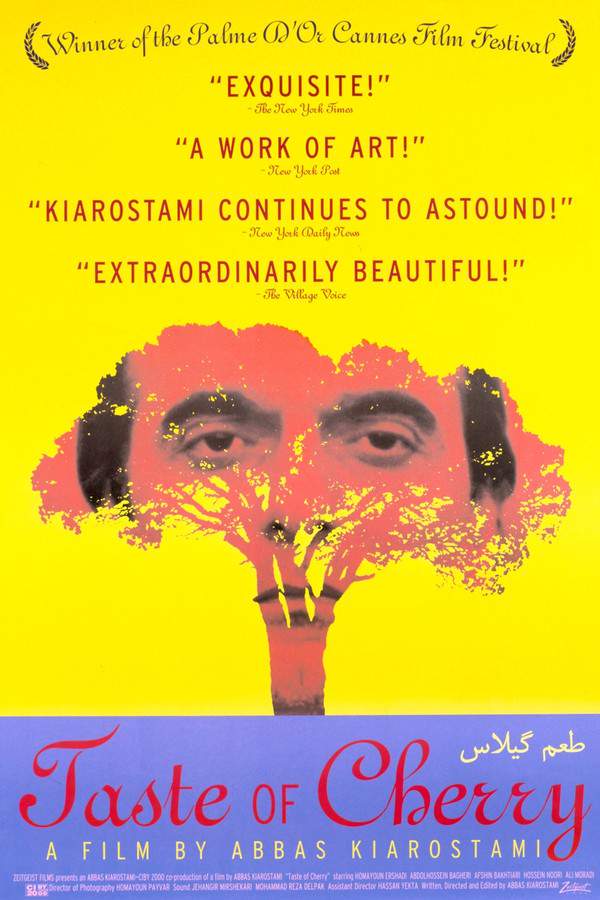
Taste of Cherry (1998) movie poster

Characters & Themes

Taste of Cherry (1998) Characters, Setting & Themes Explained

Release, runtime and language
1998 · 95 min · Persian
JustWatch #7,384 9
Directed by
Abbas Kiarostami
Starring
Abdolrahman Bagheri, Afshin Khorshid Bakhtiari, Ahmad Ansari, Homayoun Ershadi, Mir Hossein Noori, Safar Ali Moradi

A middle-aged man named Mr. Badii drives through Tehran searching for someone willing to bury him after he dies. As he journeys through the city, the seemingly mundane backdrop of urban life contrasts with his unusual request. He encounters various people, including a young, religious student and a truck driver, each interaction offering a glimpse into their own lives and perspectives. Ultimately, he finds an unexpected individual who agrees to his request, leading to a poignant exploration of life, death, and human connection.

On this page (8)
  1. 1 Where to watch
  2. 2 Characters explained (4)
  3. 3 Where & when it takes place
  4. 4 Themes & meaning (2)
  5. 5 Character & meaning questions
  6. 6 Movie threads
  7. 7 Movies like Taste of Cherry
  8. 8 Every angle

Where to watch

Where to Watch Taste of Cherry (1998)

Where can you watch Taste of Cherry? Stream, rent or buy it in the US, including on HBO Max and Kanopy: current JustWatch availability with up-to-date prices.

Streaming availability powered by JustWatch

4 main characters · contains spoilers

Taste of Cherry Characters Explained: Who Is Who

The main characters of Taste of Cherry (1998), heroes and villains: what drives them, how they change over the course of the story and what each of them reveals about the film's bigger ideas.

  • Badii

    Badii is a middle-aged man faced with a profound existential crisis as he contemplates suicide. Throughout the film, he seeks companionship and understanding from others, revealing his vulnerability. His character embodies the struggle between despair and the quest for a reason to live.

    • 😟 Despair
    • 🤔 Introspection
  • Abdolrahman Bagheri

    Abdolrahman Bagheri is a compassionate Azeri taxidermist who, despite his own struggles with life's burdens, tries to dissuade Badii from his decision. He represents hope and resilience, sharing his own journey and the transformative power of appreciating life's beauty.

    • 💔 Sacrifice
    • 🌟 Hope
  • Kurdish Soldier

    The young Kurdish soldier embodies innocence and fear as he grapples with the weight of Badii's request. His immediate exit from the car showcases the overwhelming nature of Badii's situation and the struggles many face when confronted with such heavy topics.

    • 😨 Fear
    • 🚷 Abandonment
  • Afghan Seminarist

    The Afghan seminarist represents traditional values and moral beliefs, highlighting the conflict between religious teachings and personal choices. His rejection of Badii's request emphasizes the moral complexities surrounding the subject of suicide.

    • ✝️ Religion
    • 📜 Moral Dilemma

Last updated: October 22, 2024 at 21:28

Was this helpful?

Setting

Where and When Does Taste of Cherry Take Place?

The setting of Taste of Cherry (1998): the year and time period, the places and locations, and how they shape the characters, the mood and the tension of the story.

Time period

1960s

The story touches upon the 1960s, a period marked by social and political upheaval in Iran. This time saw shifts in cultural attitudes and ideologies, influencing the lives and decisions of many individuals, including those grappling with existential crises such as the film's protagonist.

Location

Tehran

Tehran, the capital of Iran, is a vibrant and bustling metropolis known for its rich history and culture. The city's streets are filled with a mix of modernity and tradition, showcasing its diverse population and lively atmosphere. The surrounding mountains and parks also provide a natural escape from the urban landscape.

  • 🏙️ City
  • 🌳 Nature

Last updated: October 22, 2024 at 21:28

Was this helpful?

2 major themes

Taste of Cherry Meaning: Themes & Message Explained

What is Taste of Cherry (1998) really about? The emotional, social and philosophical themes the film keeps returning to, its symbolism and the message beneath the surface.

  • Existentialism

    The theme of existentialism permeates the film as Badii confronts the meaning of life and death. His journey reflects struggles with despair, purpose, and the search for meaning in an often unforgiving world. Through his conversations, the film explores the value of life and the impact of human connections.

  • Beauty of Existence

    The beauty of existence is a central theme illustrated through Bagheri's passionate depiction of life's wonders. Despite the heavy subject matter, the film encourages appreciation for nature and life's small joys, symbolized by the mulberries, which serve as a reminder of hope and renewal.

Last updated: October 22, 2024 at 21:28

Was this helpful?

Character & theme questions

Taste of Cherry Characters & Meaning: Your Questions Answered

The questions people ask about Taste of Cherry (1998): who the characters really are, their relationships, what the symbols mean, where it takes place and what the movie is really about. Each answer contains spoilers.

Q1

Where is the movie set?

The film takes place in Tehran, the capital of Iran. The story unfolds across the city's streets, capturing the mix of modernity and tradition that defines urban life in this bustling metropolis. The surrounding mountains and parks provide a natural contrast to the urban landscape.

  • tehran
  • iran
  • setting
  • city
  • location
Q2

When does the story take place?

The movie is set in the 1960s, a period in Iran marked by social and political upheaval. This era saw significant shifts in cultural attitudes and ideologies, providing context for the protagonist's existential crisis and the moral dilemmas explored through his conversations.

  • 1960s
  • time period
  • iran
  • era
  • history
Q3

Who is Badii?

Badii is a middle-aged man who drives through Tehran seeking someone willing to help him after his death. He represents a person grappling with profound existential despair, searching for meaning and human connection in his final days. His vulnerability and longing for companionship reveal the human need for understanding even in the darkest moments.

  • badii
  • protagonist
  • main character
  • suicide
Q4

Who is Bagheri in the film?

Abdolrahman Bagheri is an Azeri taxidermist who becomes Badii's final companion. Despite his own life burdens, Bagheri tries to dissuade Badii from his decision by sharing his own journey and perspective. He embodies hope and resilience, representing the film's theme of appreciating life's beauty even amid suffering.

  • bagheri
  • taxidermist
  • supporting character
  • hope
Q5

What does the Afghan seminarist represent?

The Afghan seminarist represents traditional religious values and moral beliefs. He embodies the conflict between religious teachings and personal autonomy regarding end-of-life choices. His rejection of Badii's request highlights the moral complexities surrounding suicide in contexts shaped by faith and tradition.

  • afghan seminarist
  • religion
  • values
  • moral
  • religious character
Q6

What is the Kurdish soldier's role?

The Kurdish soldier is a young, frightened man who encounters Badii's unusual request. His immediate exit from the car illustrates how overwhelming and confronting such topics can be for ordinary people. He represents the innocence and hesitation many feel when faced with existential dilemmas beyond their understanding.

  • kurdish soldier
  • young character
  • innocence
  • fear
Q7

How does Tehran's setting affect the story?

The urban setting of Tehran creates a powerful contrast between the mundane, everyday life of the city and the profound existential question Badii carries. The bustling streets filled with ordinary people underscore how life continues apace while one individual grapples with its meaning and termination.

  • tehran
  • city
  • urban
  • contrast
  • setting
Q8

What does existentialism mean in this film?

Existentialism permeates the film as Badii confronts fundamental questions about life's meaning and death's inevitability. His journey through Tehran represents a search for purpose in an often unforgiving world. Through his conversations with different people, the film explores how human connections can provide meaning even when despair dominates.

  • existentialism
  • meaning of life
  • despair
  • search for meaning
  • philosophy
Q9

What is the beauty of existence theme about?

The beauty of existence theme illustrates how life's small wonders can provide hope and renewal. Despite the heavy subject matter, the film encourages appreciation for nature and simple joys, symbolized by mulberries. Bagheri's perspective represents this counterpoint, showing that even in darkness, moments of beauty can matter.

  • beauty of existence
  • nature
  • hope
  • renewal
  • mulberries
Q10

Why does the film break the fourth wall at the end?

The ending breaks the fourth wall as a deliberate narrative choice that heightens the film's thematic ambiguity. Rather than providing closure, this technique invites viewers to engage directly with the questions the film raises about life, death, and human connection. It leaves interpretation open, refusing to resolve Badii's fate definitively.

  • fourth wall
  • ending
  • ambiguity
  • directors
  • meta narrative

Movie threads

More Movies Like Taste of Cherry, by Mood & Story

Curated lists built around what makes Taste of Cherry tick: the same mood, the same kind of story or the same emotional payoff. Each list explains why these movies belong together.

Philosophical road trip movies like Taste of Cherry

Meditative journeys where the destination is a state of mind, not a place. If you appreciated the meditative drive and existential conversations in Taste of Cherry, you'll find similar stories here. These films use journeys—literal or metaphorical—to explore themes of meaning, mortality, and human connection, often with a slow, thoughtful pace and heavy emotional weight.

  • meditative
  • existential
  • contemplative
  • lonely
  • philosophical
  • somber
  • Tone: melancholic, contemplative
  • Pacing: slow, deliberate
Why these movies?

The story pattern: Stories in this thread follow a protagonist on a physical journey that is secondary to their internal, philosophical quest. The plot is often simple, driven by a series of encounters with strangers who each offer a different perspective on the central theme. The conflict is primarily internal, and the resolution is often ambiguous, focusing on the questions raised rather than a definitive conclusion.

Why they belong together: These films are grouped together because they share a specific narrative structure and mood: a slow, contemplative pace, a focus on existential themes, and a journey motif. They prioritize atmosphere and ideas over plot, creating a similarly introspective and melancholic viewing experience.

Movies about mortality and existential crisis like Taste of Cherry

Stories that approach the subject of death with quiet gravity and philosophical depth. For viewers who were moved by the heavy themes of suicide and existential dread in Taste of Cherry, this collection offers similar films. These dramas explore life and death with a serious, contemplative tone, focusing on the philosophical and emotional weight of mortality rather than dramatic event.

  • somber
  • contemplative
  • existential
  • heavy
  • desperate
  • philosophical
  • Tone: somber, melancholic
  • Pacing: slow, conversational
Why these movies?

The story pattern: The narrative pattern involves a character grappling with a profound existential crisis, often related to their own mortality or the desire to end their life. The story unfolds through introspective moments and dialogues that explore different viewpoints on life's value. The central dilemma is moral and philosophical, leading to an ending that is frequently ambiguous or open to interpretation.

Why they belong together: These films are united by their solemn and unflinching focus on death as a philosophical concept. They share a heavy emotional weight, a melancholic tone, and a preference for psychological depth over action. The similarity lies in the sober, respectful, and deeply human way they handle their difficult subject matter.

If you liked this

Movies Like Taste of Cherry

Similar movies to Taste of Cherry: the same genre, themes or kind of story. Each one comes with its own plot summary, timeline and ending explained.

Browse all movie summaries

Every angle

Taste of Cherry (1998) Explained: Plot, Timeline & Characters

Everything about Taste of Cherry in one place: what happens in the plot summary, the timeline in chronological order, the characters and meaning and a spoiler-free summary. What's After the Movie adds the cast, box office and post-credit scenes.

Coming soon on iOS and Android

The Plot Explained Movie Summary App

Plot summaries, endings explained and timelines on your phone. Catch up on any movie in minutes, save your favorites and never miss a twist again.

Be the first to know when we launch. Your email stays private, always.

Learn more about the app