Plot Explained Spoilers guaranteed!
Plot Explained

Browse by genre

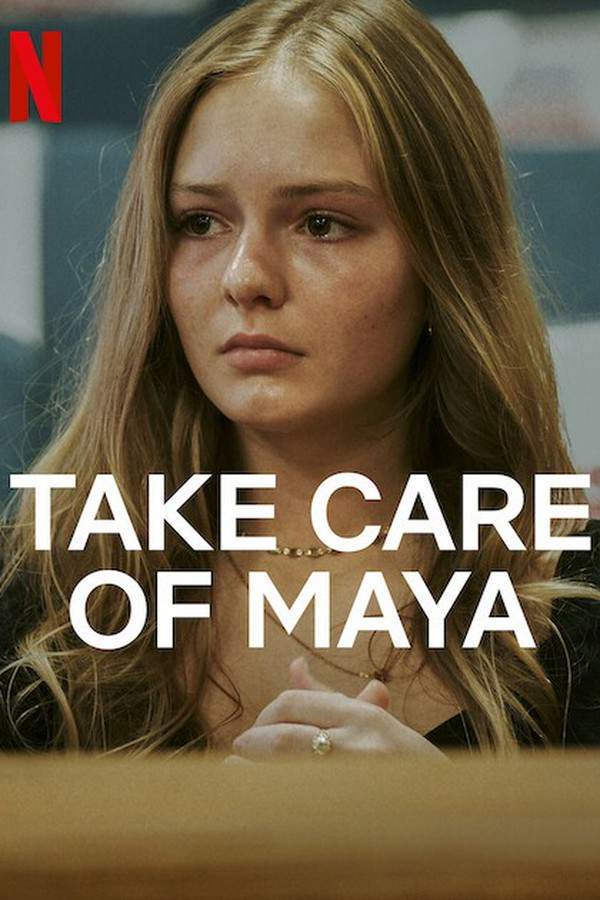
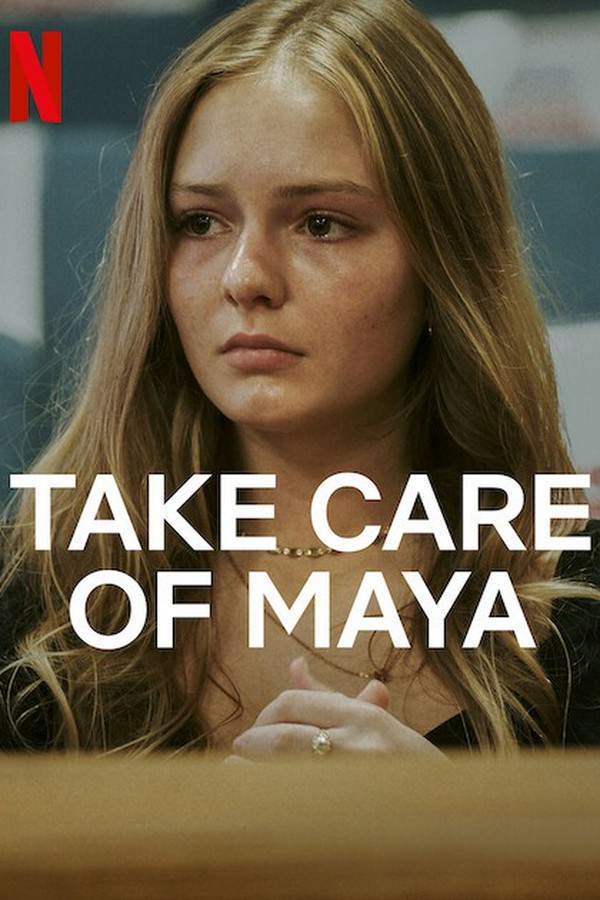
Take Care of Maya (2023) movie poster

Plot Summary

Take Care of Maya (2023) Plot Summary Explained

Release, runtime and language
2023 · 103 min · English
Echo score 60
Loading streaming availability…
Directed by
Henry Roosevelt

This moving documentary follows the Kowalski family as their young daughter, Maya, battles a rare and debilitating illness. The film chronicles their emotional journey and the challenges they face while seeking medical care and desperately trying to stay together. Through intimate interviews, the family shares their experiences, highlighting the difficulties of navigating children's healthcare and revealing a powerful story of love, resilience, and the enduring strength of family bonds.

On this page (6)
  1. 1 Where to watch
  2. 2 What happens: full plot
  3. 3 Plot questions answered
  4. 4 Movie threads
  5. 5 Movies like Take Care of Maya
  6. 6 Every angle
Loading streaming availability…

Full plot summary · contains spoilers

What Happens in Take Care of Maya: Full Plot Summary

The whole story of Take Care of Maya (2023) explained, from the opening scene to the final frame: every key event, every twist and what it all adds up to. Read it as a quick recap before the sequel, to check a scene you missed, or to finally understand what really happened.

Set in early 2015, the story follows the harrowing experience of Jack and Beata Kowalski and their nine-year-old daughter, Maya. The young girl begins to suffer from a series of devastating health issues, including skin lesions, lower limb dystonia, severe breathing problems, and debilitating chronic pain. After visiting numerous medical professionals without finding a clear cause for her suffering, they finally meet Dr. Anthony Kirkpatrick. He provides a firm diagnosis: Maya is suffering from advanced complex regional pain syndrome (CRPS).

To combat this condition, Dr. Kirkpatrick suggests the use of ketamine. When initial low doses fail to provide relief, he recommends a more drastic measure—a ketamine coma. This process involves administering a massive dose of the medication to induce a five-day coma. The procedure is a success, significantly reducing Maya's symptoms. For the following year, she is prescribed 1,000 mg of ketamine daily to keep her condition stable.

However, the situation takes a dark turn on October 7, 2016, when Maya suffers a relapse. Jack rushes her to the emergency room at Johns Hopkins All Children's Hospital (JHACH). The medical staff there are unfamiliar with the specifics of CRPS and become deeply concerned by the high dosage of ketamine Maya has been receiving. When Beata arrives at the hospital, the physicians perceive her as "belligerent," "demanding," and "controlling" regarding her daughter's medical care. This clash of personalities leads the hospital staff to doubt the validity of Maya's diagnosis entirely.

Suspecting that Maya is actually a victim of Munchausen syndrome by proxy, the hospital contacts child protective services. Dr. Sally Smith, a pediatrician specializing in child abuse, interviews both Maya and Jack. Based on these interactions, Dr. Smith concludes that Beata is abusing her child. In a sudden and traumatic turn of events, a nurse informs Jack that Maya has been placed under state custody and orders him to leave the premises.

Desperate to reunite their family, the Kowalskis hire a lawyer named Debra Salisbury. Salisbury reveals a disturbing pattern: the Suncoast Center, which provides privatized child welfare services for Pinellas County, seems to be overly aggressive. Her research indicates that children in Pinellas County are nearly two and a half times more likely to be removed from their homes than the Florida average. Meanwhile, the doctors at JHACH completely ignore Dr. Kirkpatrick's established treatment plans. While Beata is infuriated by this negligence, Jack urges her to remain calm to avoid further tension with the hospital administration.

The legal battle intensifies when a judge issues a no-contact order between Beata and Maya, though Jack is permitted supervised visits. Dr. Kirkpatrick warns the parents that without the necessary ketamine treatments, the prolonged and severe pain could eventually lead to Maya's death.

Under the strict and oppressive supervision of a social worker named Cathi Bedy, Beata is finally allowed to speak to Maya via phone. Upon researching Bedy online, Jack discovers a shocking detail: Bedy had been previously arrested for child abuse. Despite Maya crying for her mother and pleading to go home, Bedy attempts to have Beata's calling privileges revoked. As the investigation by the Sarasota County Sheriff's Office continues, Beata faces multiple court hearings where the judge consistently sides with Dr. Smith and the hospital. In one heartbreaking instance, Beata's simple request for one single hug with her daughter is denied. Overwhelmed by grief and believing she is the only obstacle to Maya's freedom, Beata dies by suicide after spending 87 days separated from her daughter.

The tragedy gains public attention when Daphne Chen, a reporter for the Sarasota Herald-Tribune, begins investigating the flaws of the Florida child welfare system. Her January 2019 article reveals that the Kowalskis were not alone; many other parents had experienced similar nightmares at Johns Hopkins, all stemming from reports made by Dr. Sally Smith. Further discovery revealed a staggering contradiction: while the hospital claimed Maya was lying about her illness, they had actually charged the Kowalskis' insurance for 174 different CRPS treatments.

The legal battle culminated in late September 2023 in the Twelfth Judicial Circuit Court of Florida. Jack Kowalski, acting on behalf of himself, Maya, Kyle, and the estate of Beata, filed a lawsuit against Johns Hopkins All Children's Hospital for $220 million, seeking both compensatory and punitive damages. On November 9, 2023, the jury ruled in favor of the Kowalskis, awarding a total of $261 million. Although a judge later reduced this award by $47.5 million via remittitur, the entire award was ultimately overturned on appeal on October 29, 2025. The appellate court ruled that the hospital deserved more legal protection as a state-mandated reporter of child abuse. The case has since been remanded for a retrial.

Last updated: October 18, 2026 at 17:34

Was this helpful?

Plot questions answered

Take Care of Maya Plot Explained: Your Questions Answered

The questions people ask most about Take Care of Maya (2023): what happens in the confusing scenes, why the characters do what they do, the twists, hidden details and what the ending means. Each answer contains spoilers.

Q1

Why did Johns Hopkins take custody of Maya Kowalski?

Take Care of Maya explains that staff at Johns Hopkins All Children's Hospital became suspicious after Maya was admitted for a CRPS relapse, largely because the ER physicians were unfamiliar with complex regional pain syndrome and the high-dose ketamine protocol she had been following at home. When Beata arrived and insisted on continuing her daughter's established treatment, hospital staff labeled her 'belligerent' and 'controlling,' which led them to suspect Munchausen syndrome by proxy. After pediatrician Dr. Sally Smith interviewed Maya and Jack, the hospital concluded that Beata had been fabricating or inducing Maya's illness and reported the family to child protective services.

Foreshadowing: Early scenes show ER staff already expressing alarm at Maya's daily 1,000 mg ketamine dosage before Beata even arrives, setting the stage for the confrontation that follows.

  • maya kowalski
  • johns hopkins
  • munchausen by proxy
  • child custody
  • hospital suspicion
  • beata kowalski
Q2

Why did Beata Kowalski take her own life?

In Take Care of Maya, Beata died by suicide after 87 days of forced separation from her daughter, having come to believe that she was the only obstacle standing between Maya and freedom. Court hearings repeatedly sided with the hospital and Dr. Sally Smith, including a denial of her simple request for a single hug with Maya, and the ongoing Sarasota County Sheriff's Office investigation left her feeling hopeless. Her death is presented in the documentary as an act of sacrifice she believed was necessary for Maya to finally come home.

  • beata kowalski
  • suicide
  • 87 days separated
  • maya kowalski
  • custody case
  • denied hug
Q3

Why was the $261 million verdict against Johns Hopkins overturned on appeal?

Take Care of Maya details how, on October 29, 2025, an appellate court overturned the jury verdict, ruling that the trial court had erred by not granting Johns Hopkins greater legal protection in its role as a state-mandated reporter of suspected child abuse. The court reasoned that hospitals making good-faith abuse reports deserve broad immunity, even when those reports later prove incorrect. The ruling remanded the case for retrial, leaving the Kowalski family's legal fight unresolved.

  • verdict overturned
  • appeal
  • mandatory reporter
  • johns hopkins
  • retrial
  • immunity
Q4

What is the insurance billing contradiction in Maya's case against Johns Hopkins?

During the discovery process for the Kowalski family's lawsuit, it emerged that Johns Hopkins All Children's Hospital had charged the family's insurance for 174 separate CRPS treatments and services while simultaneously claiming Maya was fabricating her illness. This contradiction became one of the most damaging pieces of evidence for the defense, since the hospital could not credibly deny Maya's condition while having billed for treating it. The billing records were central to the jury's decision to award $261 million in damages.

  • insurance billing
  • 174 treatments
  • CRPS
  • johns hopkins
  • lawsuit evidence
  • contradiction
Q5

Why was Beata given a no-contact order preventing her from seeing Maya?

As the custody case progressed in Pinellas County courts, a judge sided with Dr. Sally Smith's assessment and issued a no-contact order between Beata and her daughter Maya, while Jack was permitted supervised visits. The order was based on the hospital's ongoing accusation that Beata had been inducing Maya's illness, a finding Dr. Kirkpatrick's medical evidence directly contradicted. The ruling effectively cut off Beata from her daughter for 87 days, despite Maya repeatedly crying and pleading to go home during supervised calls.

  • no-contact order
  • beata kowalski
  • pinellas county
  • custody hearing
  • maya kowalski
  • court order
Q6

How much did the Kowalski family win in their lawsuit against Johns Hopkins?

On November 9, 2023, a six-person jury in Florida's Twelfth Judicial Circuit Court awarded the Kowalski family $261 million in combined compensatory and punitive damages against Johns Hopkins All Children's Hospital after just two days of deliberations. Although the judge later reduced the award by $47.5 million through remittitur, the verdict was a historic legal vindication for a family that had spent years fighting the system. The jury award was ultimately overturned on appeal in October 2025, with the case remanded for retrial.

  • 261 million
  • lawsuit verdict
  • kowalski family
  • johns hopkins
  • compensatory damages
  • punitive damages
Q7

What is complex regional pain syndrome and why was ketamine used to treat Maya?

Complex regional pain syndrome (CRPS) is a rare, intensely painful chronic condition that Maya Kowalski was diagnosed with in 2015 after months of unexplained skin problems, dystonia, and severe pain. Dr. Anthony Kirkpatrick determined that ketamine could interrupt the pain signals driving the disease, and when low oral doses failed to control her symptoms, he escalated to a five-day medically induced ketamine coma to essentially reset her nervous system. The procedure dramatically reduced Maya's pain, and she was kept on roughly 1,000 mg of daily ketamine for about a year to prevent relapse.

  • complex regional pain syndrome
  • CRPS
  • ketamine treatment
  • dr. kirkpatrick
  • maya kowalski
Q8

Who is Dr. Sally Smith and how did she decide Maya was being abused?

Dr. Sally Smith was a pediatrician specializing in child abuse who was called in by Johns Hopkins All Children's Hospital after staff suspected Munchausen syndrome by proxy in Maya's case. After interviewing Maya and Jack, with Beata notably excluded, Dr. Smith concluded that Beata had been fabricating or inducing her daughter's symptoms, and her assessment became the foundation of the state's custody case. Take Care of Maya later reveals that multiple other families had been separated through her reports, suggesting her evaluation methods were part of a broader pattern rather than isolated judgment.

  • dr. sally smith
  • child abuse pediatrician
  • munchausen by proxy
  • maya kowalski
  • interview
  • johns hopkins
Q9

Why couldn't Dr. Kirkpatrick's established ketamine treatment plan continue at Johns Hopkins?

Take Care of Maya shows that doctors at Johns Hopkins All Children's Hospital had little to no experience with complex regional pain syndrome or high-dose ketamine therapy, so they refused to follow Dr. Anthony Kirkpatrick's established protocol. Instead of consulting directly with him, they treated his treatment plan as evidence of medical neglect rather than a specialized therapy that had successfully controlled Maya's CRPS for a year. This institutional unfamiliarity led to Maya being weaned off her medication, a decision Dr. Kirkpatrick warned could be fatal given her advanced condition.

Foreshadowing: Dr. Kirkpatrick's earlier warning that without ketamine Maya's pain could kill her makes the hospital's refusal of his protocol even more consequential later in the film.

  • dr. kirkpatrick
  • ketamine protocol
  • johns hopkins
  • treatment plan
  • CRPS
  • medical negligence
Q10

What did reporter Daphne Chen uncover about Florida's child welfare system?

In January 2019, Sarasota Herald-Tribune reporter Daphne Chen published an investigation into the Kowalski case that revealed multiple other families had experienced nearly identical situations at Johns Hopkins All Children's Hospital. Her reporting showed that every case originated from reports made by Dr. Sally Smith, suggesting a systemic pattern rather than isolated mistakes. Chen's article opened the floodgates for other affected parents to come forward and ultimately helped catalyze the Kowalskis' $220 million lawsuit against the hospital.

  • daphne chen
  • reporter
  • sarasota herald-tribune
  • child welfare investigation
  • dr. sally smith
  • pattern
Q11

Who was Cathi Bedy and why is her background significant?

Cathi Bedy was the Suncoast Center social worker assigned to supervise Beata's limited phone calls with Maya during the custody case. Take Care of Maya reveals that Jack discovered Bedy had previously been arrested for child abuse, a deeply troubling fact given that she was evaluating a mother accused of the very same offense. Despite Maya crying for her mother and pleading to go home during the calls, Bedy attempted to have Beata's calling privileges revoked, and her past became a symbol of the system's broken oversight.

  • cathi bedy
  • suncoast center
  • social worker
  • child abuse arrest
  • beata kowalski
  • supervised calls
Q12

What was the ketamine coma procedure that Dr. Kirkpatrick used on Maya?

The ketamine coma was an aggressive treatment in which Maya was administered a massive dose of ketamine to induce a five-day medically induced coma, intended to break the cycle of severe pain caused by her advanced CRPS. The procedure carried significant risks but succeeded in dramatically reducing Maya's symptoms, making it possible for her to function normally for the first time in over a year. Take Care of Maya presents the coma as the family's first real hope after months of unsuccessful treatments and misdiagnoses.

  • ketamine coma
  • dr. kirkpatrick
  • five-day coma
  • maya kowalski
  • CRPS treatment
Q13

Why were children in Pinellas County more likely to be removed from their homes?

Attorney Debra Salisbury discovered during the Kowalski case that children in Pinellas County were nearly two and a half times more likely to be removed from their families than the Florida state average. The statistic reflected the aggressive posture of the Suncoast Center, the privatized child welfare agency serving the county. Take Care of Maya uses this data to argue that Maya's case was not an isolated incident but part of a broader systemic pattern of removals in the region.

  • pinellas county
  • child removal
  • suncoast center
  • debra salisbury
  • florida foster care
  • privatization

Movie threads

More Movies Like Take Care of Maya, by Mood & Story

Curated lists built around what makes Take Care of Maya tick: the same mood, the same kind of story or the same emotional payoff. Each list explains why these movies belong together.

Investigative documentaries exposing broken institutions like in Take Care of Maya

Real stories where hospitals, courts, and bureaucracies fail the people they should protect. If you were moved by Take Care of Maya, these investigative documentaries expose similar systemic failures in healthcare, child welfare, and the courts. Each film reveals how trusted institutions can become the source of injustice, combining courtroom drama, journalistic investigation, and devastating human stories that leave viewers questioning the systems meant to protect us.

  • exposé
  • courtroom tension
  • institutional failure
  • outrage
  • investigative
  • unsettling
  • Tone: bleak, enraging
  • Pacing: variable, investigative
Why these movies?

The story pattern: These documentaries typically unfold over years, layering interviews with families, whistleblowers, journalists, and legal teams to expose a slow-building pattern of harm. Courtroom or legislative sequences punctuate intimate family footage, while the filmmakers methodically assemble evidence that turns abstract policy failures into unmistakable personal tragedy. The arc usually moves from confusion and disbelief, through gathering outrage, to a final reckoning that is rarely clean or satisfying.

Why they belong together: Films in this thread share a forensic, evidence-driven approach to true stories of institutional harm, with pacing that shifts between quiet testimony and explosive courtroom reveals. They combine high emotional weight with bleak or mixed endings, leaving audiences feeling both informed and unsettled. The connective tissue is a refusal to look away and a commitment to showing how bureaucratic cruelty compounds over time.

Bleak family tragedies against institutional cruelty like in Take Care of Maya

Parents and children pushed past breaking by the systems meant to save them. Movies like Take Care of Maya that follow families devastated by medical and legal systems. These emotionally heavy films depict parental devotion tested by forced separation, misdiagnosis, and bureaucratic indifference. Expect heartbreaking stories of grief, resilience, and the lasting scars left when institutions fail the people who depend on them most.

  • heartbreaking
  • devastating
  • institutional abuse
  • parental devotion
  • forced separation
  • grief
  • Tone: bleak, heartbreaking
  • Pacing: variable, escalating
Why these movies?

The story pattern: Stories in this thread center on a tight family unit thrown into crisis by an external institution, often through a child whose illness or condition is misinterpreted or mishandled. The narrative typically traces escalating conflict, legal struggle, and moments of fleeting hope before tragedy reshapes everything. Character arcs pivot from trust to suspicion, from advocacy to exhaustion, and the endings tend to be bittersweet, ambiguous, or bleak rather than redemptive.

Why they belong together: These films are united by their focus on maternal or parental love under siege, complex institutional antagonists, and extended timelines that test a family's endurance. They share heavy emotional weight, mixed or bleak endings, and pacing that braids intimate domestic moments with high-stakes procedural beats. The shared feeling is one of injustice that lingers long after the credits.

If you liked this

Movies Like Take Care of Maya

Similar movies to Take Care of Maya: the same genre, themes or kind of story. Each one comes with its own plot summary, timeline and ending explained.

Browse all movie summaries

Every angle

Take Care of Maya (2023) Explained: Plot, Timeline & Characters

Everything about Take Care of Maya in one place: what happens in the plot summary, the timeline in chronological order, the characters and meaning and a spoiler-free summary. What's After the Movie adds the cast, box office and post-credit scenes.

Coming soon on iOS and Android

The Plot Explained Movie Summary App

Plot summaries, endings explained and timelines on your phone. Catch up on any movie in minutes, save your favorites and never miss a twist again.

Be the first to know when we launch. Your email stays private, always.

Learn more about the app