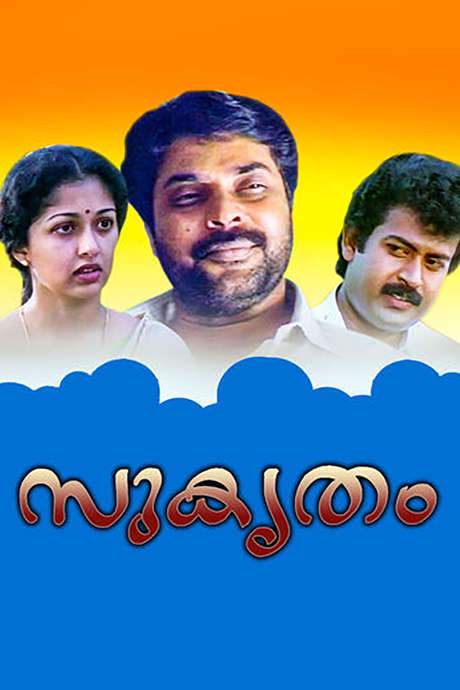
Two friends with very different temperaments, Nandan and Sunny, are finishing their senior year of college by making beautiful music together and sharing close relationships with their girlfriends, Devi and Thara. Nandan is a hardworking, introverted dreamer, pouring his energy into studies and later into his craft as a playback singer. Sunny, by contrast, is outgoing, athletic, and universally liked—a natural connector in their circle. Among Sunny’s friends is a loyal but sometimes persistent companion, Vinod. The four young lovers seem perfectly paired: Devi’s quiet seriousness mirrors Nandan, while Thara’s warmth fits Sunny’s exuberant spirit.
When they graduate with top honors, the plan shifts from celebration to commitment: the two couples decide to marry their respective beloveds. Thara’s parents readily approve of Sunny, promising a hopeful future together. Devi’s father, however, is wary of Nandan after learning he works as a waiter; his concern morphs into stronger resistance and an arranged-match setup for Devi. The tension escalates as Devi’s father moves to seal the alliance with someone else, leaving the friends frustrated and distressed. In a bid to outmaneuver the stubborn obstacle, Sunny enlists the help of Chandran to orchestrate a risky plan, hoping to secure a temple visit for Devi in disguise and quietly slip her away to a register office for the ceremony.
Yet fate remains cruelly indecisive. Devi’s arranged marriage proceeds despite these efforts, casting a shadow over the group’s hopes and dreams. The morning of Devi’s wedding brings tragedy: Sunny is killed in a motorbike accident, and Vinod is rushed to the hospital in critical condition. It is later revealed that Vinod survives, but the accident costs him his ability to speak, leaving a void in the friends’ circle. The loss weighs heavily on Thara, who is devastated and begins to live as a widow. Nandan, left to navigate the collapse of the original plan, channels his grief into a rising career behind the microphone, accepting opportunities to become a playback singer for the films around him. A music director, introduced to him through Sunny’s brother, helps propel Nandan toward fame and financial success, turning his life into a public journey of song, rhythm, and memory.
From this point forward, Sunny’s presence stretches beyond the physical world: his voice appears in scattered moments, guiding, comforting, and prompting the living to remember him. The film’s exploration of loss and longing uses these spectral echoes to remind every character of the bond they once shared. In a key moment from a hometown tour, Nandan stays at a hotel and discovers that the receptionist is Devi. He reaches out with a whispered, resonant question, echoing the movie’s title: “Sukhamo Devi?”—a quiet, tender inquiry that hints at the enduring connection between their past and his present life. Devi’s reply comes through the news of her own life; she reveals that she has moved on with her husband, Dr. Venugopal, and that her life is now with them—though she remains bound to memories of Nandan and the love that did not fully come to pass.
As the emotional landscape shifts, Devi, along with her daughter, relocates to Goa to stay with her husband, leaving Nandan to find solace in his music and memories. He reassures Devi that their unfulfilled love will someday be reconciled in heaven, while Thara stays close, trying to piece together a future that honors the past. The two remaining friends still feel Sunny’s presence in their hearts as a guiding force, and Nandan vows to protect and care for Thara, a pledge that hints at a future couplehood born from shared sorrow. The film’s tonal balance remains rooted in a bittersweet realism: even as life continues with new relationships and new opportunities, the memory of Sunny’s love and his final wishes linger, shaping decisions and softening grief.
The story culminates with a poignant scene: Nandan and Thara watch Devi’s plane depart, their senses filled with Sunny’s lingering voice. In that moment, a gentle, almost spiritual directive emerges from the past, as Sunny’s voice seems to instruct Nandan to “look after Thara like gold.” This farewell isn’t merely about two people choosing to form a new bond; it’s a testament to how love endures, even when the people involved are separated by distance, circumstance, and even death. The movie’s closing line leaves viewers with a frank, reflective note about love’s resilience and the complexity of letting go: a final acknowledgement that, in the face of tragedy, there can be a practical, compassionate path forward for everyone involved.
Throughout, the film remains anchored by its cast, with Sunny and Nandan serving as emotional focal points, and the other principals—Devi, Thara, Vinod, Chandran, and Dr. Ambikadmajan Nair—contributing to a tapestry of memories and relationships that drive the narrative. The emotional arc is carefully balanced between joy, longing, and the ache of loss, with music acting as a connective thread that sustains the characters when words fall short. In the end, the film offers a nuanced meditation on how lovers and friends navigate heartbreak, how memories persist, and how two people can choose a path forward together while honoring the love that once illuminated their lives. The on-screen message reinforces this: “A practical solution for a love tragedy.”