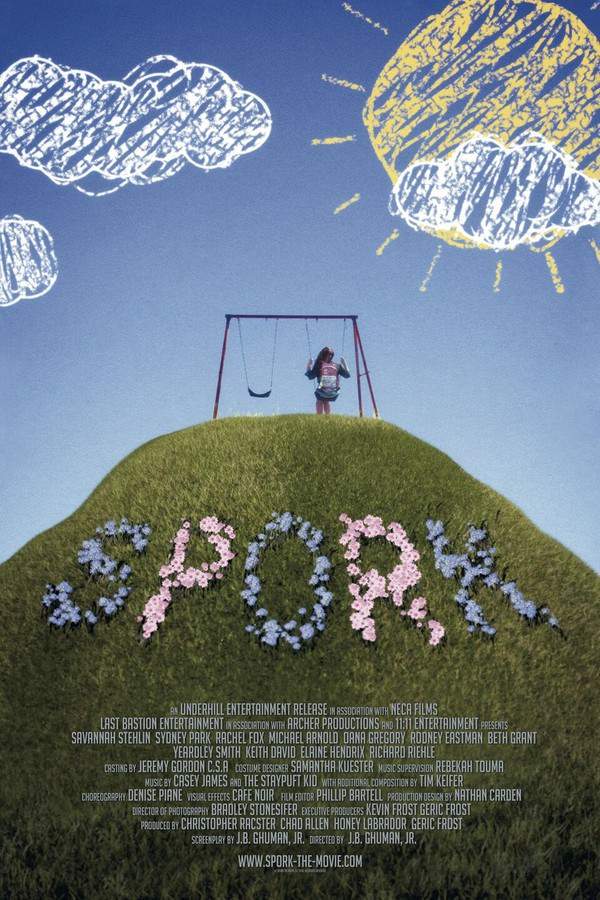
Set in Los Angeles, California, a 14-year-old girl nicknamed "Spork" navigates the rough edges of middle school life. Quiet, soft-spoken, and often overlooked by her peers, she watches as her world tilts when her next-door neighbor and best friend, known as "Tootsie Roll," hatches a plan to enter the school Dance-Off. The prize money—$236—becomes a means to an end: a chance to visit her father in prison.
When a hair-product–related dancing accident sidelines Tootsie Roll and leaves her unable to compete, the opportunity shifts in an unexpected direction. Spork steps up, choosing to enter the Dance-Off herself, and her decision resonates through the school, surprising friends, rivals, and teachers alike. The moment marks a turning point as she discovers a different side of herself and begins to claim a space she hadn’t claimed before.
The movie explores a placing of time and taste that highlights a clash of eras and attitudes. The two friends drift through a soundtrack rooted in early 1990s hip-hop and dress in 1990s fashion, while the antagonist, Betsy Byotch, and her circle cling to 1980s garb and 1980s tunes, even as their pop fandom grows with Britney Spears. Amid the schoolyard rivalries and fashion wars, Charlie stands out, obsessed with Justin Timberlake, whose career began in the mid-1990s, a detail that anchors the story’s mid-1990s sensibility.
A recurring and provocative thread in the film is the use of language as a window into identity; the term “hermaphrodite” appears as a descriptor and qualifier, signaling a particular era’s conversations about intersexuality and identity—an aspect that helps situate the story in its 1990s milieu. The dialogue and character dynamics are carefully pinned to this period, inviting viewers to consider how language shapes perception and inclusion.
There’s a fond, ongoing reference to classic cinema through the interests the characters share in The Wizard of Oz universe. Spork’s affection for the 1978 film The Wiz contrasts with Charlie’s devotion to the 1939 The Wizard of Oz, while both threads reinforce a larger theme: the comfort of stories that offer escape, hope, and a blueprint for navigating difficult social landscapes.
As the narrative unfolds, Spork’s ascent from quiet bystander to determined participant becomes the heart of the story. The Dance-Off becomes more than a contest; it’s a test of confidence, resilience, and the power of friendship to transform a tense, sometimes cruel social world into a space where a young girl can voice her own strength. The film balances humor with sincerity, painting a portrait of adolescence that respects the tempo of its era while honoring the universal ache to belong.