Plot Explained Spoilers guaranteed!
Plot Explained

Browse by genre

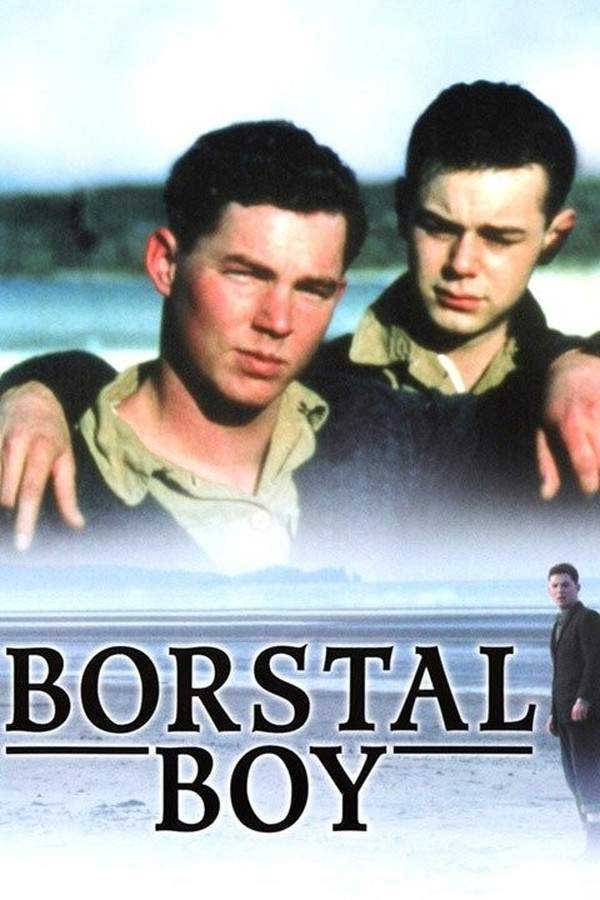
Song for a Raggy Boy (2003) movie poster

Plot Summary

Song for a Raggy Boy (2003) Plot Summary Explained

Release, runtime and language
2003 · 94 mins · English
Loading streaming availability…
Directed by
Aisling Walsh
Starring
Andrew Simpson, Aidan Quinn, Iain Glen, Stuart Graham, Marc Warren, Dudley Sutton

After being forced out of a U.S. teaching post in 1939 because of his left‑leaning politics, Irish‑born William Franklin returns to his homeland. He becomes the first lay instructor at St. Jude’s, a strict boarding school for troubled boys run by the disciplinarian Brother John, where Franklin wrestles with purpose, identity and survival within the rigid walls of the institution.

On this page (6)
  1. 1 Where to watch
  2. 2 What happens: full plot
  3. 3 Plot questions answered
  4. 4 Movie threads
  5. 5 Movies like Song for a Raggy Boy
  6. 6 Every angle
Loading streaming availability…

Full plot summary · contains spoilers

What Happens in Song for a Raggy Boy: Full Plot Summary

The whole story of Song for a Raggy Boy (2003) explained, from the opening scene to the final frame: every key event, every twist and what it all adds up to. Read it as a quick recap before the sequel, to check a scene you missed, or to finally understand what really happened.

In 1939, on the brink of World War II, the St. Judes Reformatory stands as a ruthless Irish school for boys, a place that feels grey and foreboding, ruled by the sadistic Brother John. The institution prefers punishment to rehabilitation, chillingly turning discipline into a regime of fear. Into this harsh world arrives a new lay teacher, William Franklin — a veteran of the Spanish Civil War who brings a quiet courage and a belief that these boys deserve more than torment.

Patrick Delaney arrives at the school aged 13 and a half, and like every boy there, is assigned a number that the brothers use to identify him. Yet Franklin chooses to call his students by their names, a small but stubborn rebellion against the system. Delaney is described as an attractive boy who becomes the target of the coercive attention of Brother Mac, who rapes him in the school toilets. The weight of Delaney’s confession reaches a visiting priest, who urges silence, a cruel message that only deepens the hurt. The punishment that follows—forced immersion under a cold shower, with wet clothes left on his body—shows the brutal immediacy of the abuse and the way power corrupts mercy.

Liam Mercier is one of the few boys who can read and write, a hard-edged soul who nevertheless catches Franklin’s eye. Franklin bonds with Mercier, introducing him to poetry—including works by writers with communist sympathies—an act that stirs a dangerous sense of possibility within the walls. Together, Mercier and Franklin challenge Brother John’s authority: Mercier protests when two brothers are viciously beaten on Christmas Day after crossing the dividing wall to be with each other, while Franklin steps in and halts the whipping in a moment of defiant courage.

Brother John, biding his time, eventually tricks Mercier into stepping out of class and then beats him relentlessly in front of Brother Mac in the refectory. The crushing defeat is followed by a blunt, devastating discovery: Mercier’s body is found, and Franklin carries the corpse out of the room, overwhelmed by what has happened and the sense that a line has been crossed.

Enraged and grief-stricken, Franklin confronts Brother John, accusing him of murder. The two brothers, John and Mac, are ultimately taken from the school by Church authorities, a consequence that hints at accountability finally arriving from outside the walls. At Mercier’s funeral, Franklin publicly declares that Mercier’s death was murder, and he seals the moment with a kiss on the coffin, a gesture of mourning and defiance.

The crisis reshapes Franklin’s future at the reform school. He considers leaving, but a turning moment comes when Delaney recites Eva Gore-Booth’s poem Comrades across the playground, a moment that reminds the students of humanity and solidarity in a place designed to erase both. Moved by the recital, Franklin abandons his plan to depart; he drops his bags, and Delaney runs to embrace him as the other boys gather around, offering their collective support and affection to the man who had become their savior.

Last updated: October 09, 2025 at 16:49

Was this helpful?

Plot questions answered

Song for a Raggy Boy Plot Explained: Your Questions Answered

The questions people ask most about Song for a Raggy Boy (2003): what happens in the confusing scenes, why the characters do what they do, the twists, hidden details and what the ending means. Each answer contains spoilers.

Q1

Why does Brother John kill Liam Mercier?

Brother John kills Liam Mercier as a direct punishment for his acts of rebellion. Mercier had protested when two boys were viciously beaten on Christmas Day for crossing the dividing wall to be together, and he had also challenged the school's authority by learning poetry from Franklin, including works with communist sympathies. Brother John tricked Mercier out of class and beat him relentlessly in front of Brother Mac, resulting in Mercier's death. The killing serves as a warning to all boys about the consequences of defying the institution's rigid rules.

Foreshadowing: Earlier, Brother John warns Franklin that Mercier's intelligence and literacy make him dangerous to the school's control.

  • brother john
  • liam mercier
  • death
  • murder
  • beating
  • rebellion
  • punishment
Q2

Why does Brother Mac target Patrick Delaney?

Brother Mac targets Patrick Delaney because he is described as an attractive young boy who appears vulnerable within the institution's oppressive environment. Delaney is new, only 13 and a half years old, and lacks the protection or status that might shield him from the predatory attention of the staff. Mac uses his position of authority to coerce and assault Delaney in the school toilets, exploiting the power imbalance that defines daily life at St. Jude's.

Foreshadowing: The school culture already normalizes abuse and dehumanization through its numbering system and harsh punishments.

  • brother mac
  • patrick delaney
  • rape
  • abuse
  • assault
  • victim
Q3

Why does William Franklin call the boys by their names instead of numbers?

Franklin calls the boys by their names as a deliberate act of rebellion against the school's dehumanizing system. The reformatory assigns each boy a number to strip them of individuality and identity, treating them as faceless inmates rather than people. By using their actual names, Franklin affirms each boy's humanity and dignity, establishing from his first day that his approach to teaching will be fundamentally different from the regime's cruel efficiency.

Foreshadowing: This act immediately signals Franklin's conflict with Brother John's authority and sets up his role as a compassionate alternative.

  • william franklin
  • names
  • numbers
  • rebellion
  • humanity
  • dignity
Q4

Why does the visiting priest tell Delaney to stay silent about the abuse?

The visiting priest tells Delaney to remain silent because the institution actively protects its own, covering up crimes committed by the staff. Rather than pursuing justice for Delaney's assault, the priest reinforces the system's culture of denial and complicity. This silence further victimizes Delaney, demonstrating how the Church's authority figure prioritizes the school's reputation over the welfare of the boys in its care.

Foreshadowing: The cover-up mirrors the broader institutional corruption that permeates St. Jude's.

  • visiting priest
  • silence
  • abuse
  • cover-up
  • church
  • confession
Q5

How does Brother John trick Mercier into leaving class?

Brother John tricks Mercier by calling him out of class under false pretenses, exploiting the boy's position as a student who must obey authority figures. Once Mercier is separated from the classroom and his protector Franklin, John leads him to the refectory where the brutal beating takes place. The trickery demonstrates John's calculated cruelty, he does not confront rebellion openly but uses deception to deliver his punishment.

Foreshadowing: John had been biding his time, waiting for the right moment to eliminate the threat Mercier posed to his authority.

  • brother john
  • liam mercier
  • trick
  • deception
  • beating
  • refectory
Q6

Why does Franklin decide to stay at St. Jude's?

Franklin decides to stay after Patrick Delaney recites Eva Gore-Booth's poem Comrades across the playground. The poem reminds everyone, including Franklin, of humanity, solidarity, and shared struggle in a place designed to crush those very qualities. Moved by this moment of resilience and by the boys' collective support, Franklin abandons his plan to leave. He drops his bags and allows Delaney to embrace him, choosing to remain as their protector and advocate.

Foreshadowing: Franklin had previously considered leaving after Mercier's murder, wrestling with whether he could truly make a difference.

  • william franklin
  • stay
  • departure
  • poem
  • comrades
  • solidarity
  • turning point
Q7

What does the poem Comrades symbolize at the end of the movie?

The poem Comrades by Eva Gore-Booth symbolizes solidarity among the oppressed and the recognition of shared humanity despite attempts at dehumanization. Delaney reciting it in the playground represents a reclaiming of identity and resistance against the institution that numbered and brutalized the boys. It signals that the spirit of unity and defiance that Franklin nurtured through teaching poetry has taken root, offering hope even after tragedy.

Foreshadowing: Franklin had introduced Mercier to poetry as a way to inspire hope and critical thinking among the boys.

  • comrades
  • poem
  • eva gore-booth
  • solidarity
  • resistance
  • poetry
  • recitation
Q8

Why does Franklin kiss Mercier's coffin at the funeral?

Franklin kisses Mercier's coffin as a public act of mourning, defiance, and moral declaration. By declaring Mercier's death a murder in front of everyone and physically honoring the coffin with a kiss, Franklin rejects the school's attempt to dismiss the killing as punishment rather than crime. The gesture is both an intimate personal farewell and a public statement that the truth will not be silenced.

Foreshadowing: Franklin had carried Mercier's body from the room, overwhelmed by the sense that a line had been crossed.

  • franklin
  • kiss
  • coffin
  • funeral
  • murder
  • declaration
  • defiance
Q9

What happens to Brother John and Brother Mac after Mercier's death?

Church authorities remove Brother John and Brother Mac from St. Jude's following the confrontation with Franklin and the public outcry over Mercier's murder. While the film does not show their trial or punishment, their removal represents a rare moment of accountability reaching the institution from outside its walls. Franklin's accusation of murder and the subsequent intervention by higher Church authorities finally ends their reign of abuse.

Foreshadowing: Franklin confronts Brother John directly, insisting that Mercier's death was murder, which triggers the ecclesiastical investigation.

  • brother john
  • brother mac
  • removed
  • church authorities
  • accountability
  • consequences
Q10

Why does Franklin confront Brother John about murder?

Franklin confronts Brother John because he witnesses the direct cause-and-effect relationship between John's brutal beating and Mercier's subsequent death. After carrying Mercier's corpse from the room, Franklin is overwhelmed by the realization that the institution has crossed an irredeemable line. The confrontation represents Franklin's moral breaking point, he can no longer tolerate the pretense that the school's violence is merely discipline rather than criminal abuse.

Foreshadowing: This confrontation follows Mercier's protest against the Christmas Day beating and Franklin's earlier act of halting a whipping.

  • franklin
  • brother john
  • confrontation
  • murder
  • accusation

Movie threads

More Movies Like Song for a Raggy Boy, by Mood & Story

Curated lists built around what makes Song for a Raggy Boy tick: the same mood, the same kind of story or the same emotional payoff. Each list explains why these movies belong together.

Movies about defiant teachers like Song for a Raggy Boy

A lone teacher fights institutional cruelty to protect vulnerable students. If you were moved by the struggle in Song for a Raggy Boy, this list features similar films about teachers confronting systemic abuse. These dramas focus on the powerful bond between an educator and their students against a backdrop of institutional corruption and the fight for redemption.

  • defiant
  • somber
  • harsh
  • resilient
  • oppressive
  • tragic
  • Tone: dark, defiant
  • Pacing: steady, building
Why these movies?

The story pattern: The narrative typically follows a principled outsider or reformer who enters a broken system (like a school or juvenile facility). They witness injustice, form protective bonds with the oppressed, and engage in a escalating conflict with the corrupt authority figures, leading to a climactic confrontation.

Why they belong together: These films are grouped by their core conflict: a heroic individual versus a villainous system. They share a heavy emotional weight, a dark tone due to the themes of abuse, and a focus on the courage it takes to stand up for what's right in the face of overwhelming odds.

Bleak survival dramas in oppressive institutions like Song for a Raggy Boy

Gripping stories of resilience and trauma within oppressive institutions. For viewers seeking the grim, oppressive atmosphere of Song for a Raggy Boy, this collection gathers movies about survival within brutal institutions. These similar stories often involve coming-of-age challenges, graphic violence, and a bittersweet hope found amidst overwhelming tragedy.

  • oppressive
  • harsh
  • tragic
  • somber
  • grief-stricken
  • brutal
  • Tone: dark, oppressive, tragic
  • Pacing: steady, methodical
Why these movies?

The story pattern: Stories unfold within the claustrophobic confines of a single, oppressive location like a prison, reform school, or asylum. The plot follows characters, often young or vulnerable, as they navigate a daily reality of abuse and cruelty, clinging to small acts of defiance and fragile bonds for survival, typically leading to a tragic climax and a bittersweet resolution.

Why they belong together: This thread connects films through their oppressive setting and the central theme of survival against institutional power. They uniformly feature a high intensity, a dark tone, heavy emotional weight, and a focus on the psychological and physical toll of enduring trauma.

If you liked this

Movies Like Song for a Raggy Boy

Similar movies to Song for a Raggy Boy: the same genre, themes or kind of story. Each one comes with its own plot summary, timeline and ending explained.

Browse all movie summaries

Every angle

Song for a Raggy Boy (2003) Explained: Plot, Timeline & Characters

Everything about Song for a Raggy Boy in one place: what happens in the plot summary, the timeline in chronological order, the characters and meaning and a spoiler-free summary. What's After the Movie adds the cast, box office and post-credit scenes.

Coming soon on iOS and Android

The Plot Explained Movie Summary App

Plot summaries, endings explained and timelines on your phone. Catch up on any movie in minutes, save your favorites and never miss a twist again.

Be the first to know when we launch. Your email stays private, always.

Learn more about the app