Plot Explained Spoilers guaranteed!
Plot Explained

Browse by genre

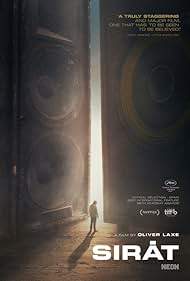
Sirât (2025) movie poster

Ending Explained

Sirât (2025) Ending Explained – Final Scene & Meaning

Release, runtime and language
2025 · 1 h 55 m
Echo score 75
Loading streaming availability…
Directed by
Óliver Laxe
Starring
Sergi López, Joshua Liam Herderson, Stefania Gadda, Jade Oukid, Richard 'Bigui' Bellamy, Bruno Núñez Arjona

A father (Sergi López) and his son travel to a mountain rave in southern Morocco, hoping to find Mar—the daughter and sister who disappeared months earlier during one of those endless, sleepless parties. Amid electronic music and an unfamiliar, raw sense of freedom, they repeatedly hand out her photo, clinging to the dwindling hope of finding her.

On this page (6)
  1. 1 Where to watch
  2. 2 What happens at the end
  3. 3 Final events in order
  4. 4 Ending questions answered
  5. 5 Movie threads
  6. 6 Every angle
Loading streaming availability…

Ending explained · contains spoilers

What Happens at the End of Sirât?

How Sirât (2025) ends, what the final scene means, which earlier moments set it up and how to read the ending if the film leaves it open. The full ending explained, with every spoiler.

In the final stretch of Sirat, Luis — the desperate father‑searching‑for‑his‑daughter— finds himself alone with the few ravers who have stayed by his side. After his son Esteban and the dog Pippa are lost in a car that tumbles off a cliff, the group is shattered; shortly thereafter Jade and Tonin step on hidden land‑mines while trying to cope with the grief, adding two more bodies to the desert sand. Their supplies are gone, the vans that could have led them to safety burn, and the only way forward is a narrow, mine‑strewn “passage” that the locals call Sirat, the bridge that links hell and paradise.

The surviving three—Luis, Steff and Josh—realise that no careful plan can guarantee safety. The only option left is to surrender their fear. Luis volunteers to go first, crossing without thinking, and miraculously reaches the other side. When Bigui follows his footsteps he is killed by a mine, confirming that luck, not technique, decides who survives. Accepting this, Steff and Josh close their eyes, step onto the path and, against the odds, also make it through.

With the passage behind them, the trio boards a rattling train that snakes across the desert, a visual promise that they have escaped the immediate nightmare of the war‑torn wilderness. The train does not resolve Luis’s original quest for his daughter, nor does it guarantee a peaceful future—World III still looms beyond the horizon—but it shows that they have crossed the razor‑thin line between death and life by letting go of their expectations and trusting the moment. In the film’s closing image, the three travelers sit together, carrying the weight of loss while also clutching the fragile gift of another day, embodying the film’s core idea that survival sometimes means embracing the unknown without fear.

Last updated: January 28, 2026 at 11:53

Was this helpful?

The last 4 events

How Sirât Ends: The Final Events in Order

The last events of Sirât (2025) in chronological order, the run-up to the ending explained above. The complete timeline has all 15 events, scene by scene.

Open the full timeline
  1. Continued Loss

    They try a second van, which also meets a grim fate after hitting multiple mines. The chaos and confusion take a heavy toll, as the group grapples with their mortality and the mounting casualties.

    Where
    Minefield
  2. Making a Break

    In a bold move, Luis decides to walk straight through the minefield, trusting his instincts. Miraculously, he reaches a safe area, offering a glimmer of hope amid the ongoing tragedy.

  3. A Final Farewell

    Bigui tragically steps on a mine while trying to follow Luis, highlighting the relentless dangers surrounding them. With each loss, the remaining group's resolve to survive becomes more urgent.

    Where
    Minefield
  4. Crossing into Uncertainty

    Finally, Stef and Josh successfully navigate the perilous terrain and join Luis. The film concludes with the trio crossing the desert on an ore train, surrounded by others, symbolizing both survival and uncertain futures.

    Where
    Desert Train Tracks

Ending questions answered

Sirât Ending: Your Questions Answered

The questions people ask most about the ending of Sirât (2025): what the final scene means, how the twist works, what happens to each character and how to read the ending. Each answer contains spoilers.

Q1

What happens to Esteban and the dog Pippa in Sirât?

Esteban, Luis's son, and the dog Pippa are killed when the car they are traveling in tumbles off a cliff during the journey. Their deaths mark the first catastrophic loss for the group and leave Luis alone to continue the search for Mar. The scene shifts the film from a slow, dreamy road movie into sudden, irreversible grief, and it is the moment that breaks the small community of ravers apart.

Foreshadowing: The van's instability on the mountain roads and the group's growing carelessness after hours of driving hint that the convoy is unsafe long before the crash occurs.

  • esteban
  • pippa
  • cliff death
  • son
  • dog
  • car crash
Q2

What is the Sirat passage and what does it symbolize?

Sirat is the narrow, mine-strewn corridor that locals describe as the bridge linking hell and paradise, a literal and symbolic threshold the survivors must cross to escape the war-torn desert. In the film, it stands for the razor-thin line between death and life that no planning or technique can guarantee crossing. The name itself, drawn from Islamic eschatology, frames the minefield as a spiritual test rather than just a battlefield obstacle.

Foreshadowing: Earlier references to the ravers chasing transcendence through music and drugs quietly set up Sirat as the physical version of that same search for passage into the unknown.

  • sirat
  • passage
  • minefield
  • hell paradise
  • bridge
  • symbolism
Q3

Why does Luis survive the minefield but Bigui does not?

Luis crosses the minefield by deliberately not thinking, surrendering his fear and walking forward as if the path were already clear. When Bigui tries to retrace Luis's exact footsteps as a safety technique, he is killed by a mine, proving that survival on Sirat depends on luck and mental surrender rather than careful strategy. The contrast confirms that the field cannot be outsmarted and that only those who let go of control make it through.

  • luis
  • bigui
  • minefield
  • luck
  • fear
  • footsteps
Q4

Does Luis ever find his missing daughter Mar?

No, Luis never finds Mar. By the end of Sirât, his original quest has been swallowed up by the larger catastrophe of war, the loss of his son, and the brutal crossing of the minefield. The film deliberately leaves this central mystery unresolved so that the ending carries the weight of an open wound rather than a tidy reunion. Mar's absence is part of what makes the finale ambiguous instead of hopeful.

  • mar
  • daughter
  • missing
  • unresolved
  • quest
Q5

What does the train at the end of Sirât symbolize?

The rattling ore train that carries Luis, Steff and Josh across the desert represents physical escape from the immediate nightmare of the minefield and the war zone. It is a visual promise of survival, but not of peace, because World III still looms on the horizon and Mar is still missing. The image of the three exhausted travelers sitting together on the train captures the film's idea that surviving one more day is itself a fragile, hard-won gift.

  • train
  • escape
  • desert
  • survival
  • ending image
Q6

Why do Steff and Josh close their eyes to cross the minefield?

After watching Luis survive by walking without thinking and Bigui die by following exact footsteps, Steff and Josh understand that reasoning is useless on Sirat. They shut their eyes to abandon visual calculation and accept the same surrender Luis showed. Their crossing completes the film's argument that survival in the minefield requires letting go of fear and trusting the moment rather than trying to control it.

  • steff
  • josh
  • eyes closed
  • surrender
  • minefield
  • fear
Q7

What is World III in Sirât and does it actually happen?

World III refers to the third, full-scale world war that erupts in the background of the film, turning the rave into a militarized zone and the desert into a battlefield littered with mines and burning convoys. The war is not shown as a distant news item but as an ambient horror that directly kills the ravers around Luis. It is presented as already happening, which is why the ending offers survival but not safety.

Foreshadowing: The first appearance of soldiers at the rave and the sound of distant shelling already in the first half foreshadow the war that eventually overtakes the group.

  • world war iii
  • war
  • soldiers
  • conflict
  • apocalyptic
Q8

Is the ending of Sirât hopeful or bleak?

The ending of Sirât is deliberately ambiguous, leaning bleak rather than hopeful. Three characters physically survive, but Luis has lost his son, his dog and several surrogate companions, Mar is still missing, and a world war continues beyond the horizon. Survival is real, but the emotional and narrative goals of the story remain painfully open, which is why the final image carries grief and relief at the same time.

  • ending meaning
  • hopeful
  • bleak
  • ambiguity
  • survival
Q9

What happens to Jade and Tonin in the ending of Sirât?

Jade and Tonin are killed by hidden landmines while trying to cope with the grief of losing Esteban and Pippa. Their deaths strip the group of two more companions and remove most of the remaining supplies, leaving Luis, Steff and Josh with no realistic option except the Sirat passage. The double loss deepens the sense that grief itself becomes a fatal hazard in this landscape.

  • jade
  • tonin
  • landmine
  • grief
  • death
Q10

Why does Luis volunteer to cross the minefield first?

Luis volunteers to cross first because he has already lost his son, his dog and nearly all reason to keep planning, and he understands that the group will not move unless someone breaks the paralysis. By stepping onto Sirat without thinking, he turns his accumulated grief into a kind of reckless clarity. His survival then gives Steff and Josh the template, not of a safe path, but of the mindset required to risk it.

  • luis
  • volunteer
  • crossing
  • grief
  • leadership
Q11

What does letting go of fear mean in Sirât's ending?

Letting go of fear in Sirât's ending means abandoning the illusion that careful planning, logic or willpower can protect anyone on the minefield. Luis crosses by surrendering thought, Bigui dies by clinging to technique, and Steff and Josh survive by closing their eyes and accepting the moment as it comes. The film frames this surrender not as wisdom but as the only human response to a landscape where control has already been lost to war.

  • fear
  • surrender
  • letting go
  • acceptance
  • theme
Q12

Who are the three survivors at the end of Sirât?

The three survivors who board the train at the end of Sirât are Luis, the father who began the journey searching for his daughter Mar, and the ravers Steff and Josh, who have stayed with him through every loss. Their shared survival is the result of crossing the Sirat minefield together, not of any plan they made. They reach the train carrying grief, exhaustion and the unresolved question of Mar, which the film deliberately does not close.

  • luis
  • steff
  • josh
  • survivors
  • train
  • ending

Movie threads

More Movies Like Sirât, by Mood & Story

Curated lists built around what makes Sirât tick: the same mood, the same kind of story or the same emotional payoff. Each list explains why these movies belong together.

Desert survival odysseys like in Sirât

Journeys through wastelands where the world keeps falling apart around you. If you loved Sirât, these movies like Sirât deliver the same bone-deep dread of a hostile landscape turned apocalyptic. Expect characters crossing deserts, war zones and mined terrain where every footstep could be the last, and survival feels less like a victory than a temporary reprieve. Perfect for fans of bleak survival dramas with slow burn dread and sudden catastrophe.

  • bleak
  • desolate
  • survival-driven
  • apocalyptic
  • unflinching
  • raw
  • Tone: bleak, tense, apocalyptic
  • Pacing: variable, slow build to sudden shocks
Why these movies?

The story pattern: A character or small group is forced to traverse a vast, dangerous, and often lawless stretch of land. What begins as a focused mission gradually expands into a wider collapse: war breaks out in the background, the landscape grows increasingly mined or hostile, and trusted companions are picked off one by one. The journey structure forces intimacy between characters while the environment keeps stripping away comfort, hope, and eventually people. The conclusion is rarely triumphant—physical escape may come, but the emotional cost is total.

Why they belong together: These films share a relentless sense of place as threat, where geography, weather, and war conspire against the characters. They pair variable pacing—slow, ritualistic character building followed by sudden, catastrophic violence—with high emotional weight and ambiguous or hollow endings. Violence is unflinching, humor is almost absent, and grief accumulates with each loss rather than being resolved.

Grief-driven missing person searches like in Sirât

Parents and siblings chase ghosts across unforgiving places, hoping for a single sign. Movies like Sirât that center on a family refusing to give up on a missing loved one, even as the world gives them every reason to. These stories blend missing person mysteries with heavy grief, loss of innocence, and ambiguous or unresolved endings. Great for viewers who want emotional weight, family bonds tested to breaking, and quests where hope and despair share the same breath.

  • grief-stricken
  • raw
  • loss of innocence
  • somber
  • tense
  • desolate
  • Tone: bleak, grief-stricken, somber
  • Pacing: variable, reflective with sudden ruptures
Why these movies?

The story pattern: A parent or sibling learns that someone they love has disappeared, often under ambiguous or violent circumstances. They set out on a personal odyssey, gathering strangers who become a fragile surrogate family along the way. The narrative oscillates between quiet, ritualistic bonding and sudden, devastating loss—companions die, clues mislead, and the world outside grows more dangerous. By the end, physical survival is uncertain and emotional resolution is rarely granted; the search transforms the searcher more than it reveals the missing.

Why they belong together: These films all share grief as their dominant emotional register and a missing person as the narrative engine. They pair variable pacing—dreamy, almost meditative stretches punctuated by traumatic shocks—with heavy emotional weight, strong family bonds, and endings that refuse easy comfort. Found family, loss of innocence, and the slow erosion of hope connect them, even when their settings and genres differ widely.

Every angle

Sirât (2025) Explained: Plot, Ending, Timeline & Characters

Everything about Sirât in one place: what happens in the plot summary, the timeline in chronological order, the characters and meaning, the ending explained and a spoiler-free summary. What's After the Movie adds the cast, box office and post-credit scenes.

Coming soon on iOS and Android

The Plot Explained Movie Summary App

Plot summaries, endings explained and timelines on your phone. Catch up on any movie in minutes, save your favorites and never miss a twist again.

Be the first to know when we launch. Your email stays private, always.

Learn more about the app