Plot Explained Spoilers guaranteed!
Plot Explained

Browse by genre

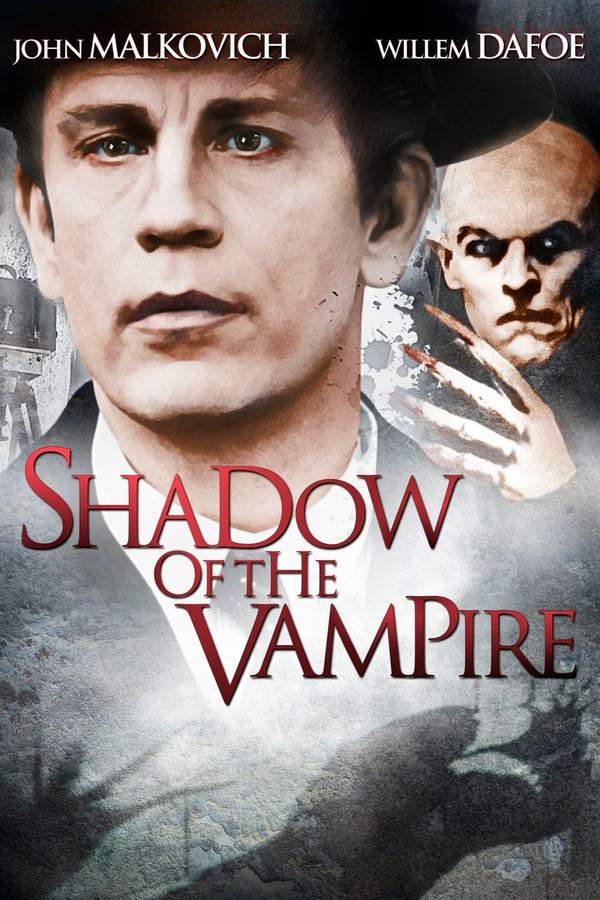
Shadow of the Vampire (2000) movie poster

Plot Summary

Shadow of the Vampire (2000) Plot Summary Explained

Release, runtime and language
2000 · 92 min · English
Loading streaming availability…
Directed by
E. Elias Merhige
Starring
Willem Dafoe, John Malkovich

During the production of his silent film "Nosferatu," director F.W. Murnau makes a startling decision to cast an actual vampire, Max Schreck, in the lead role. As filming progresses, the cast and crew discover that Schreck's intense commitment to the part is far more than mere acting; he embodies the character of Count Orlok, appearing only under the cover of darkness and seemingly unable to break from his role. The quest for realism turns into a terrifying ordeal as the line between fiction and reality blurs.

On this page (6)
  1. 1 Where to watch
  2. 2 What happens: full plot
  3. 3 Plot questions answered
  4. 4 Movie threads
  5. 5 Movies like Shadow of the Vampire
  6. 6 Every angle
Loading streaming availability…

Full plot summary · contains spoilers

What Happens in Shadow of the Vampire: Full Plot Summary

The whole story of Shadow of the Vampire (2000) explained, from the opening scene to the final frame: every key event, every twist and what it all adds up to. Read it as a quick recap before the sequel, to check a scene you missed, or to finally understand what really happened.

Bram Stoker's widow has outright declined to sell the film rights for Dracula to F.W. Murnau, prompting him to forge ahead with the project regardless. He transforms the narrative into Nosferatu, altering character names, settings, and titles in the process. As a result, Count Dracula becomes Count Orlock, and the locations shift from Transylvania and England to Germany. The character of Mina is renamed Ellen. After initiating the filming on a soundstage in Berlin, Murnau is eager to shuttle the cast and crew to Czechoslovakia, where they will be collaborating with the enigmatic Max Schreck, portrayed by Willem Dafoe, a vampire chosen to embody the role of a vampire.

Murnau introduces Max Schreck as a distinguished character actor from the Reinhold Company, emphasizing that he will maintain his character throughout the production. However, Murnau's producer, Albin Grau, portrayed by Udo Kier, and the crew are left in the dark about Schreck's true nature. As a vampire, Schreck diverges from the familiar image of Dracula. He is old and bald, unable to recall his human life, burdened only by memories of a woman who has faded from his mind. With his powers diminished, he struggles without his former abilities, isolated within the decaying walls of an abandoned abbey and surviving on the sparse blood of rats. He finds his existence mirrored in the tragic tale of Dracula, particularly resonating with a moment in which Dracula is forced to serve Harker due to a lack of servants.

Schreck's character experiences existential angst, obsessively reading Goethe's poem about Tithonus, a mortal who craved immortality yet neglected to request eternal youth, now aged and powerless like him. He has consented to participate in the film with the understanding that Murnau will provide him with blood throughout the shoot, culminating in a promise that he can feed on Greta, the actress playing Ellen Harker.

As production unfolds, Schreck's performance oscillates between sublime and unsettling; he authentically embodies the essence of a vampire while revealing his eccentricity. Adding to the unsettling atmosphere, local villagers are stirred with fear about the nosferatu, heightened further when photographer Wolfgang Mueller, played by Ronan Vibert, is discovered in a weakened state. During a pivotal scene where Jonathan Harker accidentally cuts his finger, Schreck momentarily loses composure and drains Wolfgang of more blood than intended, leading Murnau to sternly warn him against harming his team, reminding him that no Greta means no film. Although Schreck manages to exercise control, feasting on ferrets, rats, and some donated blood, filming at sea remains off-limits for him, resulting in Murnau constructing a replica ship on dry land.

Yet, the climactic sequences, where Orlock preys upon Ellen and meets his demise in the sunlight, must be filmed on the island of Heligoland, compelling Murnau to arrange for Orlock to be flown there. Sadly, as Wolfgang grows too weak to continue, they bring on a new photographer, Fritz Wagner, played by Cary Elwes.

By this point, suspicions regarding Schreck's true nature begin to stir among cast and crew; they lock their doors tightly at night. In a moment of vulnerability, Albin and Fritz search for Schreck's coffin only to find nothing. Their fears become more concrete when they discover Murnau under the influence of laudanum, revealing in a daze that Max Schreck does not exist as initially portrayed. Instead, Murnau confessed to discovering him in a book about tyrannical Slovakian rulers rumored to be vampires, unraveling the truth of how he found Schreck while scouting locations.

Faced with this unsettling reality, Murnau admits the chilling bargain he struck: Greta's life in exchange for Schreck's performance. Despite their horror, Albin and Fritz agree to proceed with filming the final scenes that night.

In a last-ditch effort, Murnau prepares an old warehouse as a makeshift set for the climactic bedroom scene, ensuring daylight is a flick of a switch away. As Greta, attired in a nightgown, lies on the bed, Orlock watches with ravenous desire. With Fritz positioned behind the camera and Albin on standby, Murnau begins barking directives. At that crucial moment, Greta glances into a mirror, horrified to see that Schreck casts no reflection. In a panic, she screams, prompting Murnau to sedate her with laudanum, rendering her compliant.

At this point, Schreck becomes desperate, exclaiming, > "I vant her now," yet Murnau insists that the death scene must be filmed first. As they complete those shots, Schreck can no longer contain himself and lunges for Greta’s neck. Surprisingly, Murnau keeps the camera rolling as Schreck drinks deeply. After satisfying his thirst, Schreck succumbs to slumber, his snores resonating in the stillness.

As dawn approaches, Murnau seeks to capture an authentic death scene and commands the door to open, flooding the room with sunlight. Unbeknownst to him, Schreck has dismantled the trap. The noise rouses Schreck, inciting his fury at being outsmarted. Attempts made to subdue him yield no results as he breaks Fritz's neck and turns on Albin. Seizing control of the camera, Murnau informs Schreck that the current ending is not feasible and requests that he return to his original mark. Remarkably, Schreck complies, leaning back into Greta’s neck for another sip.

Suddenly, the outside crew bursts into the room, allowing sunlight to breach the chamber, ultimately leading to Schreck's demise—this time, it is permanent. After concluding the shot, Murnau looks up from the camera, a satisfied smirk crossing his face as he declares, > "I think we have it."
Last updated: November 03, 2024 at 23:50

Was this helpful?

Plot questions answered

Shadow of the Vampire Plot Explained: Your Questions Answered

The questions people ask most about Shadow of the Vampire (2000): what happens in the confusing scenes, why the characters do what they do, the twists, hidden details and what the ending means. Each answer contains spoilers.

Q1

Why does F.W. Murnau hire a real vampire for his film?

Murnau is obsessed with achieving absolute authenticity in his adaptation of Dracula. He believes that casting an actual vampire will result in the most realistic portrayal ever captured on film. This obsession with artistic realism leads him to make the dangerous decision to cast Max Schreck, disregarding the obvious peril to his cast and crew.

Foreshadowing: Murnau's obsession with realism is established early when he transforms the story and seeks exotic locations.

  • F.W. Murnau
  • Max Schreck
  • casting
  • authenticity
  • Nosferatu
Q2

What deal does Murnau make with Max Schreck?

Murnau promises to provide Schreck with blood throughout the filming, culminating in allowing him to feed on Greta, the actress playing Ellen. This horrifying bargain is the price Murnau pays for what he believes will be the most authentic vampire performance ever recorded.

Foreshadowing: Murnau introduces Schreck as a method actor who will stay in character throughout production.

  • blood deal
  • Max Schreck
  • Greta
  • Murnau
  • bargain
Q3

Where does Max Schreck come from?

Murnau discovers Schreck in a book about tyrannical Slovakian rulers rumored to be vampires. Schreck is an ancient vampire whose powers have diminished over time. He can barely recall his human life and survives in isolation, reading Goethe's poem about Tithonus, a figure who achieved immortality but lost his youth, mirroring Schreck's own tragic existence.

Foreshadowing: Schreck's obsession with the Tithonus poem reflects his despair over his diminished state.

  • Max Schreck
  • Slovakian
  • vampire origins
  • Tithonus
  • diminished powers
Q4

Why does Greta see no reflection in the mirror?

During filming, Greta looks into a mirror and discovers that Schreck casts no reflection, confirming what the crew has suspected, Max Schreck is genuinely a vampire. This horrifying realization causes her to scream in terror, prompting Murnau to sedate her with laudanum to complete the scene.

Foreshadowing: The crew has been locking their doors at night and searching for Schreck's coffin, hinting at their growing suspicions.

  • Greta
  • mirror
  • no reflection
  • vampire confirmation
  • sedated
Q5

What happens to the crew members during the final scene?

During the climactic bedroom scene, Schreck breaks Fritz Wagner's neck when the crew attempts to control him. He also attacks Albin Grau. The outside crew bursts into the room seeking sunlight, which ultimately destroys Schreck. Multiple crew members die as a result of Schreck's violent rampage.

Foreshadowing: Murnau has been warned that without Greta, there will be no film, emphasizing how desperate the situation has become.

  • Fritz Wagner
  • Albin Grau
  • crew deaths
  • sunlight
  • final scene
Q6

What is the significance of the Tithonus poem to Max Schreck?

Schreck becomes obsessed with Goethe's poem about Tithonus, a mortal who begged for immortality but forgot to request eternal youth, leaving him aged and powerless. This poem perfectly reflects Schreck's own existence, he has lived for centuries but lost his vampire powers, trapped in a decaying body, desperate but unable to die.

Foreshadowing: Schreck is described as old and bald, struggling without his former abilities.

  • Tithonus
  • Goethe
  • immortality
  • poem
  • lost powers
  • existential crisis
Q7

How does Murnau plan to film Orlock's death safely?

Murnau prepares an old warehouse as a makeshift set for the climactic bedroom scene, with daylight controlled by a simple switch. He believes he can flood the room with sunlight on command to destroy Orlock after filming is complete. However, Schreck dismantles the trap, and when the outside crew bursts in, sunlight floods the room unexpectedly, leading to Schreck's permanent destruction.

Foreshadowing: Murnau has previously built a replica ship on dry land because Schreck cannot go to sea.

  • warehouse
  • sunlight trap
  • Orlock death
  • filming
  • controlled daylight
Q8

Why does Murnau continue filming despite the danger?

Murnau's obsession with capturing the perfect shot overrides all concern for human life. He keeps the camera rolling as Schreck drinks from Greta, believing he is capturing the most authentic vampire footage ever made. His final satisfied smile after the destruction proves he achieved his goal, at any moral cost.

Foreshadowing: Murnau warned Schreck that no Greta means no film, showing his priorities.

  • Murnau
  • filming
  • obsession
  • perfect shot
  • moral corruption
Q9

How is Max Schreck different from typical movie vampires?

Unlike the charismatic Dracula archetype, Schreck is old, bald, and barely remembers his human existence. His powers have diminished significantly, he survives on rat blood and cannot venture into sunlight or travel by sea. He is less a fearsome predator and more a tragic, pitiful creature trapped in his own immortality.

Foreshadowing: The description emphasizes that Schreck finds resonance in Dracula being forced to serve Harker due to lack of servants.

  • Max Schreck
  • different vampire
  • diminished powers
  • tragic vampire
  • rat blood

Movie threads

More Movies Like Shadow of the Vampire, by Mood & Story

Curated lists built around what makes Shadow of the Vampire tick: the same mood, the same kind of story or the same emotional payoff. Each list explains why these movies belong together.

Movies about dangerous artistic obsession like Shadow of the Vampire

Stories where the creator's ambition blurs the line between art and monstrosity. If you were fascinated by the morally compromised director in Shadow of the Vampire, explore this list of movies like it. These films feature obsessive creators who sacrifice their humanity and safety for their art, leading to dark and psychologically complex thrillers about the cost of genius.

  • unsettling
  • psychological
  • grim
  • meta-fictional
  • intense
  • atmospheric
  • Tone: dark, intellectual, grim
  • Pacing: steady, methodical
Why these movies?

The story pattern: The narrative typically follows a brilliant but obsessive creator who makes a pact, literal or metaphorical, to achieve an unparalleled work. Their ambition leads them to exploit others, ignore ethical boundaries, and descend into a moral abyss. The conflict arises from the growing tension between their artistic goal and the horrific real-world consequences of their actions.

Why they belong together: Movies in this thread share a dark, intellectual tone and a focus on the psychological decay of a driven protagonist. They explore the theme of artistic creation as a destructive force, often with a steady pacing that builds dread as the creator's obsession consumes everything around them.

Melancholic vampire movies with existential dread like Shadow of the Vampire

Vampirism as a metaphor for profound loneliness and existential despair. Fans of the tragic, atmospheric vampire in Shadow of the Vampire will appreciate these similar movies. This list features gothic horror films where vampirism is a metaphor for loneliness and existential despair, focusing on mood and character over simple scares, perfect for viewers who like their horror thoughtful and bittersweet.

  • melancholic
  • eerie
  • atmospheric
  • gothic
  • tragic
  • unsettling
  • Tone: melancholic, dark, bittersweet
  • Pacing: steady, atmospheric
Why these movies?

The story pattern: These narratives often explore the vampire's perspective, framing their condition as a curse of solitude and weariness. The plot is character-driven, emphasizing the vampire's internal conflict and melancholy interactions with humans. The horror comes from the existential dread and the poignant, often bittersweet, connections they form that are doomed from the start.

Why they belong together: These films are grouped by their shared gothic atmosphere, heavy emotional weight, and their reinterpretation of vampire mythology. They prioritize a melancholic, eerie mood and complex character studies over fast-paced action, creating a cohesive experience for viewers seeking a more philosophical and atmospheric take on the genre.

If you liked this

Movies Like Shadow of the Vampire

Similar movies to Shadow of the Vampire: the same genre, themes or kind of story. Each one comes with its own plot summary, timeline and ending explained.

Browse all movie summaries

Every angle

Shadow of the Vampire (2000) Explained: Plot, Timeline & Characters

Everything about Shadow of the Vampire in one place: what happens in the plot summary, the timeline in chronological order, the characters and meaning and a spoiler-free summary. What's After the Movie adds the cast, box office and post-credit scenes.

Coming soon on iOS and Android

The Plot Explained Movie Summary App

Plot summaries, endings explained and timelines on your phone. Catch up on any movie in minutes, save your favorites and never miss a twist again.

Be the first to know when we launch. Your email stays private, always.

Learn more about the app