Plot Explained Spoilers guaranteed!
Plot Explained

Browse by genre

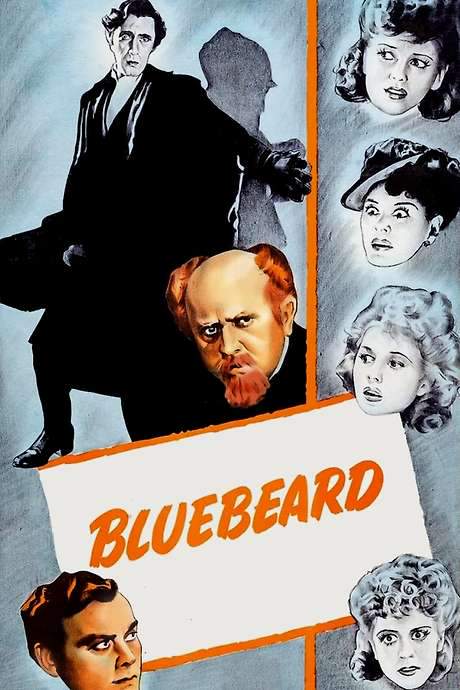
Bluebeard (1944) movie poster

Plot Summary

Bluebeard (1944) Plot Summary Explained

Release, runtime and language
1944 · 72 mins · English
JustWatch #4,897 67
Directed by
Edgar G. Ulmer
Starring
John Carradine, Jean Parker, George Irving, Iris Adrian, Eddie Hall, Harry Cording

The most sinister love story ever told! Young female models are being strangled. Will law enforcement be able to stop the crime wave before more women become victims?

On this page (6)
  1. 1 Where to watch
  2. 2 What happens: full plot
  3. 3 Plot questions answered
  4. 4 Movie threads
  5. 5 Movies like Bluebeard
  6. 6 Every angle

Where to watch

Where to Watch Bluebeard (1944)

Where can you watch Bluebeard? Stream, rent or buy it in the US, including on Amazon Prime Video, Artiflix and Bloodstream: current JustWatch availability with up-to-date prices.

Streaming availability powered by JustWatch

Full plot summary · contains spoilers

What Happens in Bluebeard: Full Plot Summary

The whole story of Bluebeard (1944) explained, from the opening scene to the final frame: every key event, every twist and what it all adds up to. Read it as a quick recap before the sequel, to check a scene you missed, or to finally understand what really happened.

All Paris is frightened by the murders attributed to "Bluebeard". Modiste Lucille is introduced to Gaston Morrell, a puppeteer and painter, by a friend. They are drawn to each other, and she accepts a commission to design costumes for his puppets. Their budding connection adds a glimmer of warmth to a city on edge, and Lucille hopes art and affection might steer Morrell away from darker impulses.

At home, Morrell is confronted by a jealous Renee, who performs in Morrell's puppet show and is his lover. When she wonders what became of the models who had posed for him, he strangles her and dumps her body in the Seine River. The shocking act marks the first deadly consequence of Morrell’s complex psyche, and Parisian whispers begin to circle around the painter who can conjure beauty on canvas and horror in life.

Art dealer Jean Lamarte is aware of Morrell's homicidal tendencies, but keeps his secret as Morrell's paintings fetch high prices. Yet, when he sells Morrell's latest work to a Duke of Carineaux, he overestimates his own safety. The duke displays the collection, and a guard on duty recognizes the portrait as one of Bluebeard's victims, pulling Lamarte deeper into a fatal game of greed and exposure.

Inspector Lefevre of the Sûreté calls in one of his best undercover agents, Francine, who happens to be Lucille's sister. She and her "father" go to Lamarte to have her portrait done. Lamarte is on his guard, but her father is willing to pay a very large commission to find the man responsible for the duke's painting, and Lamarte's greed overcomes his caution. The plot thickens as the art world collides with law enforcement in a dance of deception and danger, drawing the siblings of Lucille closer to the truth.

Morrell has decided to give up painting (which triggers his murderous compulsion) out of love for Lucille, but Lamarte pressures him into one last picture to make him financially independent. However, [Francine] recognizes him, having met him briefly earlier at her sister's apartment, and Morrell has no choice but to dispose of her. Certain that Francine and her father were working for the police, Lamarte tries to flee, but Morrell catches him and kills him too, before escaping. The only clue he leaves behind is the cravat he used to strangle Francine.

At Francine's funeral, Inspector Lefevre shows Lucille the cravat. She knows it belongs to Morrell, as she had mended it for him. When she confronts Morrell, he tells her the story behind his crimes. As a starving art student, he had nursed back to health a woman who had fainted, fallen in love with her, and painted her portrait. She left without warning. When his painting was chosen to hang in the Louvre, he searched for her to tell the news, only to discover that she was a prostitute. Enraged by her contemptuous response, he strangled her. But ever since then, every model he painted turned into her in his mind, and he was compelled to kill her again and again. When Lucille tells him she is going to the authorities, he starts strangling her too, but the police break in. Lefevre saw that Lucille recognized the cravat and had her followed. After a rooftop chase across the city, Morrell falls to his death into the Seine.
Last updated: October 09, 2025 at 11:13

Was this helpful?

Plot questions answered

Bluebeard Plot Explained: Your Questions Answered

The questions people ask most about Bluebeard (1944): what happens in the confusing scenes, why the characters do what they do, the twists, hidden details and what the ending means. Each answer contains spoilers.

Q1

Why does Gaston Morrell kill models?

Morrell's killing spree began when he, a starving art student, nursed a woman back to health and fell in love with her. He painted her portrait, and when his work was later selected for the Louvre, he searched for her excitedly, only to discover she was a prostitute who dismissed him contemptuously. Enraged, he strangled her. Afterward, every model he painted became a mental projection of her, triggering an irresistible compulsion to kill each one repeatedly.

Foreshadowing: Early in the film, Morrell's intense focus on his models and his dark artistic vision hint at his disturbed psychology.

  • gaston morrell
  • bluebeard
  • motive
  • killing spree
  • models
  • prostitute
  • portrait
Q2

Why does art dealer Jean Lamarte keep Morrell's secret?

Lamarte knows Morrell is the Bluebeard killer but remains silent because Morrell's paintings are extremely valuable and generate significant profits for his gallery. Lamarte's greed overrides his moral obligations, making him complicit in the murders through his silence.

Foreshadowing: Lamarte's nervous demeanor when discussing Morrell's work hints at his dangerous knowledge.

  • jean lamarte
  • art dealer
  • greed
  • money
  • silence
Q3

How does the police finally identify Morrell as Bluebeard?

After Francine is killed, she leaves behind a cravat used to strangle her. At her funeral, Inspector Lefevre shows the cravat to Lucille, who recognizes it as one she mended for Morrell. When Lucille confronts Morrell, she decides to go to the authorities, and Lefevre had her followed. This leads to the police catching Morrell during his attempt to kill Lucille.

Foreshadowing: Earlier, Lucille mends Morrell's cravat, establishing it as a recognizable object that would later serve as evidence.

  • cravat
  • evidence
  • lucille
  • lefevre
  • police
  • arrest
Q4

Why does Morrell try to kill Lucille at the end?

When Lucille tells Morrell she is going to report his crimes to the authorities, he attacks her just as he had killed all his previous victims. His psychological compulsion overrides any love he felt for her. To Morrell, Lucille had become another embodiment of the original woman who betrayed him, triggering the same murderous response.

Foreshadowing: Throughout the film, Morrell's treatment of women alternates between affection and violence, foreshadowing his ultimate betrayal of Lucille.

  • lucille
  • murder attempt
  • compulsion
  • betrayal
Q5

How does Francine get caught by Morrell?

Francine goes undercover as a model to lure Morrell out. She recognizes Morrell when he arrives to paint her, having met him briefly earlier at her sister Lucille's apartment. Morrell realizes she is connected to the police and eliminates her to prevent exposure. Lamarte also tries to flee but Morrell kills him too.

Foreshadowing: Francine's earlier visit to Lucille's apartment where she meets Morrell plants the seed for his eventual recognition.

  • francine
  • undercover
  • model
  • recognition
  • killed
Q6

Why does Morrell decide to give up painting?

Morrell decides to quit painting because he recognizes that his art triggers his murderous compulsion. Out of genuine love for Lucille, he attempts to abandon his craft entirely to break the cycle of killing. However, Lamarte pressures him into creating one final painting for financial independence, which ultimately leads to the chain of events that exposes him.

Foreshadowing: Morrell's dark studio filled with disturbing portraits establishes the dangerous connection between his art and his violence.

  • painting
  • quit
  • love
  • lucille
  • lamarte
  • pressure
Q7

What happens to Renee in the movie?

Renee is Morrell's jealous lover who performs in his puppet show. When she questions him about the models who had posed for him, he strangles her in a fit of rage and dumps her body in the Seine River. This first murder establishes Morrell's pattern of eliminating women who threaten his secret.

Foreshadowing: Renee's jealousy and probing questions about other women plant the seeds of her own demise.

  • renee
  • killed
  • strangled
  • seine
  • lover
Q8

How does the Duke's exhibition help the police?

Lamarte sells one of Morrell's paintings to the Duke of Carineaux. When the Duke displays the artwork publicly, a guard on duty recognizes the portrait as one of Bluebeard's victims. This exposure brings law enforcement closer to Morrell's trail, as the painting provides concrete evidence linking him to the murders.

Foreshadowing: Lamarte's greed in selling the painting despite knowing Morrell's secret sets the stage for his downfall.

  • duke
  • painting
  • exhibition
  • recognition
  • evidence
Q9

How does Morrell die at the end?

After attempting to kill Lucille, Morrell flees onto the rooftops of Paris with the police in pursuit. During the chase across the city rooftops, Morrell loses his footing and falls into the Seine River, dying from the fall. His death brings justice to his crimes while ending the Bluebeard murders.

Foreshadowing: The Seine has been a recurring element throughout the film, from when Morrell disposes of Renee's body to the final confrontation.

  • morrell
  • death
  • seine
  • rooftop
  • chase
  • fall
Q10

What is Morrell's tragic backstory?

As a starving art student, Morrell found a woman who had fainted in the street and nursed her back to health. They fell in love, and he painted her portrait. When his painting was chosen for the Louvre, he searched for her to share the good news, only to learn she was a prostitute who had left without a word. Her contemptuous rejection sent him into a rage, leading to his first murder and triggering his lifelong compulsion.

Foreshadowing: Morrell's intense, obsessive nature in his art and relationships foreshadows this traumatic origin.

  • backstory
  • art student
  • prostitute
  • portrait
  • louvre
  • rejection
Q11

Why is Francine working as an undercover agent?

Inspector Lefevre of the Sûreté recruits Francine, Lucille's sister, to go undercover as a potential model. The plan is to get close to Morrell through Lamarte's gallery and identify him as Bluebeard. Her connection to Lucille provides a personal stakes element to the investigation.

Foreshadowing: Francine's relationship to Lucille creates dramatic irony, as Morrell doesn't know he's dealing with the sister of the woman he loves.

  • francine
  • undercover
  • police
  • lucille
  • sister
  • investigation
Q12

Why does Morrell kill Lamarte?

After Morrell realizes Francine and her father were working for the police, he kills Francine. When Lamarte attempts to flee because he knows the police are closing in, Morrell catches him and kills him too. Lamarte's attempt to abandon Morrell and protect himself sealed his fate.
Foreshadowing: Lamarte's greed and complicity throughout the film set up his inevitable betrayal and doom.

  • lamarte
  • killed
  • morrell
  • flee
  • betrayal

Movie threads

More Movies Like Bluebeard, by Mood & Story

Curated lists built around what makes Bluebeard tick: the same mood, the same kind of story or the same emotional payoff. Each list explains why these movies belong together.

Movies about psychological compulsion like Bluebeard

Films that explore the dark descent into psychological turmoil and destructive obsession. If you liked the exploration of a tortured psyche in Bluebeard, you'll find similar gripping tales here. This thread gathers movies about obsessive characters, psychological thrillers, and stories where internal turmoil leads to external violence, perfect for fans of dark character studies.

  • psychological
  • oppressive
  • suspenseful
  • tragic
  • grim
  • fatalistic
  • Tone: dark, oppressive, tragic
  • Pacing: steady, deliberate
Why these movies?

The story pattern: Stories in this thread often follow a central character's downward spiral, where a psychological flaw or traumatic past manifests as a destructive obsession. The plot typically involves a cat-and-mouse element, either with an external force like the law or with their own conscience, building towards an inevitable and often tragic confrontation.

Why they belong together: These films are grouped by their intense focus on a character's internal psychological struggle, which drives the narrative. They share a dark, oppressive tone, a steady pacing that builds dread, and a heavy emotional weight centered on themes of madness, compulsion, and the blurred lines between genius and insanity.

Gothic crime thrillers with a bleak tone like Bluebeard

Bleak murder mysteries set in shadowy, melancholic worlds where hope is fleeting. For viewers who enjoyed the grim, suspenseful crime wave and gothic mood of Bluebeard, this section features similar movies. Discover other thrillers and murder mysteries where a dark, oppressive atmosphere and a sense of inevitable tragedy define the viewing experience.

  • gothic
  • melancholic
  • suspenseful
  • grim
  • fatalistic
  • tragic
  • Tone: dark, melancholic, grim
  • Pacing: steady, suspenseful
Why these movies?

The story pattern: The narrative pattern involves a series of crimes investigated within a stylized, often period-specific setting that enhances the feeling of despair. The focus is less on a clever puzzle and more on the tragic human cost and the oppressive mood. Endings provide a form of closure but are tinged with sadness and loss, reinforcing the film's bleak worldview.

Why they belong together: These movies are united by their unique blend of crime thriller elements with a distinct gothic or noir sensibility. They prioritize mood and atmosphere over plot complexity, featuring a steady pacing that maintains tension, a dark tone, and a bittersweet resolution that leaves a lasting melancholic impression.

If you liked this

Movies Like Bluebeard

Similar movies to Bluebeard: the same genre, themes or kind of story. Each one comes with its own plot summary, timeline and ending explained.

Browse all movie summaries

Every angle

Bluebeard (1944) Explained: Plot, Timeline & Characters

Everything about Bluebeard in one place: what happens in the plot summary, the timeline in chronological order, the characters and meaning and a spoiler-free summary. What's After the Movie adds the cast, box office and post-credit scenes.

Coming soon on iOS and Android

The Plot Explained Movie Summary App

Plot summaries, endings explained and timelines on your phone. Catch up on any movie in minutes, save your favorites and never miss a twist again.

Be the first to know when we launch. Your email stays private, always.

Learn more about the app