Plot Explained Spoilers guaranteed!
Plot Explained

Browse by genre

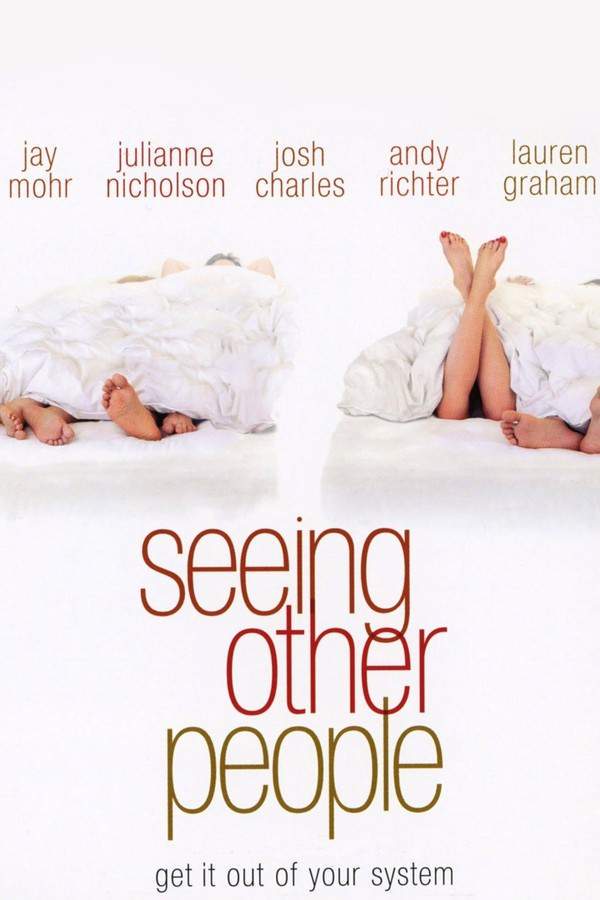
Seeing Other People (2004) movie poster

Characters & Themes

Seeing Other People (2004) Characters, Setting & Themes Explained

Release, runtime and language
2004 · 90 min · English
Loading streaming availability…
Directed by
Wallace Wolodarsky
Starring
Julianne Nicholson, Jay Mohr, Andy Richter

As a couple prepares for marriage, they decide to test their relationship with a prenuptial agreement that allows for open relationships. Ed and Alice explore other connections, hoping to spice up their impending nuptials. However, the initial excitement fades, and their experiment exposes vulnerabilities and unexpected consequences. They find themselves grappling with the challenges of temptation and the enduring pull of commitment, ultimately questioning the foundation of their relationship.

On this page (9)
  1. 1 Where to watch
  2. 2 Characters explained (3)
  3. 3 Character relationship map
  4. 4 Where & when it takes place
  5. 5 Themes & meaning (3)
  6. 6 Character & meaning questions
  7. 7 Movie threads
  8. 8 Movies like Seeing Other People
  9. 9 Every angle
Loading streaming availability…

3 main characters · contains spoilers

Seeing Other People Characters Explained: Who Is Who

The main characters of Seeing Other People (2004), heroes and villains: what drives them, how they change over the course of the story and what each of them reveals about the film's bigger ideas.

  • Ed

    played by Jay Mohr

    Ed is a complex character struggling with insecurities and the pressures of modern love. Initially hesitant about the idea of an open relationship, he embraces the adventure but soon faces feelings of inadequacy. His emotional journey reflects the challenges of commitment and the quest for self-discovery.

    • 🧑‍🤝‍🧑 Relationships
    • 😔 Insecurity
  • Alice

    played by Julianne Nicholson

    Alice embodies a character seeking to explore her sexuality and personal desires beyond her relationship with Ed. Her journey showcases a blend of empowerment and vulnerability as she navigates her attractions and the consequences they bring. She represents the yearning for fulfillment in the face of routine.

    • 🔍 Self-discovery
    • ❤️ Exploration
  • Carl

    played by Andy Richter

    Carl serves as a supportive friend to Ed, offering insights into the complexities of romance. His character adds humor and depth to the narrative, providing a contrasting perspective as he navigates his own romantic endeavors. He plays a pivotal role in reflecting the challenges of modern dating.

    • 😄 Friendship
    • 🎭 Humor

Last updated: October 30, 2026 at 11:11

Was this helpful?

7 characters · 7 connections · contains spoilers

Seeing Other People Character Relationship Map

Who is connected to whom in Seeing Other People: family, love, friendships, rivalries and hidden ties, colour-coded. Pick a character to see their side of the story, or a connection to see what brings two characters together.

How much of the story to show
EEdJay MohrAAliceJulianne NicholsonCCarlAndy RichterDDonaldSSandyPPenelopePPeter

Last updated: October 30, 2026 at 11:11

Was this helpful?

Setting

Where and When Does Seeing Other People Take Place?

The setting of Seeing Other People (2004): the year and time period, the places and locations, and how they shape the characters, the mood and the tension of the story.

Time period

The film takes place in contemporary times, characterized by the exploration of modern relationships and the impact of casual encounters. The characters navigate their connection against the backdrop of societal norms and evolving boundaries in love and intimacy.

Location

restaurant, house party

The restaurant serves as a backdrop for tense encounters, highlighting the emotional complexities of Ed, Alice, and Donald's relationships. The house party is a social hub where Ed seeks comfort and connection, reflecting the struggles of modern romance amidst a lively atmosphere.

  • 🍽️ Restaurant
  • 🎉 Party

Last updated: October 30, 2026 at 11:11

Was this helpful?

3 major themes

Seeing Other People Meaning: Themes & Message Explained

What is Seeing Other People (2004) really about? The emotional, social and philosophical themes the film keeps returning to, its symbolism and the message beneath the surface.

  • Love and Betrayal

    The film delves into the intricacies of love and the pain of betrayal, as Ed and Alice grapple with their evolving relationship. Their journey illustrates how trust can be tested when partners seek fulfillment outside their bond, leading to vibrant experiences alongside distressing revelations.

  • Exploration of Sexuality

    A central theme is the exploration of sexuality that both Ed and Alice embark upon, encouraging them to seek new desires and experiences. The film captures the exhilaration and challenges that come with opening up a relationship and the search for personal identity within romantic partnerships.

  • Connection and Redemption

    Throughout the tumultuous events, the film highlights the quest for genuine connection and the potential for redemption. Ed's ultimate return to Alice signifies hope amidst chaos, suggesting that relationships can thrive through adversity when both partners are willing to confront their fears.

Last updated: October 30, 2026 at 11:11

Was this helpful?

Character & theme questions

Seeing Other People Characters & Meaning: Your Questions Answered

The questions people ask about Seeing Other People (2004): who the characters really are, their relationships, what the symbols mean, where it takes place and what the movie is really about. Each answer contains spoilers.

Q1

Where is the movie set?

The movie takes place primarily in two key locations: a restaurant and a house party. These settings serve as backdrops for the emotional complexities of Ed, Alice, and Donald's relationships. The restaurant hosts tense encounters, while the house party serves as a social hub where Ed seeks comfort and connection, reflecting the struggles of modern romance.

  • restaurant
  • house party
  • modern romance
  • settings
Q2

What time period does the film take place in?

The film is set in contemporary times, capturing the modern era of relationships and casual encounters. The story reflects the social norms and evolving boundaries in love and intimacy that characterize the early 2000s dating landscape.

  • contemporary
  • modern era
  • 2000s
  • relationships
Q3

What is the Love and Betrayal theme about?

The film explores how trust is tested when partners seek fulfillment outside their bond. Ed and Alice grapple with their evolving relationship as they navigate the prenuptial agreement allowing open connections. Their journey illustrates how vulnerability emerges alongside vibrant new experiences, leading to both exciting discoveries and distressing revelations about themselves and each other.

  • trust
  • betrayal
  • open relationship
  • commitment
Q4

What does the Exploration of Sexuality theme mean in the movie?

Both Ed and Alice embark on exploring their sexuality, encouraging each other to seek new desires and experiences before marriage. The theme captures the exhilaration and challenges of opening up a relationship, while also examining each character's search for personal identity within their romantic partnership.

  • sexuality
  • self-discovery
  • open relationship
  • identity
Q5

What is the Connection and Redemption theme about?

The film highlights the quest for genuine connection amid relationship chaos. Ed's ultimate return to Alice signifies hope and the potential for redemption. This theme suggests that relationships can survive adversity when both partners are willing to confront their fears and vulnerabilities, even after straying from their original commitment.

  • redemption
  • hope
  • connection
  • reconciliation
Q6

Who is Ed and what are his struggles?

Ed, played by Jay Mohr, is a complex character dealing with insecurities and the pressures of modern love. Initially hesitant about the open relationship concept, he eventually embraces the adventure but soon confronts feelings of inadequacy. His emotional journey reflects the broader challenges of commitment and the quest for self-discovery within a romantic relationship.

  • Ed
  • Jay Mohr
  • insecurity
  • commitment issues
Q7

Who is Alice and what does she want?

Alice, portrayed by Julianne Nicholson, seeks to explore her sexuality and personal desires beyond her relationship with Ed. Her journey balances empowerment with vulnerability as she navigates her attractions and their consequences. She represents the yearning for fulfillment and self-discovery that can emerge when facing the routine of a long-term relationship.

  • Alice
  • Julianne Nicholson
  • sexuality
  • empowerment
Q8

What is Carl's role in the story?

Carl, played by Andy Richter, serves as Ed's supportive friend, offering insights into the complexities of romance. His character adds humor and depth to the narrative while providing a contrasting perspective on modern dating challenges. Through Carl's own romantic endeavors, the film reflects additional challenges faced in contemporary relationships.

  • Carl
  • Andy Richter
  • friend
  • comic relief
Q9

What is the prenuptial agreement about in the movie?

The prenuptial agreement in the film allows Ed and Alice to explore other connections while preparing for their marriage. This arrangement is meant to test their relationship by permitting open relationships before they commit to each other permanently. The experiment reveals how this arrangement impacts their bond and exposes underlying vulnerabilities in their relationship.

  • prenuptial agreement
  • open marriage
  • trial relationship
Q10

How would you describe the movie's tone?

The film has a bittersweet tone that blends the initial excitement of sexual discovery with the growing pain of jealousy and emotional distance. While the couple experiences new connections and self-exploration, they also face anxiety and uncertainty about their future together. This tone captures the core tension between freedom and security in modern relationships.

  • tone
  • bittersweet
  • emotional
  • jealousy
  • excitement
Q11

What message does the film send about commitment?

The film questions the foundation of relationships by exploring whether commitment can survive temptation and personal exploration. Through Ed and Alice's journey, the movie suggests that relationships can potentially thrive through adversity when both partners confront their fears honestly, though the ending remains ambiguous about whether they truly overcome their challenges.

  • commitment
  • marriage
  • temptation
  • trust
  • relationship future

Movie threads

More Movies Like Seeing Other People, by Mood & Story

Curated lists built around what makes Seeing Other People tick: the same mood, the same kind of story or the same emotional payoff. Each list explains why these movies belong together.

Movies about relationship experiments like Seeing Other People

Couples who test their bonds through risky agreements, facing chaotic emotional consequences. If you liked Seeing Other People, explore more movies about couples testing their commitment. These films explore the emotional chaos of open relationships and prenuptial pacts, blending comedy with the bittersweet fallout of exploring temptation and love.

  • anxious
  • introspective
  • unsettled
  • chaotic
  • wistful
  • tender
  • Tone: bittersweet, anxious, introspective
  • Pacing: steady, character-driven
Why these movies?

The story pattern: This thread follows a predictable arc: a stable or committed couple decides to challenge their relationship's boundaries, leading to a period of exciting but destabilizing exploration. The core conflict arises from the gap between expectation and reality, as jealousy and emotional distance create a crisis that forces the characters to confront what they truly want, often leading to an ambiguous resolution about their future.

Why they belong together: Movies are grouped here for their shared focus on the deliberate destabilization of a romantic partnership. They share a medium emotional weight, a bittersweet tone balancing humor and pain, and a steady pacing that allows the emotional consequences of the 'experiment' to unfold realistically.
Bittersweet romantic comedies with anxious vibes like Seeing Other People

Romantic stories where love is laced with anxiety and the endings are realistically uncertain. Find movies similar to Seeing Other People that capture an anxious, bittersweet mood within a romantic comedy-drama framework. These stories explore love with a realistic edge, focusing on emotional fallout and uncertain futures rather than perfect fairy-tale endings.

  • bittersweet
  • anxious
  • introspective
  • wistful
  • unsettled
  • tender
  • Tone: bittersweet, anxious, wistful
  • Pacing: steady, reflective
Why these movies?

The story pattern: The narrative pattern involves a central romantic relationship facing internal, rather than external, threats. The drama stems from the characters' own insecurities, miscommunications, or attempts to redefine their partnership. The journey is introspective, moving between tender connection and chaotic disconnection, and often concludes on a note of hopeful ambiguity, reflecting the ongoing work required in real relationships.

Why they belong together: This grouping is defined by a specific emotional mix: the relatable anxiety of navigating love, balanced by a bittersweet tone that avoids pure cynicism or saccharine sentimentality. The pacing is steady, allowing for character depth, and the emotional weight is substantial enough to feel meaningful without being overwhelming.

If you liked this

Movies Like Seeing Other People

Similar movies to Seeing Other People: the same genre, themes or kind of story. Each one comes with its own plot summary, timeline and ending explained.

Browse all movie summaries

Every angle

Seeing Other People (2004) Explained: Plot, Timeline & Characters

Everything about Seeing Other People in one place: what happens in the plot summary, the timeline in chronological order, the characters and meaning and a spoiler-free summary. What's After the Movie adds the cast, box office and post-credit scenes.

Coming soon on iOS and Android

The Plot Explained Movie Summary App

Plot summaries, endings explained and timelines on your phone. Catch up on any movie in minutes, save your favorites and never miss a twist again.

Be the first to know when we launch. Your email stays private, always.

Learn more about the app