Plot Explained Spoilers guaranteed!
Plot Explained

Browse by genre

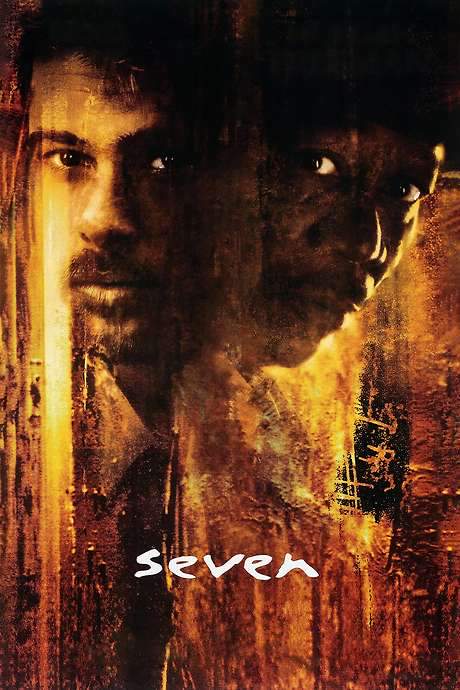
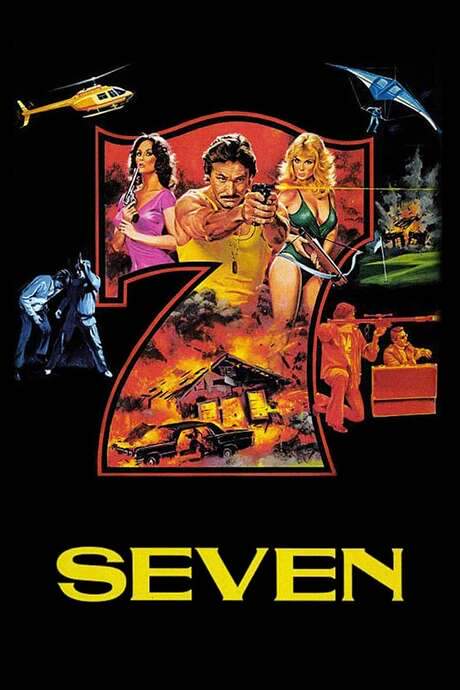
Seven (1995) movie poster

Plot Summary

Seven (1995) Plot Summary Explained

Release, runtime and language
1995 · 127 min · English
JustWatch #282 65
Directed by
David Fincher
Starring
Brad Pitt, Morgan Freeman
Budget
$33M

A young man finds himself embroiled in a dangerous situation when he journeys to a Nigerian slum to inherit a family fortune. Over seven intense days, he must confront the harsh realities of his family's history and navigate a world of crime and secrets. His quest to uncover the truth about his father's death leads him through a perilous journey filled with unexpected challenges and deadly encounters.

On this page (6)
  1. 1 Where to watch
  2. 2 What happens: full plot
  3. 3 Plot questions answered
  4. 4 Movie threads
  5. 5 Movies like Seven
  6. 6 Every angle

Where to watch

Where to Watch Seven (1995)

Where can you watch Seven? Stream, rent or buy it in the US, including on fuboTV, Paramount Plus Essential and Paramount Plus Premium: current JustWatch availability with up-to-date prices.

Streaming availability powered by JustWatch

Full plot summary · contains spoilers

What Happens in Seven: Full Plot Summary

The whole story of Seven (1995) explained, from the opening scene to the final frame: every key event, every twist and what it all adds up to. Read it as a quick recap before the sequel, to check a scene you missed, or to finally understand what really happened.

Soon-to-retire Detective Lieutenant William Somerset is partnered with the short-tempered yet idealistic Detective David Mills, who has just relocated to an unnamed large city with his wife, Tracy. As Somerset is preparing for his retirement in just seven days, a unique bond forms between him and Tracy, who soon confides in him about her pregnancy during a dinner invitation. She expresses her distress about the city, feeling it is not a safe environment for raising a child. Somerset empathizes with her dilemma, reflecting on a similar experience from his past, and advises her to reveal the news to Mills only if she decides to keep the child.

As the investigation unfolds, Somerset and Mills delve into a series of chilling murders inspired by the seven deadly sins. Their first case involves a morbidly obese man who was forced to eat until his stomach burst, representing gluttony. Somerset deduces that these grotesque murder details symbolize something far more profound than simple violence. The second victim is a criminal defense attorney who, in a horrific act representing greed, is forced to cut a pound of flesh from his body.

Clues from the crime scenes lead the detectives to a suspect's apartment, uncovering a third victim — a child molester and drug dealer found strapped to a bed in a state of near death, embodying sloth. This critically injured individual is unable to speak, leaving Somerset and Mills grasping for answers while daily photographs reveal the meticulous planning behind the crimes.

Utilizing library records and some investigative intuition from Mills, they identify a suspect known as John Doe. During an intense chase, Mills falls and injures his arm, only to face Doe who momentarily holds him at gunpoint before fleeing. The suspect's apartment provides a chilling insight into his disturbed mind, filled with notebooks detailing his psychopathic motives alongside a clue to another murder.

In their quest, the detectives are too late to prevent yet another horrific crime where Doe forces a man to murder a prostitute in an act that revels in lust. Soon after, they encounter the fifth victim; her face mutilated by Doe and confronted with a harrowing choice to take her own life or live disfigured, which she chooses — an emblem of pride.

Returning to the station, Doe unexpectedly surrenders, drenched in blood, and insists on confessing his crimes with the stipulation that he will lead Somerset and Mills to the burial sites of victims representing envy and wrath. While Somerset is cautious, Mills is lured into following Doe. During the ominous drive, Doe unabashedly reveals that he feels no remorse for his actions and believes his victims deserved their fates, viewing himself as an agent of justice sent to awaken the apathetic populace.

Eventually, they arrive at a desolate location where a delivery van approaches. Mills, furious and agitated, holds Doe at gunpoint as Somerset approaches the van's driver, who claims he has a package meant for their coordinates. With a mix of dread and urgency, Somerset opens the package, urging Mills to step back upon realizing its contents — the head of Tracy, confirming Doe's sinister implication that he embodies envy due to his desire for Mills' life with her.

In a fit of rage, Mills succumbs to wrath and shoots Doe multiple times, unwittingly completing the twisted plan that Doe crafted. Somerset and the police captain witness the aftermath with a heavy heart, as Mills is led away, broken by grief and remorse.

In a poignant voiceover, Somerset reflects on the impermanence of life and violence through a quote from Ernest Hemingway: > "The world is a fine place and worth fighting for." With deep conviction, Somerset affirms the latter part of the quote, implying his journey is far from over.
Last updated: October 27, 2024 at 17:07

Was this helpful?

Plot questions answered

Seven Plot Explained: Your Questions Answered

The questions people ask most about Seven (1995): what happens in the confusing scenes, why the characters do what they do, the twists, hidden details and what the ending means. Each answer contains spoilers.

Q1

Why does John Doe choose victims based on the seven deadly sins?

John Doe believes he is executing divine justice by punishing people who have committed deadly sins. He views himself as a moral detective eliminating those who have escaped earthly punishment for their transgressions. The obese man represented gluttony, the attorney represented greed, the child molester represented sloth, and so on. Doe sees his murders as awakening an apathetic society to moral accountability.

Foreshadowing: Early crime scene details prominently display the sins being punished, foreshadowing the systematic nature of Doe's mission.

  • john doe
  • seven deadly sins
  • motivation
  • serial killer
  • justice
Q2

Why does John Doe surrender to the police?

John Doe surrenders not out of remorse but as part of his twisted plan. He knows that leading the detectives to the burial sites of the final two victims (envy and wrath) will complete his narrative. Doe wants to demonstrate that he has succeeded in his mission of punishing sinners and believes he will achieve a kind of martyrdom by being caught.

Foreshadowing: Doe's calm demeanor during the chase and his detailed notebooks suggest he operates with a larger purpose beyond individual murders.

  • john doe surrender
  • confession
  • plan
  • capture
Q3

Why does John Doe target Mills and Tracy specifically?

John Doe targets Mills because he represents someone who has committed the sin of wrath yet appears to live a virtuous life with a loving wife. Doe explains during the drive that he envies Mills' life, his wife, his job, his seemingly perfect existence. By killing Tracy and provoking Mills to commit murder, Doe believes he is exposing the hypocrisy of righteous-seeming people and proving that anyone can succumb to sin.

Foreshadowing: During the chase, Doe briefly holds Mills at gunpoint but doesn't kill him, suggesting a more calculated purpose beyond simple elimination.

  • mills
  • tracy
  • john doe envy
  • target
  • motivation
Q4

How does John Doe kill Tracy while Mills is investigating the case?

John Doe stalks the Mills household and learns their routines. While Mills is distracted by the investigation and the intense surveillance on his apartment, Doe kidnaps and murders Tracy. The exact timing is never shown on screen, but Doe confirms her death when he reveals her head in the package. Doe notes that Mills was too consumed by the case to protect his wife, which was part of Doe's plan to prove Mills' failure as a protector.

Foreshadowing: Tracy confides to Somerset about feeling unsafe in the city, and Doe makes reference to knowing details about Mills' personal life, indicating he has been watching.

  • tracy death
  • how
  • kidnapping
  • timeline
Q5

Why does Mills shoot John Doe in the end?

Mills shoots Doe in a fit of wrath after discovering Tracy's decapitated head in the package. Overcome with grief, rage, and betrayal by Doe's manipulation, Mills unloads his weapon on Doe. This is precisely what Doe wanted, Mills, the supposed righteous detective, commits murder (wrath) in plain view, proving that everyone is capable of sin. Doe achieves his goal of corrupting the hero.

Foreshadowing: Doe manipulates Mills throughout the drive, provoking him and explaining his philosophy about wrath as a sin that righteous people commit.

  • mills shoots doe
  • wrath
  • ending
  • rage
  • murder
Q6

What happens to Tracy at the end of Seven?

Tracy is murdered by John Doe, who decapitates her and places her head in a delivery package. Doe sends this package to the remote location where he leads Somerset and Mills, deliberately timing the revelation to provoke Mills into killing him. Tracy's death is the final act of Doe's plan to punish Mills for what Doe perceives as his secret sins.

Foreshadowing: Tracy's anxiety about the city and her pregnancy hints at her vulnerability, while Doe's envy of Mills' life foreshadows why he would target her.
  • tracy death
  • head
  • package
  • final victim
Q7

Why doesn't Somerset stop Mills from shooting John Doe?

Somerset attempts to prevent the shooting by urging Mills to step back when he realizes what's in the package, but Mills is too overcome with grief and rage to control himself. By the time Somerset sees the package's contents and reacts, Mills has already fired. The speed of the emotional outburst catches Somerset off guard, and he can only witness the tragic completion of Doe's plan.

Foreshadowing: Somerset's caution throughout the investigation and his warnings about Doe's manipulation hint at his awareness of the danger.
  • somerset
  • stop mills
  • failing
  • intervention
Q8

What does the Hemingway quote mean at the end of Seven?

The final voiceover quotes Ernest Hemingway: 'The world is a fine place and worth fighting for.' After witnessing such darkness and tragedy, Somerset affirms the second part of the quote despite everything. This suggests that even in a world filled with evil and sin, there remains hope and purpose. Somerset chooses to continue fighting for good rather than surrender to cynicism, indicating his resolve to stay in the city and continue his work.

Foreshadowing: Somerset's earlier reflections on the city's corruption and his desire to retire hint at his internal struggle between hope and despair.

  • hemingway quote
  • ending
  • meaning
  • hope
  • world is a fine place
Q9

Why does John Doe believe he is an agent of justice?

John Doe sees himself as a divine instrument punishing sinners who escaped earthly consequences. He believes society has become morally corrupt and apathetic, and he must awaken people to the reality of sin by demonstrating its consequences. Despite being a psychopath who feels no remorse, Doe views his murders as righteous acts that expose the hypocrisy of so-called virtuous citizens like Mills.

Foreshadowing: Doe's apartment is filled with notebooks documenting his philosophy, showing his intellectual justification for the murders.

  • john doe psychology
  • justice
  • moral
  • punishment
  • divine
Q10

Why does John Doe leave daily photographs at the crime scenes?

John Doe leaves photographs documenting his crimes as evidence of his meticulous planning and to ensure the police understand the symbolism behind each murder. These photographs serve as his signature and communication method, allowing Somerset and Mills to track his movements and understand the pattern of the seven deadly sins. The photos also represent his desire to be recognized for his work.

Foreshadowing: The first crime scene already contains details that reveal the sin being punished, indicating Doe's method from the start.

  • photographs
  • evidence
  • planning
  • clues
  • daily

Movie threads

More Movies Like Seven, by Mood & Story

Curated lists built around what makes Seven tick: the same mood, the same kind of story or the same emotional payoff. Each list explains why these movies belong together.

Relentless thrillers with intense chases like Seven

Fast-paced investigations where the hunter becomes the hunted. If you liked the high-stakes, fast-paced cat-and-mouse game in Seven, you'll find similar tension in these movies. This collection features crime stories and psychological thrillers where investigators are pushed to the brink by cunning adversaries, creating a similar feeling of relentless momentum and suspense.

  • suspenseful
  • anxious
  • tense
  • methodical
  • urgent
  • psychological
  • Tone: dark, tense
  • Pacing: fast, urgent
Why these movies?

The story pattern: The narrative typically follows a linear, time-pressured investigation where each clue leads to a more disturbing revelation. The antagonist is often intellectually superior, dictating the pace and forcing the protagonist into a reactive, desperate position. The journey is a downward spiral, culminating in a final confrontation that tests the hero's core principles.

Why they belong together: These films are grouped by their shared structure of a high-tension pursuit, a dominant and methodical villain, and a pacing that creates a feeling of being one step behind. The emotional experience is consistently tense and anxiety-inducing, with a focus on psychological warfare.

Movies with devastatingly bleak endings like Seven

Stories where darkness triumphs, leaving characters shattered. For viewers seeking the profound emotional impact and morally complex, hopeless conclusion of Seven. These movies are similar in their heavy emotional weight, dark tone, and endings where the villain's philosophy prevails, leaving the audience with a powerful sense of loss and moral ambiguity.

  • bleak
  • somber
  • chilling
  • oppressive
  • devastating
  • psychological torment
  • Tone: bleak, dark, oppressive
  • Pacing: steady, building to climax
Why these movies?

The story pattern: The narrative arc is often a descent into darkness, where the protagonist's attempts to uphold justice or order are systematically dismantled. The climax typically involves the antagonist succeeding in their goal, often by corrupting the hero's morals or delivering a irreversible personal loss. The ending is final, bleak, and thematically resonant.

Why they belong together: They are united by a shared commitment to a pessimistic worldview and an ending that subverts conventional expectations of heroism. The emotional journey is defined by heavy psychological torment and a finale that provides no relief, creating a cohesive experience for viewers who appreciate uncompromising, dark conclusions.

If you liked this

Movies Like Seven

Similar movies to Seven: the same genre, themes or kind of story. Each one comes with its own plot summary, timeline and ending explained.

Browse all movie summaries

Every angle

Seven (1995) Explained: Plot, Timeline & Characters

Everything about Seven in one place: what happens in the plot summary, the timeline in chronological order, the characters and meaning and a spoiler-free summary. What's After the Movie adds the cast, box office and post-credit scenes.

Coming soon on iOS and Android

The Plot Explained Movie Summary App

Plot summaries, endings explained and timelines on your phone. Catch up on any movie in minutes, save your favorites and never miss a twist again.

Be the first to know when we launch. Your email stays private, always.

Learn more about the app