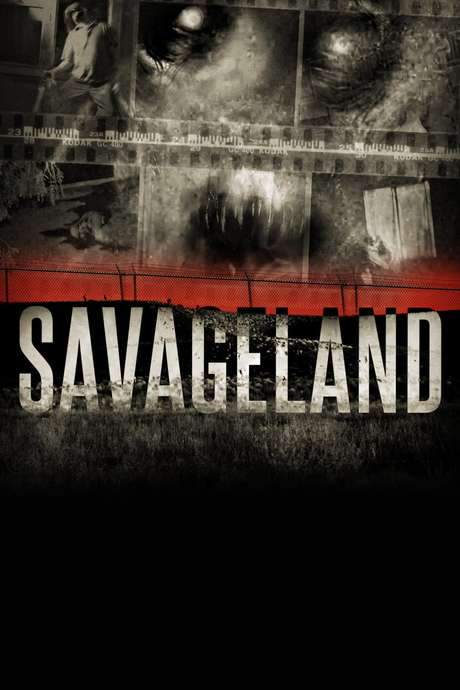
On the night of June 2, 2011, the Bordertown of Sangre De Cristo, Arizona, is shattered by an undisclosed incident that leaves the town with a grisly massacre of 57 residents. Most bodies vanish, and the few that are found are dismembered and marked by bite wounds, signaling something far beyond a ordinary crime. The emergency response quickly centers on the lone survivor: Francisco Salazar, a local handyman and amateur photographer who is caught trying to flee south toward Mexico. Because Salazar is a quiet loner who drifted through town, and had illegally entered the country years before, authorities dub him the prime suspect, a label that sticks even as doubt gnaws at the case.
The investigation unfolds through a tapestry of interviews: residents, families of the victims, and Salazar’s sister offer mixed and often conflicting views on his character and alleged guilt. Salazar himself remains guarded and ambiguous, granting only a single interview to a criminal psychologist. He claims he brought along his camera on the night to document what happened but lost the footage during his escape. Yet a single camera roll is later recovered by a resident who had first arrested him and then forwarded the film to an independent journalist.
A professional photographer and a Border Patrol specialist examine the recovered footage and declare it genuine, reconstructing a narrative that dovetails with Salazar’s lone interview. The film-like sequence begins at Salazar’s house on the town’s outskirts: a mysterious, wounded young man visits, and after Salazar attempts to seek help, the visitor dies—only to come back to life and violently attack him, forcing Salazar to kill again. From there, Salazar steps outside into a night where figures emerge from the hills, and a seasoned hunter who tries to shoot the approaching threat is overwhelmed. The documentary-style imagery he captures shows violent, contorted figures tearing into and turning townspeople, a rising horror that pushes Salazar to seek help at the church.
When Salazar reaches the church, the Putnams are not far behind. In a devastating turn, Grace Putnam is found at the center of the town’s nightmare; the night reveals that her father, Duane Putnam—a religious missionary whose faith had long anchored the community—descends into madness after being turned. He murders his own family before taking his life, a tragedy that casts a long shadow over the town’s struggle to understand what happened. Salazar’s efforts to reach Grace lead him to the town’s daycare center, which has fallen to the undead. There, a gated window separates him from the tragedy inside as he watches Grace be devoured.
Public opinion wrestles with the morality of Salazar’s actions. Some praise his bravery for bearing witness and preserving a visual record of the events; others question the authenticity of the photographs or criticize him for not intervening more directly to save lives. In the aftermath, the only posthumous conclusion about the Putnams’ tragedy confirms that Duane was the killer of his own kin, while his own burial is separated from that of the rest of the family. Salazar himself is executed, and, in a grim twist, his body later vanishes from its grave.
The story’s aftermath widens beyond Sangre De Cristo as the Border Patrol warns that the threat depicted in the footage seems to be moving north, suggesting the town may have merely stood in the path of a broader disaster. Mysterious deaths and disappearances begin to surface far from the town’s borders, hinting at a broader spread. In the most chilling recovered material, a group of campers is attacked and turned by the same terrifying force, with an undead Salazar among the attackers, confirming that the night’s horrors did not end with the town’s fall.
This account maintains a careful balance between witness testimony, documentary evidence, and the chilling possibility that the night’s events were more than a simple mass murder. It follows a man marked as a suspect, a community divided by fear and grief, and a set of photographs that challenge the boundaries between truth and interpretation, all while hinting at a wider danger that stretches far beyond Sangre De Cristo.