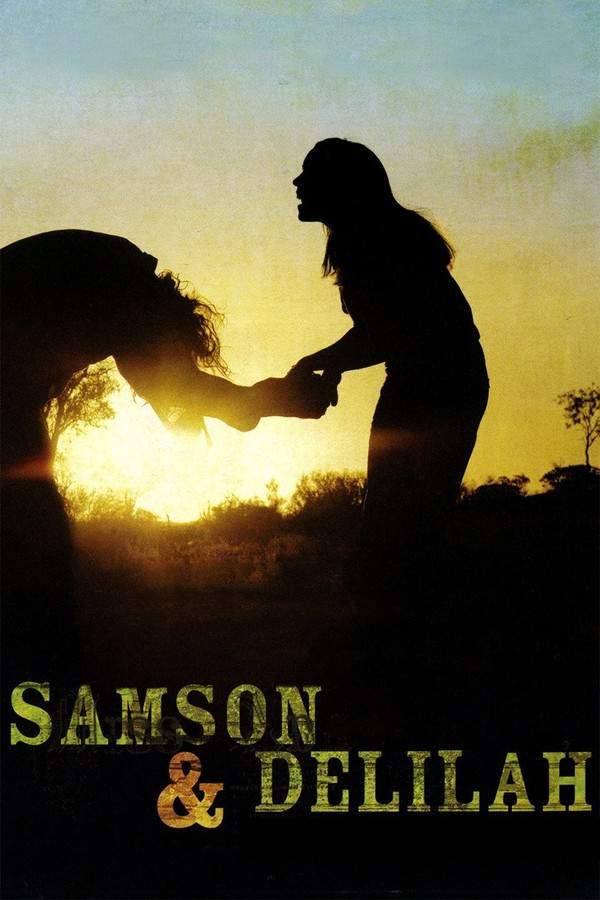
In a remote Aboriginal community near Alice Springs in Central Australia, two 14-year-olds—Samson and Delilah—navigate a world that feels both confining and precarious. Samson is mute and lives in a rundown shelter, his days shadowed by a harsh habit: petrol sniffing. The constant background of his elder brother’s ska band blasting from outside his bedroom window keeps him alert and exhausted at the same time, a rhythm that seems to define his sleep and wakefulness.
Delilah, meanwhile, cares for her frail grandmother, taking on the responsibilities of clinic visits and medication management. Together, they create dot paintings that they sell to an art broker for modest sums, a small glimmer of possibility in a life that otherwise feels stifling. Samson grows curious about Delilah, but her interest does not come easily, and her grandmother’s teasing, though mock-encouraging, only deepens the distance between them. Delilah remains resolutely uninterested, even as Samson shadows her movements and tries to intrude on her space.
Tragedy strikes when Delilah’s grandmother dies in the night. The family lashes out at Delilah, blaming her for the loss and beating her with sticks. In a moment of rage and fear, Samson lashes out as well, striking his brother with a log to silence him and his band, only to be met with a brutal counterattack. The house of cards they live in begins to topple, and the family conflict compounds the already fragile bonds that hold them together.
Desperation propels Samson and Delilah to a drastic escape. They steal the community car and drive toward Alice Springs, choosing to live rough under a bridge over the dry Todd River. A resident named Gonzo, a chronic alcoholic who is homeless, offers them shelter and a fragile sanctuary. Delilah notices that her dot paintings are fetching thousands of dollars in a distant gallery, yet when she tries to sell them herself, the gallery owner and the public rebuff her efforts, highlighting the harsh realities of art as a route out of poverty.
Samson’s addiction deepens as the days go by. The once-tolerant haze of petrol becomes a consuming fog, dulling his senses and complicating every decision. In a brutal moment, Delilah is kidnapped by a group of white teenagers in a car and suffers rape and physical assault. She somehow finds her way back to Samson, but he is too intoxicated to recognize her distress. The trauma becomes another devastating step in their descent, and Delilah, overwhelmed by despair, begins sniffing petrol herself.
The couple’s fragile world is further shattered when, one day while walking the streets in a stupor, Delilah is struck by a car. When Samson sobers up and learns of the accident, he believes she is dead and marks his grief by cutting off his hair. For weeks, he hides under the bridge, lost in sorrow and still under the influence of petrol. Delilah survives and, with the help of her brother, returns to bring Samson back from the edge by returning to their community.
Upon their arrival, an old woman chastises Samson for stealing the community’s only car, underscoring the community’s enduring rules and the weight of their choices. In a bid to help him conquer his addiction, Delilah guides Samson to a secluded place for rehabilitation. The process is slow and patient, but she remains steady and hopeful. Over time, he begins to reclaim a sense of himself, aided by the memory of better days and the support he finds in Delilah. The story closes on a note of fragile joy as Samson hears his brother’s ska music playing on the local radio, a small beacon that signals a possible return to a life rooted in rhythm, resilience, and a renewed sense of belonging.