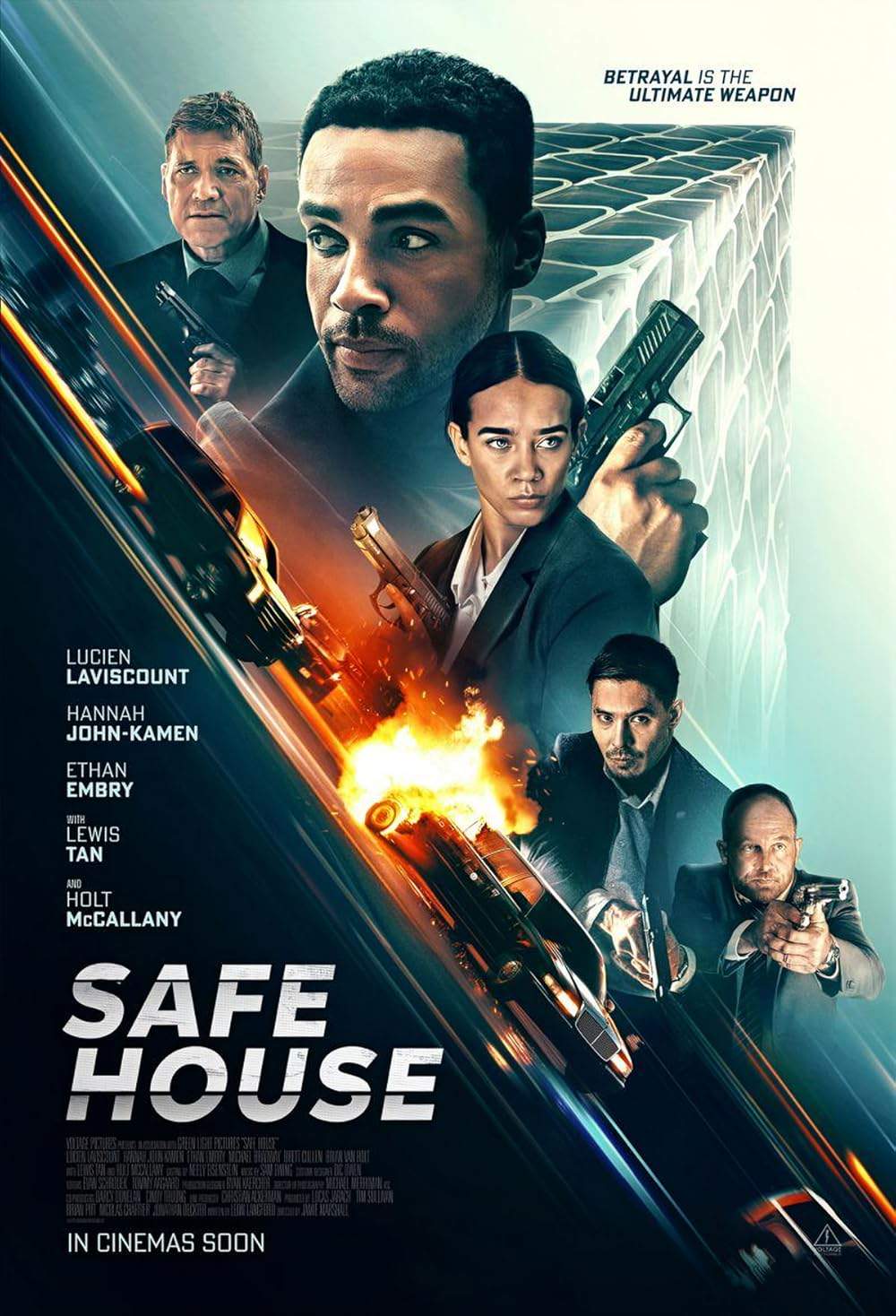
In Los Angeles, a motorcade transporting Vice President Davis is ambushed by terrorists, plunging the city into a tense scramble for control. Davis is evacuated, but the attack wipes out most of the Secret Service detail—leaving Agent Choi to scramble for a lifeline as he escapes with the backup nuclear football. As the dust settles, General Marshall orders a rapid lockdown and initiation of code Whiskey Mike Delta, forcing Choi to seek shelter at a CIA safehouse overseen by the enigmatic housekeeper, Anderson. He is joined by a small team stitched together from different agencies: USSS agent Reeves, DoD liaison Owens, a paranoid DHS agent named Sorello, and the veteran CIA figure Halton. The tension is immediate, and trust is scarce as everyone weighs who might be concealing more than they reveal.
Marshall warns Choi that he will be extracted, but the secret of what Choi carries must stay hidden from the others. Yet the moment the detonator’s signal traces back to the safehouse, the building is thrust into lockdown. Owens and Reeves explain they’re part of DoD Special Projects and were tasked with delivering a classified device known as C49 to Davis. Civilians are evacuated, the Governor issues martial law, and the city becomes a chessboard for a deliberate search to root out the attackers. The safehouse is struck again by a ruthless wave of operatives, and Reeves is killed in the early chaos. In the aftermath, Owens discovers the exits are rigged with Semtex, and the group improvises under pressure, torturing a surviving terrorist who reveals that the attackers have been contained purposefully before taking cyanide and detonating a concealed IED. Sorello grows suspicious, accusing Anderson of working with the terrorists.
As the plot thickens, Halton detains Anderson and presses Choi on the football’s whereabouts, prompting a tense exchange about loyalties and motives. Owens then reveals a chilling truth: C49 generates Gold Codes, meaning the terrorists’ plan was to grab both the football and the codes, making the attack a coordinated bid to seize ultimate control. A second wave of terrorists storms the safehouse, injuring Choi and Sorello. In the ensuing chaos, Sorello releases Anderson to help, but the housekeeper turns on them, killing both Sorello and Choi in a brutal turn of events. Owens watches in shock as CCTV footage confirms that Anderson killed the true “housekeeper” before they arrived, exposing a deeper deception at the heart of the operation.
The crisis reaches a fever pitch when Anderson reveals his true name is Elijah King, dropping the protective mask he wore and declaring a crusade on behalf of disillusioned veterans. He unpacks a far-reaching plan to launch an ICBM from Montana toward Washington, D.C., with the aim of remaking America in a new image. Owens fights to regain control, managing to disarm King and his accomplice using Reeves’s sidearm, halting the launch and preventing catastrophe—yet the victory feels hollow as the conspiracy’s architect remains at large.
In a startling turn, the final layers of treachery are peeled back: Marshall—the very man who pledged to protect the nation—is revealed to be orchestrating much of the attack from the same building. He wipes out his operation room with explosives and walks away into the night, leaving Owens to pursue him with her weapon drawn. The pursuit is far from over, and the city is left to reckon with the echoes of a plot that sought to weaponize fear itself. In the end, the line between ally and adversary blurs, and the resilience of those who stood firm under pressure—Choi, Owens, and Reeves—sustains a fragile, hard-won defense against a crisis that could have rewritten the nation’s fate.
Throughout the siege, the actors who inhabit these roles give the narrative its spine: the relentless Agent Choi, the calculating General Marshall, the shadowed Anderson whose true identity unsettles every assumption, the steadfast Owens, the wary Sorello, Reeves who never stops searching for a path to safety, and Halton—the seasoned voice of experience who ultimately pays a steep price for trust misplaced. The film threads its clockwork of tension with a careful cadence, reinforcing how quickly a city can be pulled into a cat-and-mouse game where every decision echoes on a national scale.
In this high-stakes cat-and-mouse drama, the lines between heroism and complicity blur as the conspirators reveal themselves one by one. And as the countdown to disaster is halted, the story lingers on the cost of sacrifice and the harsh truth that sometimes the greatest threat comes from within. The fallout is not just averted catastrophe but a reckoning with loyalty, truth, and the price of protecting a nation when every ally could become a threat. The credits fade on a note of cautious vigilance, a reminder that in the fog of crisis, the real battle is often for control of information, trust, and the integrity of those sworn to protect.