







Plot Explained Spoilers guaranteed!
Plot Explained

Browse by genre

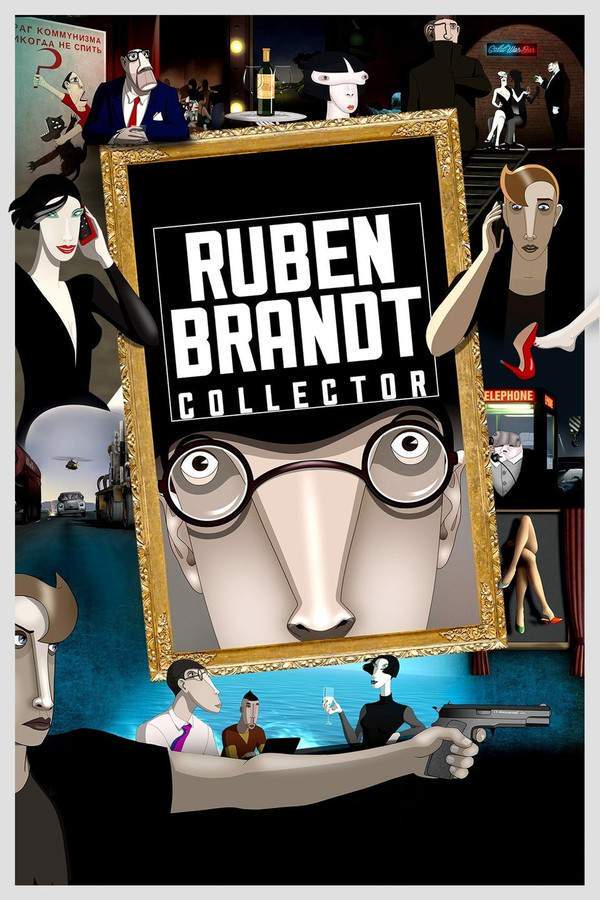
Ruben Brandt, Collector (2019) movie poster

Ending Explained

Ruben Brandt, Collector (2019) Ending Explained – Final Scene & Meaning

Release, runtime and language
2019 · 96 min · English
Echo score 75
Directed by
Milorad Krstic
Starring
Csaba Márton, Gábor Nagypál, Gabriella Hámori, Henry Grant, Iván Kamarás, Katalin Dombi

Haunted by unsettling nightmares, psychotherapist Ruben Brandt embarks on a daring plan to steal thirteen renowned paintings, believing it will rid him of his inner demons. He assembles a team of his patients, who become unlikely thieves, and together they execute elaborate heists. Their audacious crimes quickly make them the world's most wanted criminals, as they attempt to confront Ruben’s subconscious through art.

On this page (7)
  1. 1 Where to watch
  2. 2 What happens at the end
  3. 3 Final events in order
  4. 4 Ending questions answered
  5. 5 Movie threads
  6. 6 Movies like Ruben Brandt, Collector
  7. 7 Every angle

Where to watch

Where to Watch Ruben Brandt, Collector (2019)

Where can you watch Ruben Brandt, Collector? Stream, rent or buy it in the US, including on Hoopla, Amazon Video and Apple TV Store: current JustWatch availability with up-to-date prices.

Streaming availability powered by JustWatch

Ending explained · contains spoilers

What Happens at the End of Ruben Brandt, Collector?

How Ruben Brandt, Collector (2019) ends, what the final scene means, which earlier moments set it up and how to read the ending if the film leaves it open. The full ending explained, with every spoiler.

The ending of "Ruben Brandt, Collector" reveals that the entire story takes place within a dream inside Ruben Brandt’s mind. Throughout the film, Ruben struggles with his obsession with famous artworks and his childhood trauma, which have fractured his mental state. The surreal characters and scenes symbolize his internal chaos—many of them are not human and resemble paintings or abstract figures. The detective character, Mike Kowalski, is actually a reflection of Ruben himself, embodying his subconscious and inner conflict. The visual motifs, like the snail representing a spiral maze and the recurring imagery of two ties and shoes of different colors, highlight his splitting personality.

At the beginning, Ruben seems trapped in a psychological labyrinth, unable to sleep or escape his obsession. By the end, he finally awakens from his dream, symbolized by him reading a book about enjoying art, as if having conquered his internal struggles. The final scene showing Ruben at peace signifies that he has managed to confront and integrate his repressed memories and fears. The mirror reflection with Mike merging into Ruben confirms that his internal conflict has been resolved. The film uses art and psychological symbolism to illustrate that Ruben’s obsessive mind is a maze he must navigate to find peace, and through this journey, he ultimately overcomes his past mental wounds. In essence, the story concludes with Ruben emerging victorious from his mental labyrinth, symbolizing his recovery and newfound tranquility.

Last updated: June 25, 2025 at 08:58

Was this helpful?

The last 4 events

How Ruben Brandt, Collector Ends: The Final Events in Order

The last events of Ruben Brandt, Collector (2019) in chronological order, the run-up to the ending explained above. The complete timeline has all 14 events, scene by scene.

Open the full timeline
  1. Final Heist Planning

    The group identifies their ultimate target: Warhol's *Elvis I, II*, located in Tokyo. With Kowalski unraveling the painting's significance, they devise an elaborate scheme to achieve their objective under the ruse of a public performance.

    Where
    Tokyo
  2. Chaotic Climax

    As the heist unfolds in Tokyo, chaos erupts when Delangello's men recognize the group's intentions. What began as a performance quickly spirals out of control, yet the team manages to execute their plan and steal the coveted painting.

    Where
    Tokyo
  3. A Reflective Ending

    In an unexpected twist of fate, Ruben wakes up peacefully on a train, holding a personalized art book gifted by his accomplices. This moment signifies a turning point, contrasting the chaotic events and hinting at newfound tranquility.

    Where
    Train
  4. Symbolic Conclusion

    As the film concludes, the slow-moving snail in the window reflects the intertwined journeys of the characters. This imagery serves as a poignant metaphor for the complexities of their personal growth and relationships throughout the story.

    Where
    Train

Ending questions answered

Ruben Brandt, Collector Ending: Your Questions Answered

The questions people ask most about the ending of Ruben Brandt, Collector (2019): what the final scene means, how the twist works, what happens to each character and how to read the ending. Each answer contains spoilers.

Q1

Why is the entire story revealed to be a dream?

The film reveals that Ruben Brandt has been trapped in a recurring nightmare caused by his childhood trauma and obsession with famous artworks. His fractured mental state created the surreal world where he and his patients executed elaborate heists. The dream was a manifestation of his subconscious attempting to process his repressed memories and psychological wounds. By the end, Ruben finally awakens from this mental labyrinth, having confronted and integrated his inner conflicts.

Foreshadowing: Early scenes establish Ruben's inability to sleep and his unsettling nightmares, hinting at his unstable mental state.

  • dream ending
  • psychological twist
  • subconscious
  • mind game
Q2

Who is Mike Kowalski really?

Mike Kowalski, the detective pursuing Ruben and his team throughout the film, is actually a reflection of Ruben himself. He represents Ruben's subconscious and inner conflict between his professional identity as a therapist and his criminal desires. The mirror reflection at the end shows Mike literally merging into Ruben, confirming that the detective was always a manifestation of Ruben's own psyche.

Foreshadowing: Mike appears in many surreal scenarios that would be impossible for a real detective, and his motivations remain unclear throughout the story.

  • mike kowalski
  • detective identity
  • split personality
  • alter ego
Q3

What do the snail and spiral imagery mean in the ending?

The snail serves as a visual metaphor for Ruben's psychological state - trapped in an endless spiral maze of his own making. The recurring spiral motif represents his repetitive cycle of trauma and obsession. The different colored shoes and two ties also symbolize his splitting personality, showing the fractured nature of his mind trying to reconcile different aspects of himself.

Foreshadowing: The snail appears multiple times throughout the film, reinforcing the idea of being caught in an unending loop.

  • snail symbolism
  • spiral maze
  • visual metaphors
  • psychological symbolism
Q4

Why does Ruben finally wake up at the end?

Ruben wakes up after successfully confronting his inner demons during the dream. His journey through the psychological maze forced him to face his childhood trauma and his unhealthy obsession with art. The act of stealing the paintings within the dream represented his attempt to overcome his fears. By the final scene, he has integrated his repressed memories and achieved a sense of peace, allowing him to break free from the nightmare.

Foreshadowing: The film's progression shows Ruben gradually gaining awareness and control within the dream world.

  • awakening
  • recovery
  • mental healing
  • confronting trauma
Q5

What is the significance of the book Ruben reads at the end?

At the end, Ruben is shown reading a book about enjoying art rather than being consumed by it. This symbolizes his transformation - he has learned to appreciate art without letting it control his life. The book represents his newfound healthy relationship with his passion, free from the obsessive qualities that drove his nightmares and the entire dream scenario.

Foreshadowing: Ruben's obsession with the thirteen paintings drives the entire heist plot, making the shift to peaceful appreciation significant.

  • book
  • art appreciation
  • recovery
  • symbolism
Q6

Is the ending actually a happy one for Ruben?

The ending suggests Ruben has achieved genuine healing and peace. His internal conflict is resolved - the mirror scene shows Mike merging into him, indicating his split personality has been integrated. However, the film maintains some ambiguity about whether this peace will last or if his trauma could resurface. The stylized animation and adventurous framing keep the conclusion from feeling overly heavy while still conveying meaningful recovery.

Foreshadowing: Throughout the film, Ruben shows moments of clarity and connection that hint at his capacity for healing.

  • happy ending
  • recovery
  • peace
  • resolution
Q7

What happens to Ruben's team of thieves in the end?

Since the entire story takes place in Ruben's mind, his patients who became thieves were never real - they were manifestations of his psyche. Characters like theCollector and other surreal figures represent different aspects of Ruben's personality and fears. In the dream resolution, these figures fade as Ruben awakens, suggesting he has let go of these psychological projections.

Foreshadowing: Many team members have surreal, impossible characteristics that mark them as dream constructs rather than real people.

  • patients
  • thieves
  • characters
  • dream constructs
Q8

Why did Ruben believe stealing paintings would cure him?

Ruben's obsession with famous artworks stems from childhood trauma connected to art. Within the dream, stealing the paintings represented his attempt to confront and take control of the sources of his psychological pain. The heist was a metaphorical journey through his own mind, with each painting representing a different aspect of his trauma that he needed to face and integrate to achieve healing.

Foreshadowing: Ruben's intense emotional reactions to specific artworks establish art as the root of his psychological issues.

  • painting heist
  • motivation
  • trauma
  • psychology
Q9

What was the half-brother reveal and does it matter to the ending?

The half-brother connection between Ruben and one of his patients added complexity to the character relationships, but since the entire narrative occurs in Ruben's mind, these relationships were psychological projections. The reveal served to deepen the dream's narrative while exploring themes of connection and identity. By the ending, these character bonds are resolved as part of Ruben's overall psychological healing.

Foreshadowing: The half-brother subplot creates emotional stakes that feel personal but ultimately serve Ruben's inner journey.

  • half brother
  • relationship
  • family secret
  • revelation
Q10

What does the mirror reflection scene reveal?

The final mirror scene shows Mike Kowalski merging into Ruben, visually confirming that the detective was always an extension of Ruben's own consciousness. This moment represents the integration of his split personality - the pursuer and the pursued becoming one. It symbolizes the resolution of his internal conflict and his emergence from the psychological labyrinth as a unified, healed individual.

Foreshadowing: The recurring motif of mirrors throughout the film hints at themes of identity and self-reflection.

  • mirror
  • integration
  • identity
  • resolution

Movie threads

More Movies Like Ruben Brandt, Collector, by Mood & Story

Curated lists built around what makes Ruben Brandt, Collector tick: the same mood, the same kind of story or the same emotional payoff. Each list explains why these movies belong together.

Psychological Heist Movies like Ruben Brandt, Collector

Characters who confront their inner demons through elaborate, symbolic crimes. If you enjoyed the unique premise of Ruben Brandt, Collector, you'll find more movies here where elaborate heists are a means to confront deep-seated psychological trauma. These films combine thrilling crime capers with introspective journeys into the subconscious mind.

  • cerebral
  • tense
  • psychologically driven
  • symbolic
  • anxious
  • thrilling
  • Tone: tense, cerebral
  • Pacing: fast, intellectual
Why these movies?

The story pattern: These narratives follow individuals or teams using meticulously planned criminal acts as a way to process trauma, conquer fears, or resolve internal conflicts. The journey is as much about the success of the heist as it is about the characters' psychological evolution, with the external action mirroring their internal struggles.

Why they belong together: They are grouped by their unique fusion of high-stakes crime thrillers with deep psychological exploration. The shared experience is one of intellectual suspense and emotional introspection, where the thrill of the heist is inextricably linked to the protagonist's quest for self-understanding.

Surreal Animated Thrillers similar to Ruben Brandt, Collector

Adult animated films that use surreal visuals to tell tense, psychological stories. Fans of the unique visual style and adult themes of Ruben Brandt, Collector will appreciate these movies. Discover other animated thrillers for adults that use surreal art and fast-paced plots to create a tense, dreamlike viewing experience.

  • surreal
  • dreamlike
  • stylish
  • gripping
  • anxious
  • visually striking
  • Tone: tense, dreamlike, dark
  • Pacing: fast, visually dynamic
Why these movies?

The story pattern: Stories in this thread often unfold in visually distorted worlds where the line between reality, memory, and nightmare is fluid. They leverage the freedom of animation to create suspense and unease through unconventional imagery, exploring themes of identity, trauma, and perception with a thrilling pace.

Why they belong together: They share a commitment to using animation as a medium for sophisticated, thrilling stories aimed at adults. The combination of a distinctive artistic vision with genres like thriller, crime, and psychological drama creates a uniquely immersive and stylistically bold viewing experience.

If you liked this

Movies Like Ruben Brandt, Collector

Similar movies to Ruben Brandt, Collector: the same genre, themes or kind of story. Each one comes with its own plot summary, timeline and ending explained.

Browse all movie summaries

Every angle

Ruben Brandt, Collector (2019) Explained: Plot, Ending, Timeline & Characters

Everything about Ruben Brandt, Collector in one place: what happens in the plot summary, the timeline in chronological order, the characters and meaning, the ending explained and a spoiler-free summary. What's After the Movie adds the cast, box office and post-credit scenes.

Coming soon on iOS and Android

The Plot Explained Movie Summary App

Plot summaries, endings explained and timelines on your phone. Catch up on any movie in minutes, save your favorites and never miss a twist again.

Be the first to know when we launch. Your email stays private, always.

Learn more about the app