Plot Explained Spoilers guaranteed!
Plot Explained

Browse by genre

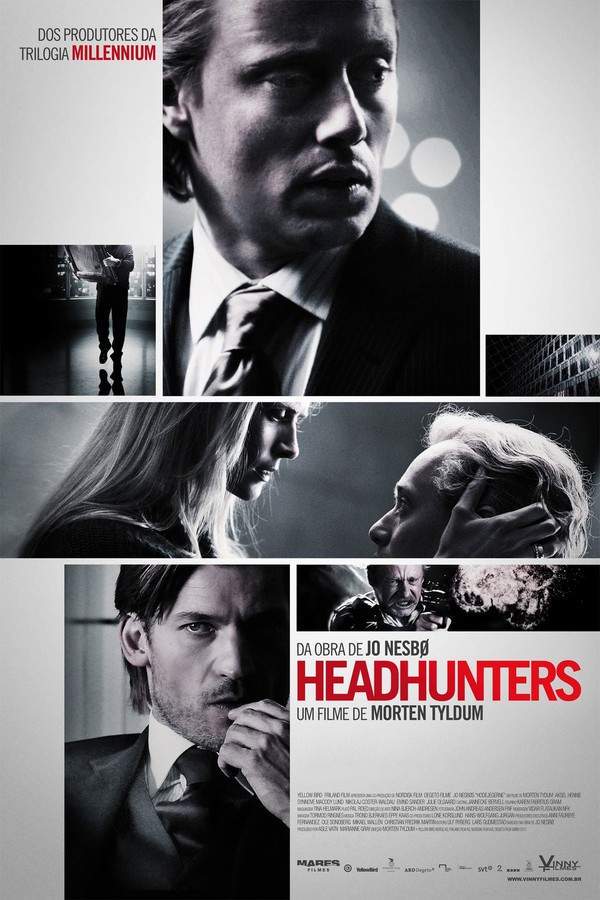
Headhunters (2012) movie poster

Plot Summary

Headhunters (2012) Plot Summary Explained

Release, runtime and language
2012 · 100 min · Norwegian
Loading streaming availability…
Directed by
Morten Tyldum
Starring
Nikolaj Coster Waldau, Aksel Hennie, Synnøve Macody Lund, Julie R. Ølgaard, Kyrre Haugen Sydness

Roger, a successful headhunter living a lavish lifestyle funded by illicit activities, becomes entangled in a dangerous game when he learns of a valuable painting owned by one of his clients. Driven by the allure of wealth, he attempts to steal the artwork, unaware that he’s become the target of a vengeful and formidable adversary. His life is turned upside down as he finds himself hunted and forced to confront the consequences of his choices.

On this page (7)
  1. 1 Where to watch
  2. 2 What happens: full plot
  3. 3 Plot questions answered
  4. 4 The book behind the movie
  5. 5 Movie threads
  6. 6 Movies like Headhunters
  7. 7 Every angle
Loading streaming availability…

Full plot summary · contains spoilers

What Happens in Headhunters: Full Plot Summary

The whole story of Headhunters (2012) explained, from the opening scene to the final frame: every key event, every twist and what it all adds up to. Read it as a quick recap before the sequel, to check a scene you missed, or to finally understand what really happened.

Roger Brown, portrayed by Aksel Hennie, is a highly successful headhunter in Norway who leads an extravagant lifestyle that he funds through a series of art thefts. He cleverly collaborates with his partner Ove, who works at a surveillance company, to deactivate the security systems of Roger's wealthy clients' homes. This criminal arrangement allows Roger to swap original paintings with forgeries while maintaining his façade of a respectable businessman.

One day, Roger's mistress, Lotte—played by Julie R. Ølgaard—invites him to dinner, but he declines her invitation and ends their affair, which sets the stage for escalating tensions in his personal life. At the same time, tension arises in his marriage to Diana, portrayed by Synnøve Macody Lund, an art gallery owner. Diana is eager to start a family, but Roger keeps her in the dark about his low sperm count, leading to mounting frustration on her part.

Their lives take a complicated turn when Diana introduces Roger to Clas Greve, a character interpreted by Nikolaj Coster-Waldau, who is an executive at a GPS technology firm and a potential recruit for Pathfinder, a rival company for which Roger is scouting new talent. Despite Roger's persistence, Clas appears elusive and uninterested in the job offer, which only fuels Roger's competitive instincts.

As the story unfolds, Roger learns that Clas possesses a rare Rubens painting that is rumored to be immensely valuable. Driven by jealousy and ambition, Roger concocts a plan to steal the painting with Ove's assistance. However, things take a dark turn when Roger uncovers evidence suggesting that Diana is having an affair with Clas, a revelation that propels him into a spiral of rage and betrayal.

After successfully stealing the painting, Roger is faced with the shocking sight of Diana's cellphone in Clas's bedroom, solidifying his fears about their infidelity. Amidst the turmoil, tragedy strikes their partnership when Ove is seemingly killed after a botched encounter, leading to a series of violent and chaotic events as Roger struggles to cover his tracks.

As Roger attempts to evade Clas, the narrative takes unexpected shifts, including mistaken identities and mounting stakes involving survival. Roger’s frenzied efforts spiral into a web of complications—particularly when he realizes that the GPS technology Clas has developed could track him, intensifying his paranoia.

In desperate scenarios that follow, Roger’s journey leads him to uncover deep layers of betrayal, including revelations about Lotte’s actual loyalties and Clas’s hidden motives. The tension culminates in a confrontation that alters the trajectory of the characters’ lives forever.

Though the investigation surrounding the murders and theft escalates, Roger executes a clever strategy to divert suspicion away from himself, creating a narrative that casts the deceased as notorious art thieves. The resolution brings unexpected clarity, leaving both Roger and Diana, who is now pregnant, confronting their past while forging a new life as they sell their house and return to the world of business, albeit under different terms.

This tale intricately weaves themes of deception, ambition, and redemption, featuring a diverse cast that propels the narrative with layered performances, ultimately leading to a gripping conclusion that resonates with the complexities of human relationships and moral choices.
Last updated: May 12, 2025 at 07:04

Was this helpful?

Plot questions answered

Headhunters Plot Explained: Your Questions Answered

The questions people ask most about Headhunters (2012): what happens in the confusing scenes, why the characters do what they do, the twists, hidden details and what the ending means. Each answer contains spoilers.

Q1

Why did Roger attempt to steal Clas Greve's painting?

Roger learned from his wife Diana that Clas Greve owned a rare Rubens painting rumored to be worth millions. After discovering that Clas was uninterested in the job offer Roger was extending, Roger saw an opportunity to steal the valuable artwork as a way to fund his extravagant lifestyle. The theft was also motivated by his growing suspicion that Diana was having an affair with Clas, adding a layer of revenge to his criminal plan.

Foreshadowing: Earlier in the film, Roger explains to Diana how he supplements his headhunter income through art thefts, establishing his willingness to steal from clients.

  • rubens painting
  • art theft
  • clasa greve
  • money
  • stealing
Q2

Did Diana actually have an affair with Clas Greve?

The evidence is ambiguous. Roger discovers Diana's cellphone in Clas's bedroom during the theft, which convinced him of the affair. However, the film never confirms definitively whether the affair was real or if Clas planted the phone to manipulate Roger. Diana consistently denies the affair, though her secret conversations with Clas and the reveal that Clas had been tracking Roger through GPS technology create lasting doubt about her true loyalties.

Foreshadowing: Diana's eagerness to introduce Roger to Clas and her enthusiasm about the Rubens painting raise questions about her motivations throughout the film.

  • diana affair
  • clas grieve
  • cellphone
  • betrayal
  • jealousy
Q3

How did Roger end up killing Ove?

After finding Ove apparently dead in Roger's car with a syringe, Roger panicked and disposed of the body in a lake. However, Ove had only been injected with a sedative and later revived. When Ove confronted Roger demanding money and threatened to expose his crimes, the situation escalated. In the struggle, Roger accidentally killed Ove with a pen, stabbing him in the neck. This moment marks a critical turning point where Roger's criminal life turns deadly.

Foreshadowing: Ove's growing resentment toward Roger for not being paid fairly for their criminal partnership foreshadows his confrontation and Roger's desperate reaction.

  • ove killed
  • stabbing
  • accident
  • body disposal
  • murder
Q4

Why was Clas Greve pursuing and trying to kill Roger?

Clas Greve was motivated by multiple factors. First, Roger had stolen his valuable Rubens painting, which Clas needed to fund his escape and cover his tracks. Second, Clas had discovered that Roger had killed a man (Ove) and wanted to eliminate Roger before he could expose the truth. Additionally, Clas had developed advanced GPS tracking technology and used it to locate Roger throughout the film. Their conflict became a matter of survival for both men, each trying to outmaneuver the other.

Foreshadowing: When Roger stole the painting, Clas's military background and involvement in tracking technology were revealed, establishing his capability and determination to pursue enemies.

  • clas grieve
  • hunting
  • gps tracking
  • revenge
  • pursuit
Q5

What was the GPS gel Clas developed?

Clas Greve had developed a revolutionary GPS tracking gel that could be applied to objects or people and allow persistent tracking. This technology was a key plot element in the film, as Clas used it to track Roger throughout his escape. The gel represented Clas's professional expertise and gave him a significant advantage in hunting Roger down, making it nearly impossible for Roger to hide.

Foreshadowing: During the planning meeting, Roger learns about Clas's military background and his work at a GPS technology firm, hinting at this tracking capability.

  • gps gel
  • tracking technology
  • clas grieve
  • gps tracking
  • surveillance
Q6

Why was Roger mistaken for Ove at the hospital?

After the chaotic confrontation at the farm where Roger fled from Clas, he was taken to the hospital. Due to the confusion of the situation, the injuries he sustained, and perhaps deliberate misinformation spread by Clas, Roger was misidentified as Ove. This mistaken identity led to Roger being arrested for Ove's murder, creating an additional layer of danger as he was trapped in police custody while the real threat, Clas, was still hunting him.

Foreshadowing: The chaos of Roger's escape from the farm, combined with his bloody appearance and the general confusion surrounding the multiple crimes, set the stage for this identity error.

  • hospital
  • mistaken identity
  • ove
  • arrested
  • confusion
Q7

Was Lotte secretly working for Clas Greve?

Yes, Lotte was revealed to be working for Clas all along. When Roger sought her help after being mistaken for Ove, he discovered she had been cooperating with Clas. This betrayal added another devastating layer to Roger's situation, as Lotte had been his mistress and someone he trusted. The revelation led to a deadly confrontation between them, with Lotte ultimately being killed by Roger in self-defense during their struggle.

Foreshadowing: Lotte's initial invitation to dinner and her quick exit after Roger ended their affair suggested she may have had other allegiances beyond their relationship.

  • lotte
  • clas grieve
  • betrayal
  • working together
  • secret alliance
Q8

How did Roger manage to fake his own death?

When Clas rammed the police car off a cliff, Roger used the chaos to escape. He shaved his head, changed clothes with a deceased officer at the scene, and altered evidence to make it appear that he had been killed in the incident. This clever ruse allowed Roger to disappear while Clas was still pursuing him, shifting the dynamic so that Roger could then hunt Clas instead of being the prey.

Foreshadowing: Roger had already demonstrated his resourcefulness and willingness to manipulate situations throughout the film, foreshadowing his ability to execute this deceptive escape plan.

  • fake death
  • escape
  • police
  • cliff
  • disguise
Q9

Why did Clas Greve ram the police car off the cliff?

Clas rammed the police car to get to Roger, whom he believed was being transported to custody. By causing the crash, Clas intended to kill Roger before he could be taken into legal custody and potentially reveal information about the painting theft and the murders. The attack was a desperate attempt by Clas to eliminate his primary threat and maintain control over the situation.

Foreshadowing: Clas's military background and his single-minded pursuit of Roger throughout the film establish his willingness to use extreme violence to achieve his goals.

  • police car
  • cliff
  • attack
  • clas grieve
  • crash
Q10

What happened to the painting after Roger stole it?

The painting's ultimate fate remains somewhat unclear in the narrative. Roger successfully stole the Rubens painting from Clas's home, but after his life descended into chaos and violence, the painting's location is not explicitly shown again. The focus shifts to Roger's survival and the confrontation with Clas rather than the painting itself. By the end, Roger has manipulated evidence to redirect suspicion toward the deceased Ove as the art thief, effectively covering his own tracks.

Foreshadowing: The painting serves as the initial catalyst for the entire conflict, with its immense value driving both Roger and Clas to extreme actions.

  • rubens painting
  • stolen
  • art theft
  • painting location
  • rubens
Q11

Why did Roger end his affair with Lotte?

Roger ended his affair with Lotte because he wanted to focus on saving his marriage to Diana, particularly after Diana expressed her desire to start a family. This decision reflects Roger's attempt to maintain normalcy in his personal life despite his criminal activities. However, the timing of this choice, coming just as his life begins to unravel, adds tragic irony to his situation.

Foreshadowing: Roger's decision to end the affair sets up the later revelation of Lotte's betrayal, creating a sense of poetic justice in the narrative.

  • lotte
  • affair ended
  • marriage
  • diana
  • choosing wife
Q12

Is Diana pregnant at the end of the movie?

Yes, the ending reveals that Diana is pregnant. Despite the revelations of infidelity, deception, and violence in their relationship, Roger and Diana decide to stay together. The final scenes show them preparing to sell their house and start a new chapter as a family, suggesting a bittersweet resolution where they attempt to move past their mutual betrayals.

Foreshadowing: Diana's earlier desire to have children and Roger's secret about his low sperm count created tension throughout the film, making this resolution both hopeful and complicated.

  • diana pregnant
  • baby
  • ending
  • new start
  • family

Movie threads

More Movies Like Headhunters, by Mood & Story

Curated lists built around what makes Headhunters tick: the same mood, the same kind of story or the same emotional payoff. Each list explains why these movies belong together.

Thrillers with relentless cat-and-mouse survival like Headhunters

Ordinary people thrown into desperate, life-or-death chases by their own mistakes. If you enjoyed the desperate chase and high-stakes survival in Headhunters, you'll find similar tension in these movies. This list features crime thrillers and action stories where an ordinary person becomes the prey in a dangerous game, leading to a frantic fight for their life against a formidable foe.

  • suspenseful
  • frantic
  • desperate
  • treacherous
  • anxious
  • high-stakes
  • Tone: tense, paranoid, desperate
  • Pacing: fast, relentless
Why these movies?

The story pattern: These narratives typically begin with a protagonist committing a consequential mistake, often a crime or deception, which awakens a powerful and vengeful antagonist. The story then unfolds as a series of escalating confrontations and narrow escapes, stripping the protagonist of their resources and safety, forcing them to rely on primal instinct to survive.

Why they belong together: They are grouped by their shared core experience: a fast-paced, tense, and high-intensity vibe centered on survival. They feature a clear hunter-hunted dynamic, a protagonist whose life unravels rapidly, and a sense of paranoia and desperation that drives the plot forward.

Movies about crimes spiraling out of control like Headhunters

Criminals who escape consequences but are forever changed by their actions. Fans of Headhunters who appreciated its theme of a heist leading to catastrophic consequences will enjoy these films. This selection focuses on crime thrillers and dramas where a protagonist's ambitious plan backfires spectacularly, resulting in a violent spiral and a bittersweet resolution that questions the cost of survival.

  • cynical
  • double cross
  • consequences
  • betrayal
  • desperate
  • morally ambiguous
  • Tone: cynical, tense, morally complex
  • Pacing: fast, escalating
Why these movies?

The story pattern: The narrative pattern follows a character, often motivated by greed or status, who initiates a complex crime. The plan inevitably fails due to betrayal, bad luck, or an unforeseen opponent, plunging the character into a world of violence and chaos. The journey forces a confrontation with their own morality, culminating in an ending where physical survival is secured, but psychological peace or a clean conscience is lost.

Why they belong together: These films share a heavy emotional weight and a focus on the consequences of ambition. They blend crime thrills with a character study, resulting in a tone that is both tense and morally ambiguous, often ending on a note that is more thoughtful and bittersweet than triumphant.

If you liked this

Movies Like Headhunters

Similar movies to Headhunters: the same genre, themes or kind of story. Each one comes with its own plot summary, timeline and ending explained.

Browse all movie summaries

Every angle

Headhunters (2012) Explained: Plot, Timeline & Characters

Everything about Headhunters in one place: what happens in the plot summary, the timeline in chronological order, the characters and meaning and a spoiler-free summary. What's After the Movie adds the cast, box office and post-credit scenes.

Coming soon on iOS and Android

The Plot Explained Movie Summary App

Plot summaries, endings explained and timelines on your phone. Catch up on any movie in minutes, save your favorites and never miss a twist again.

Be the first to know when we launch. Your email stays private, always.

Learn more about the app