Plot Explained Spoilers guaranteed!
Plot Explained

Browse by genre

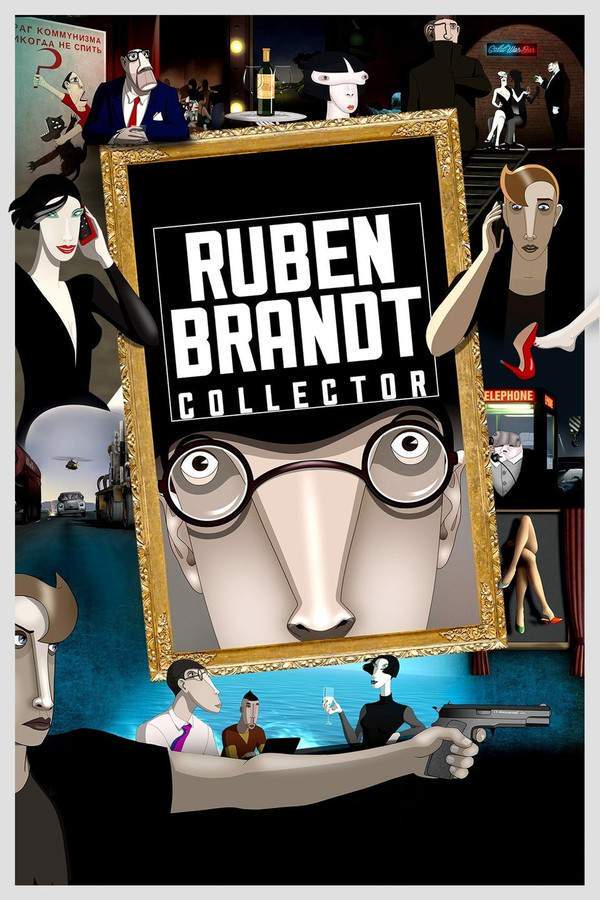
Ruben Brandt, Collector (2019) movie poster

Plot Summary

Ruben Brandt, Collector (2019) Plot Summary & Ending Explained

Release, runtime and language
2019 · 96 min · English
Echo score 75
Loading streaming availability…
Directed by
Milorad Krstic
Starring
Csaba Márton, Gábor Nagypál, Gabriella Hámori, Henry Grant, Iván Kamarás, Katalin Dombi

Haunted by unsettling nightmares, psychotherapist Ruben Brandt embarks on a daring plan to steal thirteen renowned paintings, believing it will rid him of his inner demons. He assembles a team of his patients, who become unlikely thieves, and together they execute elaborate heists. Their audacious crimes quickly make them the world's most wanted criminals, as they attempt to confront Ruben’s subconscious through art.

On this page (7)
  1. 1 Where to watch
  2. 2 What happens: full plot
  3. 3 Plot questions answered
  4. 4 How it ends
  5. 5 Movie threads
  6. 6 Movies like Ruben Brandt, Collector
  7. 7 Every angle
Loading streaming availability…

Full plot summary · contains spoilers

What Happens in Ruben Brandt, Collector: Full Plot Summary

The whole story of Ruben Brandt, Collector (2019) explained, from the opening scene to the final frame: every key event, every twist and what it all adds up to. Read it as a quick recap before the sequel, to check a scene you missed, or to finally understand what really happened.

Unlikely as it may seem, Ruben Brandt embarks on a train journey along with the artwork of Duveneck's Whistling Boy, only to be attacked by Velázquez's Infanta Margarita Teresa, revealing that he has been plagued by nightmares.

An acrobatic thief named Mimi pulls off a daring heist, stealing Cleopatra's Fan from the Louvre Museum. Hired by the crime lord Vincenzo Delangello, she was initially tasked to acquire another valuable item, the le Régent Diamant. However, her kleptomania takes over, leading her to sacrifice the fan for her escape from private investigator Mike Kowalski. Realizing her psychological struggles, she seeks guidance from psychotherapist Ruben Brandt, who specializes in helping artistic souls. He counsels her to "possess your problems to conquer them."

During their sessions, Mimi learns that Brandt suffers from panic attacks and nightmares induced by Venus of Urbino. In a bold attempt to aid him and demonstrate her therapeutic progress, she enlists his other patients — former bodyguard Bye-Bye Joe as well as fellow thieves Membrano Bruno and Fernando — to steal the Venus of Urbino painting for him. By confronting this challenge, they literally embody the advice he gave her. Impressed by their success, Brandt divulges that he has recurring nightmares involving twelve other renowned paintings. Together, the group sets off on a globe-trotting adventure, executing clifftop heists to steal these prized works of art.

As the press dubs the enigmatic thief "The Collector," the stolen paintings, which cannot be sold even on the black market, become a point of intrigue. The insurance company announces a reward for information about the Collector, putting Kowalski on their trail. Meanwhile, Delangello begins to suspect a connection between Mimi and the thief.

In the frame of betrayal, John Cooper, a former colleague of Brandt's deceased father who worked with subliminal methods in the CIA, connects the dots and identifies Brandt as the criminal mastermind behind the thefts. He contacts Kowalski, but before the investigator can arrive, mercenary Kris Barutanski brutally eliminates Cooper in a quest to find the Collector for Delangello. Unbeknownst to Kowalski, Barutanski follows closely in pursuit of him.

Delving into the house of Brandt's late father, Kowalski discovers subliminal film clips depicting the stolen artworks. Flashbacks reveal that Gerhard forced a young Ruben to consume cartoon films instead of allowing him to enjoy outings. In a fierce confrontation, Kowalski ultimately defeats Barutanski, learning in the process that Gerhard Brandt is also his father, making him the half-brother of Ruben, as Kowalski's mother left Gerhard to escape his experimental tendencies.

While Brandt and his accomplices attempt to pilfer a painting by Renoir, they face a police ambush but manage to slip away. Delangello's henchmen trail them relentlessly, yet they too evade capture.

Mimi experiences a transformative dream where she successfully controls her urge to steal. However, when she tries to share this breakthrough with Brandt, he morphs into Kowalski, complicating her feelings.

The group's final target is Warhol's Elvis I, II, located in Tokyo. As Kowalski deduces the painting’s significance, Delangello secretly monitors his movements. Brandt's team devises an elaborate ruse to secure the painting under the guise of a public performance. The plan takes a chaotic turn when Delangello's men recognize them, misinterpreting the ensuing scuffle as part of the act. Ultimately, they successfully steal the painting, which is added to Brandt's extensive collection.

As the film progresses, Brandt appears on the brink of yet another nightmare, but instead, he wakes up peacefully aboard a tranquil train with a personalized art book from his accomplice. In the reflective glass, the silhouette of Kowalski materializes. The journey concludes with the revelation of a solitary train car moving forward, drawing focus to a slow-moving snail, symbolizing the intertwining personal journeys of these complex characters. As Frigyes Karinthy stated at the film's outset, > "In my dream, I was two cats and I was playing with each other."

Last updated: November 15, 2024 at 19:21

Was this helpful?

Plot questions answered

Ruben Brandt, Collector Plot Explained: Your Questions Answered

The questions people ask most about Ruben Brandt, Collector (2019): what happens in the confusing scenes, why the characters do what they do, the twists, hidden details and what the ending means. Each answer contains spoilers.

Q1

Why does Ruben steal paintings in the movie?

Ruben Brandt is a psychotherapist who suffers from severe nightmares caused by thirteen famous paintings, particularly 'Venus of Urbino'. He believes that stealing these paintings will rid him of his inner demons by confronting his subconscious fears directly. Rather than simply avoiding the paintings, he follows his own advice to 'possess your problems to conquer them.'

Foreshadowing: The film opens with Ruben on a train being attacked by Velázquez's Infanta Margarita Teresa from his nightmares, establishing his psychological torment from artwork.

  • ruben brandt
  • nightmares
  • venus of urbino
  • psychotherapy
  • art theft
Q2

What is the connection between Kowalski and Ruben?

Kowalski discovers through investigating Ruben's father's house that Gerhard Brandt is also his own father, making him Ruben's half-brother. This revelation explains why Kowalski felt uniquely compelled to pursue the case and adds personal stakes to their cat-and-mouse dynamic throughout the film.

Foreshadowing: Kowalski's intense personal investment in catching 'The Collector' foreshadows the familial connection that is revealed later.

  • kowalski
  • ruben brandt
  • half-brother
  • gerhard brandt
  • family secret
Q3

Why does Mimi help Ruben steal the paintings?

Mimi is a kleptomaniac thief who seeks therapy from Ruben. After he counsels her to 'possess your problems to conquer them,' she decides to help him by organizing his other patients to steal 'Venus of Urbino' - literally acting on his therapeutic advice. This also represents her own progress in confronting her psychological issues.

Foreshadowing: Ruben's advice to Mimi during their therapy sessions plants the seed for the entire heist operation.

  • mimi
  • kleptomania
  • therapy
  • venus of urbino
  • patients
Q4

What do the subliminal films reveal about Ruben's past?

Kowalski discovers subliminal film clips in Gerhard Brandt's house that show the elder Brandt forcing young Ruben to watch cartoon films instead of allowing him to enjoy normal childhood activities. This traumatic upbringing explains Ruben's psychological issues and his fixation on paintings as both sources of fear and potential liberation.

Foreshadowing: Ruben's nightmares and his father's experimental methods with subliminal messaging establish the psychological foundation for his obsession with art.

  • subliminal films
  • gerhard brandt
  • childhood trauma
  • cartoons
  • cia
Q5

Why can't the stolen paintings be sold?

The thirteen stolen paintings are all world-famous works that are impossible to sell on any black market because their notoriety makes them instantly recognizable and traceable. The media dubs Ruben 'The Collector,' making the paintings essentially unsellable collectibles rather than profitable stolen goods.

Foreshadowing: The heists are motivated by psychological rather than financial gain, as Ruben never intends to profit from the thefts.

  • the collector
  • stolen paintings
  • black market
  • famous art
  • unsellable
Q6

Who kills John Cooper in the film?

John Cooper, a former CIA associate of Ruben's deceased father, is killed by mercenary Kris Barutanski. Cooper had discovered Ruben's identity as 'The Collector' and was about to inform Kowalski when Barutanski eliminates him on orders from crime lord Vincenzo Delangello, who wants to find the Collector first.

Foreshadowing: Cooper's investigation into the connection between the thefts and Ruben's family sets up his discovery and subsequent elimination.

  • john cooper
  • kris barutanski
  • mercenary
  • vincenzo delangello
  • cia
Q7

What does the ending of Ruben Brandt mean?

The ending shows Ruben waking up peacefully on a train holding a personalized art book from his accomplices, a stark contrast to his earlier nightmares. The slow-moving snail visible through the window serves as a metaphor for the gradual, intertwined personal journeys of the characters. The peaceful awakening suggests Ruben's psychological healing, though the ambiguous final imagery leaves his and the others' futures open to interpretation.

Foreshadowing: The opening quote about dreaming as 'two cats playing with each other' establishes the dreamlike, ambiguous tone that characterizes the entire film.

  • ending
  • train
  • snail
  • peaceful
  • symbolism
  • ambiguous
Q8

Why does Kris Barutanski chase Kowalski?

After killing John Cooper, Barutanski is hired by Delangello to find 'The Collector.' He pursues Kowalski because Cooper had contacted the investigator before dying, making Kowalski the best lead to tracking down the thief. Barutanski follows Kowalski to Ruben's family home, where Kowalski ultimately defeats him in combat.

Foreshadowing: Cooper's call to Kowalski connecting the dots about Ruben's identity puts Kowalski directly on Barutanski's radar.

  • kris barutanski
  • kowalski
  • pursuit
  • delangello
  • mercenary
Q9

How does the group escape the police ambush?

During the Renoir heist, Brandt and his team are ambushed by police but manage to slip away through their characteristic agility and planning. They also evade Delangello's henchmen who are trailing them simultaneously, demonstrating their expertise in executing complex heists under pressure.

Foreshadowing: The group's ability to escape multiple pursuers throughout the film establishes their competence and resourcefulness.

  • police ambush
  • renoir
  • heist
  • escape
  • delangello
Q10

What is the significance of Mimi's dream about controlling her urges?

Mimi experiences a transformative dream where she successfully controls her kleptomaniac urges for the first time. However, when she tries to share this breakthrough with Ruben, he transforms into Kowalski, complicating her romantic feelings and symbolic journey toward psychological freedom.

Foreshadowing: The dream represents Mimi's therapeutic progress in confronting her kleptomania, while the transformation into Kowalski hints at her unresolved feelings for both men.

  • mimi
  • dream
  • kleptomania
  • breakthrough
  • kowalski
  • feelings
Q11

Why is the Elvis painting the final target in Tokyo?

The Warhol 'Elvis I, II' painting is the thirteenth and final artwork Ruben needs to complete his collection and confront all his nightmares. The group stages an elaborate public performance as cover, and despite chaos when Delangello's men recognize them, they successfully steal the painting, completing Ruben's therapeutic journey.

Foreshadowing: The Tokyo heist represents the culmination of the group's globe-trotting adventure and the final confrontation with Ruben's subconscious fears.

  • elvis painting
  • tokyo
  • warhol
  • final heist
  • thirteen paintings

Ending explained

What Happens at the End of Ruben Brandt, Collector?

How Ruben Brandt, Collector (2019) ends, in short: the final scene, the last twist and what it means for the characters. The full ending explained, with every spoiler, lives on its own page.

Read the full ending explained

The ending of "Ruben Brandt, Collector" reveals that the entire story takes place within a dream inside Ruben Brandt’s mind. Throughout the film, Ruben struggles with his obsession with famous artworks and his childhood trauma, which have fractured his mental state. The surreal characters and scenes symbolize his internal chaos—many of them are not human and resemble paintings or abstract figures. The detective character, Mike Kowalski, is actually a reflection of Ruben himself, embodying his subconscious and inner conflict. The visual motifs, like the snail representing a spiral maze and the recurring imagery of two ties and shoes of different colors, highlight his splitting personality.

At the beginning, Ruben seems trapped in a psychological labyrinth, unable to sleep or escape his obsession. By the end, he finally awakens from his dream, symbolized by him reading a book about enjoying art, as if having conquered his internal struggles. The final scene showing Ruben at peace signifies that he has managed to confront and integrate his repressed memories and fears. The mirror reflection with Mike merging into Ruben confirms that his internal conflict has been resolved. The film uses art and psychological symbolism to illustrate that Ruben’s obsessive mind is a maze he must navigate to find peace, and through this journey, he ultimately overcomes his past mental wounds. In essence, the story concludes with Ruben emerging victorious from his mental labyrinth, symbolizing his recovery and newfound tranquility.

Ruben Brandt, Collector ending explained in full

Movie threads

More Movies Like Ruben Brandt, Collector, by Mood & Story

Curated lists built around what makes Ruben Brandt, Collector tick: the same mood, the same kind of story or the same emotional payoff. Each list explains why these movies belong together.

Psychological Heist Movies like Ruben Brandt, Collector

Characters who confront their inner demons through elaborate, symbolic crimes. If you enjoyed the unique premise of Ruben Brandt, Collector, you'll find more movies here where elaborate heists are a means to confront deep-seated psychological trauma. These films combine thrilling crime capers with introspective journeys into the subconscious mind.

  • cerebral
  • tense
  • psychologically driven
  • symbolic
  • anxious
  • thrilling
  • Tone: tense, cerebral
  • Pacing: fast, intellectual
Why these movies?

The story pattern: These narratives follow individuals or teams using meticulously planned criminal acts as a way to process trauma, conquer fears, or resolve internal conflicts. The journey is as much about the success of the heist as it is about the characters' psychological evolution, with the external action mirroring their internal struggles.

Why they belong together: They are grouped by their unique fusion of high-stakes crime thrillers with deep psychological exploration. The shared experience is one of intellectual suspense and emotional introspection, where the thrill of the heist is inextricably linked to the protagonist's quest for self-understanding.

Surreal Animated Thrillers similar to Ruben Brandt, Collector

Adult animated films that use surreal visuals to tell tense, psychological stories. Fans of the unique visual style and adult themes of Ruben Brandt, Collector will appreciate these movies. Discover other animated thrillers for adults that use surreal art and fast-paced plots to create a tense, dreamlike viewing experience.

  • surreal
  • dreamlike
  • stylish
  • gripping
  • anxious
  • visually striking
  • Tone: tense, dreamlike, dark
  • Pacing: fast, visually dynamic
Why these movies?

The story pattern: Stories in this thread often unfold in visually distorted worlds where the line between reality, memory, and nightmare is fluid. They leverage the freedom of animation to create suspense and unease through unconventional imagery, exploring themes of identity, trauma, and perception with a thrilling pace.

Why they belong together: They share a commitment to using animation as a medium for sophisticated, thrilling stories aimed at adults. The combination of a distinctive artistic vision with genres like thriller, crime, and psychological drama creates a uniquely immersive and stylistically bold viewing experience.

If you liked this

Movies Like Ruben Brandt, Collector

Similar movies to Ruben Brandt, Collector: the same genre, themes or kind of story. Each one comes with its own plot summary, timeline and ending explained.

Browse all movie summaries

Every angle

Ruben Brandt, Collector (2019) Explained: Plot, Ending, Timeline & Characters

Everything about Ruben Brandt, Collector in one place: what happens in the plot summary, the timeline in chronological order, the characters and meaning, the ending explained and a spoiler-free summary. What's After the Movie adds the cast, box office and post-credit scenes.

Coming soon on iOS and Android

The Plot Explained Movie Summary App

Plot summaries, endings explained and timelines on your phone. Catch up on any movie in minutes, save your favorites and never miss a twist again.

Be the first to know when we launch. Your email stays private, always.

Learn more about the app