Plot Explained Spoilers guaranteed!
Plot Explained

Browse by genre

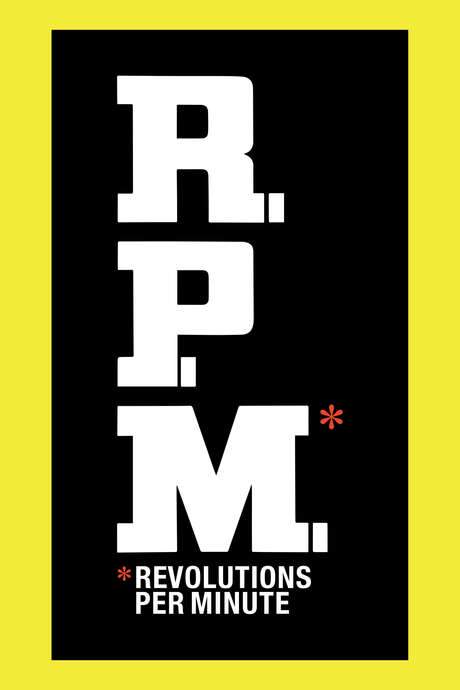
R.P.M. (1970) movie poster

Timeline

R.P.M. (1970) Timeline Explained – Every Event in Order

Release, runtime and language
1970 · 92 mins · English
Loading streaming availability…
Directed by
Stanley Kramer
Starring
Anthony Quinn, Gary Lockwood, Donald Moffat, John McLiam, Alan Hewitt, Lauren Gilbert

Set on a West Coast college in the tumultuous late 1960s, the film follows a liberal professor (Anthony Quinn) who has long supported student activism. When radical protesters seize the campus and the president steps down, he is thrust into the presidency. He must decide whether to restore order or allow the revolutionary fervor to spiral into chaos.

On this page (6)
  1. 1 Where to watch
  2. 2 Events in order (13)
  3. 3 Timeline questions answered
  4. 4 Movie threads
  5. 5 Movies like R.P.M.
  6. 6 Every angle
Loading streaming availability…

13 events in order · contains spoilers

R.P.M. Timeline: Events in Chronological Order

Every key event of R.P.M. (1970) in order, scene by scene, with when and where it takes place. Use it to untangle flashbacks, time jumps and parallel storylines, to refresh your memory before the sequel or to find the exact scene you are thinking of.

  1. Protest occupies administration building and triggers resignation

    Radical students seize the administration building and present a list of 12 demands. The tense standoff unfolds against the backdrop of the 1960s political turmoil. Unable to resolve the crisis, President Tyler resigns, forcing the Board of Trustees to consider a replacement.

    When
    1960s
    Where
    University administration building
  2. Board shortlists Pérez and selects Paco Perez as leader

    The board considers a student-made shortlist of suggested professors to lead the university. They ultimately select Professor F. W. J. 'Paco' Perez, despite his radical beliefs, noting his close past ties with students. The choice signals a willingness to bridge student activism with leadership.

    When
    Immediately after Tyler's resignation
    Where
    Board of Trustees room, campus
  3. Midnight call; Pérez is named acting president

    After midnight, Dean George Cooper calls Pérez and Rhoda, requesting an immediate meeting. Pérez is tapped as the acting president of the college. The call sets the stage for his temporary leadership role.

    When
    After midnight
    Where
    Pérez's home
  4. Pérez arrives on campus to take charge

    The next morning, Pérez arrives on campus aboard a motorcycle to assert his presence. Students and faculty watch as the new acting president steps into the crisis. His arrival marks the formal beginning of his handling of the negotiations.

    When
    Morning
    Where
    Campus
  5. Negotiations begin; disagreements over demands

    Pérez attempts to negotiate, reading the activists' 12 demands aloud. He reveals his stance by disagreeing with three demands, notably the students' right to hire and fire faculty. The negotiation sets the frame for which demands he will grant.

    When
    Morning
    Where
    Administration building
  6. Pérez commits to delivering on the first nine demands

    Pérez declares he will fulfill the first nine demands. The moment clarifies which goals are within reach and which require compromise. The standoff continues as the three remaining demands are left unresolved.

    When
    Morning
    Where
    Administration building
  7. Conflict alters the eighth demand: black admissions officer

    A brief clash between Rossiter and Steve Dempsey culminates in altering the eighth demand to hire a black admissions officer. The change reframes the path toward integrating the administration's leadership. Pérez navigates the implications as the talks proceed.

    When
    During talks
    Where
    Administration building
  8. Pérez nominates Dempsey for admissions officer

    Pérez nominates Steve Dempsey for the position of admissions officer, and the young Black activist accepts. This move addresses a core demand while keeping Pérez as mediator. The nomination symbolizes progress amid the tension.

    When
    Soon after
    Where
    Administration building
  9. Pérez mediates; Rhoda's critique at home

    Pérez serves as a mediator between the faculty and the unyielding student body, attempting to bridge perspectives. Back home, Rhoda berates him for hypocrisy, highlighting personal strains created by the crisis. The tension both on campus and at home underscores the stress of leadership.

    When
    During the standoff
    Where
    Administration building; Pérez's home
  10. Threat to destroy campus hardware revealed

    Pérez informs the faculty of an audio-recorded message indicating Rossiter will destroy the school's computer hardware if the demands aren’t met. The threat escalates the imperative to act. The faculty weighs the risk as the crisis grows more perilous.

    When
    Afternoon
    Where
    Faculty meeting room / Administration building
  11. Police intervention and mass arrests

    With no options left, Pérez authorizes a police intervention led by Police Chief Thatcher. The officers storm the building, deploy tear gas, and arrest several activists. Rhoda is among the detainees, highlighting the personal cost of the confrontation.

    When
    Hours after the threat
    Where
    Administration building
  12. Pérez signs bail grant and restores a fragile control

    After the raid, Pérez meets with the faculty in the now under-control administration building and signs a bail grant defending the outcome. His leadership is framed as stabilization after the eruption. The outcome remains controversial among activists.

    When
    Post-raid
    Where
    Administration building
  13. Pérez exits to a hostile crowd

    Leaving the building, Pérez walks through the crowd and is loudly booed by the activists. The scene captures the mixed reception of his compromise and the tumult of the rebellion. The campus atmosphere is left unsettled as the crisis seems temporarily resolved.

    When
    After the raid
    Where
    Campus grounds

Last updated: October 09, 2025 at 11:25

Was this helpful?

Timeline questions answered

R.P.M. Timeline Explained: Your Questions Answered

When does it happen, and why in that order? The questions people ask about the chronology of R.P.M. (1970): time jumps, flashbacks, cause and effect between scenes and the correct order of events, each answered with spoilers.

Q1

Why was Paco Perez chosen as acting president during the protest?

The Board of Trustees selected Perez because he had a long history with the student body and was known for supporting student activism. Even though he held radical beliefs, the board believed his existing relationships with students made him the best candidate to negotiate and resolve the crisis. His close ties to the student movement were seen as an asset rather than a liability during the standoff.

  • Paco Perez
  • acting president
  • Board of Trustees
  • student activism
  • university crisis
Q2

Why did Perez refuse the demand about hiring and firing faculty?

Perez refused the demand for students to have the right to hire and fire faculty because he believed it would destroy the university's academic integrity and independence. While he was willing to grant many demands, including scholarships and reinvestment programs, he drew a clear line at surrendering control over faculty employment. This represented the core of his philosophy, reform within the institution's framework rather than complete student takeover.

  • faculty hiring
  • student demands
  • academic control
  • Perez negotiation
Q3

What was the 8th demand and why was it changed?

The original 8th demand was vague, but during negotiations it was reframed to require hiring a Black admissions officer. This change came after a conflict between Rossiter and Steve Dempsey. Perez saw this as a compromise he could accept, filling a specific administrative position with a Black candidate, without ceding broader institutional power. It allowed him to appear responsive to civil rights demands while maintaining control over hiring decisions.

Foreshadowing: Early in the film, the demands list includes a push for an African American on the Board of Trustees, showing the movement's focus on representation.

  • eighth demand
  • Black admissions officer
  • Steve Dempsey
  • civil rights
  • campus reform
Q4

Why did Perez authorize police intervention against the students?

Perez called the police after learning of an audio-recorded threat that Rossiter would destroy the school's computer hardware if the demands weren't met. With this escalation and all negotiation options exhausted, he felt he had no choice but to restore order by force. The decision represented his shift from mediator to authority figure, prioritizing the school's preservation over the occupation.

Foreshadowing: The tense standoff had been escalating for days, with the three unresolved demands creating an increasingly volatile situation.

  • police intervention
  • Rossiter threat
  • computer hardware
  • campus raid
  • tear gas
Q5

What was the threat to destroy the school's computers?

Perez informed the faculty that he possessed an audio recording of a threat from Rossiter, warning that the activists would destroy the school's computer hardware if their demands weren't met. This represented a significant escalation in the crisis and gave Perez the justification he needed to authorize police action, as the threat constituted potential sabotage of critical university infrastructure.

  • Rossiter threat
  • computer destruction
  • audio recording
  • campus sabotage
Q6

Why was Rhoda arrested and how did it affect Perez?

Rhoda, Perez's graduate student girlfriend, was among those arrested during the police raid on the administration building. This added a deeply personal dimension to the political crisis, Perez had authorized the very action that resulted in his own partner's detention. The arrest highlighted the impossible position he occupied between the institution and the movement he once supported.

Foreshadowing: Earlier, Rhoda had accused Perez of hypocrisy, showing her commitment to the activist cause despite his new position of authority.

  • Rhoda arrested
  • personal relationship
  • police raid
  • Perez hypocrisy
  • girlfriend detained
Q7

Why did the students boo Perez after he granted their demands?

The students booed Perez because despite granting many of their demands, including scholarships and hiring a Black admissions officer, he had authorized police violence against them. From the activists' perspective, his final act was a betrayal: using state force to crush the occupation after extracting concessions. His compromise felt like capitulation to the establishment rather than genuine solidarity with the movement, leaving him satisfying no one.

  • students booed
  • Perez betrayal
  • compromise
  • activist disappointment
  • public rejection
Q8

Which of the 12 demands did Perez agree to fulfill?

Perez committed to delivering on the first nine demands, which included 20 inner-city scholarships, a reinvestment program for the college, a prohibition on military research, and the revised 8th demand for a Black admissions officer. He refused the three demands he considered incompatible with his authority, most importantly the students' right to hire and fire faculty. Even after granting these concessions, the standoff ended violently when he called in police.

  • 12 demands
  • scholarships
  • reinvestment
  • military research
  • demands met
Q9

Why did Perez nominate Steve Dempsey for admissions officer?

Perez nominated Steve Dempsey, a young Black activist, for the admissions officer position as a direct response to the revised 8th demand. This was a calculated move, Dempsey was a member of the protest movement, so appointing him demonstrated responsiveness to civil rights demands while keeping the hiring process within administrative control. The activist accepted the position, seeing it as a tangible victory achieved through negotiation.

Foreshadowing: Dempsey had clashed with Rossiter earlier, showing his prominence within the activist leadership.

  • Steve Dempsey
  • admissions officer
  • nomination
  • Black leadership
  • campus integration
Q10

What historical context explains the campus protest in the movie?

The film is set against the political turbulence of the late 1960s, a period marked by widespread student activism, anti-war protests, and civil rights movements. The protest reflects the real-world campus occupations and demands for institutional reform that characterized this era. The 12 demands, ranging from scholarships to military research bans to board representation, mirror the types of reforms students actively pursued during this time of social upheaval.

  • 1960s activism
  • student protests
  • civil rights
  • Vietnam War era
  • campus reform

Movie threads

More Movies Like R.P.M., by Mood & Story

Curated lists built around what makes R.P.M. tick: the same mood, the same kind of story or the same emotional payoff. Each list explains why these movies belong together.

Movies with Ideological Standoffs like R.P.M.

Stories where clashing ideologies lead to a tense and urgent countdown. If you enjoyed the tense campus occupation in R.P.M., explore more movies like it that feature urgent political standoffs. These films capture the high-pressure dynamics of ideological clashes, where characters are forced into difficult negotiations with time running out, leading to similarly gripping and intense viewing experiences.

  • tense
  • urgent
  • ideological
  • frustrating
  • claustrophobic
  • confrontational
  • Tone: tense, confrontational
  • Pacing: fast, urgent
Why these movies?

The story pattern: The narrative pattern typically involves two or more factions with deeply held, conflicting ideologies becoming locked in a high-pressure situation. The story unfolds in real-time or under a tight deadline, forcing characters to make rapid, consequential decisions. The journey often explores the collapse of compromise and the personal cost of political fervor.

Why they belong together: Movies are grouped here for their shared focus on tense, ideologically-driven conflicts that create a palpable sense of urgency. They share a fast-paced, confrontational tone, a high-intensity atmosphere, and often a bittersweet or heavy ending where no side emerges truly victorious.

Stories of Compromised Idealists like in R.P.M.

Character journeys where good intentions are crushed by harsh realities. For viewers who appreciated the moral conflict of the professor in R.P.M., this collection features similar movies about idealists facing compromise. These dramas explore what happens when reformers become part of the system they sought to change, leading to bittersweet endings and heavy emotional weight, perfect for fans of complex character studies.

  • frustrating
  • weighty
  • grim
  • ideological
  • moral conflict
  • disillusionment
  • Tone: tense, weighty, frustrating
  • Pacing: steady, character-driven
Why these movies?

The story pattern: The narrative centers on a character arc where a well-intentioned individual is thrust into a role of authority within the very system they criticized. They are forced to make pragmatic choices that conflict with their foundational beliefs, leading to a crisis of conscience, alienation from their allies, and a profound sense of personal failure.

Why they belong together: These films are united by a specific character journey—the fall of an idealist. They share a heavy emotional weight, a tense tone derived from internal moral conflict, and a bittersweet or bleak ending feel that questions the possibility of pure change within established structures.

If you liked this

Movies Like R.P.M.

Similar movies to R.P.M.: the same genre, themes or kind of story. Each one comes with its own plot summary, timeline and ending explained.

Browse all movie summaries

Every angle

R.P.M. (1970) Explained: Plot, Timeline & Characters

Everything about R.P.M. in one place: what happens in the plot summary, the timeline in chronological order, the characters and meaning and a spoiler-free summary. What's After the Movie adds the cast, box office and post-credit scenes.

Coming soon on iOS and Android

The Plot Explained Movie Summary App

Plot summaries, endings explained and timelines on your phone. Catch up on any movie in minutes, save your favorites and never miss a twist again.

Be the first to know when we launch. Your email stays private, always.

Learn more about the app